Lingering Vulnerabilities: Bahrain’s Political Economy and the Iran War
Despite the massive disruptions caused by the Iran conflict, how Bahraini policymakers address structural vulnerabilities moving forward will be the critical determinant of the country’s longer-term economic outlook.
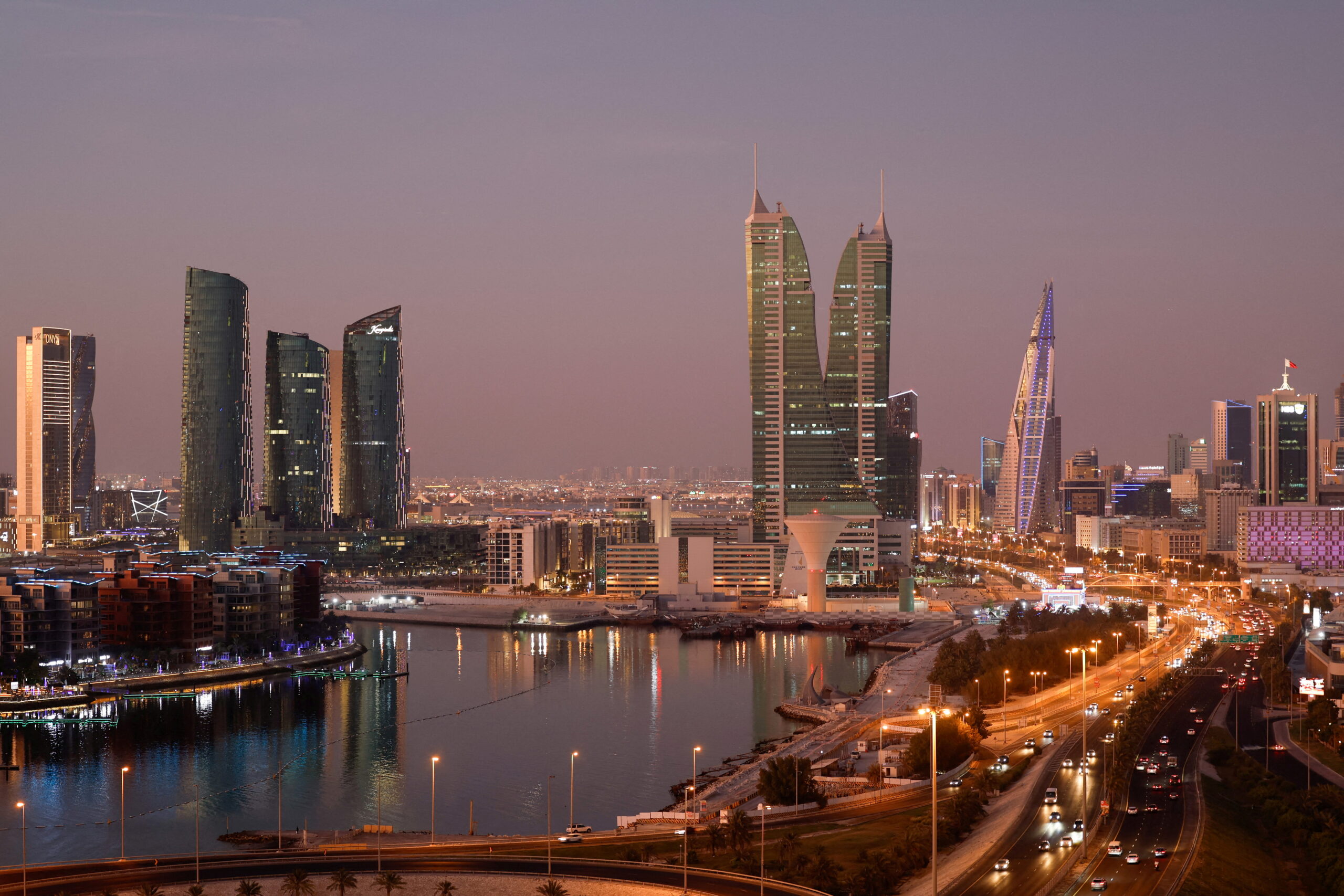
A view of the skyline in downtown Manama, Bahrain, June 22, 2025. (REUTERS/Hamad I Mohammed)
The 14-point memorandum of understanding signed between the United States and Iran called for an immediate halt to fighting and a 60-day period to negotiate a final settlement to end the war. Although the deal remains in the early stages and will be tested in the weeks ahead, any sustained progress toward ending hostilities and reopening the Strait of Hormuz would offer at least partial relief to hard-hit Gulf states, such as Bahrain.
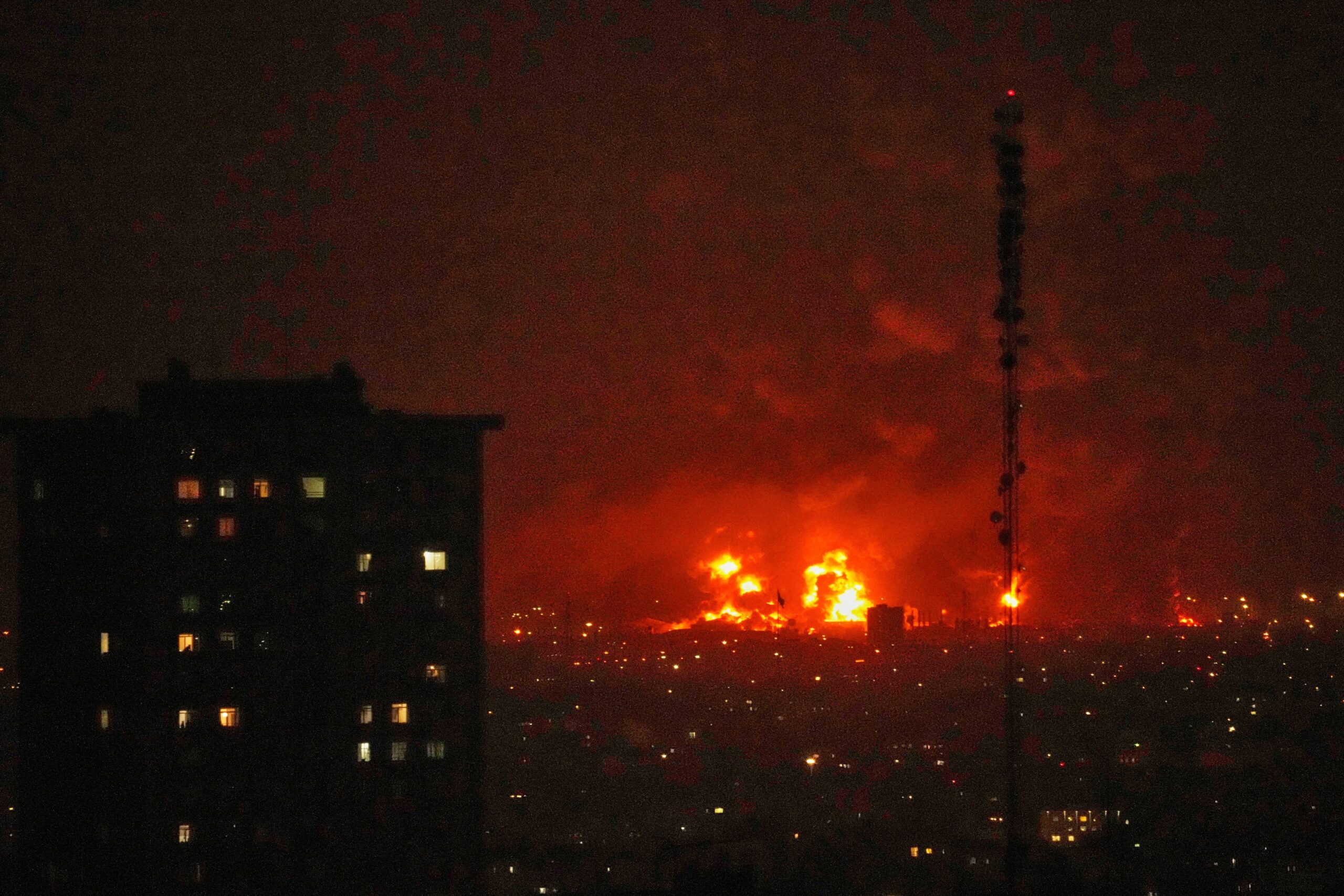
Since the conflict began February 28, the Gulf region has reportedly faced more than 7,000 Iranian missile and drone attacks, with roughly 700 targeting Bahrain. As host of the United States Fifth Fleet and a signatory of the Abraham Accords, Bahrain has been particularly exposed to Iran’s retaliatory attacks, which have targeted not only U.S.- and Israeli-linked assets across the region but also civilian infrastructure.
Beyond posing ongoing security threats, these strikes have placed significant economic pressure on Bahrain. Unprecedented obstructions to the Strait of Hormuz, causing supply-side energy shocks and other disruptions, have compounded conflict-related economic pressures on the country. The disruption of trade through the strait has underscored the Bahraini non-oil sectors’ heavy dependence on secure shipping routes and broader regional stability.
The Iran war has reinforced a persistent feature of Bahrain’s political economy: The country exhibits some degree of economic diversification on paper, but this has not translated into economic resilience in practice. Bahrain has built up important non-oil sectors and initiated sensitive reform processes, but this progress remains constrained by structural weaknesses and acute exposure to precisely the type of geopolitical shocks that Iran has demonstrated a willingness to impose on the region. While Bahrain must continue to manage significant external pressures, the primary challenge facing its economic policymakers comes from within.
Painful Economic Realities
Bahrain did not enter the tumultuous Iran conflict period on particularly strong economic footing. In fact, the small Gulf country possesses among the weakest economic fundamentals of the Gulf Cooperation Council states. In November 2025, S&P lowered its long-term rating on Bahrain to “B” for the first time since 2017, citing challenging fiscal and debt dynamics. And in January 2026, Bahrain announced a fiscal reform package aimed at tackling rising debt through taxes, subsidy adjustments, and spending cuts.
High levels of government debt, year-on-year budget deficits, and government revenue that remains closely linked to the oil sector have fueled persistent concerns. The International Monetary Fund has projected that the country’s general government gross debt will exceed 150% in 2026 and continue rising. After posting an estimated fiscal deficit of 10.8% of gross domestic product in 2025, Bahrain’s deficit is projected to exceed 10% again in 2026. Moreover, hydrocarbons account for around 75% of Bahraini government revenue, leaving the country highly sensitive to restricted maritime traffic through the Strait of Hormuz. Lower oil revenue and surging debt service costs, which absorb around 33% of total government revenue, create a double blow of economic pressures.
Prior to the war, some economic winds were blowing in a favorable direction for Bahrain. Its sovereign wealth fund, Mumtalakat, posted an 87% jump in net earnings in 2025, resulting in consolidated net profit attributable to shareholders of around $1.6 billion. Bahrain also introduced its “National Aviation Strategy for 2026-27” in February. The country’s national air carrier was on the path to an economic recovery and, while the airline and Bahrain’s international airport continue to confront disruptions, Gulf Air’s CEO appeared optimistic about longer-term growth potential.
Managing the Iran War
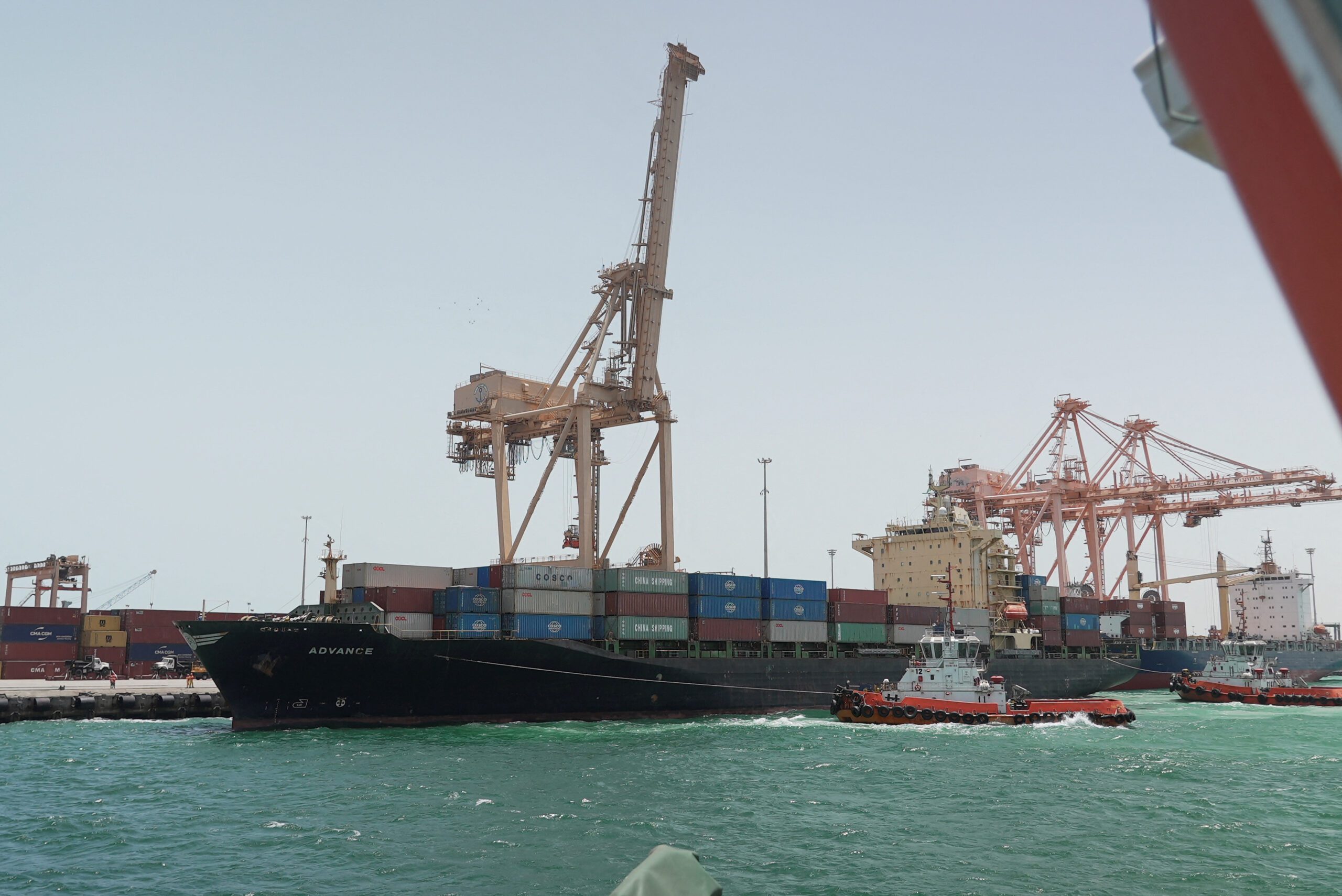
The Iran war exposed a layer of vulnerability for Bahrain that is difficult to mitigate: geography. The country’s heavy dependence on the Strait of Hormuz left it highly exposed to maritime disruptions affecting hydrocarbon exports, aluminum shipments, and broader trade flows. In the first quarter of 2026, the value of Bahrain’s trade dropped by 14.5%.
Bahrain’s Alba, one of the world’s largest aluminum smelters, shut down 19% of its capacity in March because of the closure of the strait. Such disruptions show that Bahrain’s economic diversification cannot fully shield the country from external shocks. While the country has built key non-oil sectors in recent years, with non-oil activities accounting for 85.8% of GDP in 2025, these sectors remain highly dependent on regional stability and were directly exposed to war-related disruptions.
Bahrain’s tourism sector is also vulnerable. It accounts for around 7% of Bahrain’s GDP, with direct and indirect contributions reaching around 13%. But with a population of only about 1.6 million, Bahrain has a limited domestic tourism base and depends heavily on international visitors, especially from Saudi Arabia. This leaves the sector exposed to conflict-related travel disruptions. Moreover, Saudi Arabia’s ongoing efforts to expand its domestic tourism and entertainment offerings may add further headwinds for Bahrain’s tourism sector.
Following the outbreak of the Iran war, Bahrain moved quickly to alleviate the immediate economic impact and prevent war-related disruptions from turning into a deeper crisis. In April, Bahrain’s central bank announced a package of loan deferrals and other measures backed by $18.6 billion in liquidity support to ease pressure on borrowers. The government also introduced wage support for 105,500 Bahraini private-sector workers to receive their April salaries. Additionally, Tamkeen, Bahrain’s labor fund, announced in May an economic support bundle for more than 7,000 small, medium, and micro Bahraini enterprises affected by the conflict. However, these policy initiatives, while well conceived and timely, act mainly as defensive tools. Such measures reduce the immediate impact of the war, but they do not address the deeper fiscal and structural vulnerabilities that existed before the conflict.
The Path Forward
Bahrain still maintains access to international capital markets. In early June, Bahrain raised $1 billion through a 10-year U.S. dollar bond. Strong demand for the issuance and price tightening suggested that investors remain keen for exposure to Bahrain’s credit for now. Earlier in April, the central banks of the United Arab Emirates and Bahrain signed a $5.44 billion currency swap agreement.
There remains a strong expectation that various forms of sovereign support from fellow Gulf countries – namely Saudi Arabia, Kuwait, and the UAE – will permit Bahrain to continue managing fiscal and external pressures. Yet mounting economic needs in neighboring countries could impact the scale and scope of regional assistance available to Bahrain, especially if a comprehensive resolution to the conflict remains elusive.
At the same time, Bahrain’s economic issues are intertwined to an extent with domestic politics. Bahrain’s parliamentary elections were scheduled for late 2026, but a royal order extended the current legislative term one year, pushing elections until 2027 at the earliest. Eventual elections are unlikely to produce meaningful policy shifts. However, the gradual lead-up to elections may provide a platform for citizens to air socioeconomic grievances, indicate policy preferences, and even call for incremental reforms.
The Iran war has tested not only Bahrain’s economy but also the broader Gulf economic model, showing that economic diversification has not necessarily eliminated exposure to shared security threats. Bahrain remains especially vulnerable because it entered the conflict with fewer fiscal buffers than its neighbors. While its swift response has helped ease immediate pressures, a durable recovery will require continued fiscal reform and effective economic resilience-building efforts. The easing of hostilities may give policymakers more room to pursue these crucial tasks.
The views represented herein are the author's or speaker's own and do not necessarily reflect the views of AGSI, its staff, or its board of directors.
The announcement of a new defense-focused free zone in Abu Dhabi emerges at a moment of acute national security concern but relies on an established economic development playbook.
Gulf capitals are facing immediate policy choices around how to restore order in a regional setting that is greatly changed – for the worse – as a result of the Iran war.
Newly announced joint ventures to build rare earth refineries in Saudi Arabia are part of a larger strategy to capitalize on Western markets’ need for rare earth elements.
New investment deals, mainly from the Gulf states and Turkey, are opening a path for Syrian reconstruction. But the fragile security situation and financial environment remain hurdles for foreign investment.
France is positioning to be a more influential actor across the Middle East, but the European powerhouse is most likely to see immediate traction on the economic tracks that run to and from the Gulf.
The announcement of a new defense-focused free zone in Abu Dhabi emerges at a moment of acute national security concern but relies on an established economic development playbook.