The UAE’s decision to halt trade and commercial ties with Iran reflects an exercise in applying carefully calibrated geoeconomic pressure amid an uncertain and evolving geopolitical context.
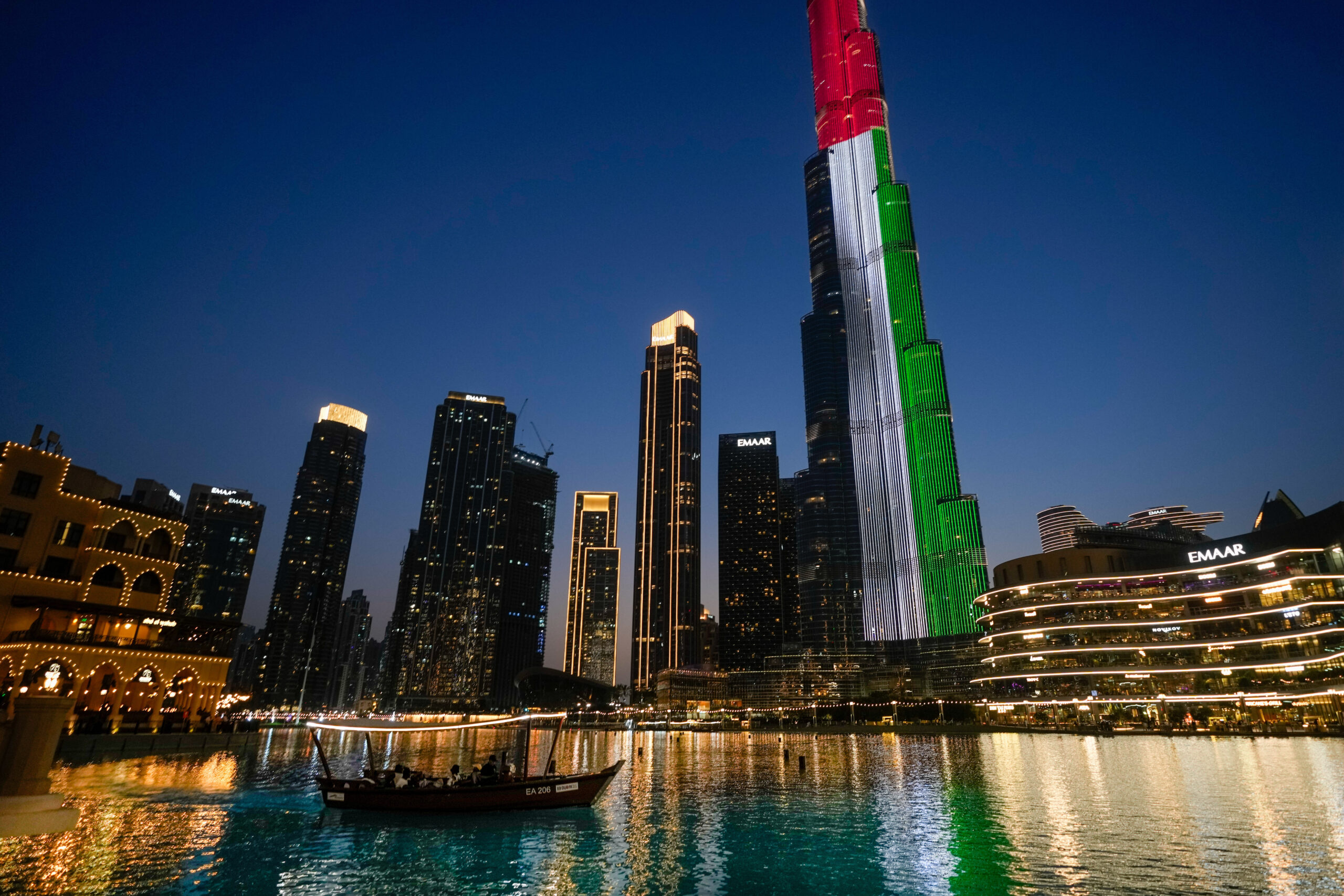
A boat takes tourists to watch a Dubai fountain show, as Burj Khalifa, the world's tallest building, is illuminated with the United Arab Emirates national flag colors in Dubai, UAE, May 6. (AP Photo/Altaf Qadri)
During an annual testimony on Capitol Hill on September 15, Treasury Secretary Scott Bessent said, “I think that we have seen some very forward-facing statements from the UAE.” The comments came amid U.S. efforts to rally support for tightening economic pressure on Iran. In August, the United Arab Emirates announced that it would halt all trade, commercial exchanges, and financial dealings with Iran. Economic ties between the UAE and Iran provide geoeconomic leverage for Abu Dhabi, which the Emirati government appears increasingly willing to utilize after several months of the Iran war.
The UAE announced a suspension of economic ties with Iran immediately after accusing Tehran of firing two ballistic missiles at the country, as neighboring Gulf Arab states remain in the crosshairs of Iranian retaliatory attacks. Emirati frustration over disproportionate levels of Iranian targeting in the early months of the war likely factored into the Emirati government’s willingness to more aggressively use geoeconomic instruments. While the UAE’s defense system largely prevented widespread damage and casualties, the attacks nevertheless resulted in a number of deaths and hundreds of reported injuries in the country.
The Emirati move came ahead of the August 24 roll out of the United States’ “Operation Economic Outcast: Total Isolation of the Iranian Regime,” which the administration described as the “single greatest financial offensive ever mounted against an adversary.” The timing demonstrates continued UAE alignment with U.S. foreign policy toward Iran.
President Donald J. Trump warned that any country providing a lifeline to Iran would face “TREMENDOUS” economic consequences. For example, the expanded U.S. sanctions regime included a proposed rule to cut off Bank Misr UAE’s access to the U.S. financial system. The UAE’s central bank subsequently announced that it “decided to conduct a special and urgent examination” of the bank’s activities.
Economic Openness, and the Flip Side
UAE officials describe their country’s economic model as one “based on openness, continuity, and adaptability to global changes.” The commitment to an open economic framework that welcomes global trade and investment with minimal constraints has enabled an economic relationship with Iran, despite the country being among the most economically marginalized in the world. A population of several hundred thousand Iranian residents of the UAE – mostly located in Dubai – and the close geographic proximity have likewise been organic drivers of economic relations.
The UAE can manage a self-imposed disruption of trade and commercial ties. Emirati exports to Iran reached an estimated $21 billion in 2024, which accounted for about 30% of Iranian imports. Only about $7 billion worth of goods flowed in the other direction, from Iran to the UAE. Bilateral trade remained a fraction of the UAE’s $1.4 trillion in total foreign trade recorded that year.
Bank Melli – Iran’s largest lender – has long maintained a presence in Dubai, though the U.S. Treasury has sanctioned the manager of the bank’s Dubai branch. Iranian academics have documented how the economic relationship between the UAE and Iran fluctuates according to the prevailing political climate between the two countries as well as external factors, such as the state of U.S.-Iranian relations.
The impact of new constraints on the economic relationship between Iran and the UAE will vary across the country’s emirates. Restricted trade flows will disproportionately affect Dubai, the UAE’s trade and investment hub, and some northern emirates where even modest levels of Iranian commercial activity play a relatively more important role in their smaller economies than that of the capital, Abu Dhabi. There is likely to be additional upward pressure on food prices across the country, though the UAE’s Ministry of Economy and Tourism has been monitoring points of sale since the outbreak of the Iran war to ensure price stability of essential goods.
By contrast, Iran is under significant economic pressure with no end in sight. Authorities are trying to manage gasoline shortages in the oil-rich country. The value of its currency has reached record lows. Inflation is expected to reach nearly 70%, according to the International Monetary Fund. Average Iranians face escalating difficulties in affording basic necessities, including food and medicine. Systemic corruption has eroded the country’s economic foundations, despite Iran having been able to build up a formidable capacity to manage sanctions-related pressures. Iran’s government will nevertheless be concerned about socioeconomic grievances translating into renewed protests at some stage.
Tehran will likely seek to exploit other economic linkages to the global economy. In April, Pakistan announced the opening of six overland transit routes as part of a formalized road corridor to Iran. The associated “Transit of Goods through Territory of Pakistan Order 2026” from the Ministry of Commerce permitted goods from third countries to be transported to Iran and was described by one Pakistani official as “a significant step toward promoting regional trade and enhancing Pakistan’s role as a key trade corridor.” A China-Central Asia-Iran transport corridor is likewise emerging as another workaround for shipments to and from Iran that circumvents maritime routes.
A Cold Dish of Sticks and Carrots
The Emirati government does not appear set on irrevocably severing every economic link with Iran. Even if this were a policy goal, the established cross-littoral trade relationships and informality would be difficult to fully stamp out. Instead, Abu Dhabi is signaling its willingness to clamp down on economic ties that are important for Iran. By highlighting the economic stakes, Abu Dhabi is also implicitly revealing an incentive for Tehran to shift its behavior.
This reflects the UAE’s dual strategy of deterrence and engagement with Iran to minimize negative spillovers from the Iran war. On the sidelines of a recent BRICS summit in Delhi, Abu Dhabi’s crown prince met with the Iranian president and “underscored the importance of supporting efforts to ease tensions, promote de-escalation, and strengthen regional stability.”
Until the trajectory of the Iran war becomes clearer, the UAE is likely to continue adopting a hard line against Tehran – often in coordination with the United States – while also leaving the door open for pragmatic engagement with Iran directly and through other global partners. Geoeconomic instruments will remain an important part of this challenging balancing act.
The views represented herein are the author's or speaker's own and do not necessarily reflect the views of AGSI, its staff, or its board of directors.
Saudi Arabia’s ability to maintain its reputation as a reliable supplier in the months ahead will depend on how quickly it can repair damaged assets and keep several imperfect routes operating at the same time.
How the Gulf states choose to invest now could determine not just how they survive this crisis but how they sustain their role as both allocators and magnets of capital and superpowers in the global energy system.
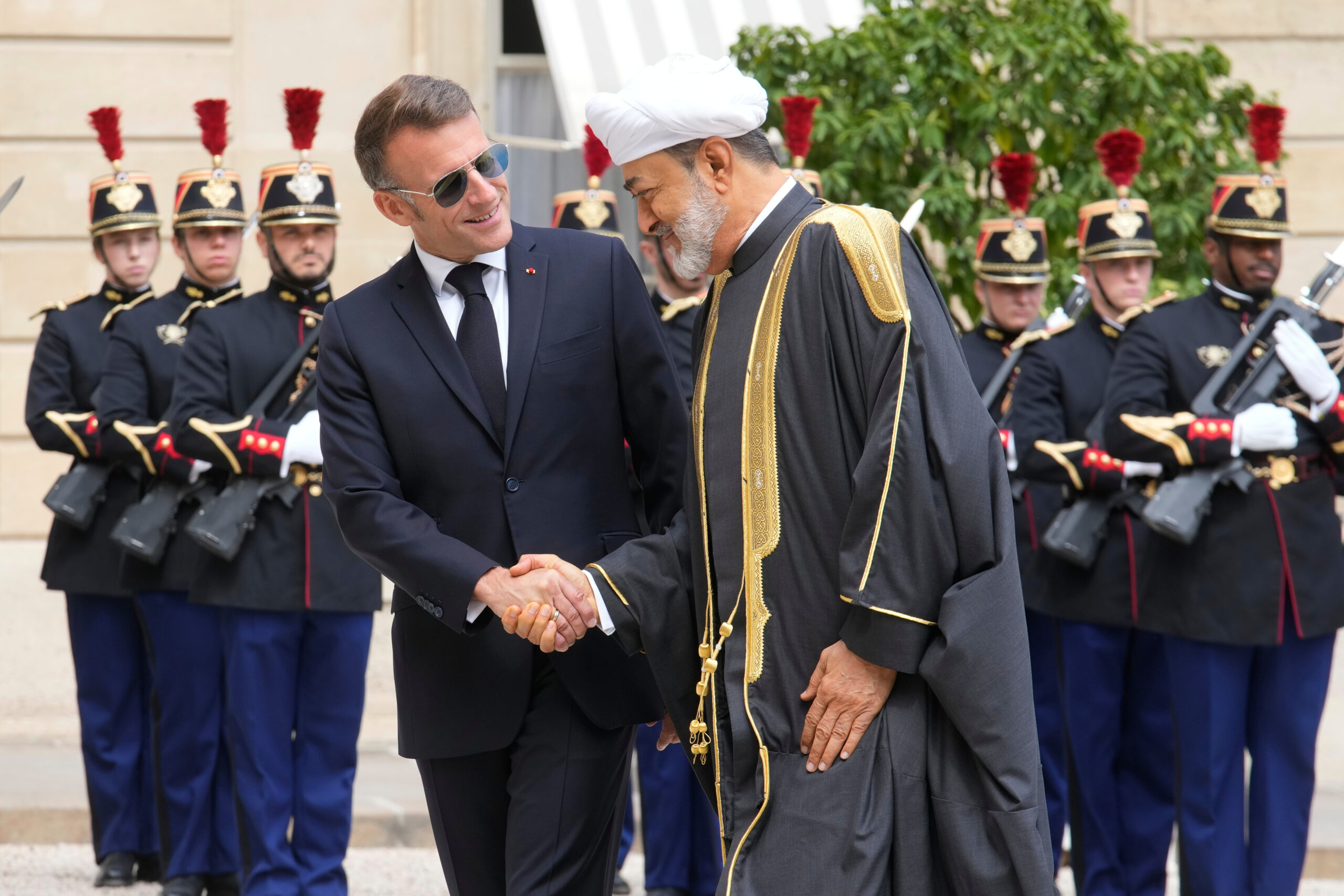
France is positioning to be a more influential actor across the Middle East, but the European powerhouse is most likely to see immediate traction on the economic tracks that run to and from the Gulf.