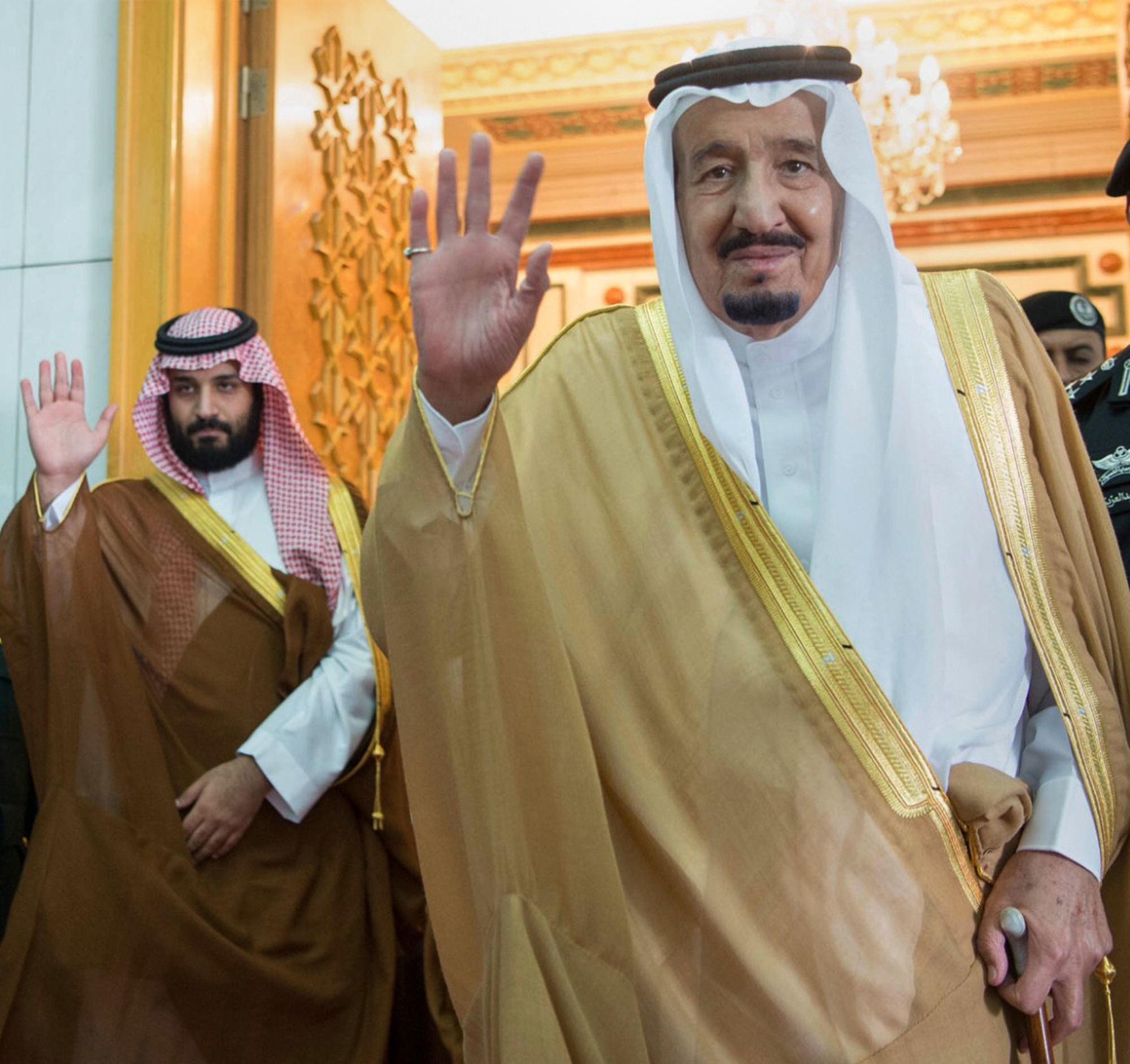
Saudi King Salman, right, and Defense Minister and Deputy Crown Prince Mohammed bin Salman
This post is part of an AGSIW series on Saudi Vision 2030, a sweeping set of programs and reforms adopted by the Saudi government to be implemented by 2030.
On April 25 the Saudi government reached the one-year mark since the launch of its ambitious program of governmental reform, Saudi Vision 2030. Just days prior, King Salman bin Abdulaziz offered a course correction of sorts: a raft of proclamations shifting policies and shuffling government appointments. The changes map the difficult course the Saudi leadership is pursuing in a time of reduced oil prices, a prolonged military effort in Yemen, and a momentous generational transition in power. The personnel changes represent a frank acknowledgement of the need for new leadership on the Yemen portfolio, while hinting at a new base of political support among young royals. Meanwhile, the policy changes mark a surprising attentiveness to the opinion of a Saudi public finding its voice through social media.
Backtracking on Austerity
The launch of Saudi Vision 2030 in April 2016 was unconventional. It came in the form of a sit-down conversation with Deputy Crown Prince Mohammed bin Salman (MbS), who encouraged his television interviewer, and a skeptical Saudi public, to accept that the era of oil dependence is over. The reality of a new austerity reached the public in truth in September 2016, when the government announced an across the board elimination of public sector allowances and bonuses. Overtime, travel, and other bonuses make up a sizeable portion of the overall wage income of Saudi civil servants in some professions, such as education. These cuts in public wages followed a January 2016 reduction in subsidies for power and water, which resulted in higher prices on gasoline and services.
These austerity measures prompted an immediate reaction from the Saudi public, who voiced their dissatisfaction via social media and especially messaging apps such as WhatsApp. Visiting the kingdom at that time, I witnessed the sharply negative shift in attitude; with many Saudis feeling the pinch, enthusiasm for the deputy crown prince’s Saudi Vision 2030 program was clearly eroding. Within a month, the government marched out three ministers on a popular Saudi talk show to defend the government’s austerity measures. Their intervention, which included the disparaging of state employees’ work ethic, was widely panned by the public, leading to the removal of the veteran finance minister, Ibrahim Assaf, at the end of October 2016. More recently, over social media, Saudis threatened protests in four major cities.
On April 22, King Salman restored bonuses and allowances for state employees. While the government said the move was possible because of rising revenue, it was a clear effort to remove this flashpoint of public dissatisfaction and source of mounting disappointment in the rule of King Salman and the economic leadership of his son. For good measure, the reversal on the elimination of public sector allowances was matched by the removal and legal prosecution of the minister of civil service, Khaled Al-Araj, who had been the target of a social media campaign following the appointment of his underqualified son to a senior position in the Ministry of Municipal and Rural Affairs. Both moves demonstrate a genuine sensitivity to public opinion, which now appears to be setting distinct limits on government cost-saving measures, and a new, if imperfect and sporadic, check on government malfeasance.
New Leadership on Yemen
The pursuit of the substantial government reforms of Saudi Vision 2030 have been made more difficult by the environment of regional instability, and the Saudi decision to intervene in regional conflicts, particularly in Yemen. The intervention in Yemen was initially welcomed by a public frustrated with the inaction of the late King Abdullah bin Abdulaziz against perceived Iranian interventionism, most notably in Syria. The public, and especially those associated with Islamist networks, showed some enthusiasm for Operation Decisive Storm’s “decisiveness” later being taken as a symbol and watchword of King Salman’s new reign.
That public support has grown more tentative as the war has persisted and its costs have mounted. Public signs of dissatisfaction include attention to the plight of low-ranking soldiers serving on the front lines, documented on social media. Soldiers serving in the Yemen campaign were exempted from the 2016 public sector cut in allowances, and were granted a two-month salary bonus in the recent royal decrees.
The Saudi course correction also included a significant personnel change in the Yemen portfolio. The head of the army, Lt. Gen. Eid al-Shalawi, was replaced by a royal, the former head of special forces, Prince Fahad bin Turki. As the new commander of Saudi ground forces, Prince Turki will take over primary responsibilities for defending Saudi Arabia’s southern border from Yemeni rebel incursions.
New Generation Transition Accelerates
The personnel changes go beyond shoring up public support for Saudi Vision 2030 and the Yemen war, to address the always important consideration of royal support for the ruling coalition. Of special note is the appointment of a raft of new young princes as deputy governors of provinces. Indeed, this aspect of the king’s decrees was the one most noted by Saudi commentators, who hailed this renewal of youthful leadership in Saudi provinces as the most significant change.
To the degree that reported leaks of dissatisfaction among third generation princes with the concentration of power under MbS are correct, this should go some way toward broadening that base of support. It also accelerates the assignment of greater responsibility to a more diverse group of young royals.
At the same time, other changes hint at a further centralization of leadership positions and key decision making bodies under King Salman and his immediate descendants. Most intriguing is the creation of a new national security office, to be run out of the royal court. While the composition and responsibilities of this new entity are as yet unclear, it appears to have the potential to impinge upon the authority of the Council of Political and Security Affairs headed by the crown prince and minister of interior, Mohammed bin Nayef. The Council on Economic Development Affairs and the Supreme Council for Saudi Aramco are both headed by MbS.
Two other sons of King Salman were appointed to the key positions of minister of state for energy affairs and Saudi ambassador to the United States, continuing the empowerment of young royals. The new Saudi envoy to Washington, Prince Khaled bin Salman, is a former fighter pilot and a full brother of the deputy crown prince.
Political Consolidation, Economic Uncertainty?
Taken as a whole, King Salman’s decrees appear to be an effort to shore up public and political support for his reign, even at the risk of weakening austerity measures. They also continue the remarkable transition of responsibility to younger technocrats and the third generation of Saudi princes, albeit with prime authority retained by King Salman and his direct descendants. The larger question, though, remains unanswered: Will the reforms outlined in Saudi Vision 2030 secure a viable economic future for the next generation? And does this course correction mark a savvy adjustment to secure backing for the tough road ahead, or a loss of nerve in a tough campaign of necessary austerity? The twin realities of a more engaged Saudi public and a less pliable oil market will prove a difficult balancing act for the kingdom in transition.
The views represented herein are the author's or speaker's own and do not necessarily reflect the views of AGSI, its staff, or its board of directors.
As the September deadline for the U.S. troop drawdown approaches, Iraq’s period of comfortable neutrality is ending, but the country’s policymakers should not rush into unsustainable alignments.
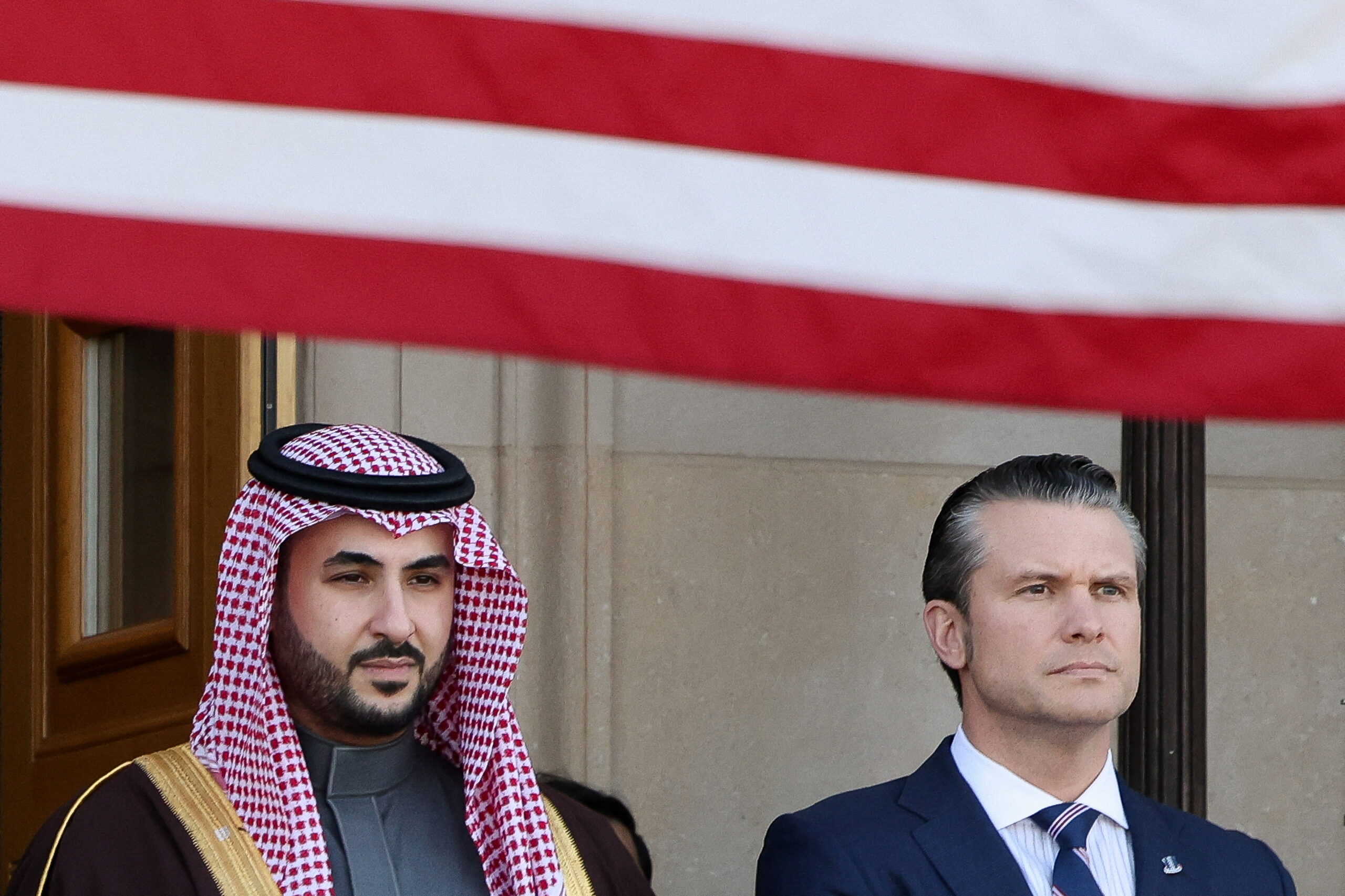
The war between the United States and Iran revealed the vulnerability of static U.S. bases, while also showcasing Gulf Arab states’ capacity – bolstered with U.S. hardware and training – to intercept most Iranian strikes on their own, raising new questions about U.S.-Gulf security partnerships.
Saudi-Emirati public reconciliation, a result of hard-earned lessons about the difficulty of going it alone, bodes well for a region at war and under attack, but there are still issues left to resolve.
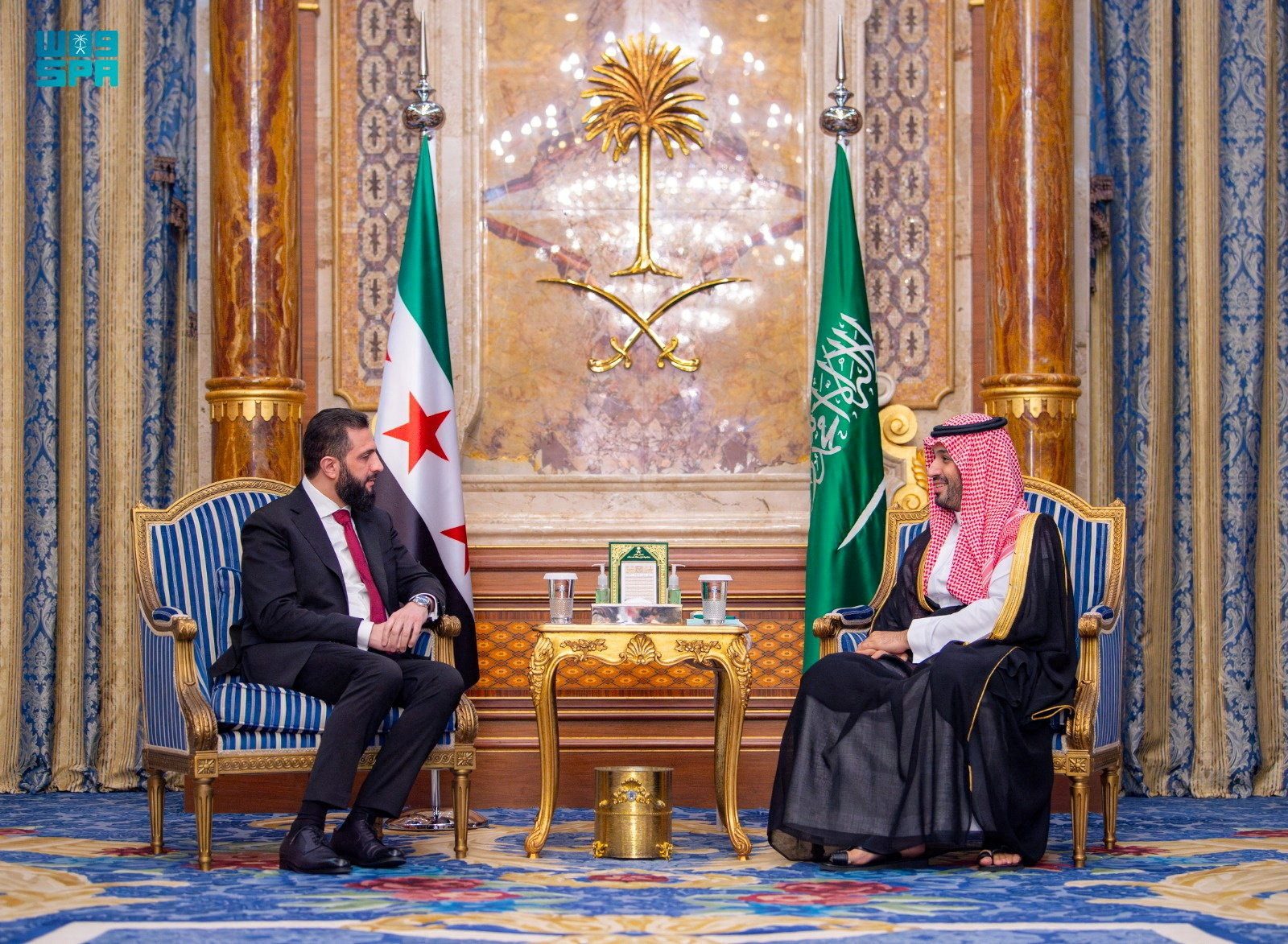
Syria hopes to use the Iran war to deepen its connection to its Gulf Arab partners. Can it compete for inclusion within the regional security order and emerging trade corridors?
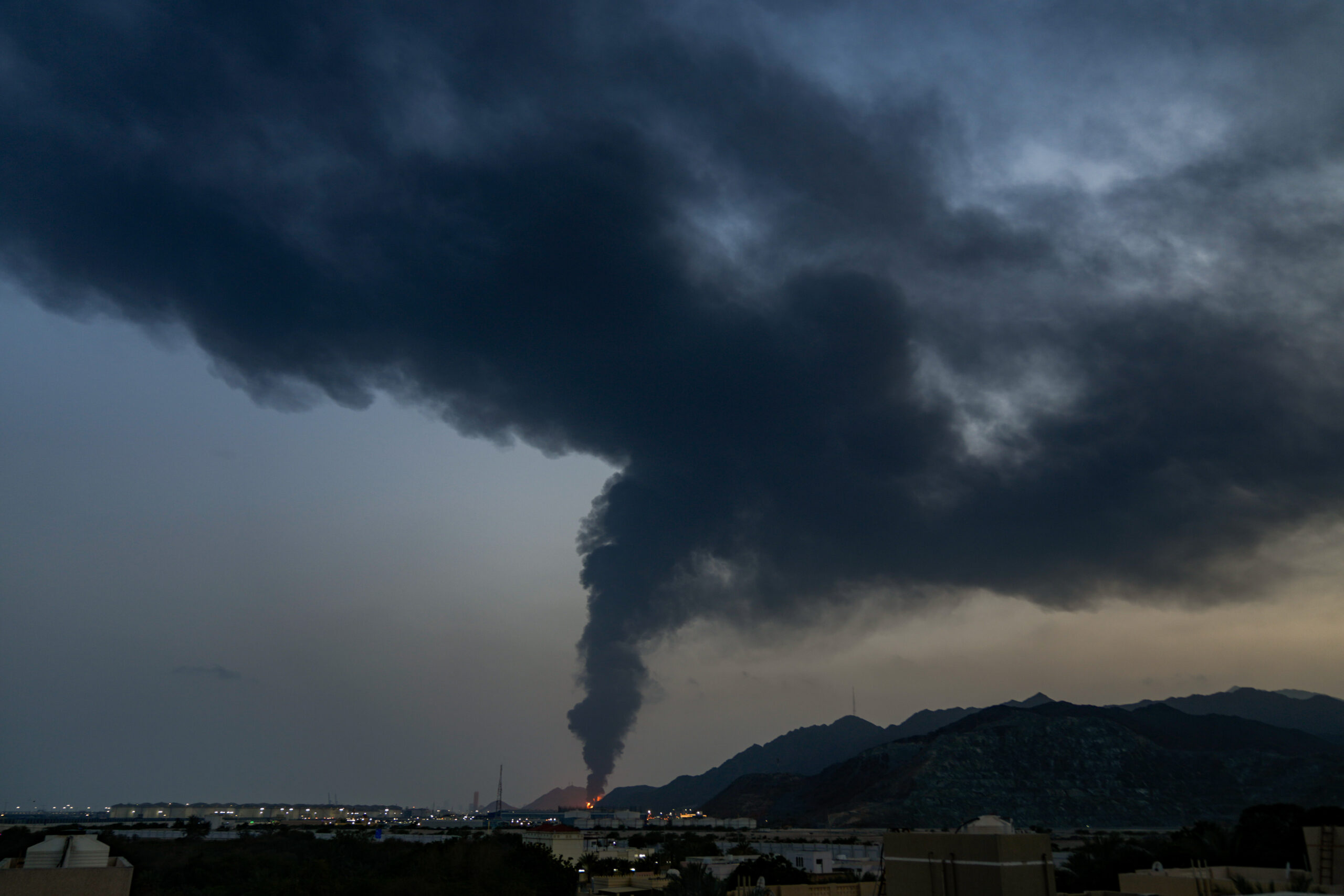
The imperative for Gulf states to unify their position has grown since the onset of Iranian attacks on their countries. Yet under conditions of uncertainty about the U.S. position and the war's outcome, Gulf states are demonstrating differing regional alignments and preferences for managing the crisis.
Caught between Iranian strikes and U.S.-Israeli pressure to join the fight, Gulf Arab states strive to maintain their autonomy over decision making, playing defense and preserving the space to maneuver when the war ends.