Gulf producers have raised billions of dollars by selling stakes in pipeline revenue while retaining ownership and operational control. But what happens when the pipelines stop working?
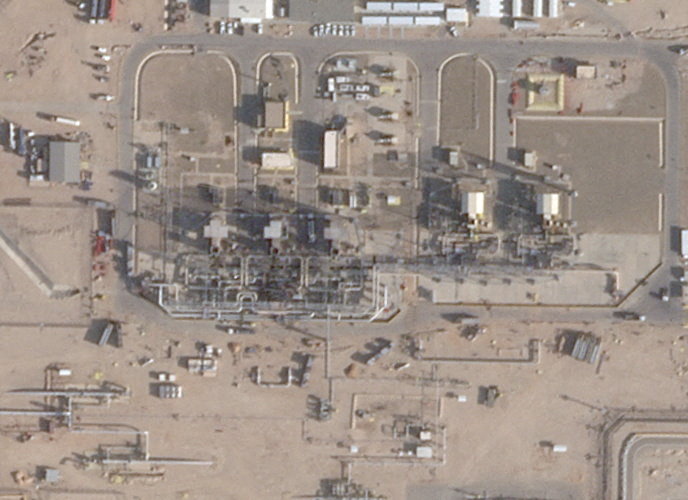
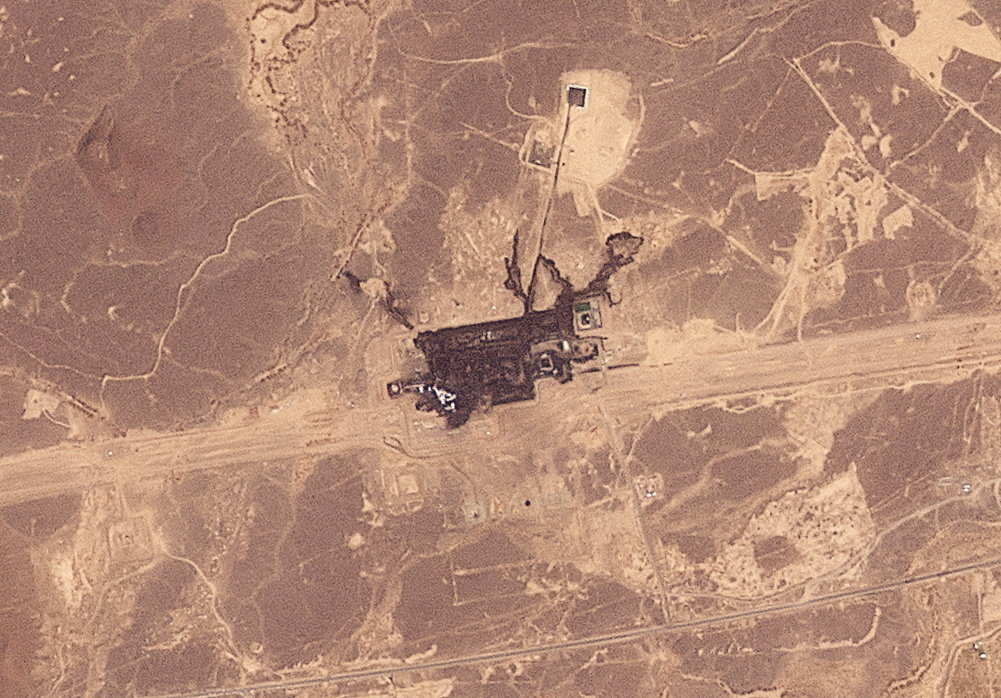
A satellite image shows damage at a Saudi oil facility serving the East-West pipeline, in the Riyadh region, Saudi Arabia, September 16. (Planet Labs PBC/Handout via REUTERS)
At the October 12 World Petroleum Congress in Riyadh, Saudi Energy Minister Prince Abdulaziz bin Salman set out plans to raise the kingdom’s pipeline crude oil export capacity to as much as 10 million barrels per day. A domestic gas line could be temporarily converted to carry crude, adding up to 1.2 mb/d within seven to eight weeks. Over the next two to three years, upgrades to East-West pumping stations and other infrastructure could lift total pipeline capacity to around 10 mb/d, allowing more Saudi crude to reach the Red Sea port of Yanbu without passing through the Strait of Hormuz.
The energy minister was speaking eight days after the second attack on the East-West pipeline in a month. Drones hit multiple pumping stations along the pipeline September 10, and Kpler tracked that the resulting halt to operations lasted from September 11 to 22. Flows stopped again October 4 after a strike on the Khurais pumping station east of Riyadh claimed by Yemen’s Houthi rebels. Energy analyst Kate Dourian set out what those interruptions mean for the limits of Saudi export flexibility.
But those interruptions have had further implications for the financial arrangements behind that infrastructure as well. The East-West pipeline runs about 745 miles from the kingdom’s Eastern province to Yanbu on the Red Sea and had been carrying around 5 mb/d after Iran effectively closed the Strait of Hormuz in early March. The April attacks temporarily removed about 700,000 b/d of capacity. The Abu Dhabi National Oil Company, Saudi Aramco, and Kuwait Oil Company have each sold minority positions in crude pipeline companies to international investors over the past seven years, and the latest outages are the most serious test of what those arrangements entail.
What the Investors Bought
In February 2019, ADNOC agreed to sell 40% of ADNOC Oil Pipelines to funds managed by BlackRock and KKR for about $4 billion in upfront proceeds. The original agreement covered ADNOC’s interest in 18 pipelines over 23 years, covering more than 466 miles, with the investment vehicle collecting a tariff from ADNOC on its share of the volumes that flow through the network. Investments by the Abu Dhabi Retirement Pensions and Benefits Fund and GIC, a Singaporean sovereign wealth fund, reduced ADNOC’s holding to 51% by September 2019, lifting the combined investment to $4.9 billion. The original press release was direct, however, about what was not sold: “Sovereignty over the pipelines and management of pipeline operations remain with ADNOC.”
Saudi Arabia followed the same path on a larger scale. Aramco sold 49% of Aramco Oil Pipelines Company to a consortium led by EIG and including Mubadala in June 2021, raising $12.4 billion against a 25-year lease and leaseback of its stabilized crude network. Aramco kept 51% and retained “full ownership and operational control” of the pipelines, with oil output remaining subject to production decisions made by Saudi Arabia.
Kuwait followed the same model in July 2026, five months into the Iran war. Kuwait Oil Company signed a 20.5-year lease-and-leaseback agreement valued at $16 billion covering all 13 of its pipelines with a consortium of Blackstone, Brookfield, and KKR. The three investors will share a 49% stake equally, while KOC retains 51%. The transaction is expected to generate $7.85 billion in upfront proceeds for KOC upon closing, supporting KPC’s capital expenditure plans. As with the ADNOC and Aramco deals, Kuwait retains national ownership and operational control while bringing in international capital, without restricting refining throughput or production volumes.
The three transactions share a common structure. What the investors acquired in each case is a contractual right to pipeline revenue, held as a minority stake in a locally incorporated company, with the national oil company serving as both operator and paying counterparty.
That shapes what foreign participation can plausibly be expected to do.
The repeated attacks on Saudi Arabia’s pipelines suggest that foreign investment offers little deterrence on its own. Investors hold financial interests but have no responsibility for protecting the infrastructure, which remains under state control. They still face financial risks, although contractual guarantees can protect much of their income when operations are interrupted. Such investments may strengthen foreign governments’ interest in Gulf export security, but they offer no direct protection against an attack.
Who Pays When the Oil Stops
The more relevant question is not who owns the pipelines but who keeps paying when they stop working. Aramco’s 2021 announcement stated that its subsidiary would receive a tariff for stabilized crude oil flows backed by minimum volume commitments. ADNOC’s 2019 arrangement was built the same way, with a tariff payable by ADNOC and underpinned by long-term minimum volume commitments, which is why its investors spoke at the time about the downside protection the structure afforded.
A January 2022 offering memorandum issued by EIG Pearl Holdings, the financing vehicle behind the consortium’s stake, gave more detail on the mechanics of the Aramco deal. The minimum payment would be calculated using 75% of an agreed upon maximum throughput benchmark and would be due whether the pipelines are available and regardless of whether a force majeure event has occurred, with additional throughput-linked payments and a balancing mechanism reflecting excesses and shortfalls across periods. The force majeure provisions include war and terrorism events and do not relieve Aramco of the minimum payment obligation while the agreement remains in force. At the same time, the underlying agreement leaves Aramco responsible for the pipelines and bearing the risk of physical loss or damage.
Several qualifications pertain to the recent outages. The tariff covers the wider stabilized crude network rather than the East-West pipeline alone, so a shutdown on one section does not mean revenue from the whole system stops. Part of investor income tracks actual throughput, so the protection is substantial rather than total. Prolonged force majeure can eventually allow termination, with refund provisions attached. A contractual promise is only as good as the payer, so investors remain exposed to Aramco’s ability to pay. What the documents established was an allocation of risk not a measured outcome. Without payment or throughput data from the relevant quarters, neither Aramco’s loss nor that of its investors can be quantified.
Kuwait’s July announcement describes a volume-based tariff without disclosing whether it includes a minimum volume commitment.The two are not mutually exclusive: Saudi Arabia’s tariff is volume based but carries a guaranteed minimum. Reuters Breakingviews noted that Kuwait had not disclosed the level of its tariff or the associated guarantees, suggesting these might be more generous than in earlier Gulf deals given the heightened security risk. Without those details, it is impossible to determine how much of the financial risk from a pipeline outage falls on investors rather than KOC.
When the Investors Change
The acquisition of 40% of ADNOC Oil Pipelines by funds managed by BlackRock and KKR was the first time overseas managers had bought into a Gulf national oil company’s infrastructure. In April 2024, Lunate’s Long Term Capital Fund had acquired that stake by purchasing the jointly held special purpose vehicle through which the two firms owned it, five years after the original investment.Lunate inherited the same deal: a minority stake, a tariff backed by ADNOC’s volume commitments, and no role in protecting the pipelines.
What to Watch in the Next Deal
For Washington, foreign financial participation should not be seen as a substitute for physical resilience or explicit security commitments. The transaction documents give investors no role in protecting the assets whose revenue they hold, a structure compatible with these governments’ insistence on retaining sovereign control. Nor has foreign financial participation prevented repeated attacks against the infrastructure.
Aramco may return to a similar structure as it expands pipeline capacity, particularly if it wants outside capital without ceding operational control, though corporate debt, internal cash, and conventional project financing would serve that requirement too. Future agreements should be judged by how they allocate interruption risk, including their minimum payments, force majeure provisions,and termination terms. Greater exposure could require higher investor returns, but neither foreign ownership nor headline transaction value reveals how much risk has changed hands.
The views represented herein are the author's or speaker's own and do not necessarily reflect the views of AGSI, its staff, or its board of directors.
Saudi Arabia’s ability to maintain its reputation as a reliable supplier in the months ahead will depend on how quickly it can repair damaged assets and keep several imperfect routes operating at the same time.
The conflict has turned renewables into security assets at home, and rendered them far more expensive to build out, while Gulf states send clean energy capital abroad.
Despite billions of dollars in infrastructure damage and economic loss, Gulf sovereign wealth funds are still investing in clean energy projects as a pathway to resilience.
The Iran conflict has arrived at the worst possible moment for Gulf sustainable finance, a sector already navigating fiscal strain, a global ESG backlash, and the unresolved tension between hydrocarbon revenue and transition capital.
The Gulf is defying global trends and investing in sustainable-labeled projects, and if those labels translate to real guidelines, the region could become a global benchmark for transition finance.