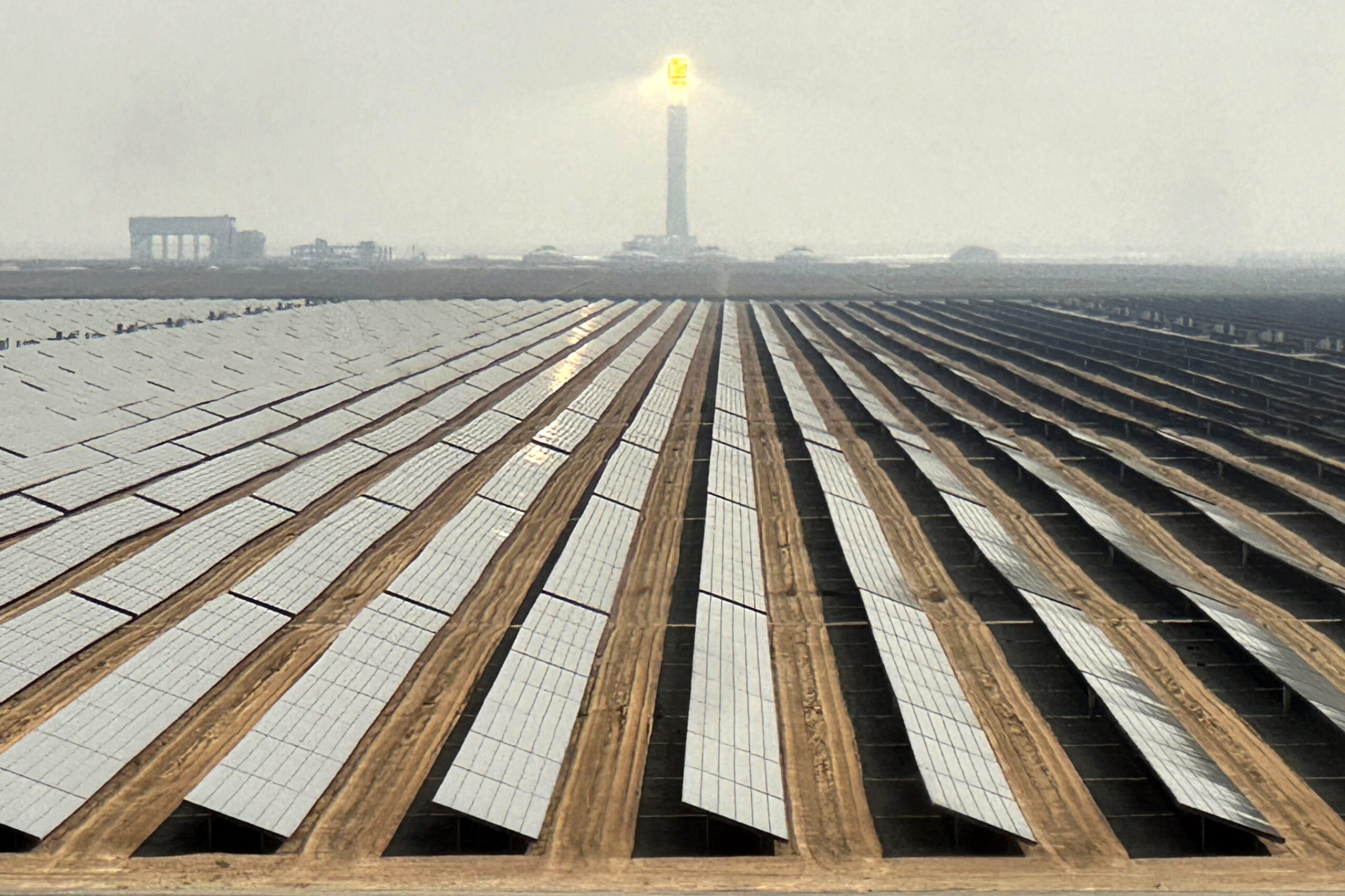
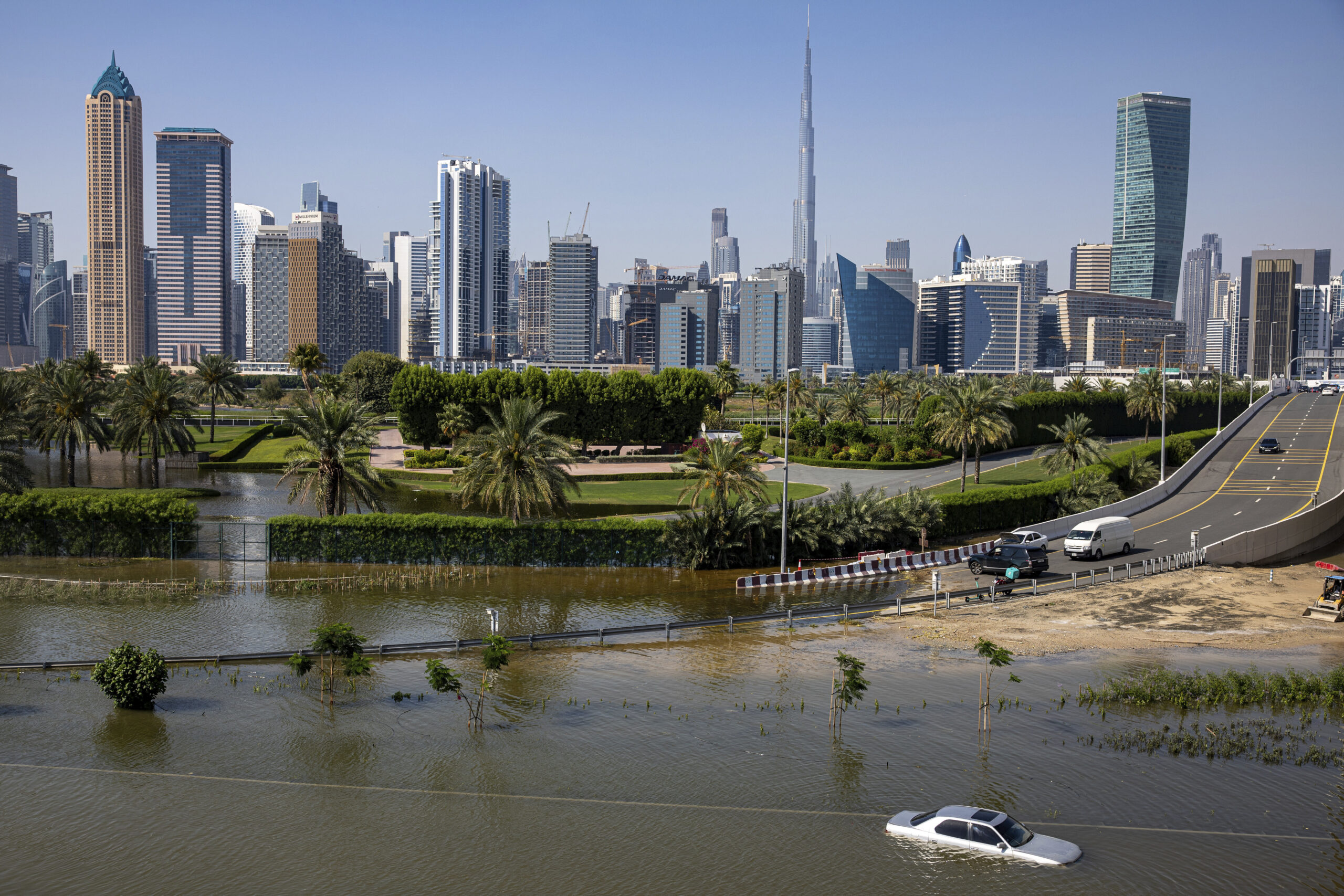
Despite billions of dollars in infrastructure damage and economic loss, Gulf sovereign wealth funds are still investing in clean energy projects as a pathway to resilience.
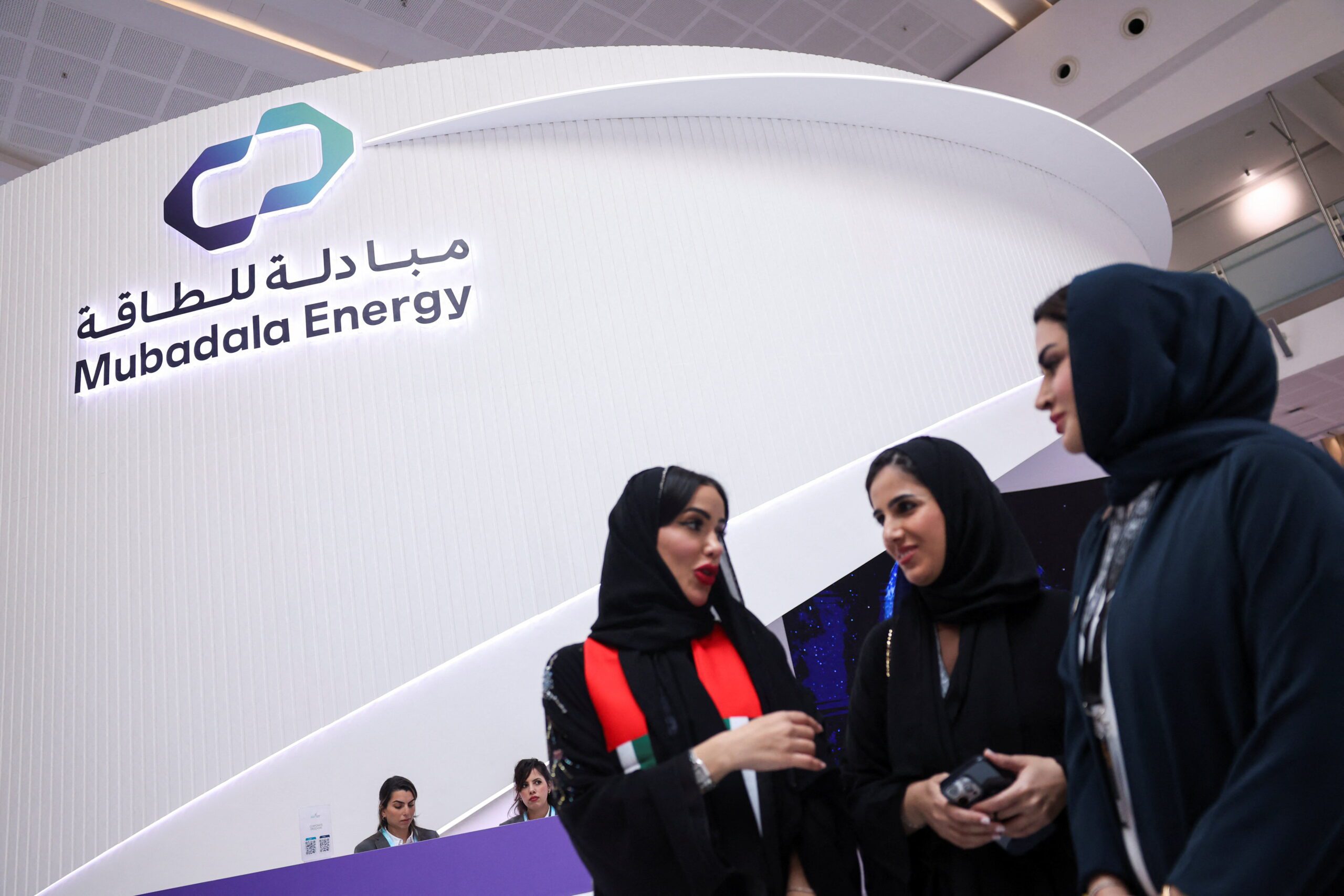
People stand near the booth of Mubadala during the Abu Dhabi International Petroleum Exhibition and Conference in Abu Dhabi, United Arab Emirates, November 3, 2025. (REUTERS/Amr Alfiky)
Despite Iran’s closure of the Strait of Hormuz, capital from Gulf sovereign wealth funds keeps flowing. According to Global SWF data, Saudi Arabia’s Public Investment Fund, the United Arab Emirates’ Mubadala, and Qatar Investment Authority together deployed close to $25 billion in fresh capital during the first quarter of 2026, despite active conflict over one-third of that period, a pace that would have pointed toward a record year under normal conditions.
The composition of much of that capital focused on clean energy projects. Alterra, a UAE-backed climate vehicle seeded with $30 billion at the COP28 United Nations climate conference, announced its commitment to invest in KKR’s Global Climate Transition Strategy, which focuses on energy storage, electrification, and green fuels. Alterra’s chief executive, Majid Al Suwaidi, said the fund has placed around $6.5 billion of its opening allocation. Mubadala has also been active: It committed almost $350 million to Rezolv Energy to support a clean power rollout across central and eastern Europe, took an equity position in U.S.-based renewable asset management firm Power Factors, and invested $325 million in Hornsea 3, Orsted’s North Sea offshore wind project, which is slated to become the world’s largest facility of its kind on completion. These are not transactions in the pipeline before the conflict; they are new commitments made since the start of the war.
The strategic logic is clear: Beyond growth strategies, programs such as Saudi Vision 2030 and the UAE’s technology and renewables push were also about building resilience into economies developed around a single export corridor. When the closure of a chokepoint such as the Strait of Hormuz can freeze regional revenue within days, assets that sit entirely outside that supply chain are essential. The crisis with Iran has confirmed that logic.
The role Gulf sovereign wealth funds play in the energy transition goes well beyond capital provision. A detailed mapping by the Orient Research Foundation shows how these funds take on early-stage risk in sectors where private capital often hesitates, bring projects to a scale and bankability that draw in commercial investors, and build out investable markets aligned with national diversification goals and the global climate agenda. That structural function has become even more acute under conflict conditions: The funds capable of holding patient positions through volatility are the ones investing right now.
The sovereign tier may be holding, but the layer beneath it is not. Private developers, family offices, and mid-tier project sponsors are operating in a materially different risk environment where insurance premiums, financing terms, and counterparty confidence are being revised on an almost weekly basis. Road shows and regional meetings have been cancelled or delayed on safety grounds. Climate fund executives cautioned that the longer the conflict runs, the more severe the impact on fund flows into the region will be.
The United Nations Development Program puts the potential cost to Gulf economies at between $120 billion and $194 billion, which would exceed the entire region’s gross domestic product growth in 2025. But bond markets are telling a different story: The Arab Center DC highlighted how Abu Dhabi’s bond issuance in March was oversubscribed and priced at only 16 basis points over analogous U.S. Treasuries. S&P, meanwhile, affirmed its AA rating for the emirate suggesting its fiscal headroom and policy flexibility would act as an “effective buffer against the impacts of regional conflict.”
Abu Dhabi’s sovereign wealth funds could redirect capital to domestic resilience priorities if the strait remains blocked, with ADIA likely to shift toward more liquid markets and Mubadala tilting toward supply chains and economic stabilization. But sovereign deployment is continuing for now. The question is what happens at month four or six if the strait stays contested and reconstruction costs compound.
The gap between what sovereign funds can do and what private developers are actually experiencing is not new in Gulf clean energy. What is new is that the conflict has made it structural rather than cyclical. Sovereign funds can hold duration risk that private developers cannot. They can honor commitments when insurance markets seize. They can deploy into distressed assets when others are in retreat. That asymmetry now defines who is actually building the region’s clean energy future.
The three largest Gulf economies have been reviewing their sovereign wealth fund approaches since early March, as the conflict intensified and hydrocarbon export disruption mounted. Those reviews prompted a repositioning rather than withdrawal – a shift toward assets outside the region, heavier weighting toward infrastructure in stable jurisdictions, and greater caution on anything with a supply chain that touches the Strait of Hormuz. Gulf governments have signaled publicly that it is business as usual, with the UAE ambassador and PIF governor both offering explicit public reassurances to investors in March. The direction of Gulf sovereign capital in the energy transition has not reversed, it has accelerated outward.
The recommitment to clean energy matters at a global scale. Gulf sovereign wealth funds currently control approximately $4.9 trillion in assets, around 38% of a global total that stood at $15 trillion at the end of 2025. That dominant position is set to grow: Gulf funds alone are projected to reach $18 trillion by 2030. Even a marginal change in allocation preferences at that scale reshapes project finance markets in Europe, Asia, and North America. The conflict is not simply a regional story about disrupted tanker lanes. It is forcing the world’s most consequential pool of transition capital to make choices that will long outlast any cease-fire.
The sovereign wealth funds are still writing checks. The important questions are which markets and sectors those checks are being written for and whether the domestic clean energy ambitions the Gulf spent a decade announcing will find the private sector partners they need to be built.
The views represented herein are the author's or speaker's own and do not necessarily reflect the views of AGSI, its staff, or its board of directors.
The Iran conflict has arrived at the worst possible moment for Gulf sustainable finance, a sector already navigating fiscal strain, a global ESG backlash, and the unresolved tension between hydrocarbon revenue and transition capital.
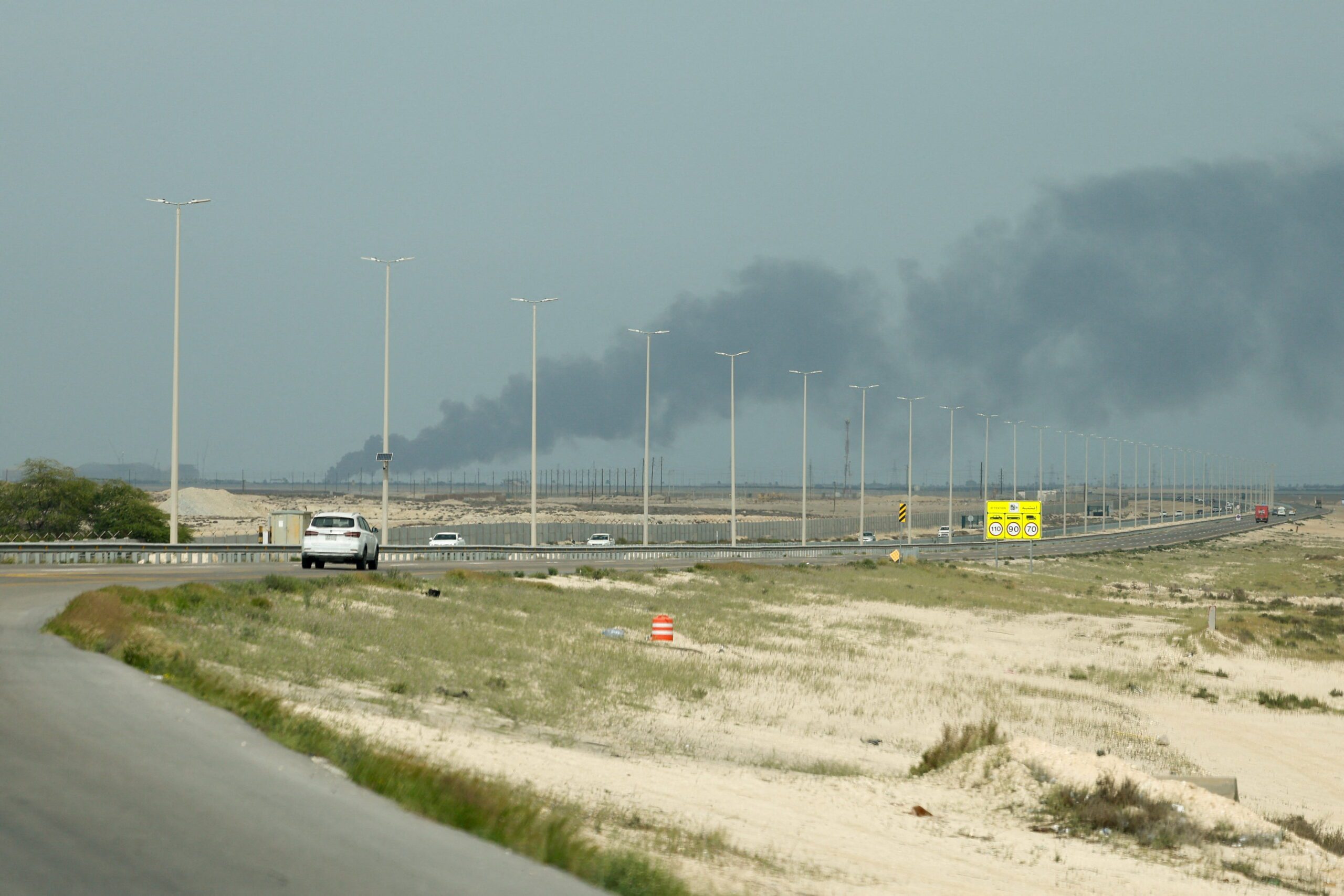
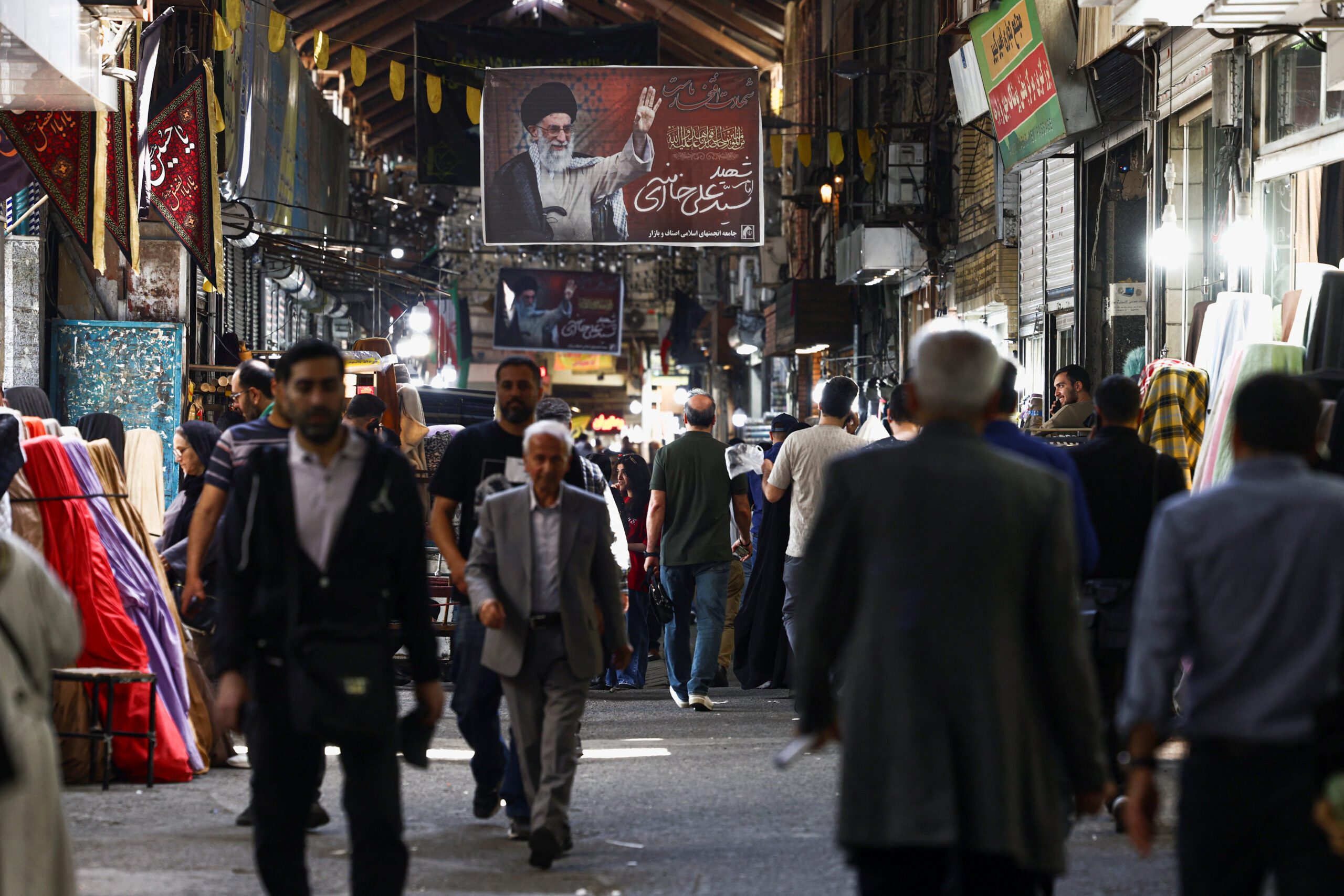
Billions of dollars in infrastructure destruction from the war, combined with decades of mismanagement, corruption, and international sanctions, has sparked an unprecedented economic crisis in Iran.
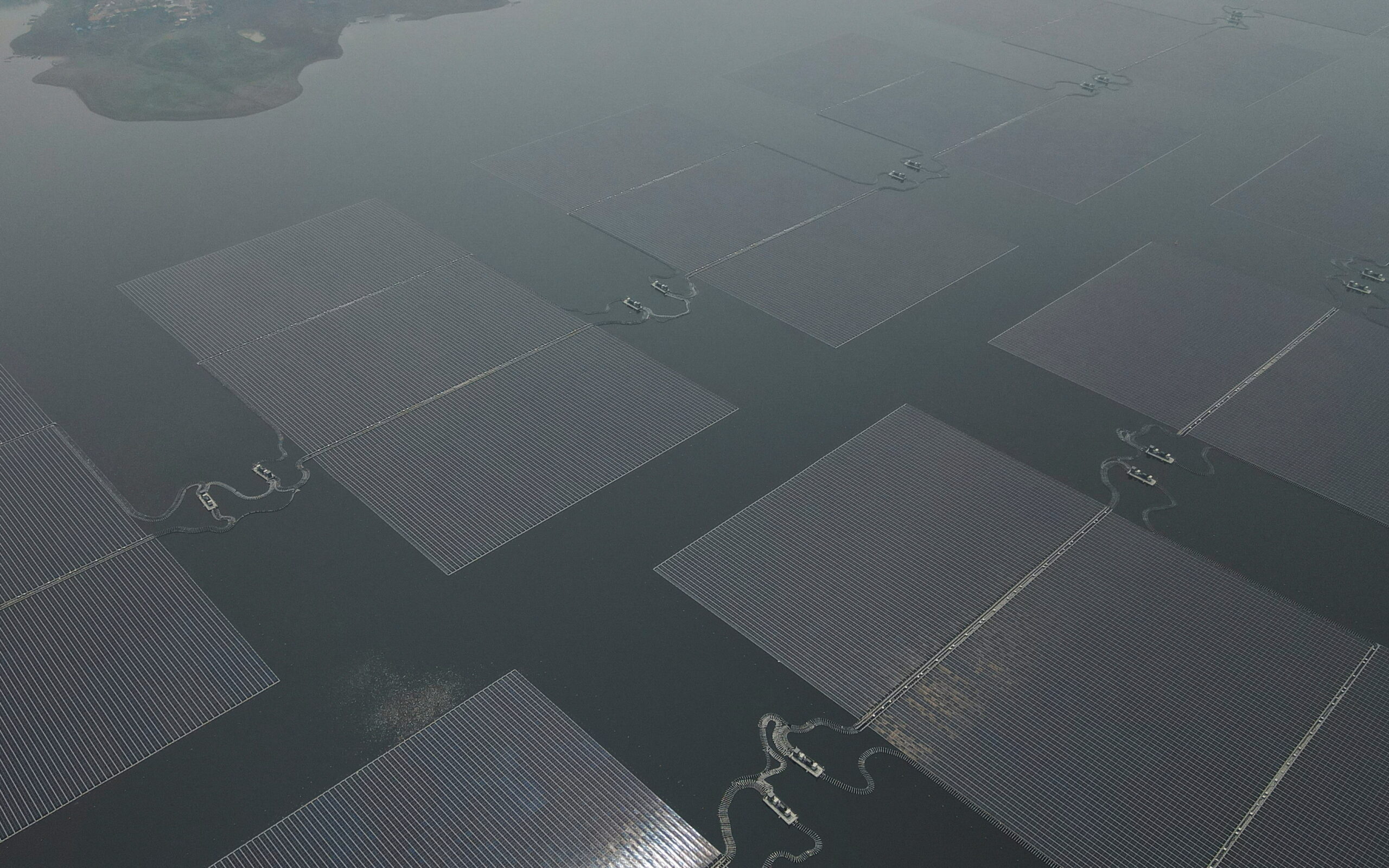
The conflict has turned renewables into security assets at home, and rendered them far more expensive to build out, while Gulf states send clean energy capital abroad.
The Iran conflict has arrived at the worst possible moment for Gulf sustainable finance, a sector already navigating fiscal strain, a global ESG backlash, and the unresolved tension between hydrocarbon revenue and transition capital.
The Gulf is defying global trends and investing in sustainable-labeled projects, and if those labels translate to real guidelines, the region could become a global benchmark for transition finance.
Gulf insurers can embed environmental resilience, social safeguards, and governance rigor into underwriting to strengthen local markets and align with the expectations of global investors increasingly focused on ESG.