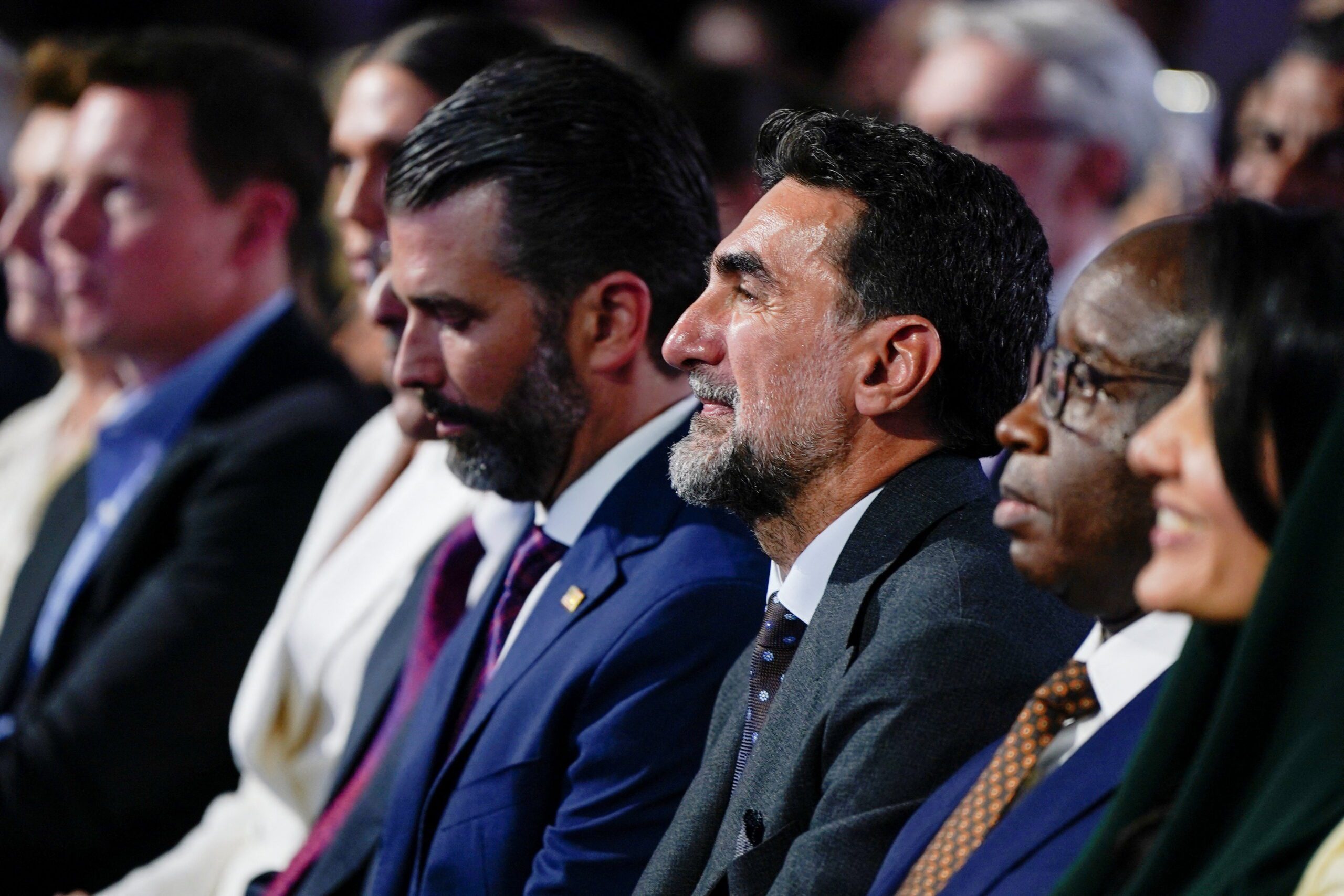
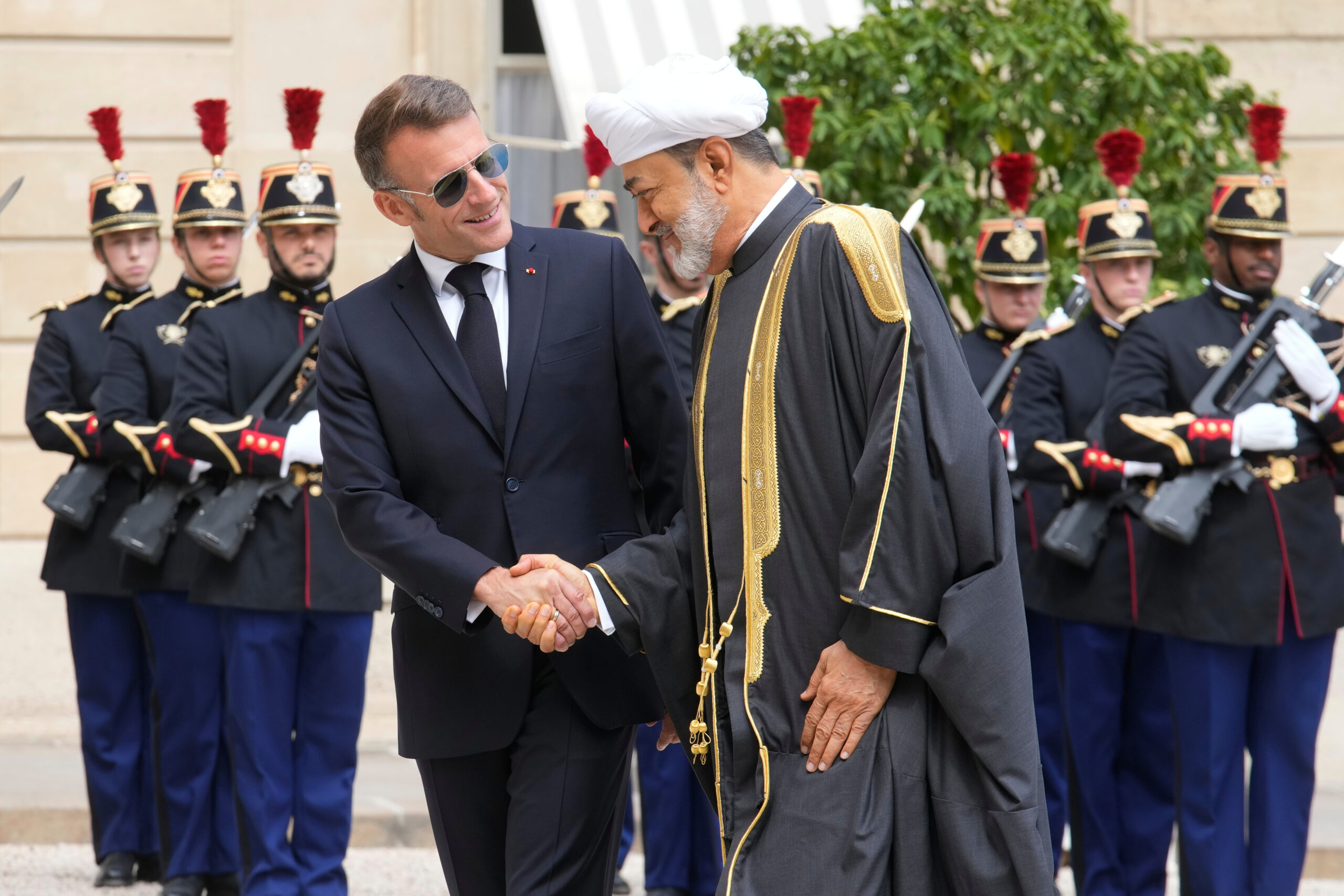
Saudi Public Investment Fund Governor Yasir al-Rumayyan listens while President Donald J. Trump delivers remarks at the Future Investment Initiative Institute's summit in Miami Beach, Florida, March 27. (REUTERS/Elizabeth Frantz)
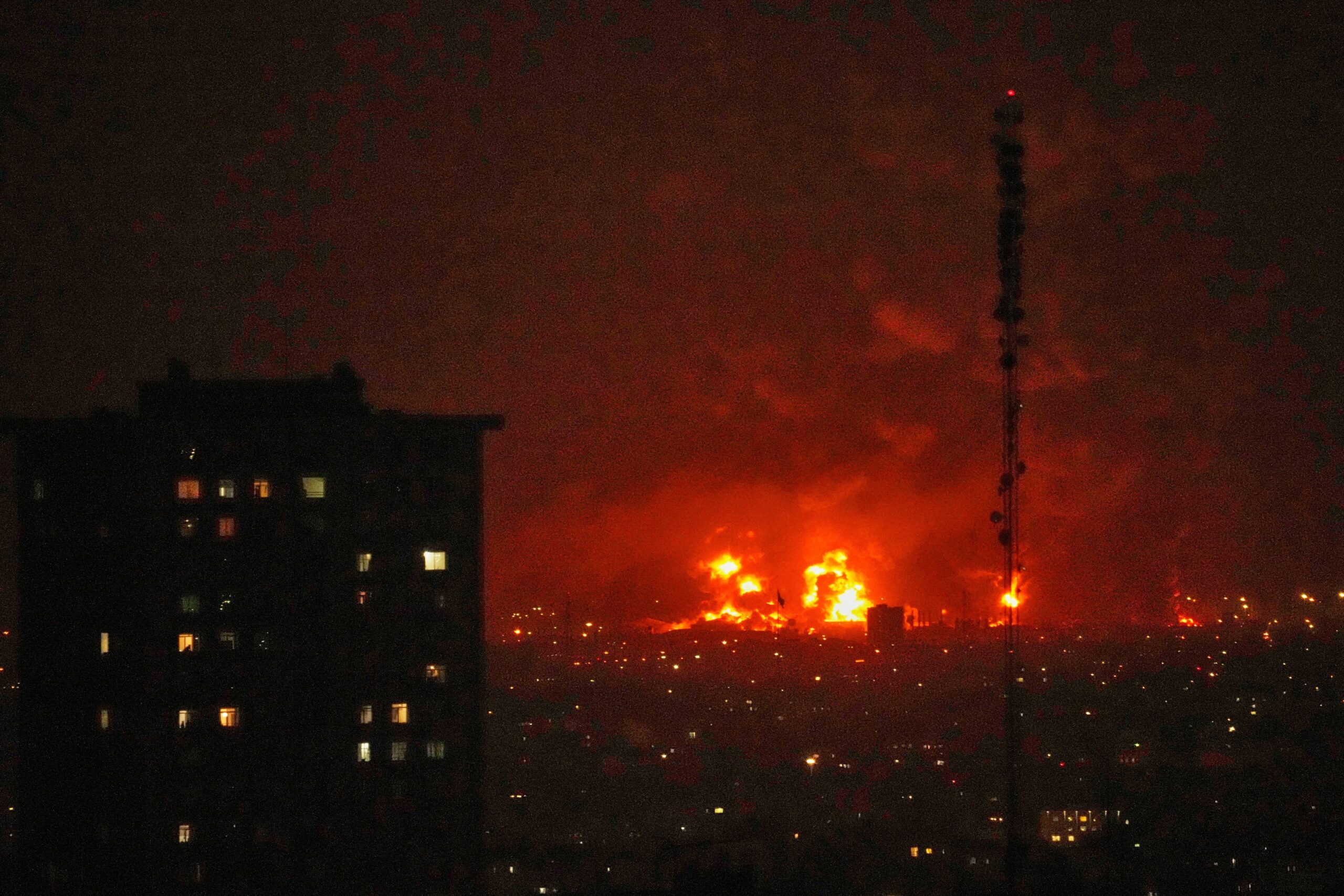
It is a challenging moment to be a Gulf economic policymaker. The Iran war that began on February 28 has clouded the region’s economic growth trajectory. Unprecedented energy market developments have injected uncertainty into the fiscal positions of regional governments, which remain closely linked to the oil and gas sector.
At the same time, the deliverables associated with economic policymaking roles are more crucial than ever. Government-related planning, spending, and investments must continue. Affected businesses and sectors in the region need support. And investors – foreign and domestic – ultimately want reassurance. Gulf sovereign wealth fund officials in particular have their work cut out for them.
It is in this challenging regional context that the Saudi Public Investment Fund’s board of directors approved its new strategy for 2026-30 in mid-April. The strategy has been in the pipeline for some time, and mid-decade is a standard time for 5-year plans to emerge. It also covers a pivotal stretch of time culminating with the much-anticipated year of 2030, which is linked to Vision 2030 and the hosting of the World Expo in Riyadh. The PIF subsequently raised $7 billion in a bond sale on May 7, reflecting continued investor appetite in the sovereign wealth fund’s first issuance since the outbreak of the Iran conflict.
Heightened regional tensions have raised the economic stakes associated with the PIF’s new strategy. Yet beyond some portfolio restructuring, this strategy contains mostly familiar elements. The region’s geopolitical context surrounding priority sectors has indeed shifted, however, increasing the likelihood of future adjustments to the strategy.
A Search for Value
Fund officials describe the upcoming period as one of “Value Realization.” This phase “prioritizes ecosystem integration, disciplined investment, and value creation across the portfolio,” and follows a 5-year period focused on growth and acceleration. The new strategy highlights a three-part structure consisting of a Vision Portfolio with a strong sectoral and domestic focus, Strategic Portfolio for overseeing PIF companies, and Financial Portfolio to manage direct and indirect investments in global markets.
Six strategic ecosystems nestled within the Vision Portfolio provide the clearest indication of the PIF’s sectoral priorities – at least for domestic-oriented investments. The sectors highlighted in these ecosystems are industrials and logistics; tourism, travel, and entertainment; urban development and livability; advanced manufacturing and innovation; clean energy, water, and renewable infrastructure; and Neom. These are familiar focus areas for investment and resonate with Saudi Arabia’s broader economic development plans.
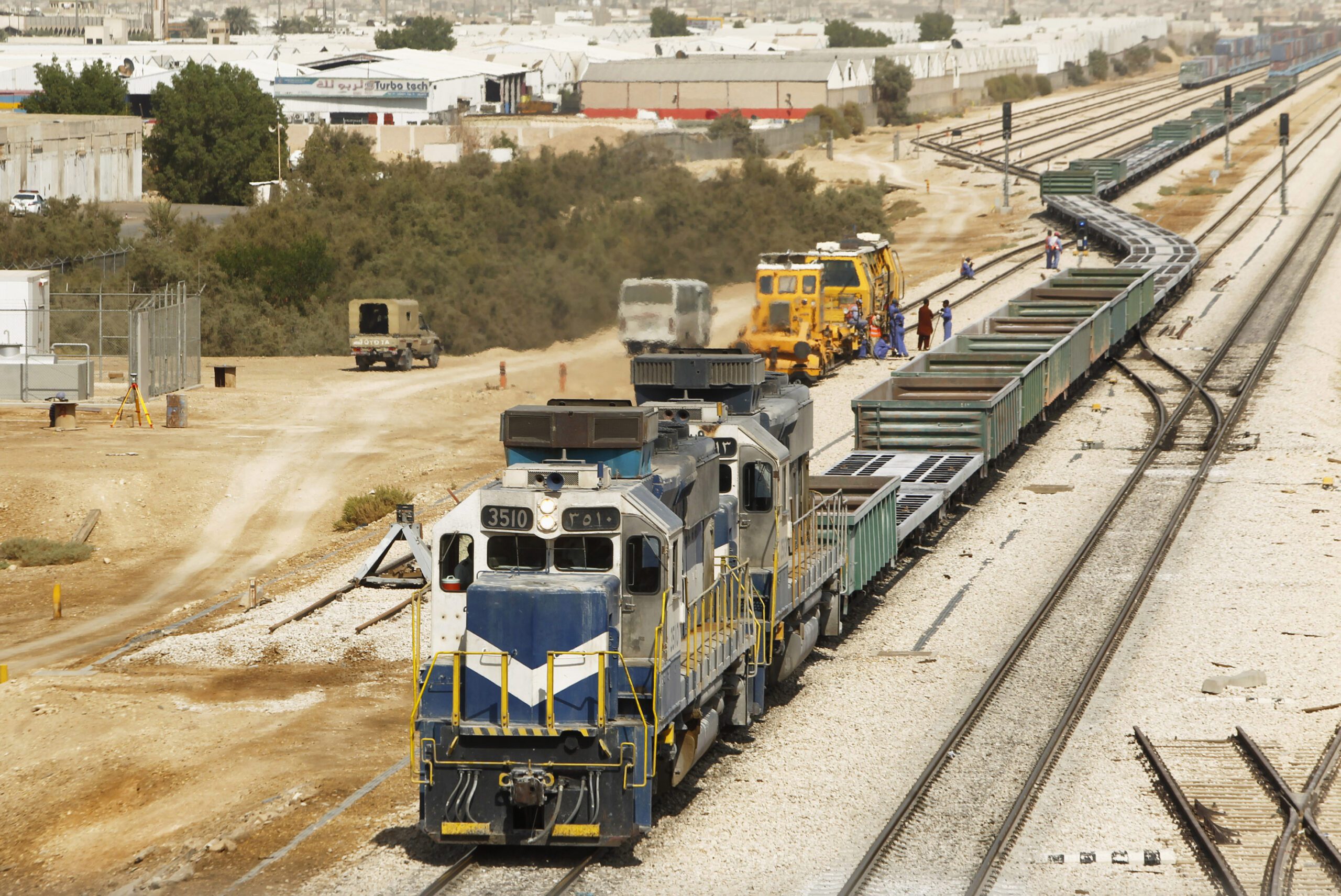
The Iran conflict clearly increases the strategic importance of some of the sectors within these ecosystems, including industrials and logistics as well as clean energy, water, and renewable infrastructure. The Saudi government has sought to boost its credentials as a logistics and transportation hub over recent years, but unprecedented tensions in the Strait of Hormuz are accelerating efforts to develop and utilize alternate export routes and connectivity initiatives across the region, with Saudi Arabia serving as a key node.
While the Iran conflict has reinforced the centrality of traditional energy commodities for the global economy, volatility in oil and gas markets is simultaneously likely to bolster the investment case for renewables. Ongoing threats to critical infrastructure throughout the conflict further highlight the need for enhanced water and food security across the region.
The tourism, travel, and entertainment ecosystem is poised to face short-term headwinds stemming from the Iran conflict, as foreign visitors and businesspeople weigh the risks of disruptions from renewed hostilities and the regional security situation. However, Saudi Arabia can draw upon a strong domestic tourism base and its religious tourism credentials in the interim. Meanwhile, the urban development and livability ecosystem will continue to be a political priority for the government, given the associated needs of a young and growing population. Approximately 70% of the Saudi population is under the age of 35.
Advanced technologies, which fall under the advanced manufacturing and innovation ecosystem, constituted a key dimension of the PIF’s investment focus throughout 2025. The PIF launched Humain in May 2025, and the artificial intelligence-focused company is likely to receive sustained support as part of broader efforts to position Saudi Arabia as a globally competitive artificial intelligence hub. This investment domain is slated to remain a top priority in the new strategy, especially for technologies with clear business applications.
The gigaproject Neom enjoys a dedicated ecosystem. The one project-focused ecosystem – as opposed to sectorally delineated ones – is a curious inclusion in the new strategy, especially given substantial media coverage over recent months concerning reassessments and scaling-down of the major development project in northwestern Saudi Arabia. Critical media coverage may have motivated fund officials to highlight the PIF subsidiary’s continued importance in the portfolio.
The PIF describes Neom as a “blueprint for next-gen economies,” which seems to acknowledge that the gigaproject remains a work in progress. The Oxagon industrial zone, Neom port, and green hydrogen project appear to be priority dimensions of the gigaproject for now, while other Neom initiatives are more likely to take a backseat. In the PIF’s 2024 annual report (released in 2025), the Saudi sovereign wealth fund slashed $8 billion in value from its gigaprojects, which included Neom.
Smart Investing
It is less clear where sports investments fit into the new strategy. To be sure, there will continue to be some room for sports – especially the electronic ones – in the PIF’s portfolio. The PIF subsidiary Savvy Games Group remains quite active. However, the PIF appears to be trimming back some expensive sports investments and taking a more disciplined approach to entertainment-related assets. The Saudi sovereign wealth fund announced it would pull funding for LIV Golf, citing that the substantial funding was “no longer consistent with the current phase of PIF’s investment strategy,” and canceled its Saudi Arabia Snooker Masters in recent weeks.
The PIF now describes its interconnected ecosystems approach as part of the fund moving “from being the primary engine of growth to serving as the architect and steward of platforms that enable others to scale.” There will be a greater focus maximizing returns too. The Saudi sovereign wealth fund reported an annualized total shareholder return exceeding 7% since 2017. For comparison, the United Arab Emirates’ Mubadala reported 5- and 10-year annualized rates of return of 10.7% and 10.3%, respectively.
This stance also resonates amid a period of significant macroeconomic uncertainty induced by the Iran conflict. Saudi growth has slowed and business confidence has dropped. Moving forward, elevated oil prices – along with a resolution to the Iran conflict or an easing of regional tensions – could create some limited tailwinds for the Saudi sovereign wealth fund by supporting future transfers from the government. The PIF, as a shareholder in Saudi Aramco, may also see a bump in dividends in 2027. On May 10, Aramco reported a 26% year-on-year jump in first quarter profits, and its board approved an expected base dividend of $21.9 billion for the quarter.
Investing in the Future
The trillion-dollar question is whether the PIF will double down on domestic investments or seek to deploy more capital outside the kingdom. The PIF opened a second office in China and began operations in Shanghai earlier this year. Yet the PIF’s investment trendline has been a domestic-oriented one. The Saudi sovereign wealth fund aims to direct around 80% of its investments locally, up from a target of 70% in 2021-25.
There is a growing need and political impetus for a deeper domestic pivot over the immediate term, but there are greater risks underlying regional investments. Greater clarity on the new strategy, including a formal and publicly available document, and the follow through on investments will provide more answers about the future investment behavior of this influential global investor.
The views represented herein are the author's or speaker's own and do not necessarily reflect the views of AGSI, its staff, or its board of directors.
One silver lining of the Iran conflict may be the emergence of new, more durable foundations for regional economic integration via more agile trade corridors in the Gulf and beyond.
With lower oil prices likely to constrain financing, a review of the Public Investment Fund’s ongoing projects is needed to ensure that investments are focused in the highest return areas.
The UAE’s decision to halt trade and commercial ties with Iran reflects an exercise in applying carefully calibrated geoeconomic pressure amid an uncertain and evolving geopolitical context.
France is positioning to be a more influential actor across the Middle East, but the European powerhouse is most likely to see immediate traction on the economic tracks that run to and from the Gulf.