A flurry of economic announcements and initiatives by the Omani government indicate a strong desire to sustain both reform progress and economic momentum amid potential headwinds.
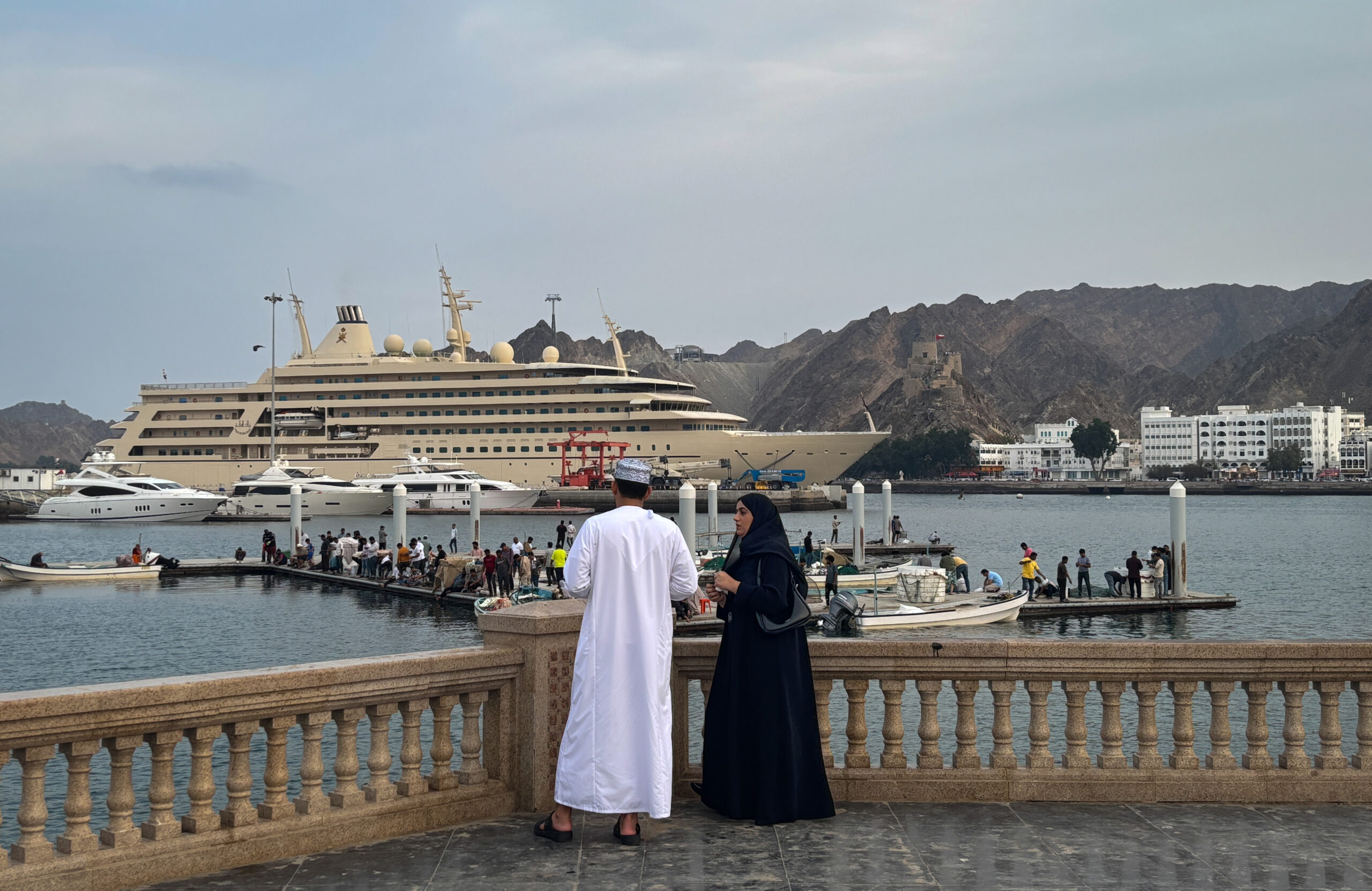
An Omani couple stand on the Mutrah Corniche in Muscat, Oman, February 6. (AP Photo/Altaf Qadri)
Washington and Tehran began indirect talks in Oman on February 6, following weeks of escalatory rhetoric and concern over renewed U.S. attacks on Iran. Oman has also facilitated follow-on talks between the United States and Iran in Geneva. Meanwhile, tensions between fellow Gulf Cooperation Council members Saudi Arabia and the United Arab Emirates are manifesting across political, security, and economic domains. Governments and businesses across the globe are closely following the uncharacteristically public spat between these Gulf economic and diplomatic heavyweights.
Beyond regional mediation efforts, Oman appears steadfastly focused on its economic policy domain. The Omani government began 2026 with a flurry of economic-oriented announcements and initiatives. These moves indicate a strong desire to sustain both reform progress and economic momentum amid potential headwinds.
On January 1, the Omani government launched its 11th Five-Year Development Plan (2026-2030), which serves as a guiding “executive roadmap” for the country’s Vision 2040. The plan identifies three core sectors – manufacturing industries, tourism, and the digital economy – that are expected to have high-growth potential, employment generation capacity, and ability to contribute substantially to gross domestic product. The plan also earmarks mining, food security, renewable energy, transportation, logistics, education, and health as supporting industries.
New development plans likewise shape the priorities of key government-related entities in Oman. The Oman Investment Authority – the country’s sovereign wealth fund with around $54 billion in assets under management – subsequently announced four major projects valued at an estimated $2.4 billion to kick off the first month of the new five-year plan. These projects aim to create 1,850 new jobs while “reaffirming the Authority’s strategic presence in the manufacturing sector as a primary driver for achieving the objectives of Oman Vision 2040.”
In mid-January, Sultan Haitham bin Tariq al-Said reshuffled Oman’s Council of Ministers, creating a new position – deputy prime minister for economic affairs – to be held by his eldest son, Crown Prince Sayyid Theyazin bin Haitham al-Said. The crown prince previously oversaw the Ministry of Culture, Sports and Youth. His new position will place him squarely at the center of economic policymaking, investment attraction, and implementation of Vision 2040.
One new initiative likely to require the crown prince’s attention will be the Oman Global Financial Centre – a planned financial hub in Muscat. Leading the financial center’s supervisory committee is Minister of Finance Sultan bin Salem al-Habsi, who also chairs the country’s sovereign wealth fund. Indeed, Oman’s sovereign wealth fund is likely to play a crucial role in the new initiative, given that the financial service sector is a priority for the Oman Investment Authority.
Omani authorities also have their sights on the aviation industry. The “National Aviation Strategy” aims to attract 40 million passengers by 2040, up from around 15 million in 2025. A robust expansion of the sector could simultaneously help enable growth in tourism, logistics, and other key areas of the Omani economy. For this to materialize, the government will need capital. Unsurprisingly, the strategy seeks to attract $2.6 billion in private-sector investments over the next 15 years.
Oman’s sectoral ambitions in finance and aviation are grounded in realistic expectations, but these plans nevertheless face stiff regional competition from established players and new entrants. Both the Dubai International Financial Centre and Abu Dhabi Global Market are expanding rapidly to meet strong demand, and Saudi Arabia continues to harbor major ambitions for its King Abdullah Financial District.
Competing in the skies will be no cakewalk either. Emirates and Qatar Airways are successful regional carriers, while Saudi Arabia’s new Riyadh Air aspires to carve out a big slice of the market. Oman must find attractive, niche offerings in these sectors rather than directly compete against better-funded counterparts. This is especially true given where the regional winds are blowing. A full-scale economic rivalry between Saudi Arabia and the UAE could further complicate Omani efforts to plant new flags in regional markets.
The prospect of weaker oil prices, alongside a continuation of high financing needs, further raises the stakes. While the price of Brent crude has edged upward over recent weeks, oil prices have remained stubbornly below $70 per barrel for some time. The “Short-Term Energy Outlook” by the U.S. Energy Information Administration sees prices dipping further to $58/bbl in 2026 and $53/bbl in 2027.
Oman has taken steps over recent years to ensure its economic house is in order, offering some cushion from lower oil prices. According to the International Monetary Fund, Oman has made demonstrable progress on economic diversification, with nonhydrocarbon activities accounting for around 70% of the country’s GDP. However, with fiscal revenue still heavily dependent on oil proceeds – as high as 80%, according to IMF estimates – there remains more work to broaden non-oil revenue streams.
Omani authorities continue to make various tweaks on the economic policy margins. For example, the country’s tax authority is seeking to improve compliance, and such seemingly small adjustments can have a significant fiscal impact over time. Yet Omani authorities understand that economic policymaking is a delicate balancing act. They also announced plans for a value-added tax refund scheme for tourists, owing to the importance of tourism as one of the country’s strategic economic pillars.
Beyond attracting more tourism, Oman has been working to increase trade and investment flows with key global partners. India remains a priority for economic engagement. In mid-February, Sultan Haitham ratified a comprehensive economic partnership agreement with India, paving the way for an acceleration in economic ties between the two countries.
A busy start to the year will ensure that the Omanis enjoy a robust pipeline of new projects, initiatives, and strategic partnerships from which to derive economic value. Yet they will not be the only regional actors seeking value creation through such means. The primary tasks ahead of Omani authorities and business actors therefore involve differentiation, implementation, and follow through.
The views represented herein are the author's or speaker's own and do not necessarily reflect the views of AGSI, its staff, or its board of directors.
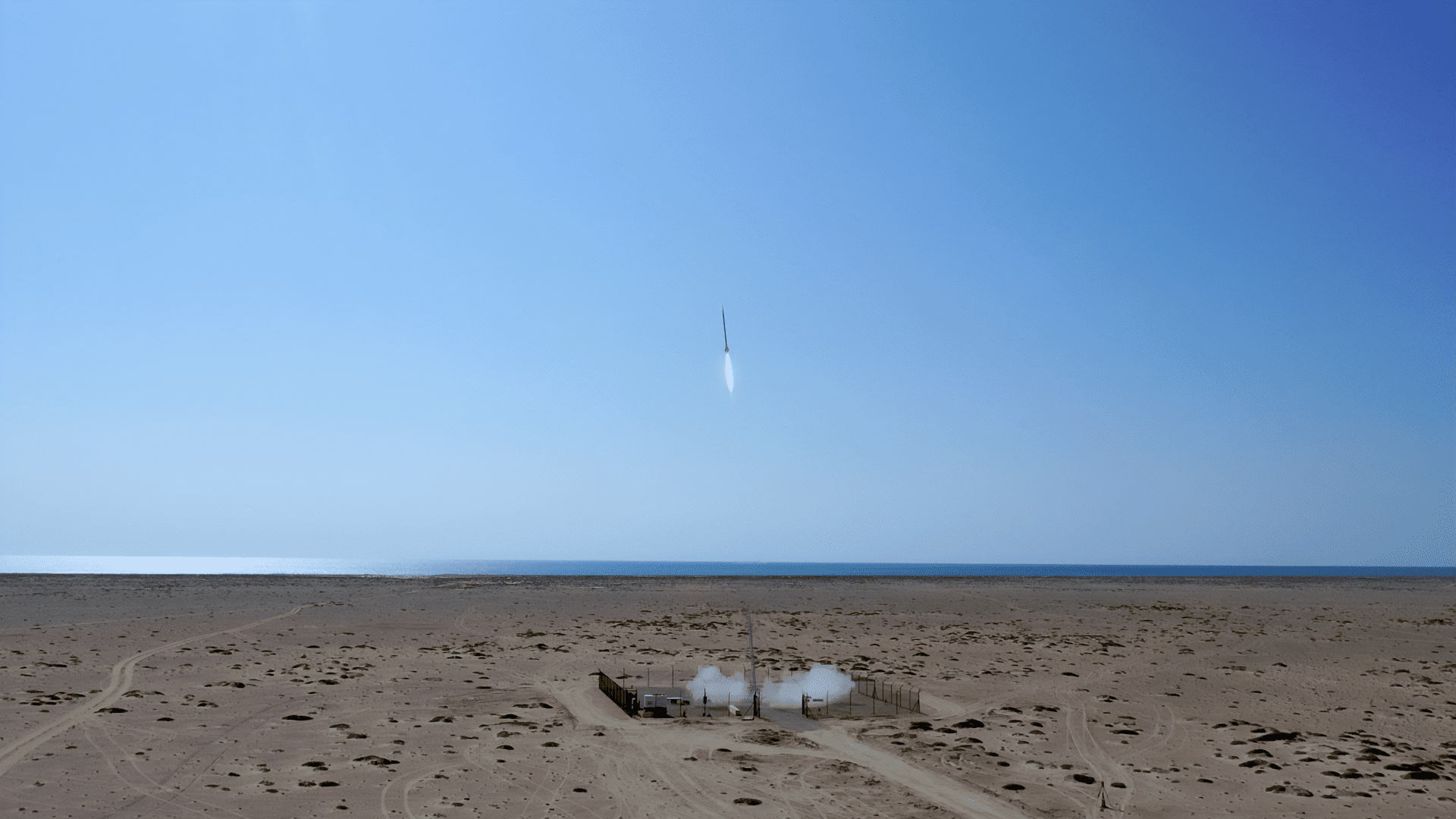
Oman is positioning itself as a future regional hub for space applications and innovation and a host, regulator, and service provider embedded within the global space economy.
By linking domestic renewable energy capacity with industrial-scale production and export corridors, Oman is building a framework to transform its hydrogen ambitions into a sustainable and globally relevant industry.
As Oman pursues its Vision 2040 reform agenda, many opportunities could stem from closer economic and long-term alignment with neighbors and other major trading partners.
The Iran conflict reinforces China’s short-term position as one of managing and mitigating risks rather than shaping outcomes that expand Chinese influence in the Middle East.
The early reactions of regional stock markets reflect serious concerns but not full-blown panic despite an unprecedented escalation of the Iran conflict.
U.S. authorizations for exporting advanced chips to the leading Gulf technology firms is sure to please regional authorities, who will push to broaden and accelerate technology collaboration with the United States.