Iran’s Election Interference Campaigns Against Israel and the United States
Rather than seeking to push for a specific election result, Iran’s manipulation and interference campaign in Israeli and U.S. elections sought to erode institutional trust, social cohesion, and the political room to maneuver for the governments that emerge from them.
Specialized books on hacking are displayed for sale during Iran's 2026 Tech Olympics, held at Pardis Technology Park in northeastern Tehran, Iran, November 3. (Photo by Morteza Nikoubazl/NurPhoto)
Within a few weeks of each other, both of Iran’s principal adversaries held elections. Americans voted in midterm elections November 3, and Israel held national elections October 27. There have been growing concerns that Iranian influence operations would be used to manipulate these and future elections. Tehran has turned the information space, and increasingly artificial intelligence, into a weapon against its adversaries while keeping its own cyberspace under tight control. The U.S. National Intelligence Council reported that Iran ran a covert influence campaign during the 2020 U.S. presidential election and was behind the hack-and-leak operation against Donald J. Trump’s presidential campaign in 2024. That same year, OpenAI reported it had taken down a cluster of ChatGPT accounts linked to an Iranian group that were generating content, including long-form articles and shorter social media comments, aimed at swaying the presidential election. Posts also covered Israel’s presence at the Olympics and, to a lesser extent, Venezuelan politics, Latin American communities’ rights, and Scottish independence.
These operations reflect a broader shift in how countries conduct hybrid warfare, a wider contest that is waged in the gray zone between peace and kinetic warfare. Since Russia’s 2014 occupation of Crimea, the concept of hybrid warfare has been stretched to cover cyber operations and information manipulation, giving rise to the term “cybrid” campaign. Despite the new terminology, the pattern is the same. Adversaries are increasingly competing below the threshold of armed conflict, where costs are low, attribution is difficult, and the response, if it comes at all, rarely hurts.
The European External Action Service has coined a name for such operations: foreign information manipulation and interference. It is defined as a series of actions that are mostly not illegal but threaten or have the potential to negatively impact values, procedures, and political processes. In 2025, the European External Action Service detected 540 incidents of foreign information manipulation and interference across 100 countries worldwide, mobilizing 10,500 social media channels (mostly on X) and websites. Over one-third of these incidents were attributed to Russia and China, but the actors responsible for the remainder was unspecified or unclear. More than 90% of channels conducting such operations were covert and unofficial assets, such as fake news sites and inauthentic social media accounts. Nearly half of all incidents were timed around elections, summits, protests, or breaking news developments.
The European External Action Service picture is understandably drawn through a European lens, and it is dominated by Moscow and Beijing. Iran barely registers in it. Yet Tehran’s playbook looks strikingly similar to those of Russia and China. After October 7, 2023, Iran stepped up its cyber-enabled influence operations against Israel. Microsoft counted 11 Iranian influence operations in October 2023. That was a sharp rise from 2021, when it identified only six over the entire year. Meta removed more than 60 accounts, pages, and groups across its various platforms that originated in Iran and targeted Israel. Unable to match U.S. and Israeli military power, Iran uses foreign information manipulation and interference techniques to raise the political cost of conflict and erode public support for it. Iran’s foreign information manipulation and interference campaigns’ goals are, similar to those of China and Russia, to deepen social division, undermine trust in democratic institutions, and silence criticism.
For Tehran, foreign information manipulation and interference serves several interconnected strategic purposes. First, it offers an asymmetric instrument to compensate for its conventional military disadvantages. Rather than confronting its adversaries solely through military means, Iran can exploit the openness of democratic societies, where political disagreement, public criticism, and competing narratives are legitimate features of the political system. Its objective is to turn these characteristics into vulnerabilities: amplifying existing grievances, deepening distrust among different segments of society, and weakening confidence in political and security institutions. The ultimate prize is not necessarily to persuade audiences of Iran’s own narrative but to make them more distrustful of their own governments and less willing to support their policies.
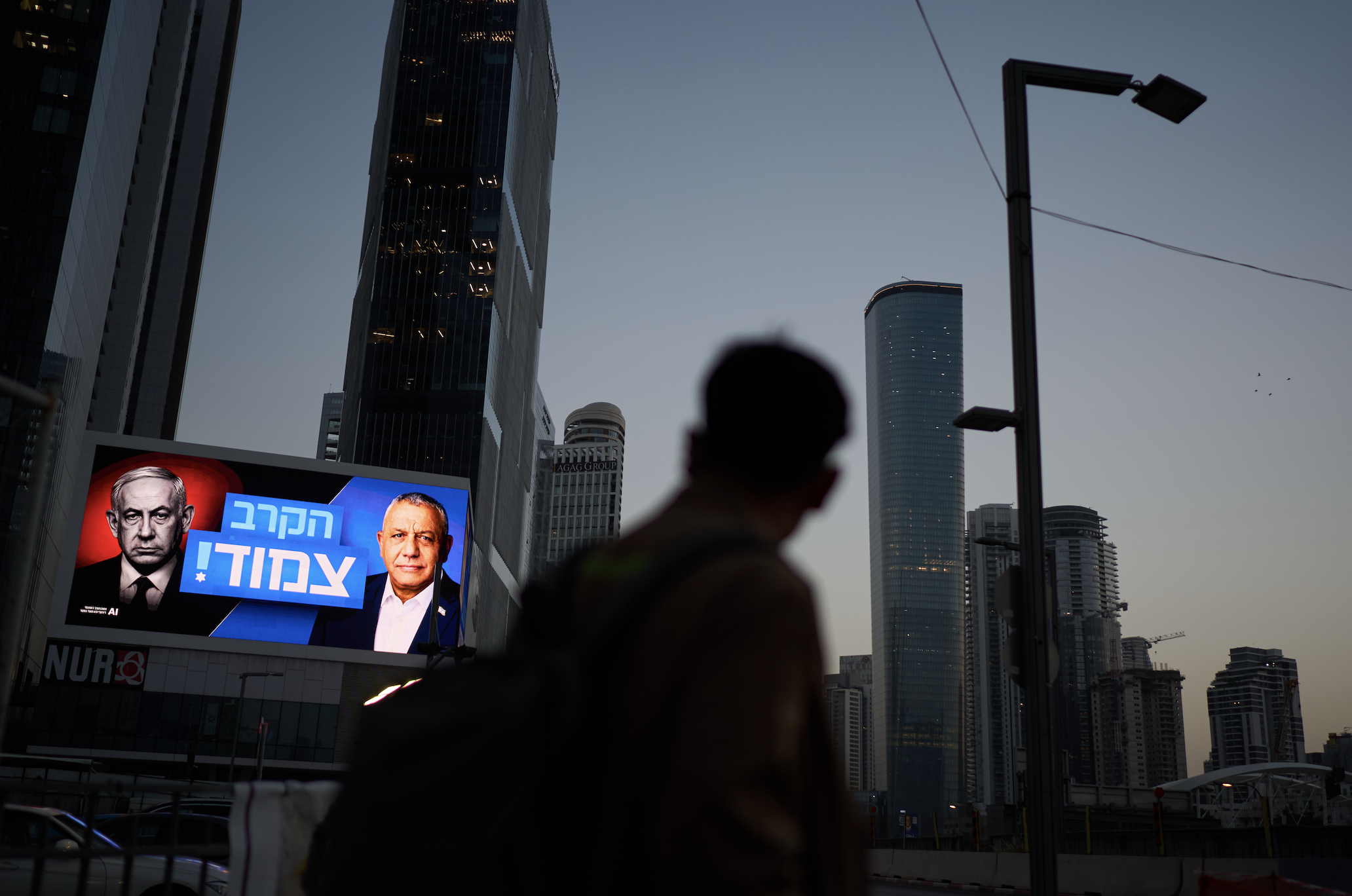
The specific objectives, however, differ depending on the target. In Israel, Iran’s interest is tied to its wider confrontation with the Israeli state. This was clear in the run-up to the October Knesset elections, as Iranian-linked networks sent different parts of Israeli society messages that contradicted one another. Topics ranged from the military failures of October 7 to the country’s political leadership to the conscription of ultra-Orthodox men. The Institute for National Security Studies in Israel wrote that this pattern suggests Tehran views internal divisions within Israel as a strategic gain in their own right, irrespective of which political camp prevails at the ballot box. The report also identified similar attempts to exploit Israeli electoral divisions in 2022, pointing to an evolving rather than one-off strategy. Iran’s objective is to erode the social cohesion and political resilience on which Israel depends to confront external threats. A fragmented society, increasingly skeptical of its leadership and institutions, may find it harder to rally behind military action and sustain public support through a prolonged confrontation.
In the United States, the calculation is somewhat different. Tehran has a direct interest in shaping the political environment that determines Washington’s policy toward Iran, particularly its approach to sanctions, military confrontation, and support for Israel. U.S. intelligence assessments have exposed Iran’s efforts to undermine confidence in democratic institutions, exploit societal tensions, and complicate the ability of any U.S. administration to pursue foreign policies contrary to Iranian interests. The 2024 operations included covert attempts to access campaign-related information and hack-and-leak activities. More recently, the Islamic Revolutionary Guard Corps sent an open letter to the American people, published ahead of the November midterms, urging Americans to reject Trump’s policies, oppose U.S. support for Israel, and reconsider the costs of confrontation with Iran. Its message was not simply that Iran should be viewed more favorably but that American voters should question whether their government’s foreign policy serves their own interests.
The IRGC’s open letter is overt political messaging rather than covert foreign information manipulation and interference. Nevertheless, it illustrates the strategic narrative that Iran’s covert influence activities seek to reinforce. Tehran wants to make the costs of confrontation with Iran more visible to American voters, deepen divisions over U.S. support for Israel, and increase domestic political pressure on Washington to reconsider its regional commitments. It does not necessarily need to secure the election of a particular candidate to achieve this. Making support for Israel politically contentious, making military engagement with Iran unpopular, and increasing the domestic costs of a confrontational Iran policy can all serve Iran’s interests, irrespective of which party controls Congress, the Senate, or the White House.
Taken together, the two cases reveal a common strategic logic but also an important distinction. In Israel, Iran seeks to weaken the cohesion of a society with which it is engaged in direct and potentially prolonged confrontation. In the United States, it seeks to weaken domestic support for the policies that sustain that confrontation. In other words, while its Israeli operations target the resilience of its adversary, its U.S. operations target the political will behind its adversary’s policies. Both serve the same broader purpose: reducing the capacity and willingness of opponents to act against Iran’s interests.
This also helps explain why the electoral outcome itself may be less important than the political conditions surrounding it. A foreign influence operation does not have to change a single vote to produce a strategic advantage. If it leaves Israeli society more divided, American voters more skeptical of their government’s regional commitments, or political institutions less trusted by the public in both countries, Tehran has already achieved something valuable. By targeting opposing political constituencies simultaneously, Tehran seeks to increase mutual suspicion, erode confidence in democratic institutions, and undermine the legitimacy of election results. The strategic calculation is that an adversary with a deeply polarized society will find it harder to build consensus around security threats, sustain public support for military confrontation, and absorb the costs of a prolonged conflict. The significance of these operations may therefore lie less in their capacity to determine who wins an election than in their cumulative effect on institutional trust, social cohesion, and the political room to maneuver for the government that emerges from it.
Identifying Iranian-linked accounts and networks does not automatically establish direct state control over every account, nor does evidence of interference demonstrate that voting behavior or electoral outcomes were changed. However, for Iran, foreign information manipulation and interference is a clear, sustained instrument of strategic competition. For Iran’s adversaries, the challenge is to recognize it as such rather than just as an episodic electoral security threat. This requires investing in the capacity to detect, attribute, and expose foreign influence operations, strengthening cooperation among intelligence agencies, electoral authorities, and social media platforms, and developing mechanisms for rapid public communication when disinformation is identified. Equally important is building societal resilience through media literacy and greater public awareness without allowing countermeasures to undermine freedom of expression or legitimate political debate. Above all, governments should avoid measuring success solely by whether an election has been manipulated. The objective should be to deny adversaries like Iran the longer-term strategic gains that they seek: weakened institutional trust, deepened social divisions, and reduced political resilience.
The views represented herein are the author's or speaker's own and do not necessarily reflect the views of AGSI, its staff, or its board of directors.
With Democrats taking both chambers of Congress in the midterms, the Gulf Arab states should watch the shifts in domestic U.S. politics and look to the 2028 presidential election.
The Iranian regime’s internet censorship and shutdowns function as comprehensive weapons of political warfare, designed to isolate, demoralize, and ultimately suppress dissent.
Billions of dollars in infrastructure destruction from the war, combined with decades of mismanagement, corruption, and international sanctions, has sparked an unprecedented economic crisis in Iran.
The Iranian regime’s internet censorship and shutdowns function as comprehensive weapons of political warfare, designed to isolate, demoralize, and ultimately suppress dissent.
As AI capabilities increasingly converge with cyber warfare, military superiority will depend not on troop numbers or weapons platforms but on algorithmic advantages and digital resilience.
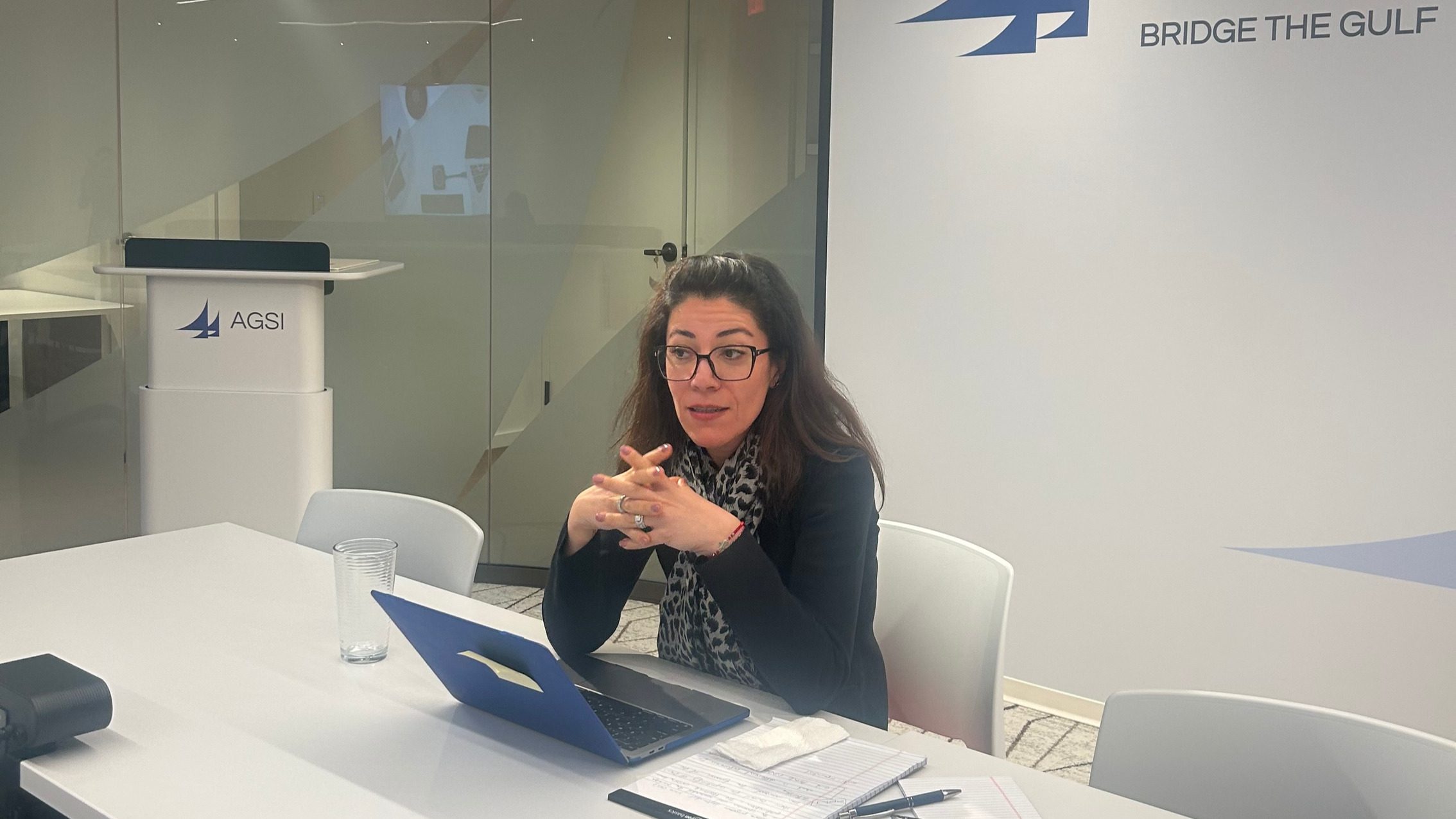
On April 15, AGSI hosted a private workshop on understanding how the dynamics of Iran's defense technology, information control, and geopolitical competition connect, led by Visiting Scholar Sara Bazoobandi.