Oman’s precarious reliance on energy exports to China and insufficient Chinese investment in non-oil segments of the Omani economy leave the sultanate in a weak position to address urgent economic challenges.
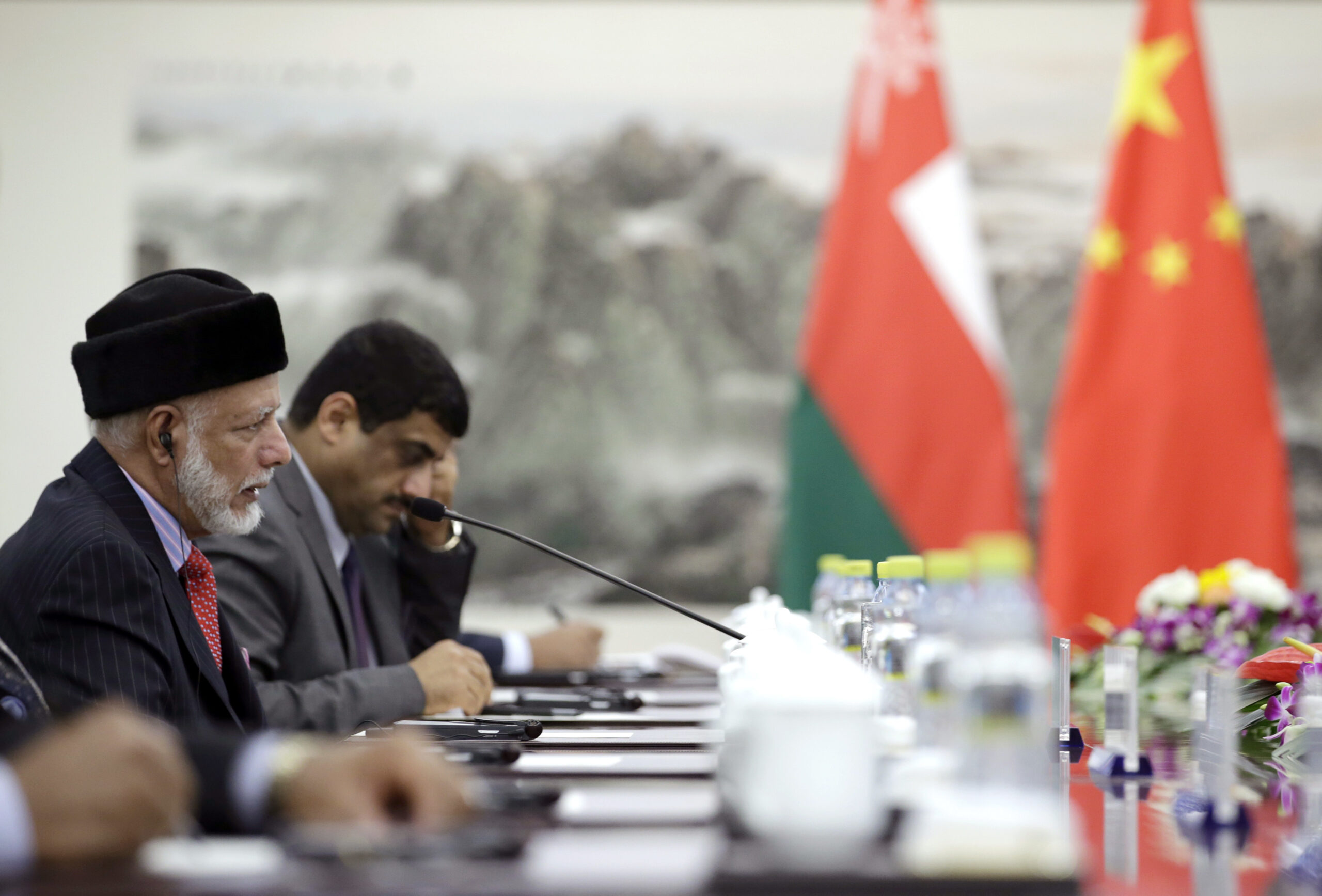
Omani Foreign Minister Yusuf bin Alawi speaks during a meeting with China's Foreign Minister Wang Yi in Beijing, May 15, 2018. (Jason Lee/Pool Photo via AP)
Lujaina bint Mohsin Darwish recently became chairperson of the Oman-China Friendship Association following the death in April of Omar Al Zawawi, a prominent businessman and government advisor. Established in October 2010, the Oman-China Friendship Association “aims at developing and strengthening the friendly relations between the Sultanate of Oman and the People’s Republic of China.” Corporate members of the association include the OMZEST Group, Omantel, and Huawei. This period of transition for the association and Omani politics, coupled with the coronavirus pandemic and low oil prices, has underlined the imbalance in ties between Oman and China.
On June 23, Moody’s Investors Service cut Oman’s sovereign rating for the second time in 2020, citing dim prospects that the sultanate will be able to offset oil revenue losses without accumulating unsustainable debt or eroding its limited financial buffers. The Omani government under the new sultan is racing to shore up the country’s finances and, in the process, is restructuring the state and decision-making mechanisms. Support from external lenders and foreign investors is crucial for economic recovery in Oman.
Yet there are good reasons for skepticism toward Oman’s economic partnership with China. The convergence of a global health emergency and an oil market rout has underlined China’s mixed role in Oman’s fragile economy. Oman exports too much of its crude oil to China, while the Asian powerhouse invests too little in the sultanate’s non-oil industries. The imbalanced nature of this economic relationship places Oman in a weak position to address mounting economic challenges.
Despite decades of economic diversification initiatives, Oman’s oil and gas sector accounts for approximately 72% of government revenue. China consumes the vast majority of exported Omani crude oil. In April and May, China imported nearly 90% of Oman’s crude oil exports. This was not always the case. Between 2000 and 2017, China’s share of Oman’s crude oil exports increased from 35.2% to 82.5%.
The growth in Chinese imports of Omani crude oil coincided with a decrease in the relative importance of other Asian importers. Prior to 2012, Oman maintained a more diverse group of crude oil trading partners, including Japan, India, South Korea, and Thailand. Japan actually imported more Omani crude oil than China in the early 2000s.
Crude oil also accounted for 92.4% of Oman’s total exports to China in 2018; the next largest export group was chemical products, such as cyclic hydrocarbons. This overreliance on hydrocarbon-based exports within Oman’s bilateral trade with China has changed little over the past decade, leaving no obvious path for export diversification to this important trade partner.
The level of Chinese engagement with Oman’s oil sector contrasts with lackluster activity in other economic spheres. Despite high expectations surrounding the economic impact of the Belt and Road Initiative on Gulf Arab economies, China is not a top foreign direct investor in Oman. The United Kingdom, the United Arab Emirates, the United States, and Kuwait each accounted for greater shares of Oman’s total inward foreign direct investment stock than China by the third quarter of 2019. Inward foreign direct investment stock from China totaled $1.25 billion, just slightly more than what was invested by the small country of Qatar. Progress on a $10 billion joint industrial park in the special economic zone at Duqm has moved slowly.
Omani policymakers also confront stubbornly high unemployment rates – estimates of youth employment reach 49%. The economic downturn related to the coronavirus outbreak and energy market outlook threatens to further exacerbate employment pressures in Oman. Employment generation, therefore, is an important component of in-country value (the contribution to social and economic development in the host country) related to foreign investment propositions. However, there are long-standing concerns over the proclivity of Chinese firms to utilize Chinese labor rather than local human resources.
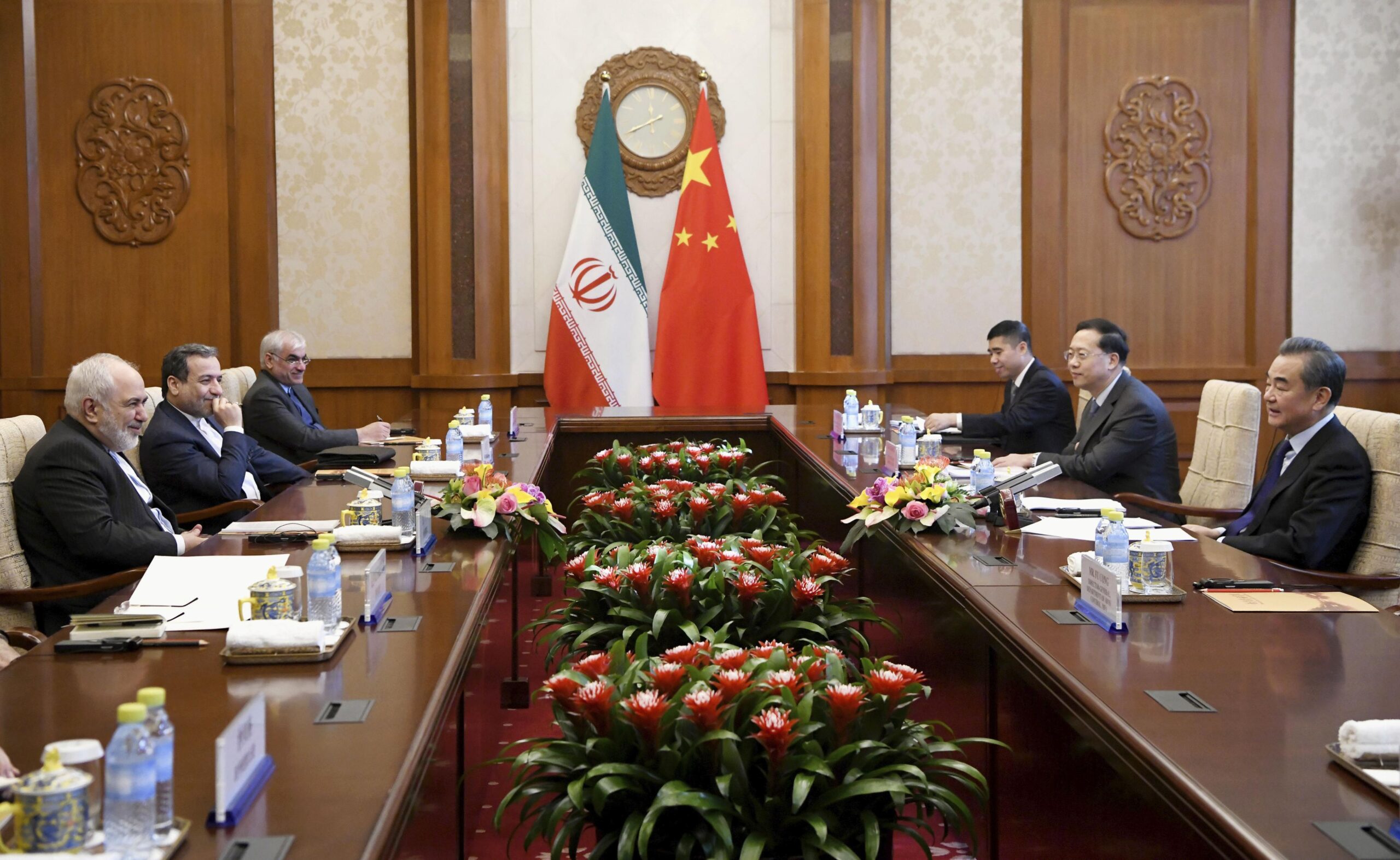
A major challenge is that many foreign investments are channeled through Omani free zones and special economic zones in Sohar, Salalah, and Duqm. Zone authorities not only offer lax labor regulations and other preferential business terms but also often compete among themselves for foreign investments. Omani officials recognize that nearby Iran possesses adequate ports and free trade zones, thereby increasing regional competition for limited investments. The reported Chinese-Iranian cooperation agreement suggests that China may begin leveraging Iranian business hubs to a greater degree over the coming years.
China has made some advances within Oman’s non-oil industries and state-led initiatives. Oman’s government raised $1 billion by selling a 49% stake in the Oman Electricity Transmission Company to the State Grid Corporation of China. In March, the Asian Infrastructure Investment Bank agreed to become a lender for the 500-megawatt Ibri II solar power project in Oman. The $60 million investment is the Chinese bank’s first renewable energy project financing in the Gulf Arab region. Chinese firms are likewise involved in developing Oman’s digital infrastructure and providing technology-related training.
China will remain an important trade and investment partner for Oman. Indeed, Oman’s fiscal well-being over the short term is closely tied to continued demand for crude oil from China. Omani efforts to diversify its economic partnerships should start with those in the hydrocarbon sector but ultimately need to go much deeper.
The views represented herein are the author's or speaker's own and do not necessarily reflect the views of AGSI, its staff, or its board of directors.
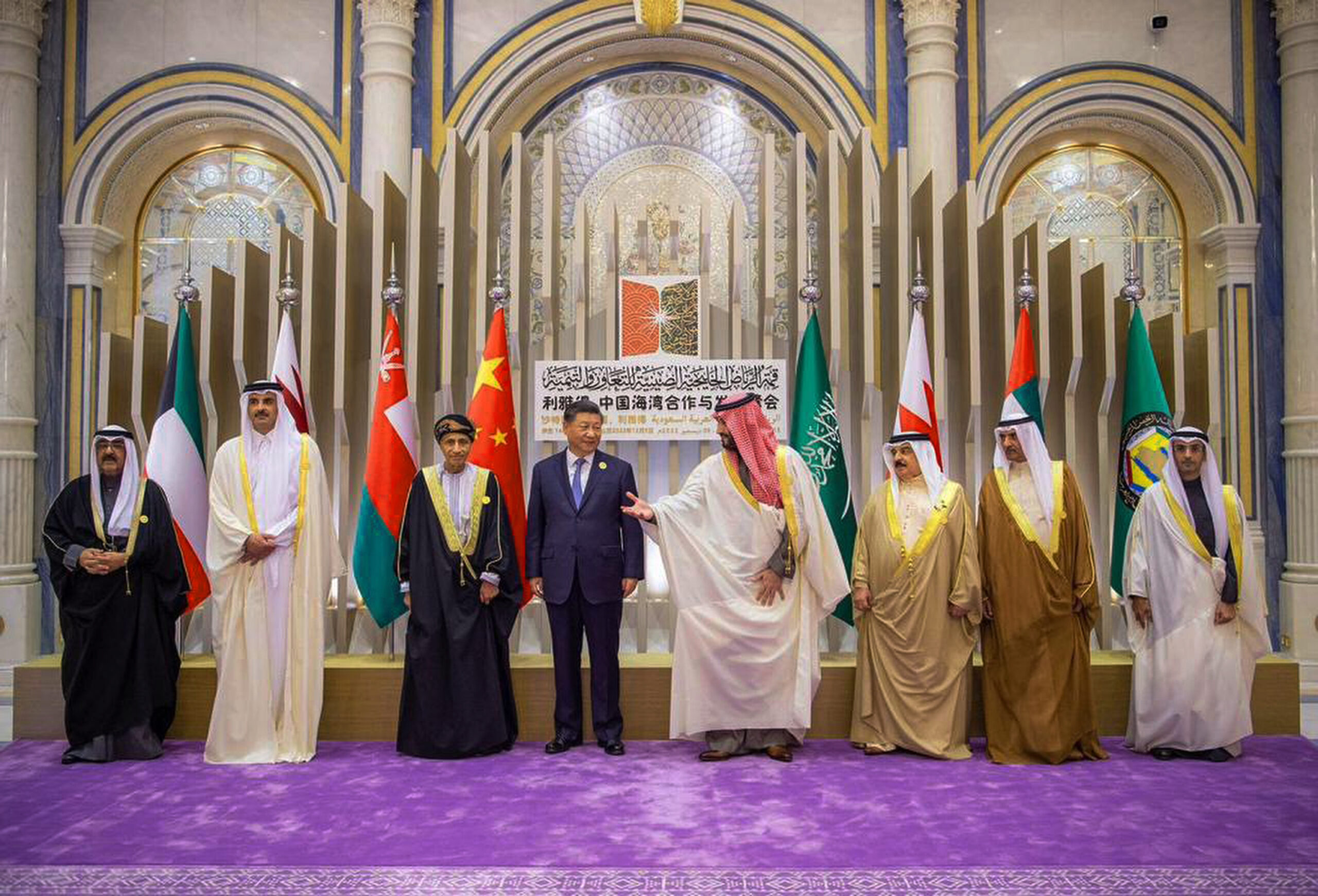
The complementary nature of China’s Belt and Road Initiative and Gulf “vision” development programs has established another pillar of China-Gulf cooperation.
The first decisions of Oman's new sultan, Haitham bin Tariq al-Said, demonstrate a calm and deliberate ruling style and offer a glimpse into important changes that may be yet to come.
Beijing keeps treading carefully around conflict in the Middle East while seeking opportunities to deepen ties with key country partners through a longer-term regional engagement strategy.
The UAE’s decision to halt trade and commercial ties with Iran reflects an exercise in applying carefully calibrated geoeconomic pressure amid an uncertain and evolving geopolitical context.