The Ties That Bind: The U.S.-Saudi Trade and Investment Relationship
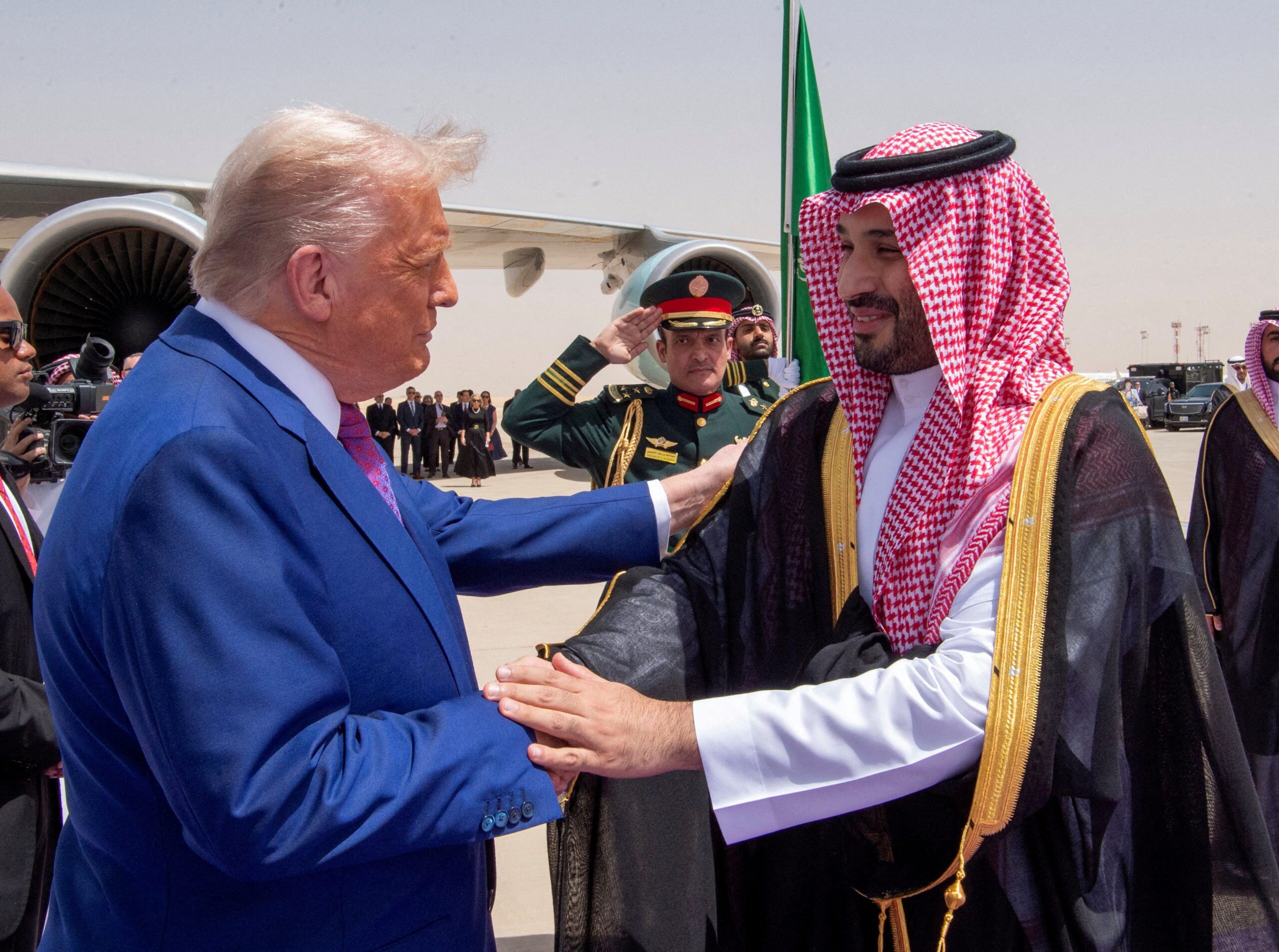
Trade and investment links between the United States and Saudi Arabia appear to be growing and will get a further boost when the Saudi crown prince visits the White House on November 18.
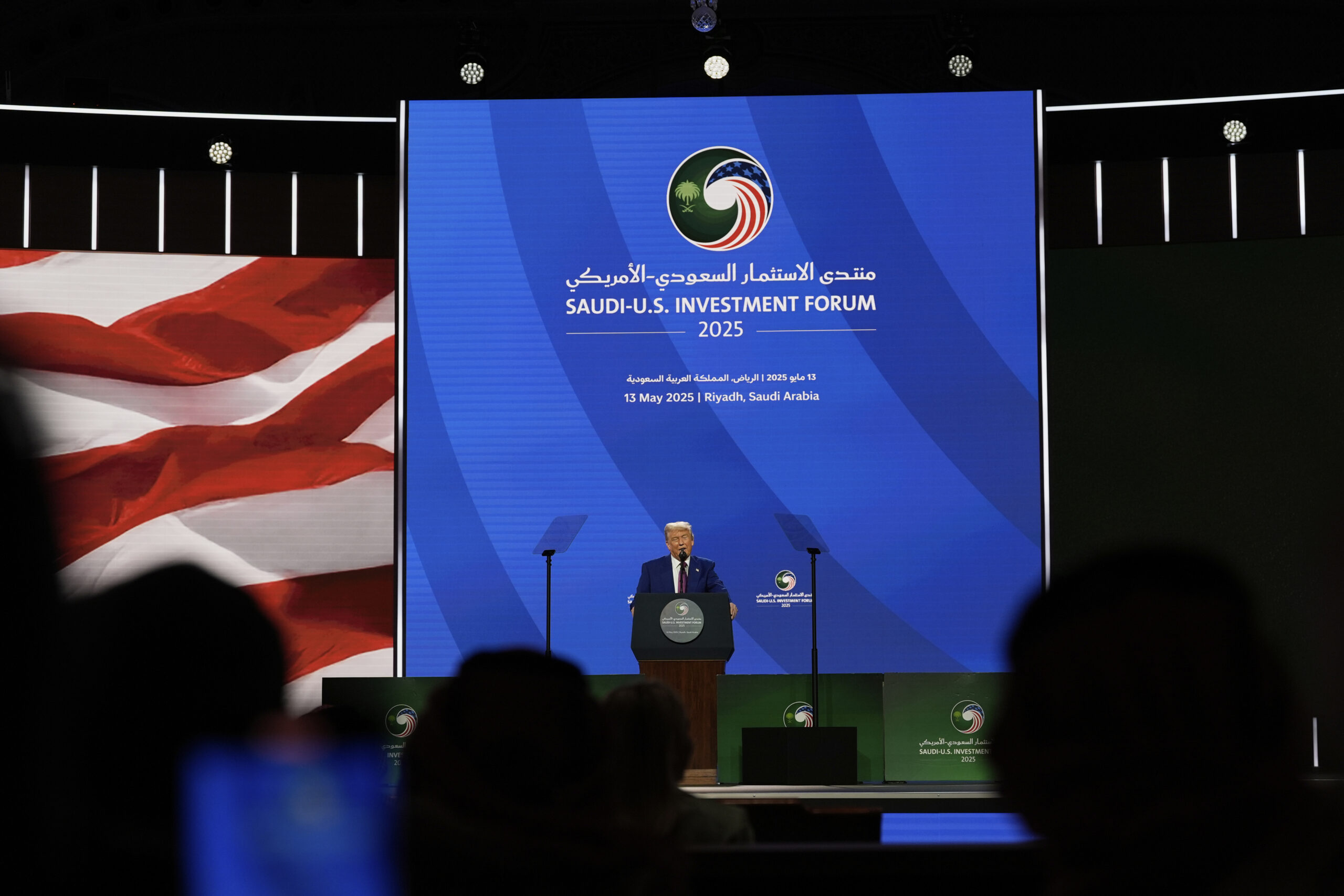
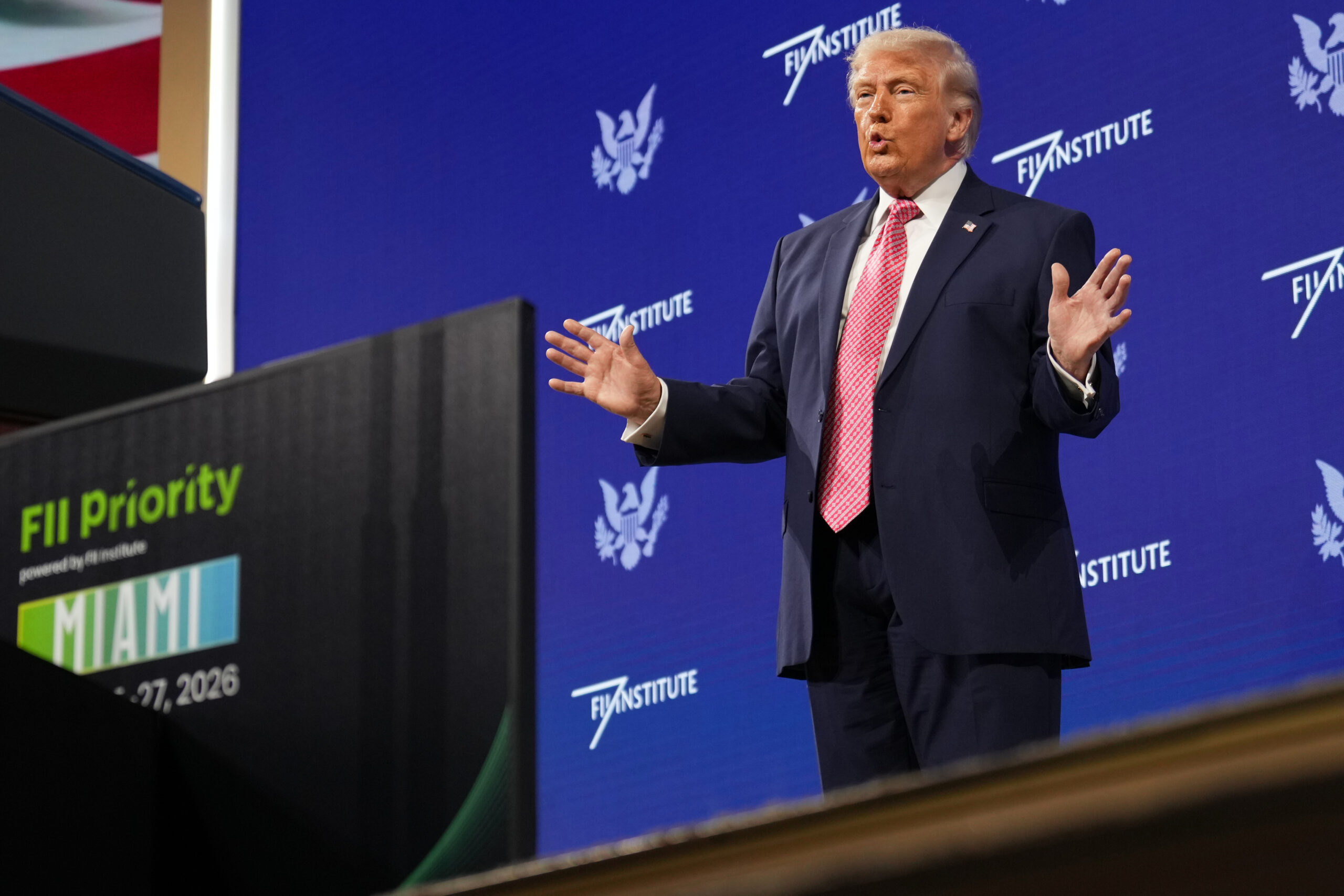
President Donald J. Trump speaks at the Saudi-U.S. Investment Forum at the King Abdulaziz International Conference Center in Riyadh, Saudi Arabia, May 13. (AP Photo/Alex Brandon)
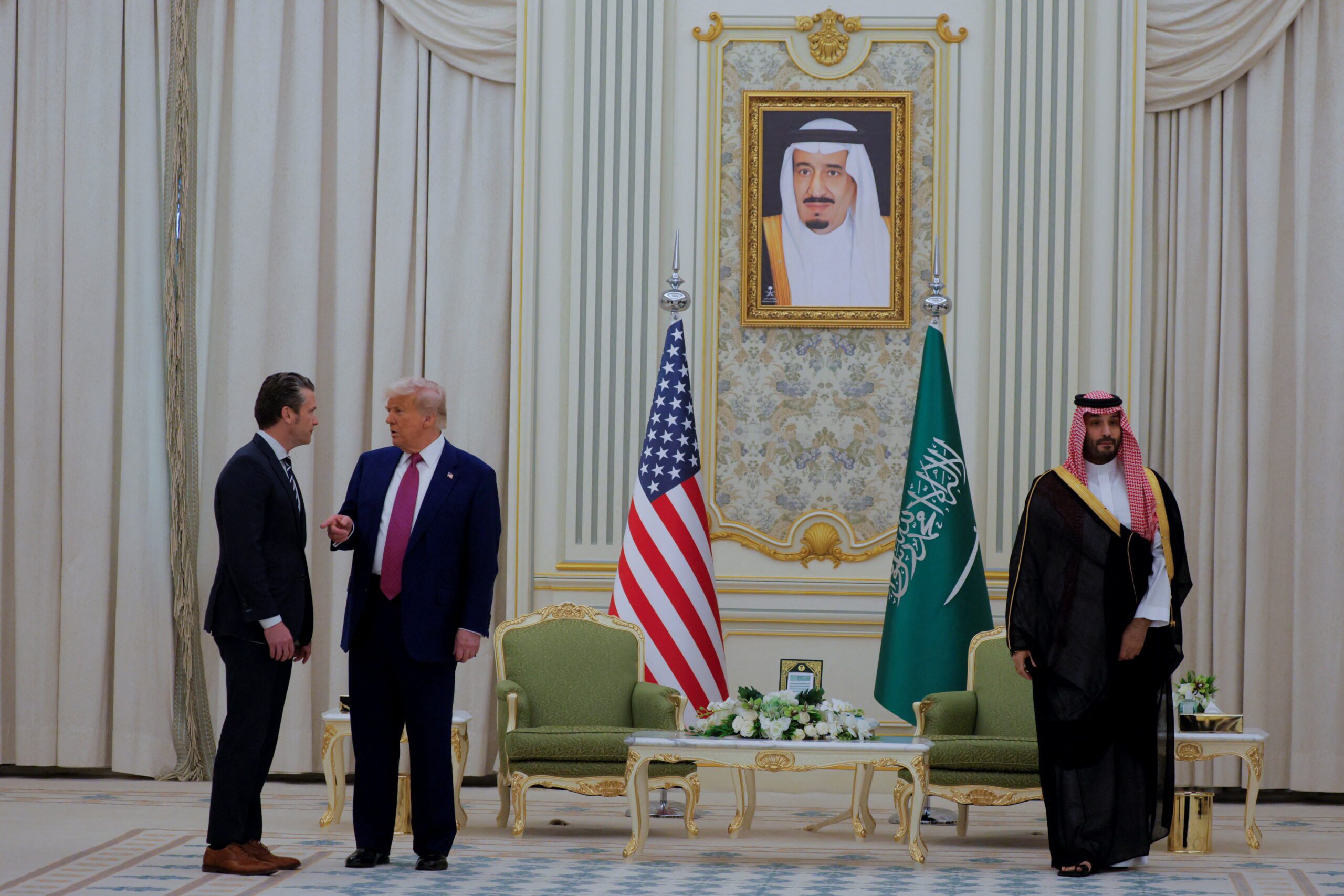
How to strengthen economic ties between the United States and Saudi Arabia will be one of the key issues on the agenda when Saudi Crown Prince Mohammed bin Salman visits President Donald J. Trump at the White House on November 18. Saudi Arabia is seeking increased foreign investment to help advance its Vision 2030 reforms, particularly in sectors such as artificial intelligence, data centers, high-tech manufacturing, finance, tourism, entertainment, mining, and natural gas. It also wants to buy advanced military equipment and high-end computer chips from the United States. The United States is seeking to tap into Saudi Arabia’s vast financial resources – the Public Investment Fund alone has close to $1 trillion of assets under management – to boost investment, jobs, and growth.
The U.S.-Saudi Trade and Investment Relationship
Trade links between the two countries have always been more important for Saudi Arabia than the United States given the difference in economic size, although Saudi oil exports have at times played an outsized role in the bilateral relationship.
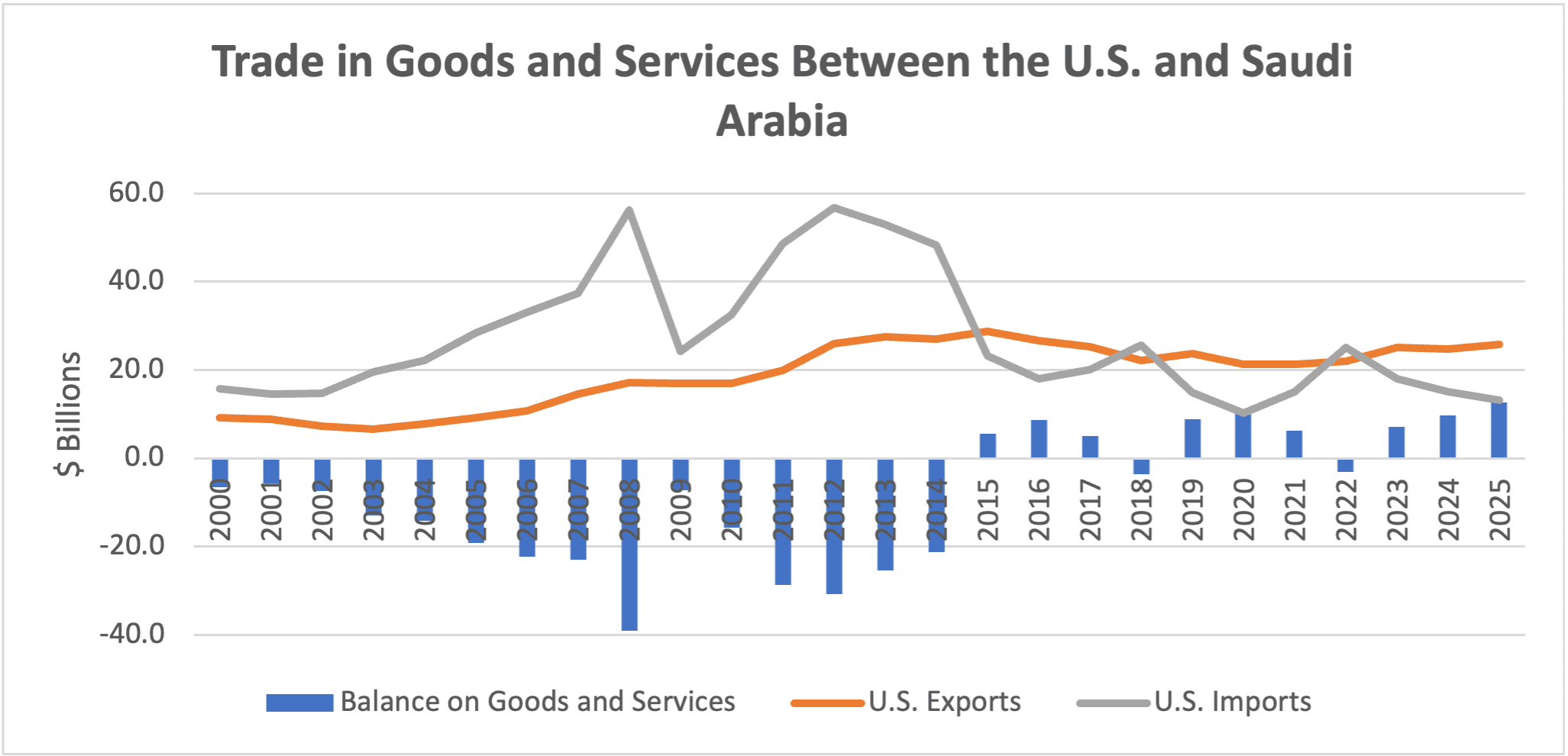
Over the past two decades, however, the importance of bilateral trade links has declined for both countries. As recently as the 2000s, 18% of Saudi exports (mostly oil) went to the United States, and 15% of imports came from the United States. Meanwhile 1% of the United States’ exports went to Saudi Arabia, and 2.2% of its imports came from the kingdom. Saudi Arabia ran a trade surplus (on goods and services) with the United States that averaged $16 billion per year in the 2000s.
Source: Bureau of Economic Analysis Note: 2025 data is the sum of the four quarters to 2025Q2.
The trade relationship began to change in the early 2010s. Saudi Arabia’s exports to the United States slumped as U.S. oil production surged. By 2024, only 4.2% of Saudi exports went to the United States, and 8.4% of its imports were sourced there. To replace the United States as a trade partner, the kingdom looked to Asia. China now accounts for 15% of Saudi exports and is the source of nearly one-quarter of its imports. From the U.S. side, the share of imports from Saudi Arabia dropped to only 0.4% in 2024, and the share of its exports going to Saudi Arabia declined to 0.8%. The trade balance between the two countries swung into a U.S. surplus ($10 billion in 2024).
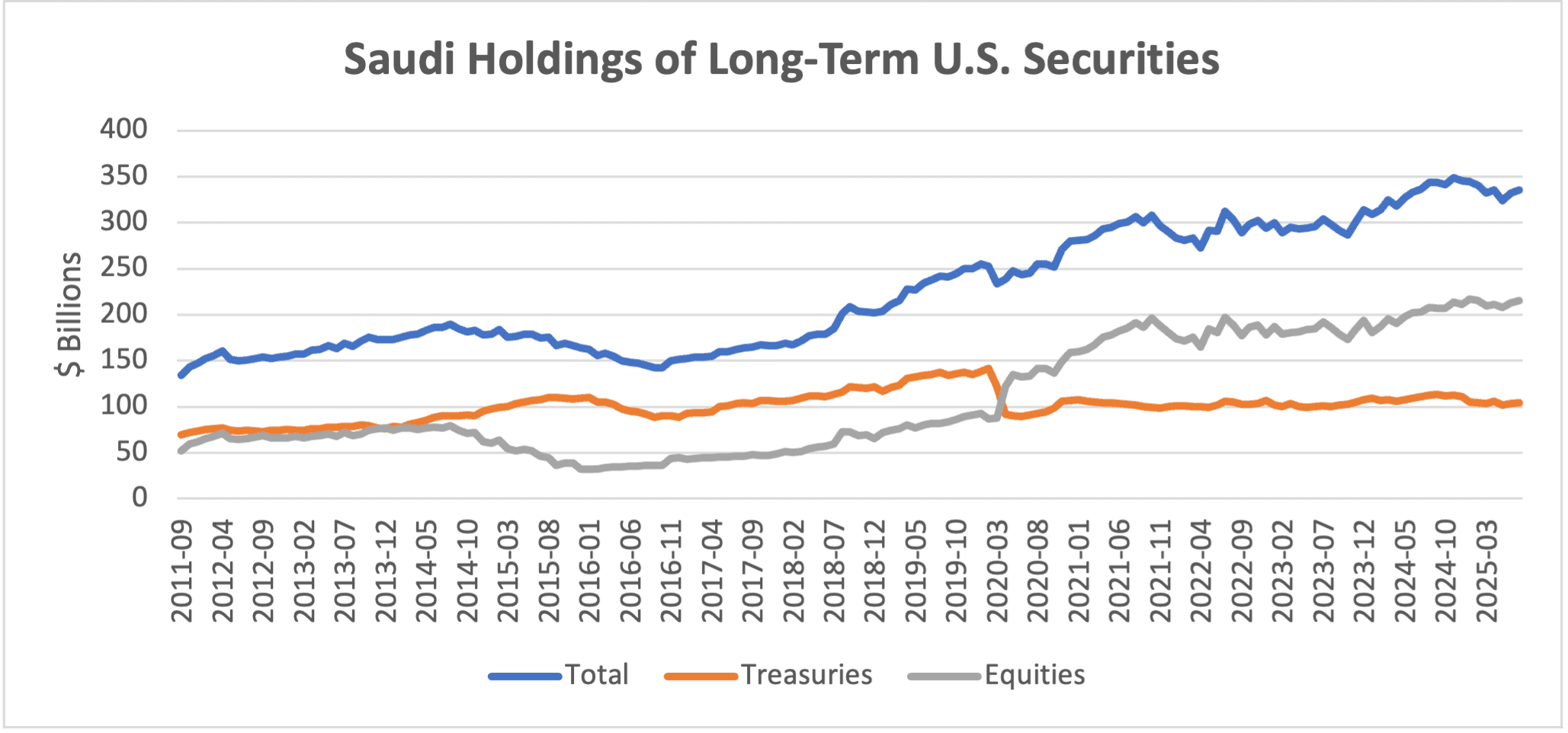
The financial relationship between the two countries has also evolved. At the end of 2011 (the first year for which data is available), Saudi investments in U.S. bonds and listed equities accounted for 17% of Saudi foreign financial assets (in reality, this is likely an underestimate, as assets could be held through companies incorporated in third countries, such as Luxembourg). These holdings were only a small fraction (1.2%) of total foreign holdings of U.S. securities. In 2024, the share of Saudi foreign financial assets invested in U.S. bonds and listed equities had risen to 23% but accounted for 1.1% of total foreign holdings of U.S. securities. The composition of the investments has also changed. Equities accounted for over 60% of Saudi holdings of U.S. securities in 2024 compared to 39% in 2011. This switch from bonds to equities started in 2020 and was spurred by the growing role of the PIF in managing foreign assets and the related desire to increase the risk-return profile of the country’s investments. For example, $40 billion of the central bank’s foreign currency reserves (which were likely heavily invested in U.S. Treasuries) was transferred to the PIF in early 2020.
Source: Treasury Information Capital System
Trade and Investment Deals in the News
The most notable recent investment by Saudi Arabia in the United States is the leveraged buy-out of EA Sports by the PIF and two partners (Silver Lake and Affinity Partners) that valued the company at $55 billion. The investment is aligned with the kingdom’s focus on developing its entertainment and technology sectors. The PIF already owned around 10% of EA Sports, and the acquisition of the remainder of the company will be financed by a $20 billion loan and additional capital supplied by the PIF and its partners. While the final ownership structure is not clear, the transaction will result in a sizeable new investment in the United States by Saudi Arabia.
On the trade side, Saudi Arabia is reported to have requested to buy 48 F-35 fighter jets from the United States as part of the $142 billion defense sales agreement signed in May. The sale of computer chips, gas turbines, and related technologies and the provision of construction services are other important and expanding areas of U.S. exports to Saudi Arabia.
Several large investments by U.S. companies in Saudi Arabia have been announced. An $11 billion deal involving the lease and leaseback of Aramco’s Jafurah gas processing facilities by a consortium of investors led by Global Infrastructure Partners, a part of BlackRock, was finalized in late October. HUMAIN, a newly created Saudi AI company, announced a $3 billion deal with AirTrunk (backed by Blackstone) to build data centers in the kingdom. There have also been deals with AWS ($5.3 billion), Google Cloud (joint investment with the PIF of $10 billion), Equinix ($1 billion), and Salesforce ($500 million). U.S. companies are heavily involved in developing the tourism sector (Hilton recently announced that it has over 100 hotels operating or in the pipeline in Saudi Arabia with a total investment of $8 billion) and the asset management sector (Templeton and Neuberger Berman).
Recent Data Suggests Economic Links Are Growing
There are some signs that trade and investment ties between the United States and Saudi Arabia are strengthening as the strategic economic priorities of the two countries align, although this can only be a tentative conclusion at this stage. U.S. exports to Saudi Arabia grew by 14.2% year over year in the second quarter of 2025 according to U.S. data (for goods and services) and by 11.7% according to Saudi data (only for goods), although based on partial data these exports may have stagnated in the third quarter. U.S. imports from Saudi Arabia, however, fell by 30% year over year in the second quarter at least partly because of weak chemical prices. As a result of these trends, the U.S. surplus on goods and services trade with Saudi Arabia reached an all-time high of $4.5 billion in the second quarter of 2025.
Turning to investment, the United States was the largest provider of foreign direct investment to Saudi Arabia in 2024. Although this amounted to only $2.8 billion, this was the highest annual net inflow since 2016 (first year data is available). While no official data is yet available for 2025, research by Emirates NDB indicates that the United States was the largest source of “greenfield” FDI (investment to establish a new company rather than to take over an existing one) in Saudi Arabia in the first half of 2025.
The value of Saudi investments in listed U.S. securities, however, has not changed over the past year (through July), remaining at around $335 billion. Valuation gains on equity holdings have been offset by the sale of both Treasuries and equities. The value of the PIF’s holdings of U.S. equities increased to $23 billion in the second quarter of 2025 from $20 billion a year earlier.
Crown Prince Visit Should Spur More Deals
The economic and financial relationship between the United States and Saudi Arabia will strengthen given the needs of the two countries and the close relationship between Trump and Mohammed bin Salman. The United States wants Saudi Arabia to purchase more of its goods and services and increase investments in U.S. companies, and Saudi Arabia is seeking greater access to U.S. tech and innovation to support its ambitious Vision 2030 reforms. The U.S.-Saudi Investment Forum scheduled for November 19 will be an opportunity to seal more economic deals between the two countries.
During Trump’s May visit to Riyadh, Saudi Arabia made a $600 billion trade and investment commitment to the United States. While this target will be difficult to reach if oil prices stay at current levels, there is little doubt that Saudi investments and purchases of U.S. products will increase. However, it may be that U.S. investments into Saudi Arabia see the strongest growth in the coming years given the improved investment climate in the kingdom, opportunities provided by Vision 2030, and availability of reliable low-cost energy and abundant land to support the expansion of AI and related activities of U.S. tech companies.
The views represented herein are the author's or speaker's own and do not necessarily reflect the views of AGSI, its staff, or its board of directors.
When the Saudi crown prince meets President Trump in Washington, the main topics of discussion are likely to be commercial deals, a defense pact, a Saudi civilian nuclear program, and normalization with Israel.
Saudi leaders are seeking bilateral deals that advance the Saudi-U.S. relationship without the need for the normalization of relations between Israel and Saudi Arabia.
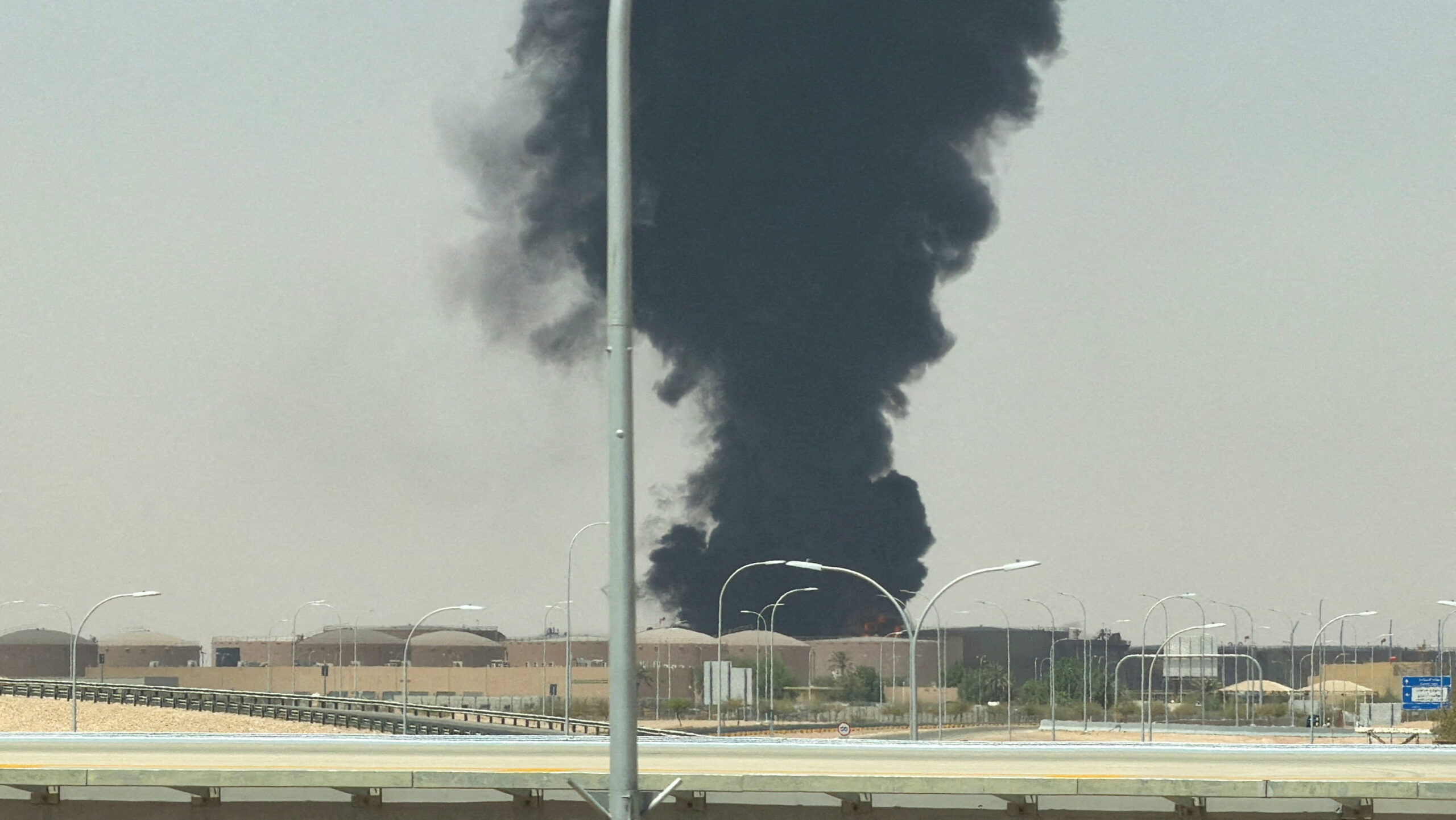
Attacks on the East-West oil pipeline and other targets in Saudi Arabia will result in a larger-than-expected economic contraction in the kingdom this year.
The outbreak of the Iran war has halted the deepening of the economic relationship between the United States and the Gulf countries. While likely temporary, it could take some time before the upward trajectory is restored.
The impact of the Iran war on the Saudi economy has been mitigated by investments in “economic resiliency,” including the East-West oil pipeline, relatively prudent fiscal policy, and the accumulation of a large stock of foreign financial assets.
On January 8, AGSI hosted a virtual roundtable with its leadership and scholars as they look ahead and assess trends likely to shape the Gulf region and U.S. foreign policy during the coming year.