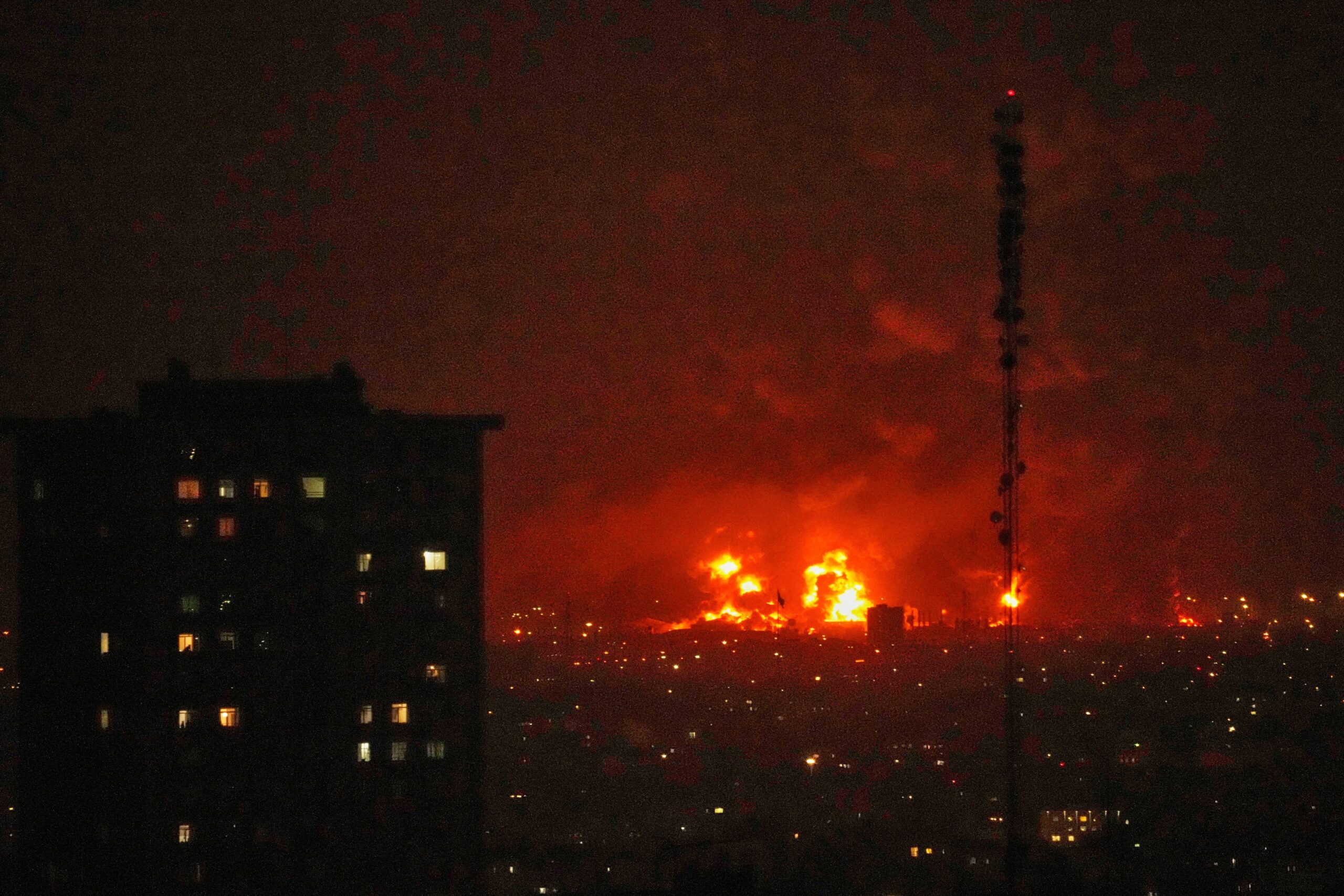
One silver lining of the Iran conflict may be the emergence of new, more durable foundations for regional economic integration via more agile trade corridors in the Gulf and beyond.
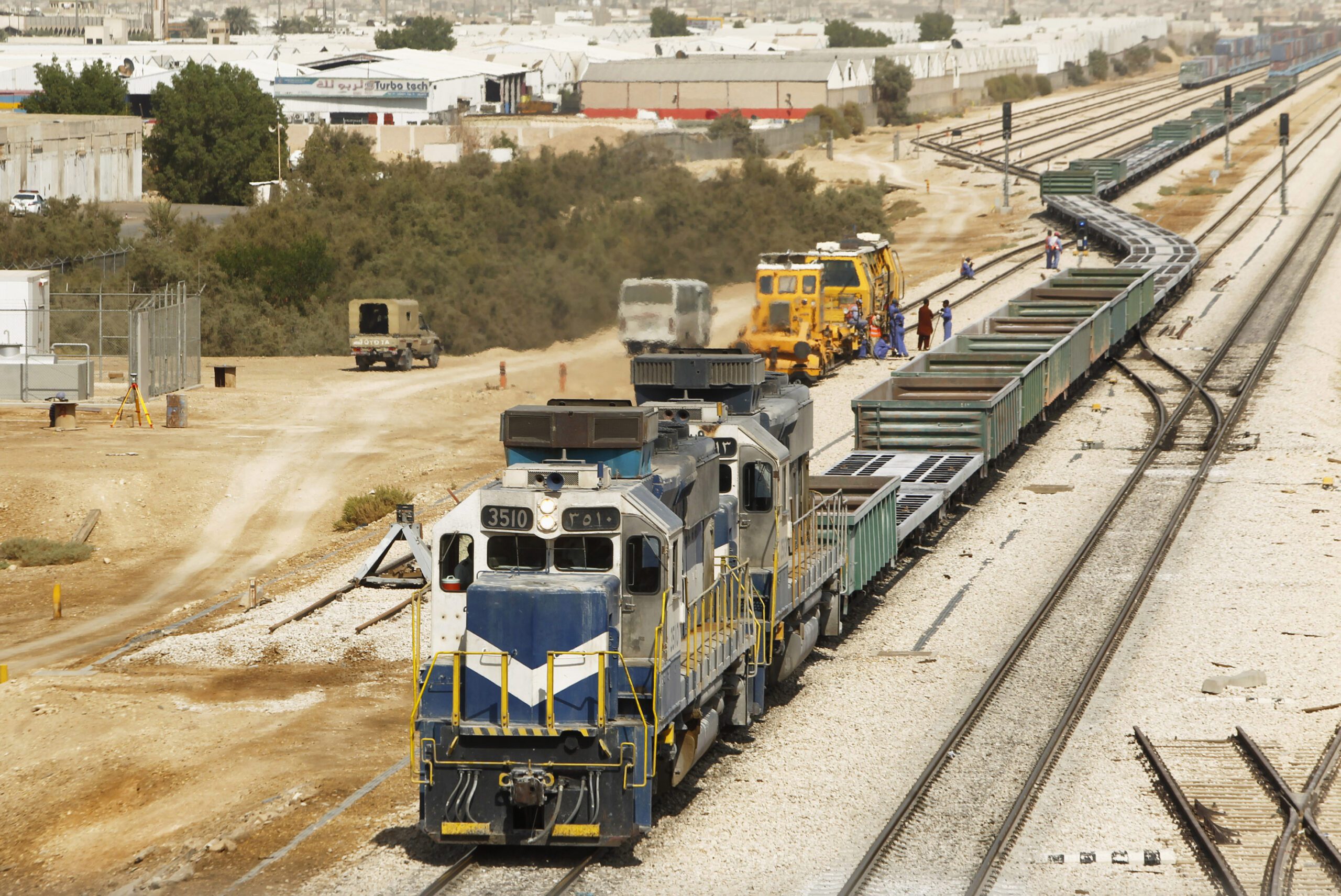
Freight train at a railway station in Riyadh that links Riyadh and the port of Dammam in Saudi Arabia, October 31, 2012. (GULF-RAILWAY/REUTERS/Fahad Shadeed)
On April 10, Saudi Arabia Railways announced the launch of five new logistics corridors in the freight sector – a recent addition amid a flurry of economic corridors that have emerged since the Iran conflict began February 28. The unprecedented obstructions to the Strait of Hormuz have laid bare the advantages of export route optionality, as Saudi Arabia has benefitted from, with its East-West pipeline that has kept crude oil flowing to global markets. No matter what happens with the strait, alternate export routes and economic corridors are going to function as key components of risk mitigation strategies over the months and years ahead.
Yet the Gulf region – and the broader Middle East and North Africa – does not have a stellar track record on economic integration. Following the oil price drop of 2014-16, Gulf governments were acutely focused on their domestic economies. The Gulf rift of 2017-21 and the coronavirus pandemic created new barriers to regional integration and further exacerbated the inward focus of regional policymakers. Over recent years, free trade agreement negotiations at the Gulf Cooperation Council level moved at a glacial pace, while those seeking additional signs of greater regional integration looked toward the well-intentioned but decidedly nonstrategic unified GCC tourist visa.
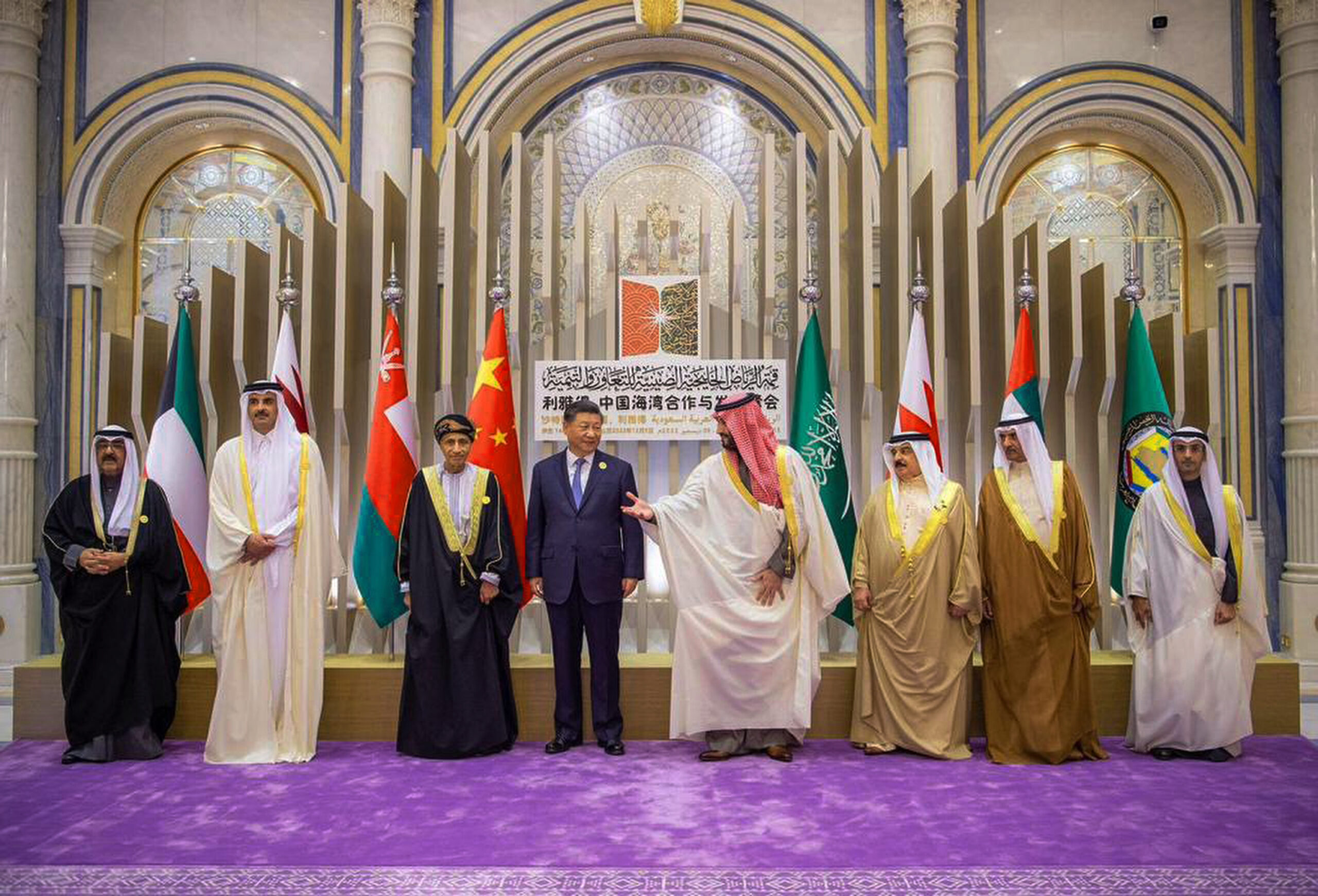
The political economy context through which regional trade and investment corridors operate is shifting. The Iran conflict and associated geopolitical shocks have injected urgency into alternate trade routes, logistics cooperation, and other connectivity initiatives. New conflict-induced corridors are likely to remain in place or morph into related structures once the dust from the conflict settles. Moreover, these new forms of commercial infrastructure will become durable components of the region if there is a broader alignment of interests and incentives between government and business actors.
Cooperating on Corridors
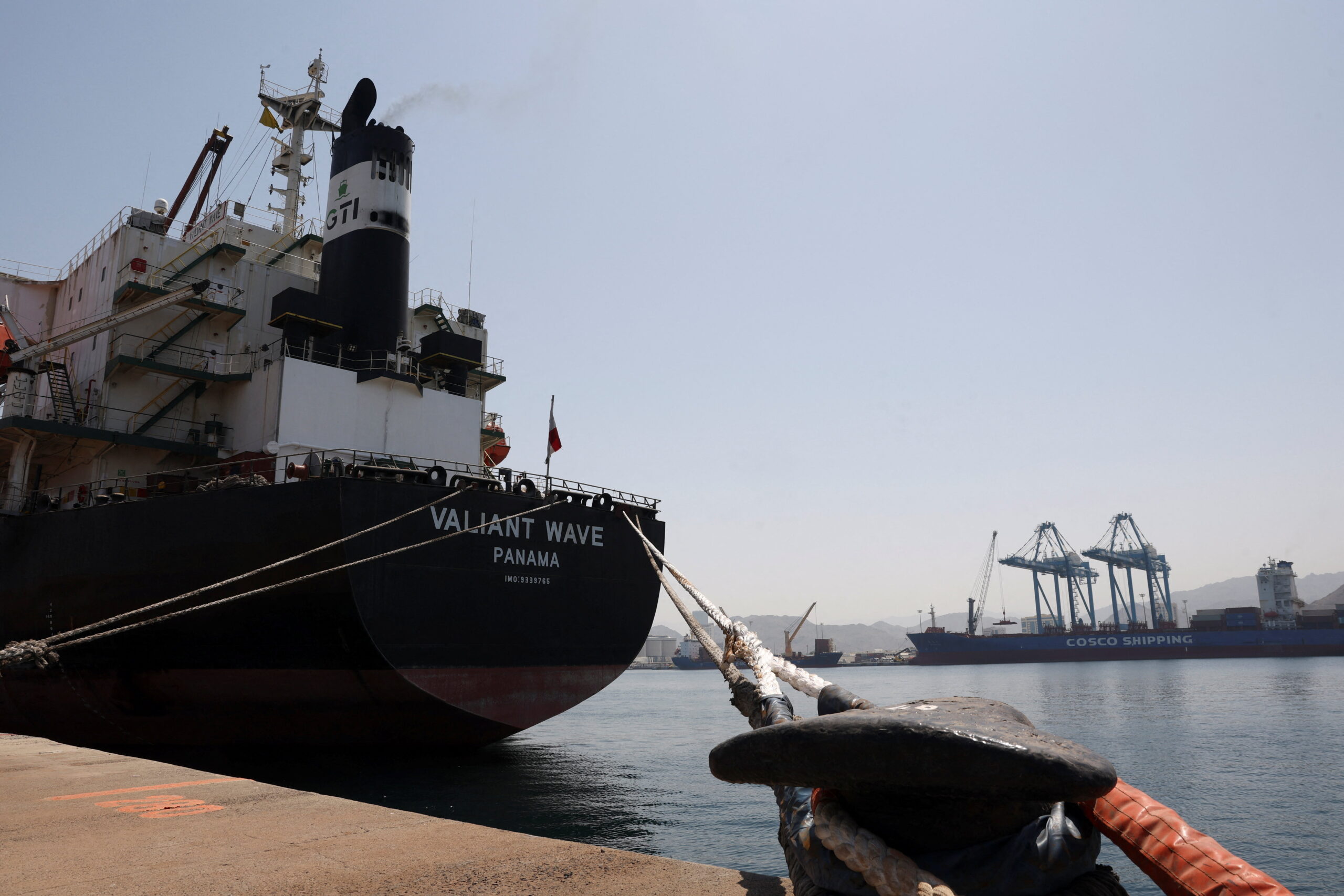
For the moment, regional actors are responding to acute pressures on supply chains, resulting in crisis management-related corridors. The Saudi Ports Authority, or Mawani, announced a tie-up with Sharjah’s logistics company Gulftainer to boost connectivity between Dammam in the kingdom’s Eastern province and Sharjah in the United Arab Emirates. The UAE-Saudi Arabia trade route will utilize the Khorfakkan Inland Corridor, Khorfakkan Commercial Terminal, and Sajaa Dry Port to create integrated inland and land-sea corridors as part of efforts to bypass the Strait of Hormuz.
Indeed, Gulftainer prominently displays on its website that the “Khorfakkan Commercial Terminal is the only fully operational terminal in the United Arab Emirates located outside the Strait of Hormuz.” The UAE’s minister of foreign trade is simultaneously advancing alternate cargo routes and updated operational frameworks to ensure movement of strategic goods.
Customs departments in Oman and Dubai also set up a new “Green Corridor” to better connect Omani and Emirati ports and free zones and facilitate the overland shipment of diverted goods. Additional customs facilitation measures were subsequently put in place, but the “facilitation is temporary in nature and will remain in force during the current exceptional situation, until further notice,” according to Abdulla Busenad, director general of Dubai Customs.
Bahrain appears to be getting a little help from its Gulf friends in the form of new economic and maritime linkages. On April 9, the UAE and Bahrain signed a 5-year, $5.44 billion currency swap aiming to facilitate cross-border transactions and monetary cooperation. The move establishes a new financial corridor for economic cooperation at a time of elevated economic stress for Bahrain stemming from the Iran conflict. Saudi Arabia’s Mawani launched a new maritime link with Bahrain via MSC’s Gulf Shuttle service, as regional shipping routes continue to manage significant strain amid the conflict.
Qatar is tapping into regional reconfigurations of crucial economic activities too – both out of need and foresight. In early March, the Qatar Chamber announced that it would facilitate the movement of goods through the Saudi land border with fast-tracked customs procedures. In an agreement that looks prescient in hindsight, Saudi Arabia’s Mawani and Qatar Ports Management Company signed a memorandum of understanding on February 18 to boost maritime and logistics cooperation.
Underlying Competitive Dynamics
Some Gulf countries stand to gain – in a relative sense – from these new Iran conflict-related regional corridors. Over recent years, Saudi Arabia has sought to boost its credentials as a trade, reexport, and logistics hub. The country has a National Transport and Logistics Strategy, and logistics is slated to be a key sectoral focus area of the Public Investment Fund’s 2026-2030 strategy.
In March, Saudi Arabia launched a Logistics Corridors Initiative. Growing pains are likely. There are reports that Saudi Arabia has struggled to find alternative routes for imports and manage more cargo at its ports. Moreover, renewed tensions in the Red Sea would severely complicate Saudi Arabia’s positioning. Iran has threatened to activate the Bab el-Mandeb front if its coast or islands are attacked, and the Houthis have renewed attacks on Israel but thus far held off from actively disrupting shipping in the vital waterway.
Oman is also well positioned to benefit from new corridors. Oman’s geographic advantages and Muscat’s diplomatic stance toward Iran have thus far reduced the worst of the conflict’s spillovers. Oman’s corridors are already being described as “complementary pathways.” Any escalation of Houthi activity in the Red Sea may partially increase the importance of Omani trade and logistics hubs, such as Duqm. Yet a strategic distance from both the Bab el-Mandeb and Strait of Hormuz does not reduce risks to zero. Duqm commercial port facilities have encountered attacks amid the conflict, though with limited damage.
The UAE has long been viewed as the region’s trade and logistics hub, and the country does enjoy some degree of export route flexibility with its Habshan-Fujairah oil pipeline bypassing the Strait of Hormuz. This premier status may be questioned amid the emergence of new corridors involving other regional states as critical nodes. Yet the UAE’s inclusion in some of these corridors is likely to emphasize and reinforce the country’s strong trade and logistics credentials as well as its connectivity to global markets.
At the same time, older initiatives facilitating trade connectivity may benefit from renewed commercial demand associated with shifting regional dynamics. Qatar’s special economic zone in Al Karaana – located roughly halfway between Doha and the Saudi border – is one such example.
To the Region, and Beyond
The scope of new Iran conflict-induced corridors extends beyond the Gulf. For example, one of Saudi Arabia’s new international rail logistics corridors aims to better link the country’s eastern ports with the Al-Haditha border crossing with Jordan. The 1,000-mile corridor connects King Abdulaziz Port in Dammam, Al-Jubail Commercial Port, and King Fahd Industrial Port in Jubail to Jordan.
Other emerging corridors and trade linkages are energy driven. This is understandable, given the strategic nature of oil and gas exports for Gulf states. Iraq is exporting oil via land tankers through Syria, despite limited political alignment with Damascus and alongside complicated efforts to rehabilitate its Kirkuk-Ceyhan pipeline.
Nor did these new corridors and regional economic linkages emerge out of thin air. An Oman-Europe Liquid Hydrogen corridor was established in 2025, but the initiative continues to move forward, with engineering firms having recently been appointed to develop associated terminals at the Port of Amsterdam. The commercial-scale initiative links Oman’s Duqm to Amsterdam and hubs in Germany.
If newer conflict-related corridors survive in the aftermath of the Iran conflict, some will overlap with preexisting connectivity initiatives. Even if short-lived, temporary initiatives may very well still shape the gradual development of the transregional India-Middle East-Europe Economic Corridor and the Development Road project, which aims to connect Iraq’s Al-Faw Grand Port to Turkey’s border and has backing from the UAE and Qatar.
Some of these crisis-induced corridors and acute risk management initiatives will fade away, evolve into different structures, or be absorbed into broader connectivity initiatives. Yet regional actors interested in securing sustainable access to global markets are forging deeper and creative commercial engagements. This process – accelerated by the Iran conflict – is likely to strengthen the foundations for regional economic integration and better demonstrate where interests are most aligned.
The views represented herein are the author's or speaker's own and do not necessarily reflect the views of AGSI, its staff, or its board of directors.
The Iran conflict has arrived at the worst possible moment for Gulf sustainable finance, a sector already navigating fiscal strain, a global ESG backlash, and the unresolved tension between hydrocarbon revenue and transition capital.
The Iran conflict reinforces China’s short-term position as one of managing and mitigating risks rather than shaping outcomes that expand Chinese influence in the Middle East.
Beijing keeps treading carefully around conflict in the Middle East while seeking opportunities to deepen ties with key country partners through a longer-term regional engagement strategy.
The UAE’s decision to halt trade and commercial ties with Iran reflects an exercise in applying carefully calibrated geoeconomic pressure amid an uncertain and evolving geopolitical context.