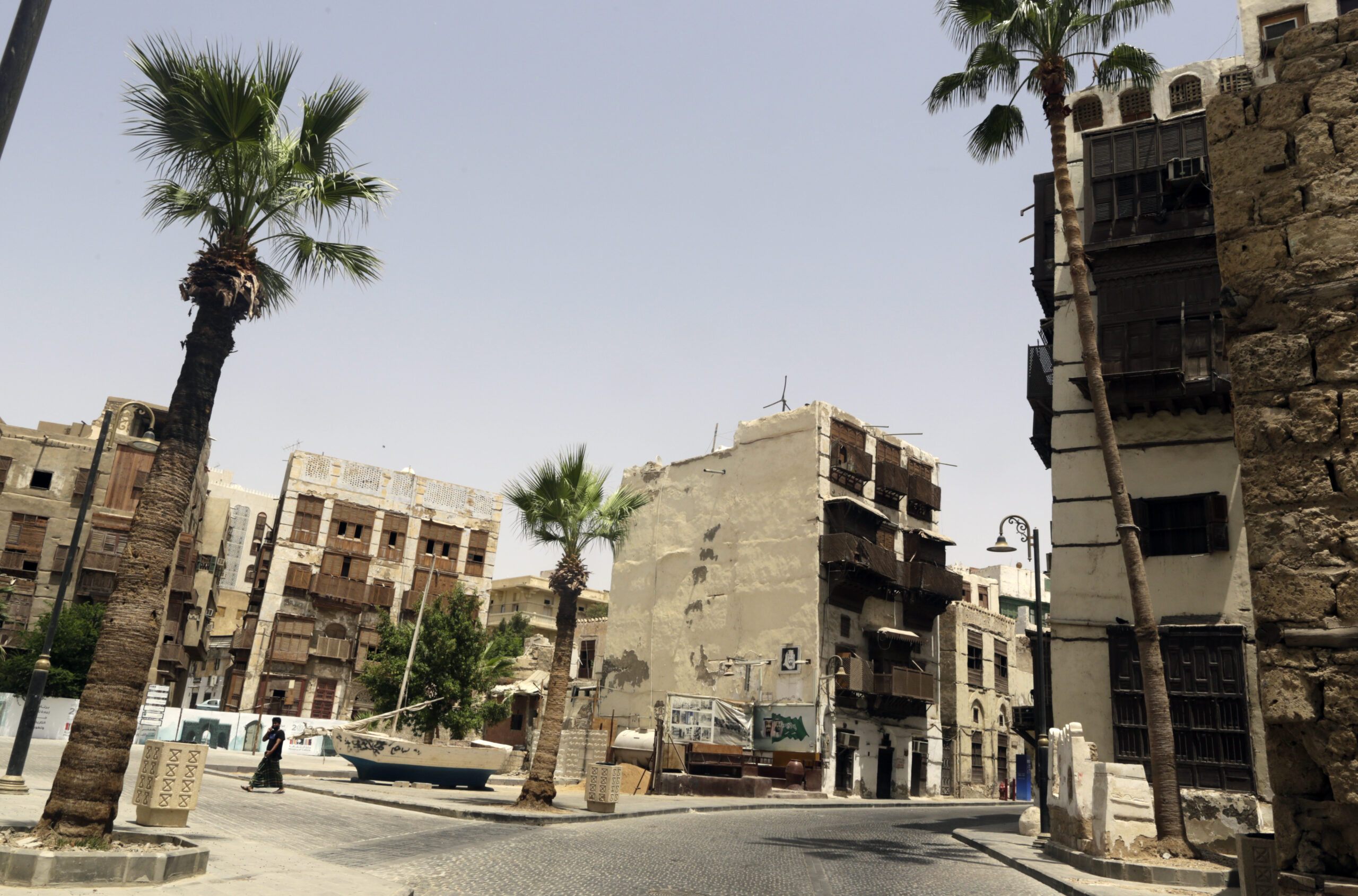
A person walks through the Jeddah's historical district, which is empty due to coronavirus restrictions, Jeddah, Saudi Arabia, June 15. (AP Photo/Amr Nabil)
Saudi Arabia’s hosting of the virtual G-20 summit from November 21-22 in Riyadh highlights the country’s role as a major economic power. Yet it is also an occasion to reflect upon the mixed record of economic reforms and uneven progress on the economic dimensions of Vision 2030. Crown Prince Mohammed bin Salman engaged in such reflection in his speech to the Shura Council on November 13. While the coronavirus pandemic offers a justifiable excuse for the slow and uncertain progress to date, the status quo will not be tolerated indefinitely.
Not All Doom and Gloom
Despite the extraordinary circumstances imposed by the coronavirus pandemic, assuming the 2020 G-20 presidency still lends credence to the global significance of the Saudi economy. The overarching summit theme of “Realizing Opportunities of the 21st Century for All” is divided into three action-oriented subcomponents: empowering people (with a focus on women and youth), safeguarding the planet, and shaping new frontiers. The pandemic and strategies to revive the global economy are expected to dominate discussions during the summit.
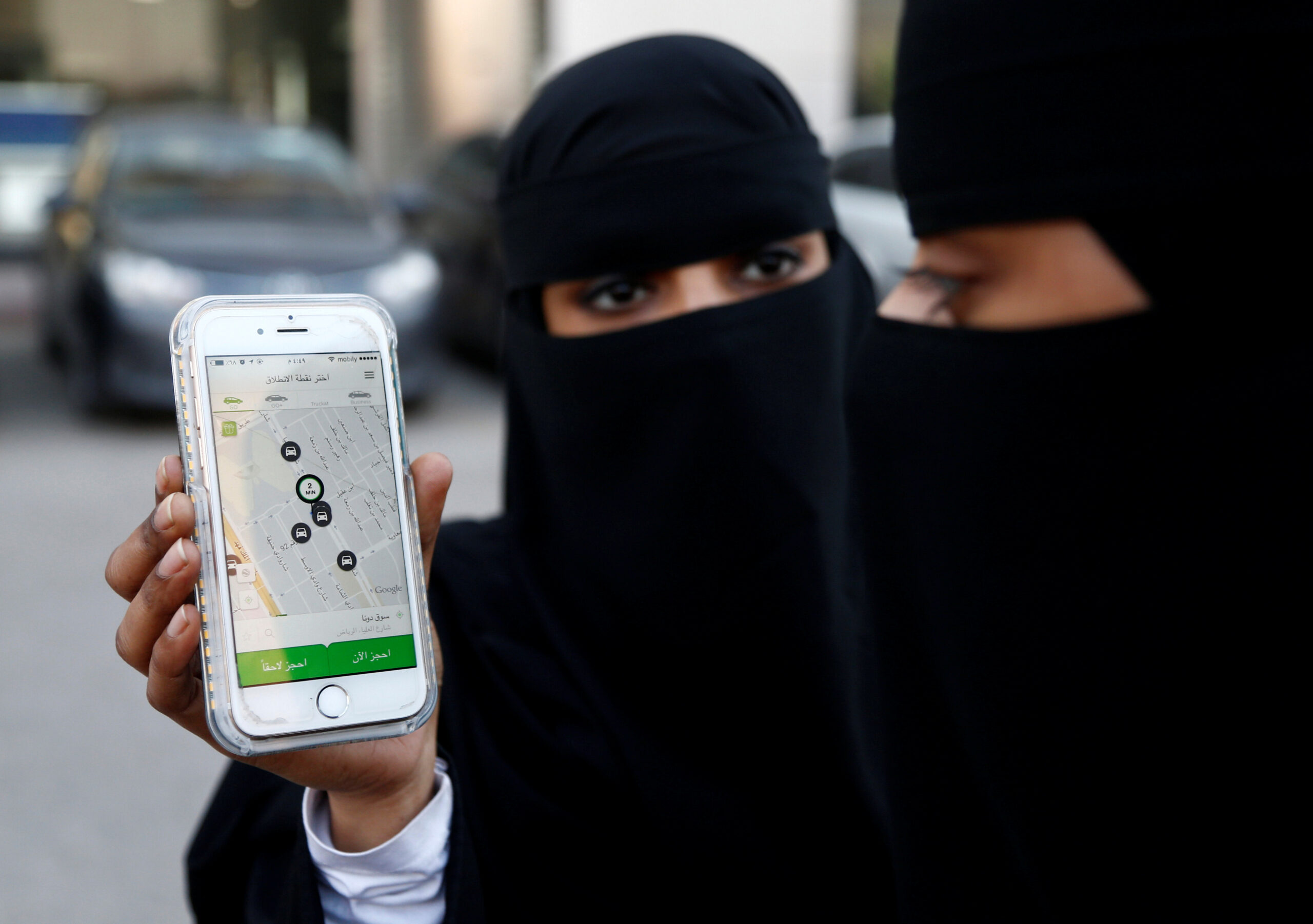
The virtual nature of the G-20 summit aligns with Saudi Arabia’s ambitious digital transformation agenda. In October, Saudi Arabia launched its National Strategy for Data and Artificial Intelligence, which follows the creation of a data and AI authority in 2019. The technology-focused strategy aims to attract $20 billion in investments and train 2,000 Saudis as data and AI specialists over the next decade.
A remote G-20 meeting does complicate efforts to showcase budding tourist destinations, cultural attractions, and expanding entertainment venues. However, high-priority national development initiatives – from Neom to Amaala – continue to push ahead, albeit at a cautious pace. The government also established the Saudi Sports Company to manage and secure broadcasting rights for elite sporting events, and Saudi Arabia obtained the rights to host Formula One racing for the next 15 years. These developments will enable Saudi officials to better promote domestic initiatives and market the country to a global audience.
Gross domestic product growth forecasts for Saudi Arabia have been revised upward in the third quarter. The International Monetary Fund now expects Saudi GDP growth to be -5.4% for 2020, up from the projected -6.8% earlier in the year. Nevertheless, the Saudi economy contracted 7% in the second quarter, leaving plenty of room for improvement.
The country has pushed through new measures to increase non-oil revenue streams, such as raising the value-added tax rate from 5% to 15% and increasing customs duties on some imports. The government also announced labor market reforms permitting certain expatriates additional rights, which may marginally benefit Saudi Arabia’s image on the global stage. The extent to which these reforms actually improve expatriates’ work environments depends largely on the policy’s implementation in 2021 and its subsequent enforcement.
An Expensive Vision
From its conception, Vision 2030 called for an expensive, government-led transformation. The slow recovery of oil prices between 2016 and 2018 offered some fiscal leeway to advance this economic agenda. Yet, oil prices are hovering around $40 per barrel for West Texas Intermediate crude, and Saudi Arabia still relies on oil and gas proceeds for the majority of government revenue. Government services accounted for the largest segment of Saudi GDP – totaling 24.5% – in the second quarter of the year, while crude petroleum and natural gas were the next largest sector at 14.5%.
Saudi policymakers face the dilemma of how to accomplish ambitious targets with fewer financial resources. This will be challenging without buy-in from local and international investors, whose interest in Saudi Arabia’s economic transformation depends in large part on their ability to secure lucrative commercial opportunities in the country.
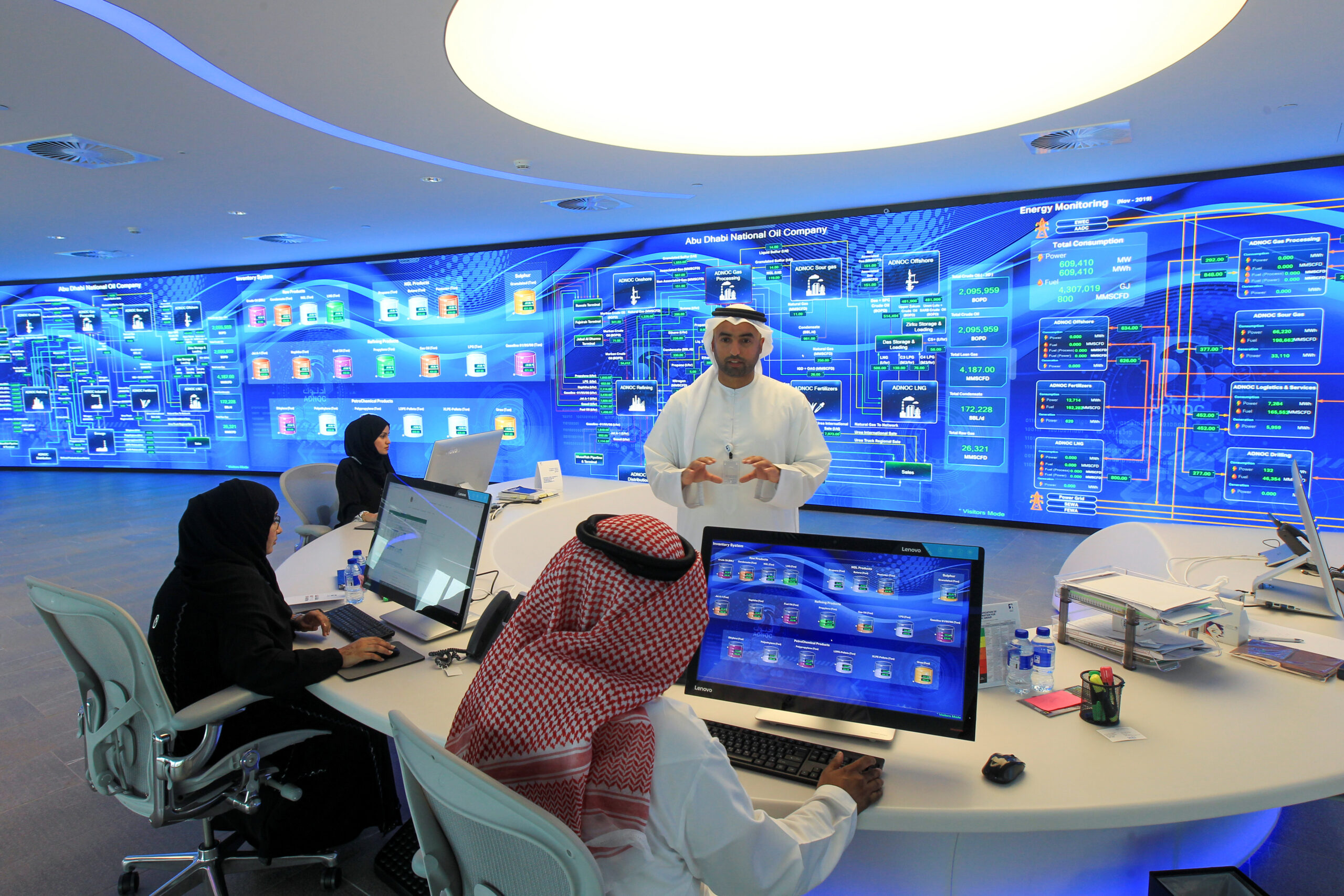
The privatization of state assets serves as one avenue identified by Saudi policymakers to enhance private sector involvement in the economy and free up additional funds. The government completed an initial public offering of Saudi Aramco, but it did not result in a torrent of demand for other state assets. Many of these government entities are struggling: The country’s crown jewel, Aramco, has hired banks for a bond issuance to help meet its 2020 dividend payments. Aramco is also mulling the partial privatization of other oil and gas assets, as the Abu Dhabi National Oil Company has done in recent months.
Foreign direct investment into Saudi Arabia has been disappointing over the past decade and largely on a downward trend since 2008. Saudi Arabia missed its $10 billion FDI target in 2019, instead attracting around $4.6 billion. FDI flows in 2020 are unlikely to fare much better. Inward FDI reached approximately $945 million in the second quarter of 2020 after registering $1.6 billion in the first quarter.
Unemployment remains a perennial issue in Saudi Arabia, given the size of the country’s population. Total unemployment reached 15.4% in 2020 – a record high. Female employment figures look a bit rosier, but challenges remain on this front. According to the General Authority for Statistics, female participation in the labor force increased from 17.7% to 31.4% between 2016 and 2020. Vision 2030’s modest targets for raising Saudi female labor participation to 25% in 2020 and 30% in 2030 appear on track. However, a 31.4% unemployment rate among Saudi women far exceeds the 8.1% rate for Saudi males in the second quarter of 2020.
In his speech to the Shura Council, the crown prince announced that the Public Investment Fund, the country’s sovereign wealth fund, would inject $40 billion annually into the local economy in 2021 and 2022. Pressure on the Public Investment Fund to redirect more capital domestically has been building for some time; however, these commitments make the target of increasing the fund’s assets to $2 trillion by 2030 seem unrealistic.
The suggestion by Saudi government officials that Vision 2030 has prepared the country for this difficult period serves to portray the vision as an enabler for, rather than hindrance to, economic progress. But, in many respects, the vision is back where it started: an ambitious transformation that must be led by a government willing to spend heavily in an uncertain economic environment. The next decade will reveal the degree to which the crown prince and other government officials can put in place the economic policies needed for hard times.
The views represented herein are the author's or speaker's own and do not necessarily reflect the views of AGSI, its staff, or its board of directors.
Smart spending on the enhancement of Gulf governments’ digital capabilities and the development of technology-focused industries is needed to bolster future growth.
France is positioning to be a more influential actor across the Middle East, but the European powerhouse is most likely to see immediate traction on the economic tracks that run to and from the Gulf.