Uzbekistan’s growing economy and strategic location are creating opportunities for Oman to expand its investments abroad and strengthen its international logistics network.
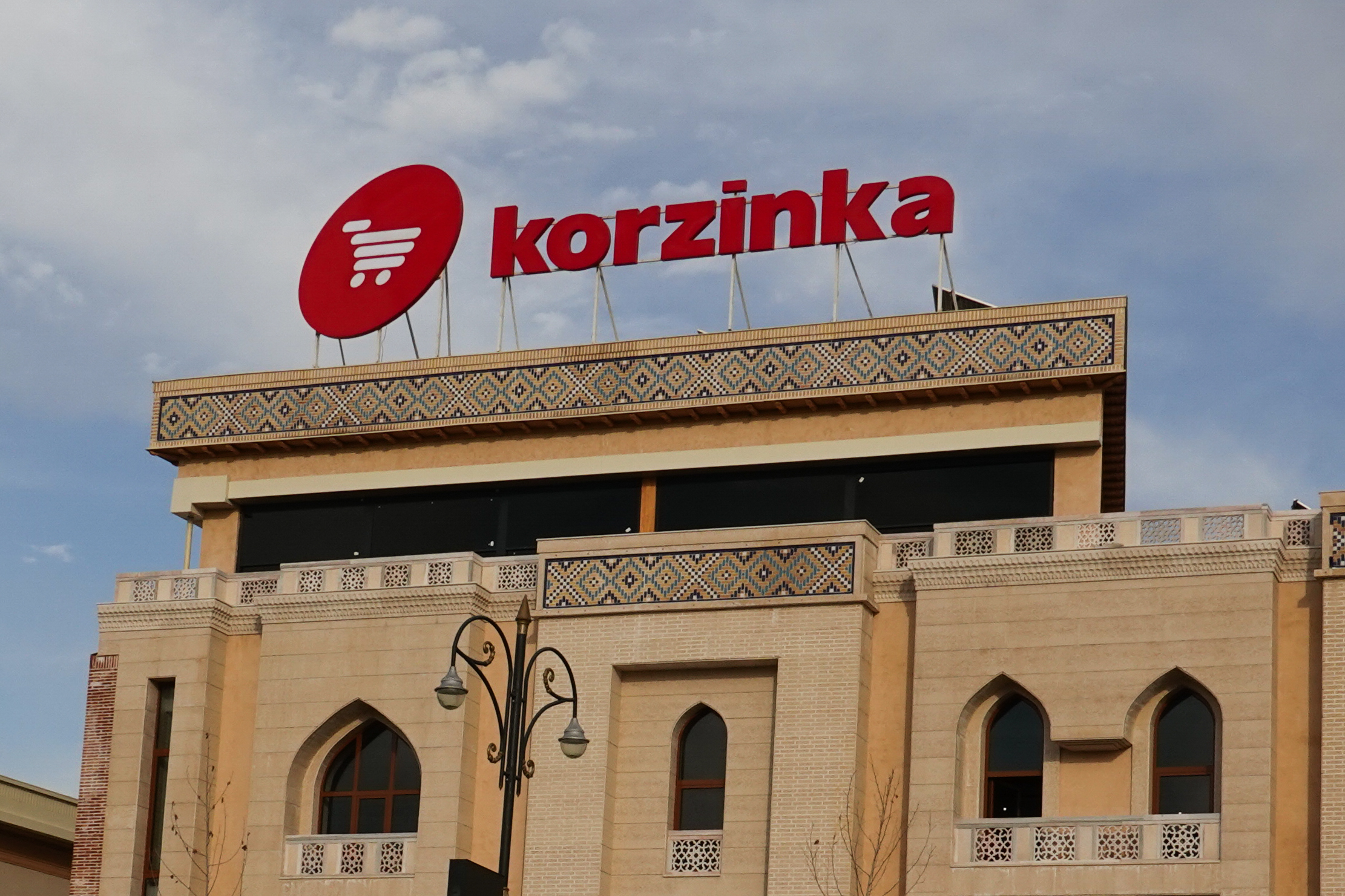
The Korzinka logo is seen on a building in Tashkent, Uzbekistan, February 20. (Photo by JPix/NurPhoto)
On November 17, Oman and Uzbekistan signed a series of agreements during Uzbek President Shavkat Mirziyoyev’s two-day visit to the sultanate aimed at deepening economic and strategic ties. The agreements included plans to establish a new commercial bank in Uzbekistan, increase the capital of Uzbek-Oman Investment Company, and expand cooperation on trade and transportation corridors. The two countries also agreed to establish a bilateral business council and pursue a preferential trade agreement.
The agreements build on an economic relationship that has been developing for over a decade. Through Uzbek-Oman Investment Company, Omani capital has entered several sectors of Uzbekistan’s economy, while more recent investments by Asyad Group have expanded cooperation into logistics and transportation infrastructure. These developments are part of Oman’s efforts to capitalize on Uzbekistan’s growing investment opportunities while strengthening the sultanate’s position as an international logistics hub.
Growing Investment Opportunities in Uzbekistan
Uzbekistan has undergone major economic reforms since 2017 to reduce state control over the economy, encourage greater private sector participation, and attract foreign investment. One important reform was the liberalization of foreign exchange controls, which made it easier for businesses to access foreign currency. Between 2017 and 2025, Uzbekistan’s economy grew at an average annual rate of approximately 6%, driven by increased domestic spending and expansion across key economic sectors. In 2025, investment grew by 10.5%, while private consumption increased by 9.5% as a result of higher wages and remittances.
While Omani investments in Uzbekistan predate 2017, these economic reforms, combined with Uzbekistan’s relatively large and expanding consumer market, have created additional opportunities for Oman. Established in 2010 as a joint venture between the Oman Investment Authority and Uzbekistan’s Fund for Reconstruction and Development, Uzbek-Oman Investment Company is the primary bilateral vehicle for deploying Omani state capital in Uzbekistan. By 2016, the company had invested an initial $100 million, followed by an additional $100 million capital injection in 2017. Since then, Uzbek-Oman Investment Company has expanded its investments across sectors including real estate, retail, logistics, financial services, and hospitality. The company currently manages over $300 million in assets.
One notable example of how Omani capital is seeking to benefit from Uzbekistan’s expanding domestic consumer market came in 2025, when Uzbek-Oman Investment Company, alongside Abu Dhabi Uzbek Investment, a joint venture between the Abu Dhabi Fund for Development and Uzbekistan’s Fund for Reconstruction and Development, participated in a $110 million minority equity investment in Korzinka, Uzbekistan’s leading supermarket chain. The investment aimed to support Korzinka’s plans to expand its footprint from 156 stores in 2025 to approximately 1,000 stores in the coming years. By September 2026, the supermarket chain had expanded to 299 stores, highlighting the growth opportunities in Uzbekistan’s modern retail market.
Linking Central Asia to Omani Ports
Beyond capitalizing on Uzbekistan’s investment opportunities, Oman has also been expanding its presence in the country’s logistics sector as part of its broader efforts to strengthen its position as an international logistics hub. In June, Oman’s state-backed logistics company, Asyad Group, acquired controlling stakes in two Uzbek logistics facilities, Universal Logistics Services and Highway Logistics Center, in a transaction involving Uzbek-Oman Investment Company and Uzbekistan’s Orient Group. The two facilities handle approximately 25% of Uzbekistan’s railway container traffic. The acquisition marks Asyad Group’s first direct operational presence in Central Asia, creating an opening for the company to establish a foothold in Uzbekistan’s freight transportation network while potentially increasing the volume of cargo passing through Omani ports.
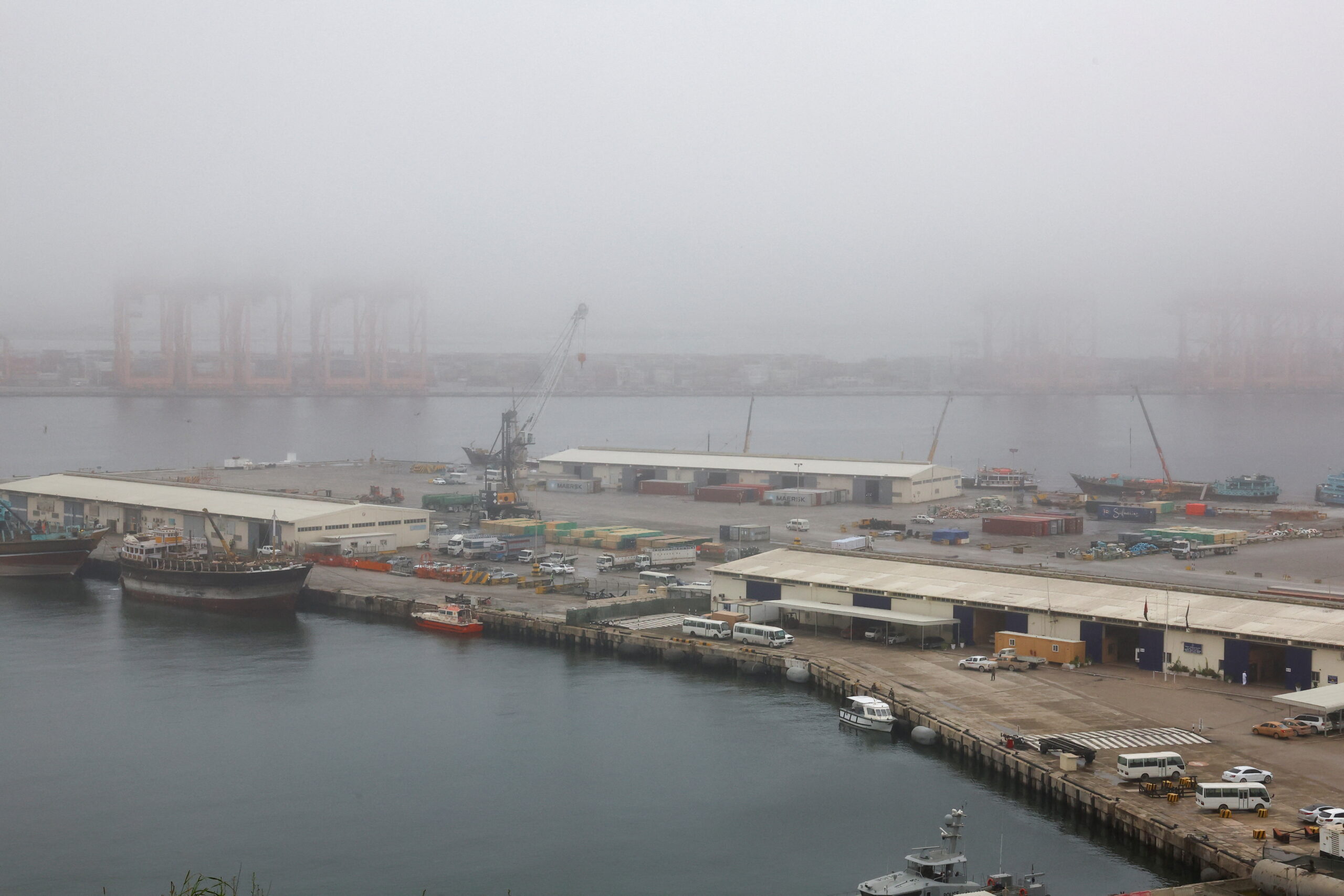
Uzbekistan is one of only two doubly landlocked countries in the world, alongside Liechtenstein in Central Europe, meaning its exports must pass through at least two other countries to reach a seaport. This geographic constraint makes reliable access to international maritime trade routes particularly important and encourages the country to diversify its trade networks. Meanwhile, Oman has invested heavily in developing its ports at Duqm, Salalah, and Sohar, seeking to attract additional cargo flows. Omani ports offer access to shipping routes serving Asia, Europe, and East Africa, providing Uzbek exporters with additional routes to international markets. These complementary interests have created opportunities for greater logistics and trade cooperation between the two countries.
One framework through which Oman and Uzbekistan are seeking to advance these shared logistics interests is the “Ashgabat Agreement,” a multimodal transport pact that entered into force in 2016. The agreement supports the development of a transportation corridor connecting Uzbekistan with Oman through Turkmenistan and Iran. In February, Omani and Uzbek transportation officials discussed ways to deepen cooperation under the agreement and increase cargo flows through the ports of Duqm, Sohar, and Salalah.
The proposed corridor, however, faces several challenges. One of the most significant is its reliance on transit through Iran, exposing it to regional conflicts and complications associated with international sanctions. Disruptions within Iran could force exporters to seek alternative routes, increasing transportation costs and delivery times. Additional obstacles include infrastructure limitations and differences in customs procedures and transportation regulations across participating countries, which could lead to border delays and increase shipping costs. These challenges could affect the corridor’s reliability and competitiveness compared with alternative international trade routes.
Oman’s deepening economic ties with Uzbekistan reflect the growing importance of Central Asia to the sultanate’s efforts to diversify its investments and enhance its international trade network. Uzbekistan’s economic expansion has created new opportunities for Omani capital, and cooperation in logistics could offer longer-term strategic benefits for both countries. However, the ability to translate these efforts into greater trade flows through Omani ports will hinge on addressing infrastructure limitations, transit challenges, and geopolitical risks. Overcoming these obstacles will be key to determining whether the growing partnership can develop into a more significant trade network between Central Asia and international markets via Oman.
The views represented herein are the author's or speaker's own and do not necessarily reflect the views of AGSI, its staff, or its board of directors.
Gulf national oil companies are looking to increase stockpiles in Asia to meet customer needs, address their energy security concerns, and enable a nimbler response to unexpected market disruptions.
An updated economic program and new regulatory framework reveal Oman’s focus on generating in-country value associated with promising economic development areas.
As Gulf countries seek alternative routes beyond the Strait of Hormuz, Lebanon is positioning Tripoli as a complementary Mediterranean gateway alongside Syria, but long-standing political and financial risks could limit serious capital inflows.
Joining the Mecca agreement could offer strategic benefits to both Damascus and its existing members while also introducing political and security complications that could test the agreement’s credibility.
Despite the massive disruptions caused by the Iran conflict, how Bahraini policymakers address structural vulnerabilities moving forward will be the critical determinant of the country’s longer-term economic outlook.
Newly announced joint ventures to build rare earth refineries in Saudi Arabia are part of a larger strategy to capitalize on Western markets’ need for rare earth elements.