Gulf national oil companies are looking to increase stockpiles in Asia to meet customer needs, address their energy security concerns, and enable a nimbler response to unexpected market disruptions.
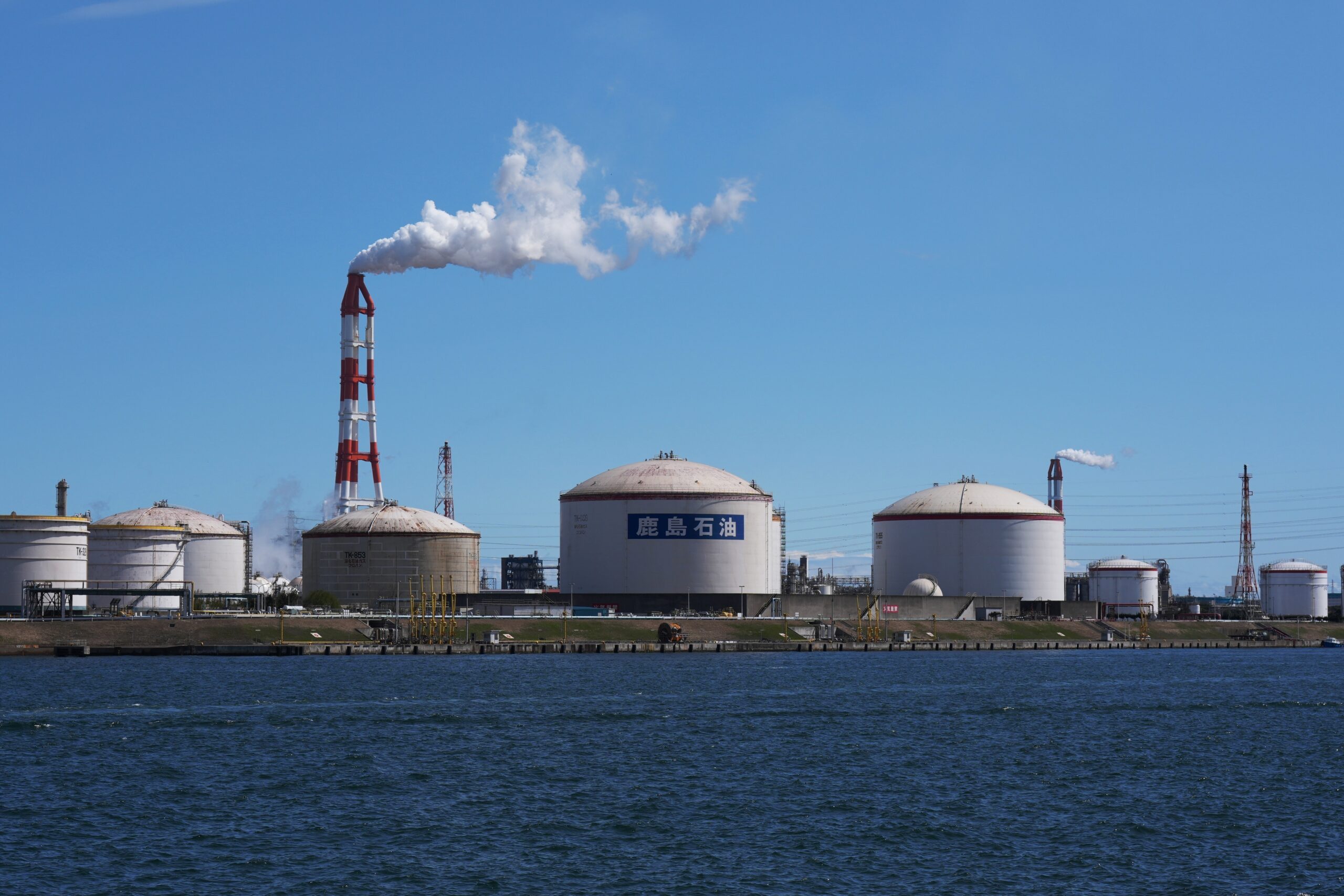
Part of Eneos group's Kashima oil refinery is seen in Kamisu, Japan, March 15. (AP Photo/Hiro Komae)
The Gulf Arab states are scrambling to reduce their dependence on the Strait of Hormuz. The United Arab Emirates is investing in a new bypass pipeline, Saudi Arabia may follow suit, and companies could even revive a long-defunct export pipeline from Iraq to Syria. Yet threats to maritime transportation in the Middle East will remain a concern, and new infrastructure could also be targeted by drone and missile attacks. It also remains true that accelerating long-term infrastructure projects will still take years to build. Oil exporters and importers are exploring another solution: stockpiling more Middle Eastern oil in Asia.
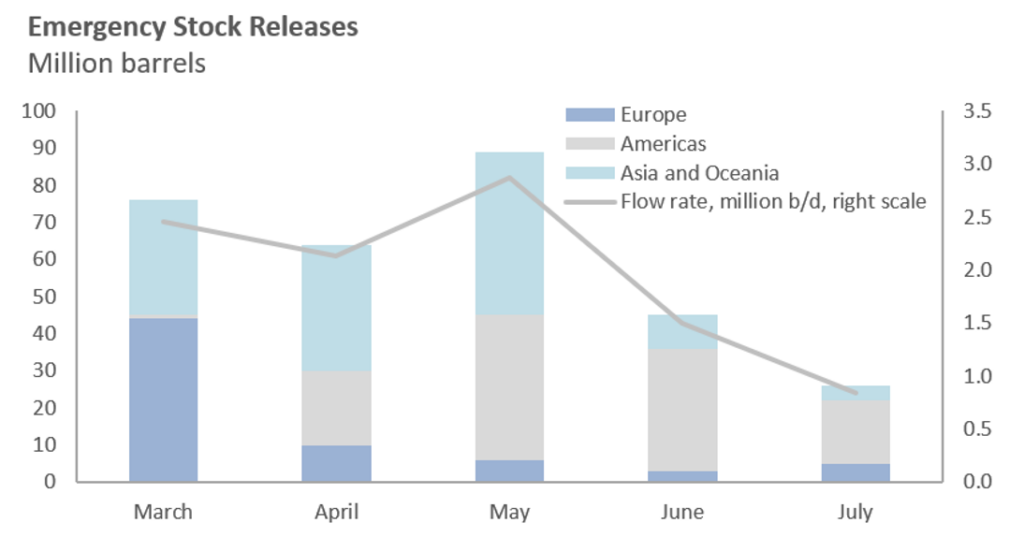
Over the past seven months, global oil inventory releases have been a key source of resilience. Between March and May, worldwide oil inventories, including strategic and commercial stocks, fell by a staggering 3.8 million barrels per day, according to the International Energy Agency. It was the deepest and most sustained inventory drawdown in history. The pace has slowed, especially as Gulf crude oil and refined product exports picked up. But most countries have limited capacity to keep draining reserves. Since February, global observed oil inventories have fallen by 507 million barrels.
Source: IEA “Oil Market Report,” August 2026
The supply shock prompted by the Iran conflict underlined the significance of oil inventories, but several structural problems are apparent. Some commercial inventories in the Middle East were inaccessible in recent months. And even under normal conditions, it can take at least three weeks for a very large crude carrier to travel from the Gulf to East Asia. For oil importers, the distance and time required to find alternative supplies presents a challenge.
One solution is for Gulf states to store oil in Asia, close to their customers. Such programs are already well established, especially in Japan and South Korea. The Japan Organization for Metals and Energy Security (JOGMEC), a state institution affiliated with the Ministry of Economy, Trade, and Industry, manages the country’s national oil stockpiles. Japan has three categories of oil inventories: national stockpiles, private inventories, and joint stockpiles managed with oil producing countries. Since 2009, Japan has leased storage tanks to national oil companies from the UAE, Saudi Arabia, and Kuwait, with total contractual capacity of 19.5 million barrels. Normally the companies use this storage capacity in commercial operations to supply customers in Asia, but in the event of national energy emergencies, Japan has preferential rights to the crude.
South Korea has a similar arrangement. Like Japan, import-dependent South Korea regards crude oil inventories as essential to energy security, and it maintains a mix of strategic government stocks and commercial reserves. The IEA estimates that government-managed strategic stocks and jointly managed inventories account for 48% of the country’s sizeable oil reserves. South Korea also requires commercial refiners to hold the equivalent of 40 days of forward cover, based on domestic product sales. As of June, the country’s total oil inventories were equivalent to 194 days of net imports. Korea National Oil Corporation operates government storage facilities and manages obligated industry stocks. According to S&P Global, South Korea holds around 10 million barrels of jointly managed stocks in cooperation with Kuwait Petroleum Corporation and the Abu Dhabi National Oil Company, charging leasing fees to the companies but retaining rights to these reserves for necessary emergency releases.
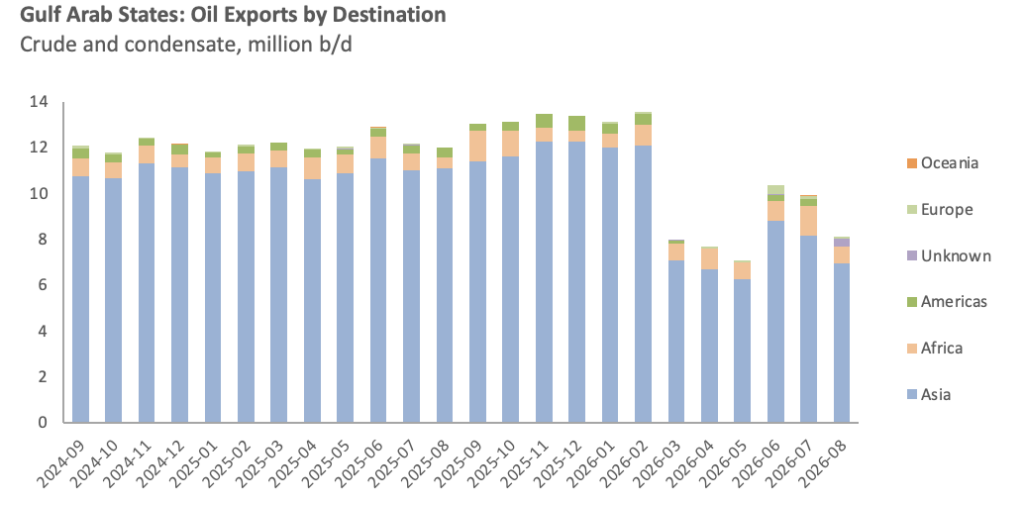
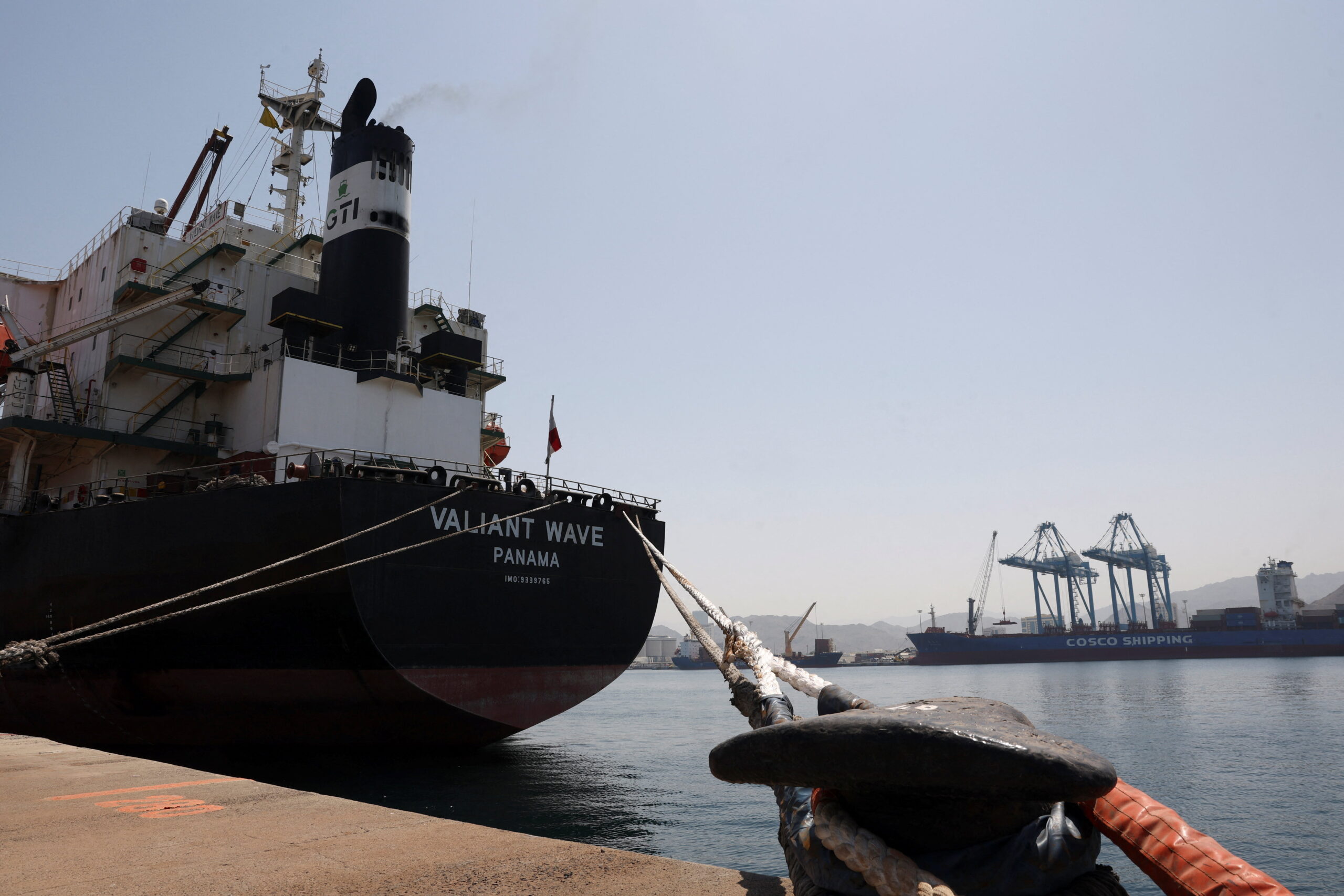
Gulf exporters have strong incentives to store more oil in Asia. Saudi Aramco CEO Amin Nasser suggested the company plans to expand storage abroad to ensure it can continue deliveries to customers even in periods of disruption. Aramco currently holds international storage capacity in Fujairah (enabling gasoline and fuel oil storage and blending activities in the neighboring UAE), on Egypt’s Red Sea port of Ain Sokhna close to the Suez-Mediterranean, or Sumed, pipeline, in the trading hub of Rotterdam, and in Japan. In late 2025, Aramco extended its arrangement with JOGMEC for 8.2 million barrels of oil storage capacity in Okinawa, which the company leases under the condition that it deliver domestic supplies in emergency periods.
Source: Kpler. Includes Saudi Arabia, the UAE, Kuwait, Oman, Qatar, Bahrain
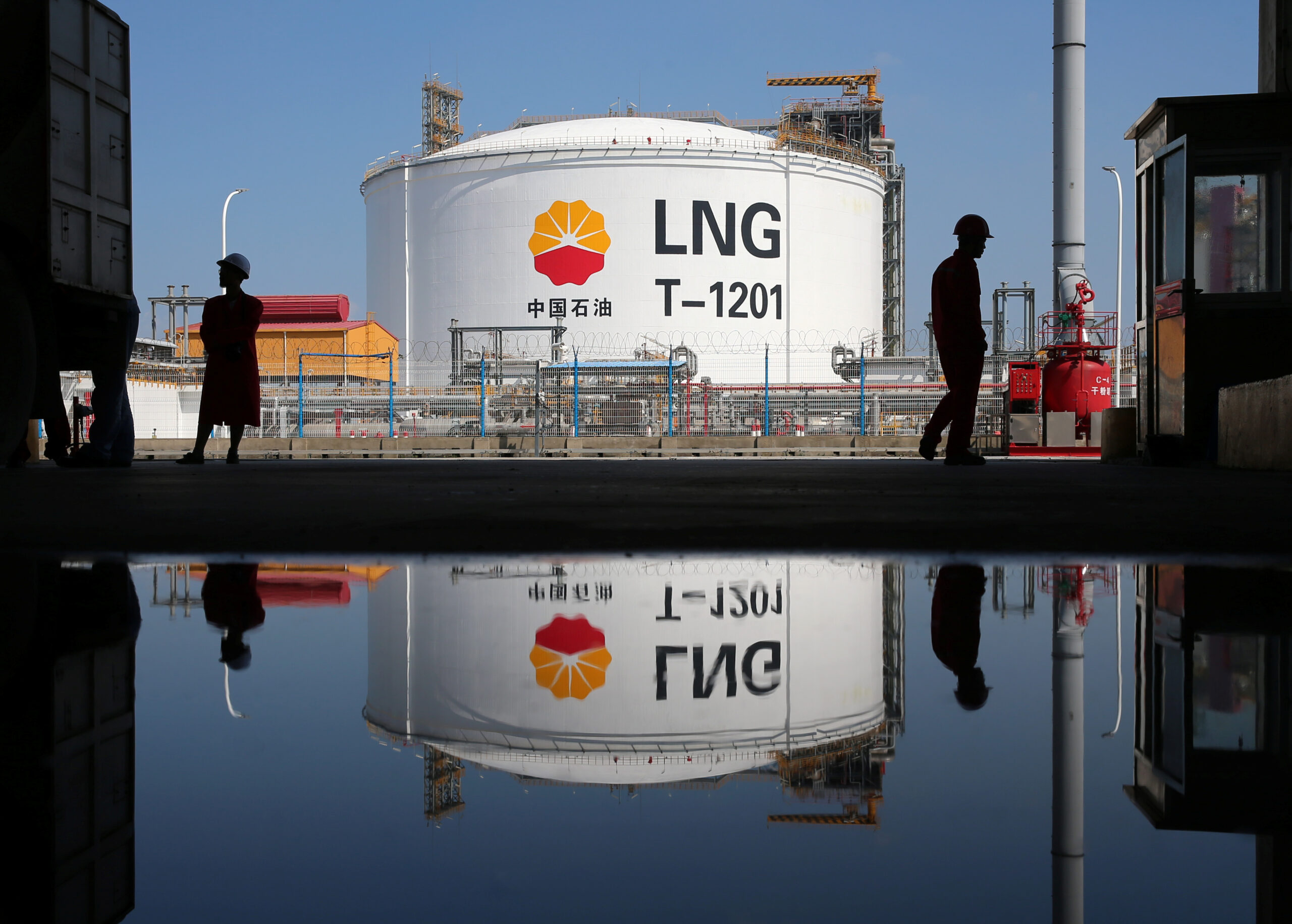
ADNOC likewise plans to store more oil overseas. In May, the company signed agreements with several Indian companies to build crude oil, liquefied petroleum gas, and liquefied natural gas storage in India. ADNOC indicated it could increase its storage capacity in India to 30 million barrels, potentially in Mangalore – where it already leases capacity – and at two planned facilities. ADNOC’s announcement suggested that the arrangement could include storage in Fujairah “as part of India’s strategic petroleum reserve.” India’s strategic reserves are very limited, with capacity of just 5.33 million metric tons (about 39 million barrels) managed by Indian Strategic Petroleum Reserves Limited. For the world’s third-largest oil importer and its fastest-growing importer, that is a relatively small volume. This year’s supply shock may have convinced India that it needs to expand inventories as a security buffer.
Kuwait’s KPC also maintains inventories in Asia. It stores up to 3.1 million barrels at the Kiire terminal in Japan and up to 4 million barrels in Ulsan, South Korea. These are relatively small figures for KPC, which exported about 1.4 million barrels per day to Asia in 2025. Like its neighbors, Kuwait plans to scale this up in the coming months.
Aside from Japan, South Korea, and India, other Asian countries may be willing partners for Gulf exporters. For Asian importers, one of the key lessons of this energy shock is to build resilience. Indeed, influential analysts have argued that Asian importers need new energy security architecture to address challenges in the region that are not adequately addressed by the IEA and other institutions. Japan’s POWERR Asia initiative aims to create new mechanisms for stockpiling crude and petroleum products, building alternative energy infrastructure, and maintaining supply chains in Asia. Japan may offer financial support, loan guarantees, and insurance through state institutions, such as the Japan Bank for International Cooperation and Nippon Export and Investment Insurance. These efforts reflect Japan’s interest in deepening economic ties, including energy investment, with Southeast Asian countries.
The Gulf national oil companies are likely to greatly increase their stockpiling in Asia to meet customer needs, address their energy security concerns, and enable a nimbler response to unexpected market disruptions. Most of the adjustments to the Strait of Hormuz shock will be expensive: The Gulf exporters will be compelled to build bypass pipelines and new export infrastructure to build redundancy and flexibility. However, because infrastructure takes years to build, bolstering oil inventories in Asia acts as an immediate insurance policy, mitigating transit risks while aligning with the commercial and strategic goals of Gulf oil exporters.
The views represented herein are the author's or speaker's own and do not necessarily reflect the views of AGSI, its staff, or its board of directors.
Beijing keeps treading carefully around conflict in the Middle East while seeking opportunities to deepen ties with key country partners through a longer-term regional engagement strategy.
How the Gulf states choose to invest now could determine not just how they survive this crisis but how they sustain their role as both allocators and magnets of capital and superpowers in the global energy system.
OPEC+ producers are increasing output in the face of a global economic downtown. This will be a major test for non-OPEC producers, but OPEC+ seems confident that time is on its side.
On July 8, AGSIW hosted a private briefing on the developing OPEC+ dispute and the repercussions for the future of the alliance as well as Saudi-UAE relations.