China-Gulf Ties: Tougher Acts to Follow Successful Show
Inconsistent policymaking, slowing growth figures, and a shrinking population may put to question China’s collective strength as an economic partner for the Gulf Arab states.
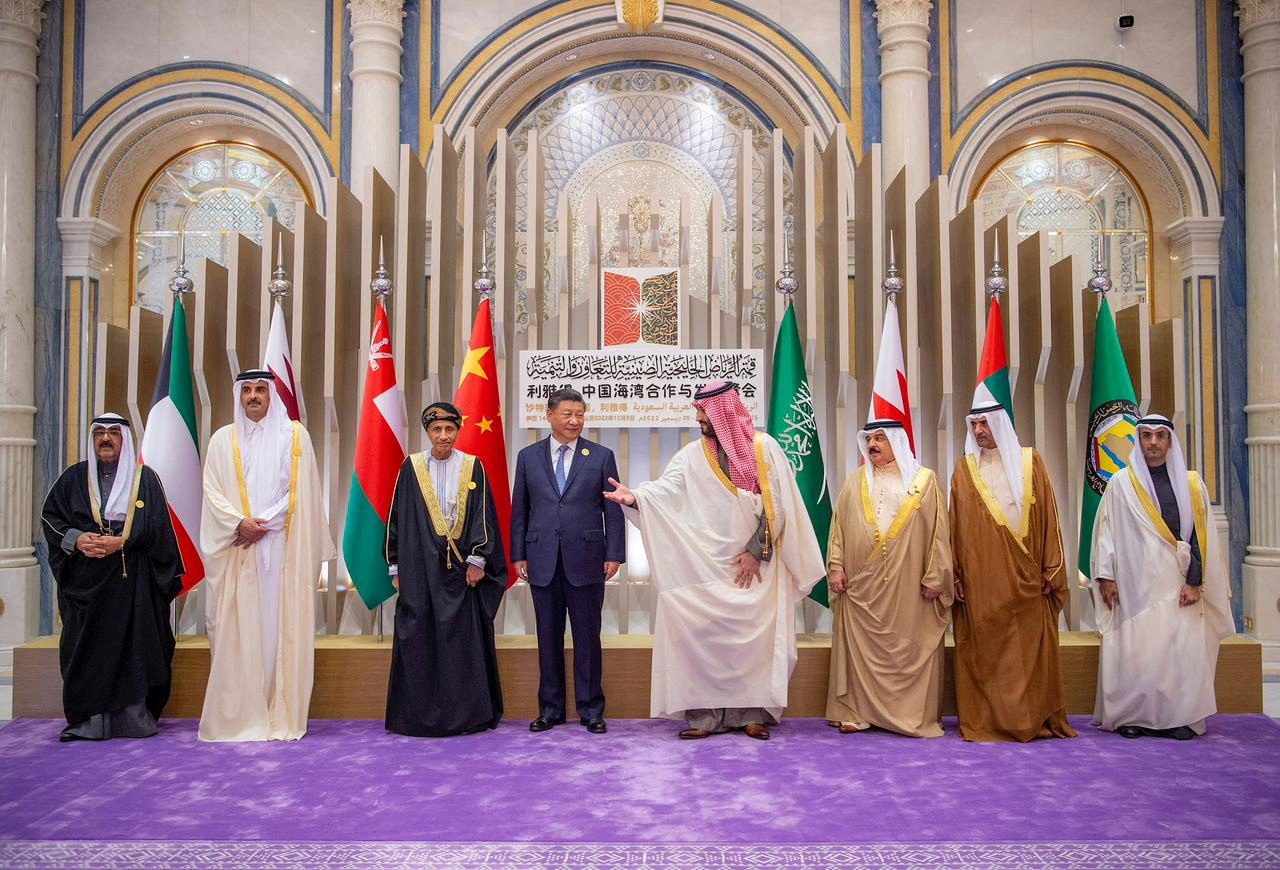
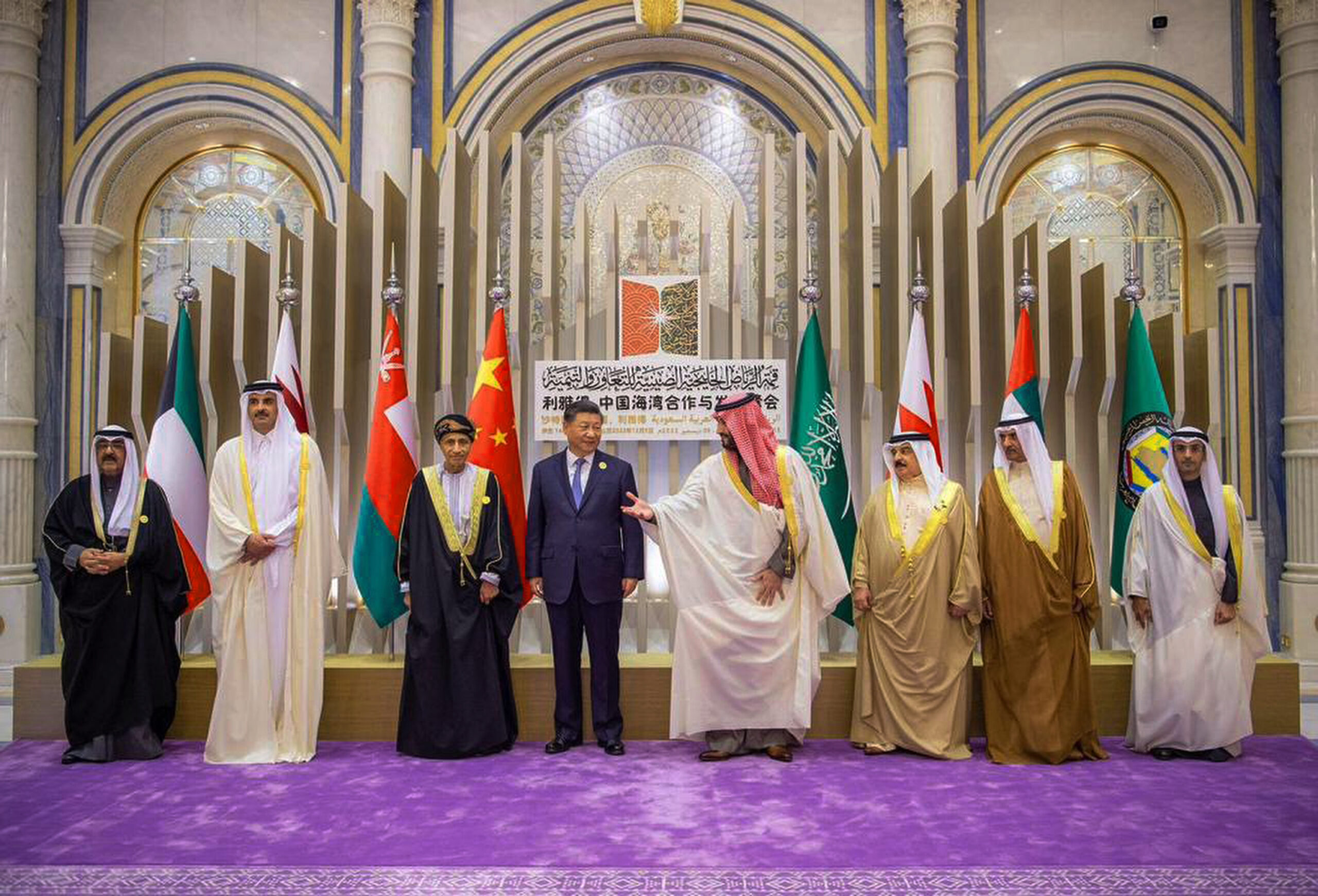
Chinese President Xi Jinping and Arab leaders pose for a group photo during the China-Arab summit in Riyadh, Saudi Arabia December 9, 2022. (Saudi Press Agency/Handout via REUTERS)
Chinese President Xi Jinping visited Riyadh in December 2022 to participate in a China-Arab States Summit, a China-Gulf Cooperation Council Summit, and a state visit to Saudi Arabia. The multifaceted, high-profile trip demonstrated how Arab and Chinese governments continue leveraging ties in a very visible manner to advance various strategic objectives. By some accounts, Xi’s trip to the region was a success – emblematic of the “win-win cooperation” approach to foreign affairs endorsed by Chinese government officials. Yet any substantiative deepening of existing China-Gulf ties or genuine expansion of relations into new realms will confront a complicating array of short-, medium-, and long-term risks.
Xi wrote that the visit would “usher in a new era in China’s relations with the Arab world, with Arab states of the Gulf and with Saudi Arabia.” After consolidating power domestically, the Chinese leader enjoyed a ceremonious welcome in Riyadh for a three-day visit that largely avoided the awkwardness and tensions associated with President Joseph R. Biden Jr.’s July visit to Saudi Arabia. Chinese and Gulf leaders approved a joint action plan for 2023-27 to push their partnership “towards new horizons.” Meanwhile, Saudi officials basked in the limelight of their country serving as a meeting place for the world’s most powerful leaders, and Saudi and Chinese counterparts signed more than 40 agreements in key sectors ranging from energy to emerging technology.
Translating rhetoric and memorandums of understanding into action can be challenging, as slow progress on past and present China-Gulf cooperative efforts demonstrates. China and the GCC began negotiations on a free trade agreement in 2004. No clear timeline for completion was visible as of early 2023, though the China-GCC Summit communique did call for a completion of negotiations “as soon as possible.” During the December summits, Xi noted that China would seek to purchase more Gulf oil and gas in yuan through platforms like the Shanghai Petroleum and Natural Gas Exchange. While in Davos, Saudi Arabia’s finance minister subsequently suggested that his country is open to “discussing” trade in currencies other than the U.S. dollar, but dollar dominance is unlikely to disappear any time soon.
Economic collaboration forms the deepest foundation of China-Gulf ties, and the economic domain will remain a priority area for engagement over the coming years. Yet it will not all be smooth sailing, especially given brewing headwinds in China. China’s abrupt reversal of its strict “zero-COVID” policy will disrupt economic activity, in addition to inflicting a severe strain on the country’s health-care system, before an expected recovery later in the year. The anticipated return of Chinese tourists to global tourism hubs has prompted international concerns about new coronavirus variants spreading beyond China’s borders. China’s growth in 2022 registered just 3% – the country’s second-worst growth rate since 1976. Meanwhile, the country’s population declined in 2022 for the first time since 1961, and analysts are increasingly debating the concept of “peak China.”
Over the short term, there is therefore reason to question China’s collective strength as an economic partner for the Gulf Arab states. Inconsistent policymaking, slowing growth figures, and a shrinking population may dent the attractiveness of certain Chinese markets and assets for Gulf investors. Indeed, cracks in the Chinese development model – which evolved alongside an impressive period of sustained growth, wherein gross domestic product growth averaged more than 9% since the late 1970s – are increasingly evident. Beijing’s willingness to crack down on domestic firms heightened the political risks associated with Chinese investments and erased billions of dollars in value from technology firms, though there are signs that the clampdown on technology firms may be easing. The Chinese government will likewise have to work exceedingly hard to support its troubled property market.
Regional variation concerning the significance of China in foreign affairs portfolios is another obstacle to deepening China-Gulf ties, especially over the medium term. Chinese influence is not equally present, robust, or welcomed across the region. While China is an undisputable force to be reckoned with in terms of overall trade flows, the Asian superpower is by no means the most important energy partner for all the oil and gas producers in the region, nor is China necessarily the largest foreign investment partner for regional states. The varying importance afforded to China’s bilateral relations in the region can also be gleaned by a mixture of comprehensive strategic partnerships (Saudi Arabia, the United Arab Emirates), strategic partnerships (Qatar, Oman, Kuwait), and more limited partnerships without a formal designation (Bahrain). Iran, which enjoys a comprehensive strategic partnership with China, issued a rare diplomatic rebuke after Beijing’s joint statement with GCC states included comments on disputed islands in the Strait of Hormuz, leading some analysts to suggest that Chinese engagement with the Arab world is putting pressure on Iran.
The United States and its interests loomed large over the media coverage of the China-focused summits in December. As Jonathan Fulton points out, geopolitical competition between Washington and Beijing is not the most convincing framework for understanding Xi’s visit to Riyadh. However, U.S. government concerns over China-Gulf relations will continue to factor into Gulf states’ foreign policy considerations over the longer term. U.S. officials have repeatedly cautioned Gulf counterparts about the risks of close cooperation with China on security issues. At the 2022 Manama Dialogue in Bahrain, Under Secretary of Defense Colin Kahl said that “raising the ceiling too much with Beijing will lower the ceiling with the U.S. – not for punitive reasons but because of our interests.” This message resonates at different frequencies in Gulf capitals, but regional officials do understand the risks associated with breaking such a ceiling, willingly or unwillingly, and the implications.
Gulf officials often respond to U.S. concerns over controversial forms of China-Gulf collaboration – especially regarding security – in two ways: that the U.S. government is either unsure or unclear about what constitutes redlines, and that the United States is not always willing or able to provide suitable alternatives, such as equipment and technology for next-generation communication networks. Yet U.S.-based analysts are increasingly mapping out such redlines and guidelines for a range of cooperation areas. U.S. officials may think twice about strong public demands on excluding Chinese companies like Huawei from their growing 5G networks, given that past efforts here have largely failed, but they are likely to sharpen their arguments in closed-door discussions and through private diplomacy.
A regional level of analysis on China-Gulf ties won’t tell the full story of the trajectory of relations. A great deal of Chinese influence in the region will be at the national and subnational level, as growth is most likely to progress unevenly across countries and within industries. Indeed, Beijing often prefers a bilateral approach to relations because it usually enables China to be the larger player. Saudi Arabia’s government appears eager to rapidly advance ties with China, but many governments in the smaller Gulf states are treading more cautiously. The actors involved in shaping China-Gulf ties, however, also include emirates, sovereign wealth funds, government-related entities, and private sector firms. Thus, even after a successful opening show led by government actors, the next acts required for deepening China-Gulf relations must contend with uncertain market conditions and a broader set of – potentially competing – interests.
The views represented herein are the author's or speaker's own and do not necessarily reflect the views of AGSI, its staff, or its board of directors.
As Gulf countries seek alternative routes beyond the Strait of Hormuz, Lebanon is positioning Tripoli as a complementary Mediterranean gateway alongside Syria, but long-standing political and financial risks could limit serious capital inflows.
Beijing keeps treading carefully around conflict in the Middle East while seeking opportunities to deepen ties with key country partners through a longer-term regional engagement strategy.
Beijing keeps treading carefully around conflict in the Middle East while seeking opportunities to deepen ties with key country partners through a longer-term regional engagement strategy.
The UAE’s decision to halt trade and commercial ties with Iran reflects an exercise in applying carefully calibrated geoeconomic pressure amid an uncertain and evolving geopolitical context.