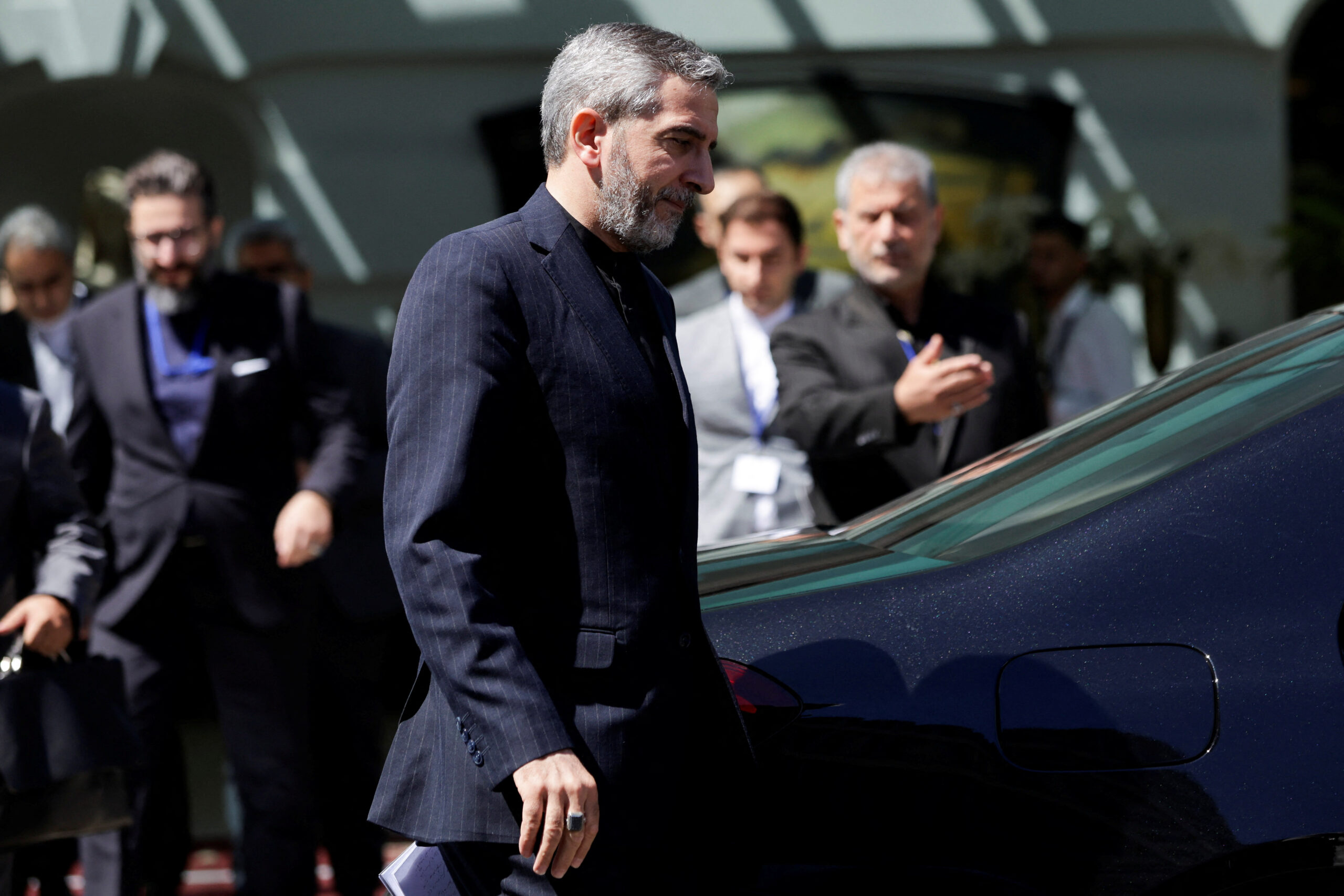
IIran's chief nuclear negotiator, Ali Bagheri Kani, leaves the Palais Coburg, the site of closed-door nuclear talks in Vienna, Austria, August 4. (REUTERS/Lisa Leutner)
Negotiators appear to be on the brink of either securing the revival of the 2015 Joint Comprehensive Plan of Action nuclear deal with Iran or confronting the stark reality that over 18 months of intensive work have produced no substantial results and the agreement is officially defunct. Senior officials from the European Union said they presented a draft agreement proposal to both Washington and Tehran that constitutes a last chance. Josep Borrell Fontelles, the EU foreign policy chief, phrased it bluntly in a tweet: “What can be negotiated has been negotiated, and it’s now in a final text.” For months, negotiations have been stalled and appeared stalemated, but neither side was willing to declare total failure. Now, however, the moment of truth appears to be close at hand.
Iran has reportedly dropped the two conditions that had been impeding an agreement in recent months: a demand that the State Department rescind its designation of the Islamic Revolutionary Guard Corps as a foreign terrorist organization and some sort of guarantee that the United States would not abandon the agreement under a future administration as happened when former President Donald J. Trump withdrew the United States from the agreement in May 2018. Now, however, Tehran is insisting that the investigation by the International Atomic Energy Agency into unexplained uranium found at Iranian nuclear facilities be ended.
Indeed, in recent months Iran’s most bitter quarrels have not been with the United States but with the IAEA, as Tehran has shut down the agency’s surveillance in key nuclear facilities. In June, IAEA Director General Rafael Grossi said the move amounted to a “fatal blow” to reviving the JCPOA and warned that Iran’s nuclear program was “galloping ahead.” Iranian officials seemed to confirm this assessment by announcing that the country is now capable of building a nuclear weapon but has not decided to do that. Kamal Kharrazi, a senior advisor to Iran’s supreme leader, said in July that, “In a few days we were able to enrich uranium up to 60%, and we can easily produce 90% enriched uranium … Iran has the technical means to produce a nuclear bomb, but there has been no decision by Iran to build one.” Under the JCPOA, Iran was restricted to 3.67% enrichment, and 90% constitutes weapons-grade uranium.
Is the 2015 Agreement Still Relevant?
This means that Iran has already achieved the status of being a nuclear-threshold power, at least in terms of enrichment. It would take several months, at the very least, however, to develop a deliverable warhead or nuclear weapon once a sufficient supply of 90% enriched uranium is produced. But this is exactly the conundrum the JCPOA was supposed to postpone, if not entirely prevent. In November 2021, Robert Malley, the U.S. special envoy for Iran and lead negotiator, was already warning that Iran’s ongoing nuclear activities “are gradually emptying the deal of the nonproliferation benefits for which we bargained.” However, he added, “We’re not going to agree to a worse deal because Iran has built up its nuclear program.”
This means that even if a solution can be found to overcome Iran’s demand that the IAEA abandon its investigation into the unexplained and apparently illicit uranium it discovered – and it is extremely unlikely that either the agency or Western powers would agree to simply let that go because it makes Tehran uncomfortable – Iran is going to have to be willing to roll back exponentially more enriched material than it did after implementation day in 2016. Moreover, there are indications that Iran might not be willing to transfer enriched uranium over 3.67% to another country – Russia having served that purpose in the past and remaining the most likely destination – and that it might insist on the material remaining inside Iran under some sort of IAEA control. But that, obviously, could easily be recovered in the event of a future breakdown or expiration of the agreement.
Moreover, as Malley noted, Iran’s technical advancements, particularly regarding centrifuges for enrichment, can’t be rolled back. Once a technology has been mastered, the knowledge cannot be unlearned. And if the agreement is effectively a revival of the 2015 agreement essentially on a compliance-for-compliance basis, as both sides have said they want, the 12-to-15-year sunsets now buy the international community far less time than they did when the agreement was implemented in 2016. So even if all the obstacles can be overcome, the prize itself – simply on its own terms – is a lot less valuable than it was 18 months, let alone six years, ago.
What Lies Ahead?
Despite all of that, an agreement to revive the nuclear deal would be a major diplomatic accomplishment. The sunsets are not about to expire immediately, so it would certainly involve another, albeit far shorter, chronological gamble well worth taking. Moreover, any U.S., Western, and even Arab diplomatic progress with Iran is closely linked to, and probably effectively dependent on, success in these negotiations. It’s not just that the level of mistrust is extreme. It is, rather, what a failure to return to the JCPOA would likely mean in the coming months and years.
The IAEA is neither a tool of Washington nor prone to exaggerations. When Grossi says Iran’s nuclear program has been “galloping ahead” at full speed in recent months, and when Tehran’s main antagonist becomes the IAEA instead of the United States, the world can be confident that Iran has indeed been making a major push to get to weapons-threshold status. If, as it claims, Iran has already achieved that landmark, in a post-JCPOA environment Iran will at times likely carefully inch and at other times suddenly sprint toward achieving the various other breakthroughs required before it suddenly and, perhaps inevitably, emerges as a fully fledged nuclear power.
The administration of President Joseph R. Biden Jr. has made it crystal clear that the United States “is prepared to use all elements of its national power to ensure” that Iran does not acquire a nuclear weapon, strongly suggesting a willingness to use military force. Yet Washington has been opaque about what metric or set of developments would trigger any such action. Israel, however, has been far more explicit about its own intention to act and has already been involved in a major shadow war with Iran involving attacks against its nuclear program, including sabotage, cyberattacks, assassinations, and other actions designed to impede or degrade Iran’s progress. Israel may not possess the bunker-buster munitions that would be required for some potential actions, meaning that Washington would either have to conduct them directly or would transfer such weapons to Israel, signaling that the two countries were contemplating such an action, even if it were carried out by the Israelis supposedly on their own. And, at the very least, Israel would be heavily dependent on U.S. diplomatic backup given the air spaces it would have to fly over in any such mission.
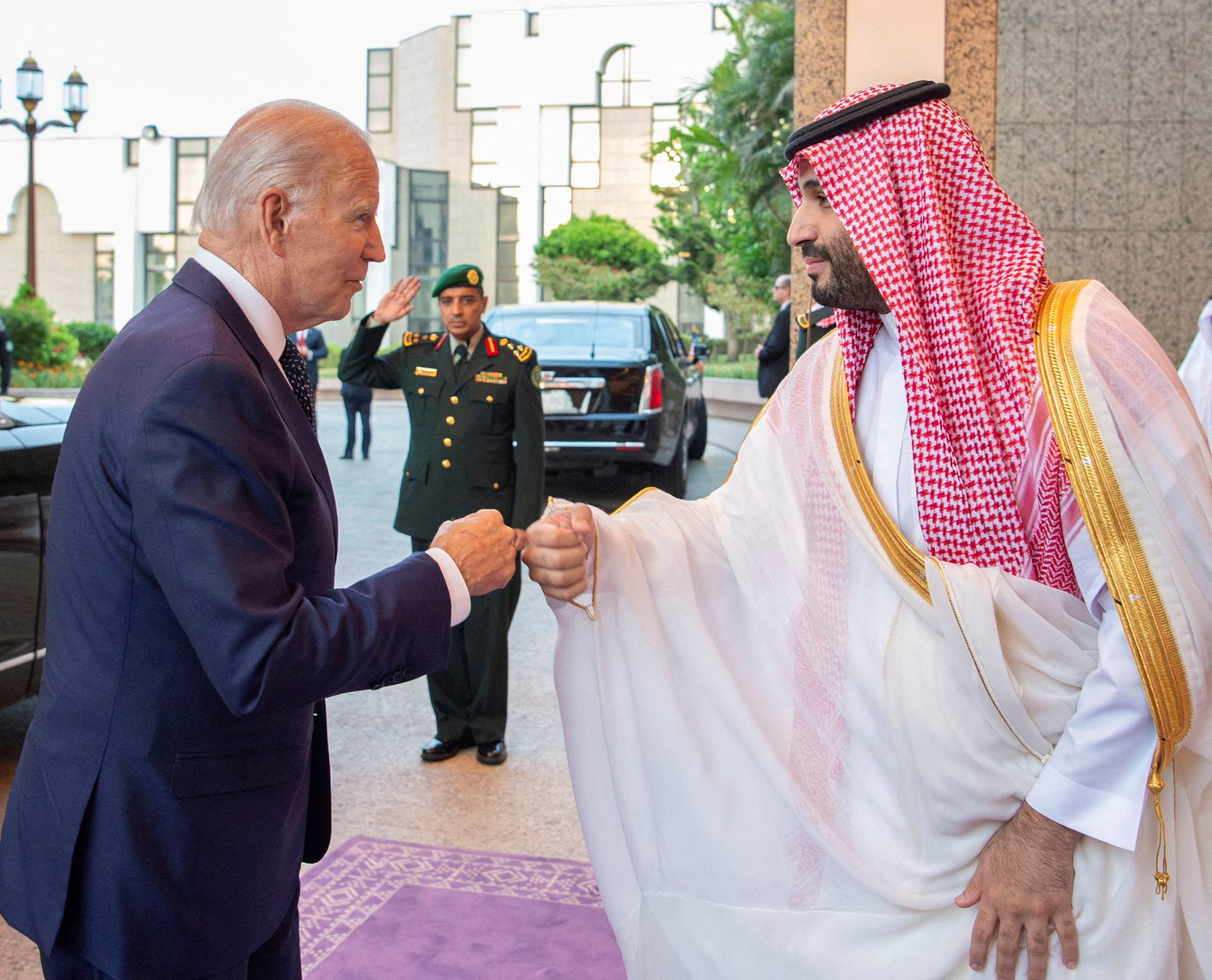
The consequences of such a drastic action, however, are clear. Therefore, while Iran would most likely inch and sprint at various moments toward nuclear power status, Washington’s most likely response to a final negotiation failure would be an effort, already begun during Biden’s recent Middle East trip, to build a stronger regime of containment and deterrence against Iran, in part by creating more networks of coordination and cooperation among U.S. partners in the Middle East. Key among those would be Gulf Arab states, especially Saudi Arabia and the United Arab Emirates. Yet both countries have their own ongoing dialogues with Iran, and the UAE has been contemplating sending an ambassador to Iran to fully restore its diplomatic relations. Saudi Arabia, too, has indicated that it is ready for more intensified and formal talks with Tehran.
Yet if the Gulf Arab countries sense that Washington’s resolve is steadfast and perceive a new commitment to their security and concerns, they are likely to contribute what they can to a new regime of containment and deterrence. Still, the 2019 attacks on Saudi Aramco facilities and the deadly missile and drone attacks against Abu Dhabi in January demonstrate their ongoing vulnerability, hence Washington’s call for more integrated or coordinated air and missile defense systems. Even if it were merely on a bilateral basis, however, the United States could certainly help strengthen such systems, and it may find a more immediate appetite for coordination on maritime security. The path to greater regional coordination and cooperation among U.S. partners against Iran is complicated and tricky. Iran’s trajectory toward nuclear weapons status is dangerous but straightforward.
What this brief overview of the likely scenarios in a post-JCPOA environment demonstrates is how important it is that the EU proposal does not fail. Iran may be trying to use the evident peril of the situation to wriggle out of its imbroglio with the IAEA, and if some method can be found to satisfy both sides – consistent with the agency’s responsibilities – that should be welcomed on all sides. Yet, from the outset of these negotiations with the Biden administration, Iran appears to have been operating from the assumption that it enjoys a position of relative strength. The Biden administration has said that it is ready to “quickly conclude a deal” and agrees that the EU proposal is, in effect, a last chance. The ball is now firmly in the Iranian court.
The views represented herein are the author's or speaker's own and do not necessarily reflect the views of AGSI, its staff, or its board of directors.
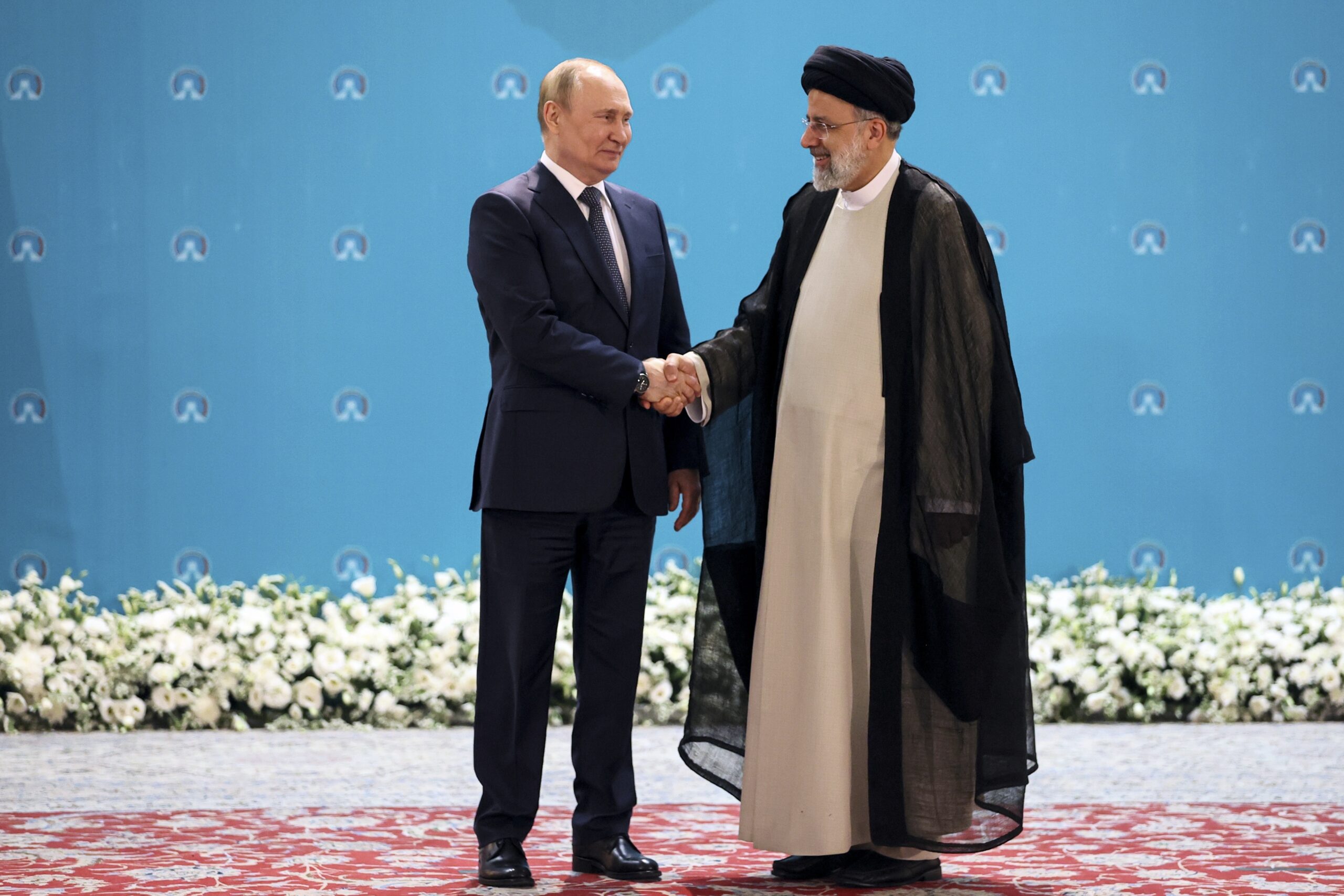
Rather than attempts at empowering negotiators in Vienna, recent statements on Iran’s nuclear program may reflect changed calculations based on Russia’s green light to Iran opting for the nuclear bomb.
President Trump has led the United States into an impossible dilemma in which resuming and intensifying the war presents one set of alarming consequences while ending it under current circumstances offers at least as many disasters for Washington.
The Trump administration has positioned the United States at a crossroads between a new regime of containment against Iran or a historic drawdown of U.S. influence in the Gulf and broader Middle East.
Riyadh and Abu Dhabi urged President Trump not to attack Iran, but now that the war is into its second month, leaving the current situation in place would be an unthinkable fiasco for them.
Though they were unsuccessful in preventing the current conflict, and, as expected, have been dragged into the U.S.-Israeli confrontation with Iran, Gulf Arab countries remain crucial to hopes for limiting the war and bringing it to a quick resolution.