Iran’s Nuclear Option: Negotiation Tactics or Strategic Shift Encouraged by Russia?
Rather than attempts at empowering negotiators in Vienna, recent statements on Iran’s nuclear program may reflect changed calculations based on Russia’s green light to Iran opting for the nuclear bomb.
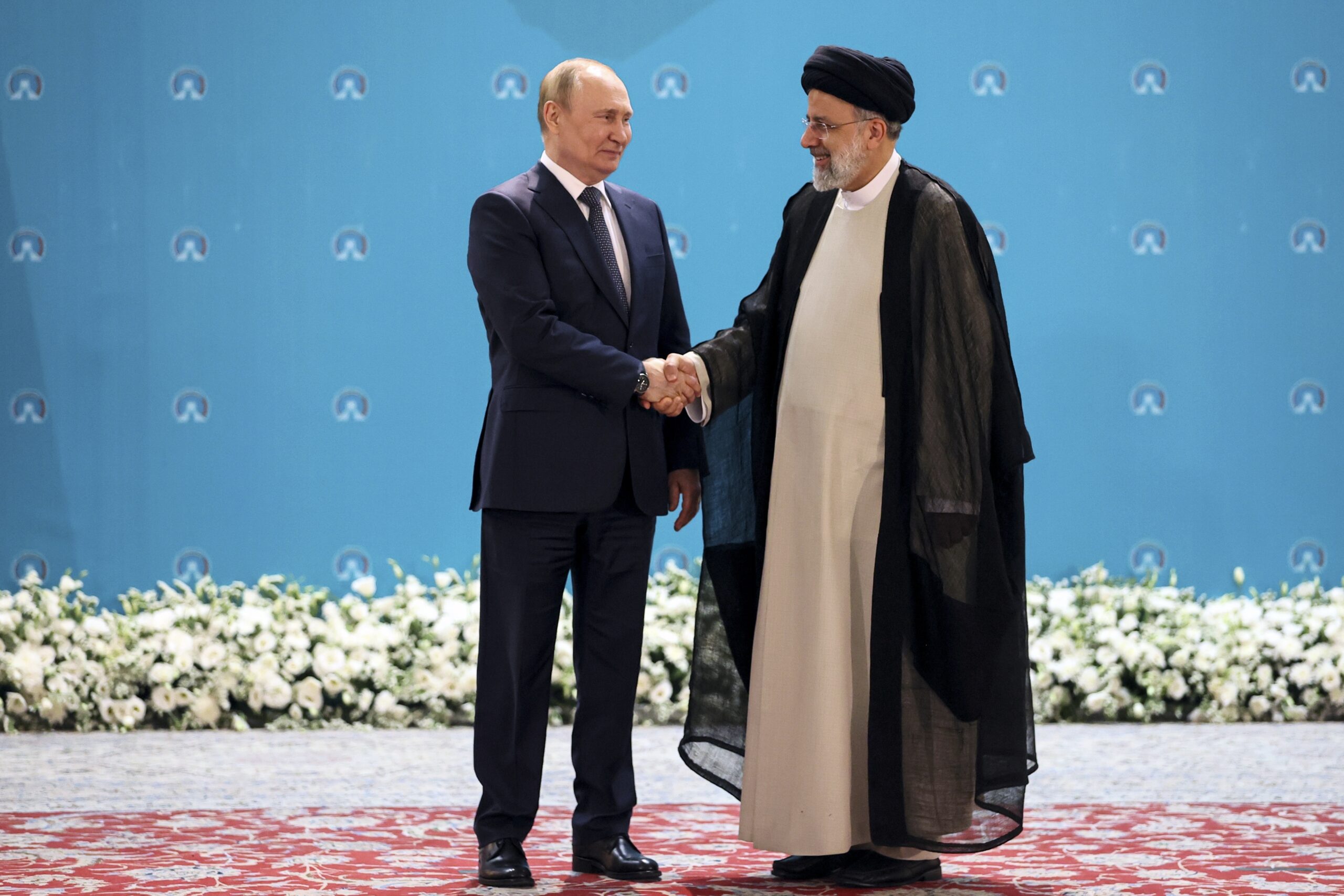
Russian President Vladimir Putin, left, and Iranian President Ebrahim Raisi shake hands prior to their talks at the Saadabad palace, in Tehran, Iran, July 19. (Sergei Savostyanov, Sputnik, Kremlin Pool Photo via AP)
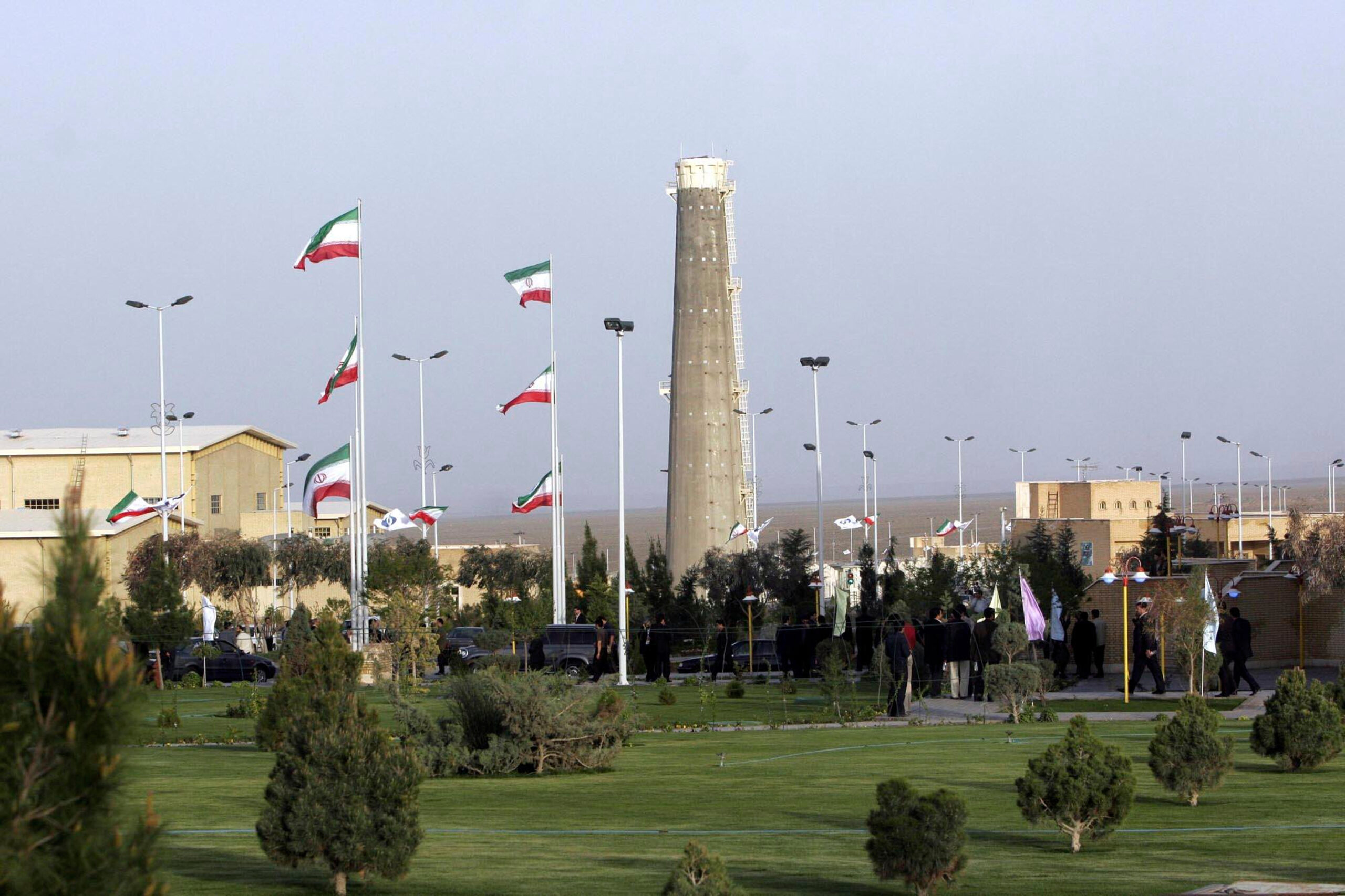
Since the inception of Iran’s nuclear program in 1957, Iranian leaders have, with a handful of exceptions, insisted that the program was purely civilian, and the country had no intention to build a nuclear bomb. In October 2003, Supreme Leader Ayatollah Ali Khamenei even issued a fatwa, or religious edict, that forbade the production and use of any form of weapon of mass destruction. It is therefore all the more remarkable that in recent months, Iranian officials have systematically emphasized that Tehran currently has the technical means to build a nuclear weapon but has not yet decided to do so. Are such public statements attempts at improving Iran’s position in nuclear negotiations with the United States, or do they reflect a strategic shift and changed calculations of the Iranian leadership concerning a nuclear deterrence, perhaps encouraged by Russian President Vladimir Putin’s latest visit to Tehran?
The series of statements about Iran’s nuclear option began July 16, as Kamal Kharazi, senior foreign policy advisor to Khamenei, in an interview with Al Jazeera television, said: “Iran has the technical means to produce a nuclear bomb, but there has been no decision by Iran to build one.” The next day, Mohammad Javad Larijani, former international affairs director for the Judiciary, followed up on Kharazi’s statements in an interview with Channel 2 of the Islamic Republic of Iran Broadcasting: “If Iran reaches the decision to build the nuclear bomb, no one can stop it.” These were not the last words on the subject, as Mohammad Eslami, vice president and head of Iran’s Atomic Energy Organization, on August 1 reiterated Kharazi’s statements: “As Mr. Kharazi pointed out, Iran possesses the technical means to produce the nuclear bomb, but this is not on the agenda.” Why mention the possibility of Iran building the bomb, if it is not on the agenda?
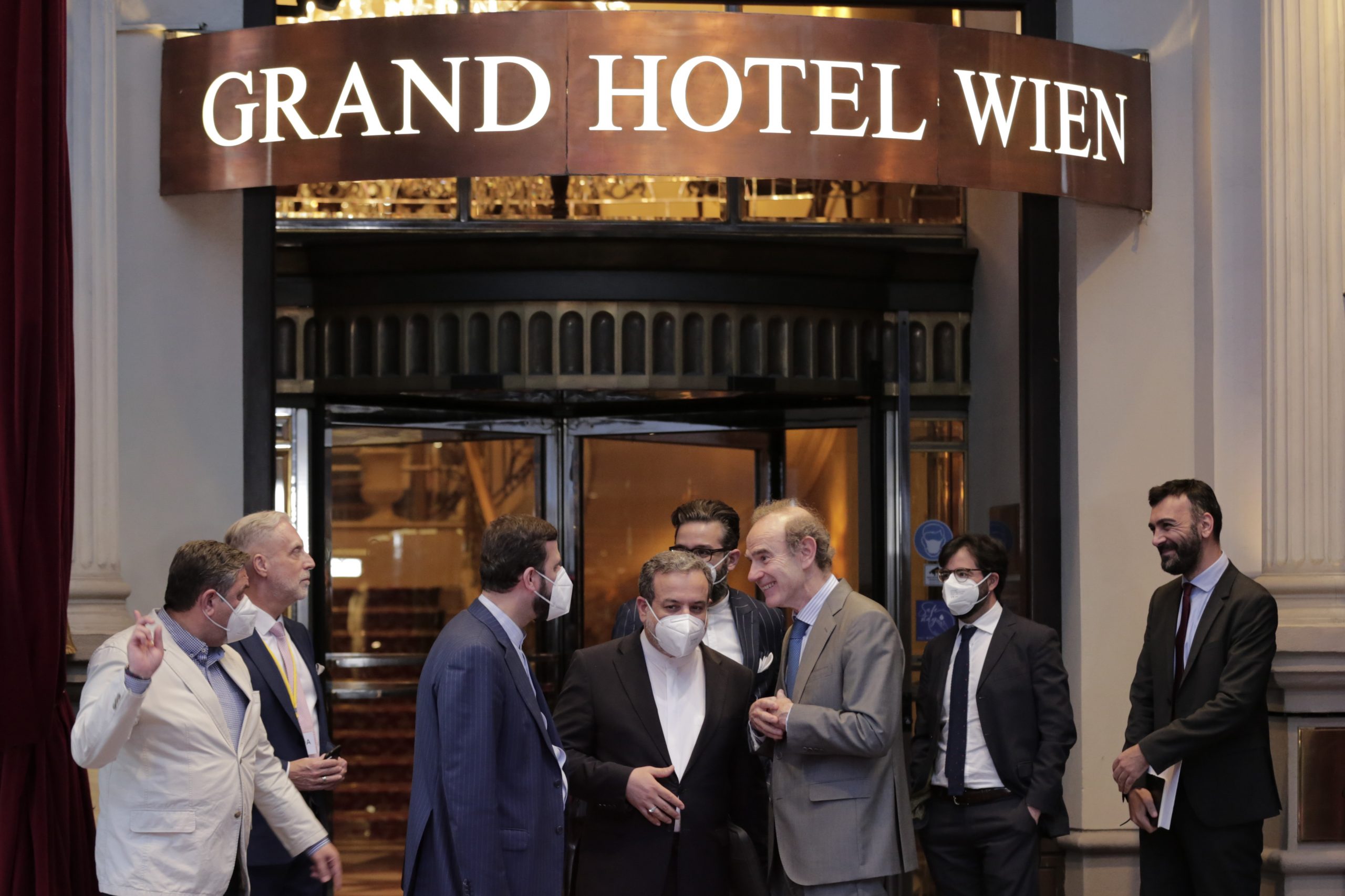
The statements may have been preludes to the latest, and perhaps final, attempt at reviving the 2015 Joint Comprehensive Plan of Action nuclear deal, which former President Donald J. Trump withdrew the United States from in 2018. As Robert Malley, the U.S. special envoy for Iran and lead negotiator, and his Iranian counterpart, Ali Bagheri Kani, traveled to Vienna August 4, the implicit threat of Iran opting for the nuclear bomb may have been designed to strengthen the bargaining position of the Iranian delegation.
But the statements may also reflect the impact of a different trip, that of Putin to Tehran July 19 to meet with Khamenei. The supreme leader’s official website does not provide a detailed account of the exchanges between the two leaders, but both appear to have held the United States responsible for regional insecurity from Ukraine to the Middle East. Khamenei and Putin’s talking points were likely cleared by the Iranian and Russian bureaucracies prior to the July 19 visit, which puts Kharazi’s July 16 remarks, but also Larijani and Eslami’s statements, in a very different light: Rather than attempts at empowering Iranian nuclear negotiators in Vienna, the statements may reflect changed calculations of the Iranian leadership concerning a nuclear deterrence based on Russia’s green light to Iran opting for the nuclear bomb.
Did Putin give such a green light prior to or during his visit to Tehran? Nuclear powers have little interest in the further spread of nuclear weapons, which minimizes the relative value of their own nuclear deterrents, and Russia’s encouragement of Khamenei may in fact serve the purpose of igniting a war, in which Iran’s nuclear infrastructure would be destroyed.
If such a green light indeed was given by Putin, Russia can at a very minimum expect further Iranian intransigence in Vienna, which may well result in total collapse of the Iran nuclear deal. Russia, after all, itself a party to the JCPOA, systematically sabotaged the negotiations in an attempt to keep Iran isolated and more dependent on Russia, former Foreign Minister Mohammad Javad Zarif asserted in an interview tactically leaked in April 2021. The collapse of the JCPOA would be in line with Russia’s interests. It would also communicate the message to the United States that Washington cannot isolate Russia, and Moscow must be involved in global crisis management and conflict resolution.
The minimum gain, however, is not likely to satisfy Putin, who may be hoping for a new war in the Middle East: If Iran dashes for the nuclear bomb, Israel will engage in military action against Iran’s nuclear infrastructure, and Iran will retaliate, which will suck the United States into another “forever war” in the Middle East. Just as U.S. military support for Ukraine is keeping Russia in a prolonged war, by encouraging Iran to opt for the nuclear bomb, Putin can impose a war on Washington. The question, of course, is if Iran, which will pay the highest price for military conflict with Israel and the United States, is receptive to Putin’s advice. The negotiations in Vienna will help clarify whether Iran has received and is willing to heed such expensive advice.
The views represented herein are the author's or speaker's own and do not necessarily reflect the views of AGSI, its staff, or its board of directors.
Are domestic protests over economic conditions likely to increase Iran’s willingness to come to a final agreement with the United States to restore the JCPOA?
After U.S.-Israeli strikes killed Supreme Leader Ayatollah Ali Khamenei on February 28, Iran’s collective leadership has concluded that the best defense is a good offense.
Wartime pressure has temporarily aligned the leadership’s overriding interest in regime survival, even as its members continue to differ over the costs, methods, and ultimate objectives of the war.
While there is historical precedent for collective leadership in Iran, today’s leadership includes representatives of the IRGC and regular military – a reflection of the IRGC’s expanding role and the necessities of governing under wartime conditions.