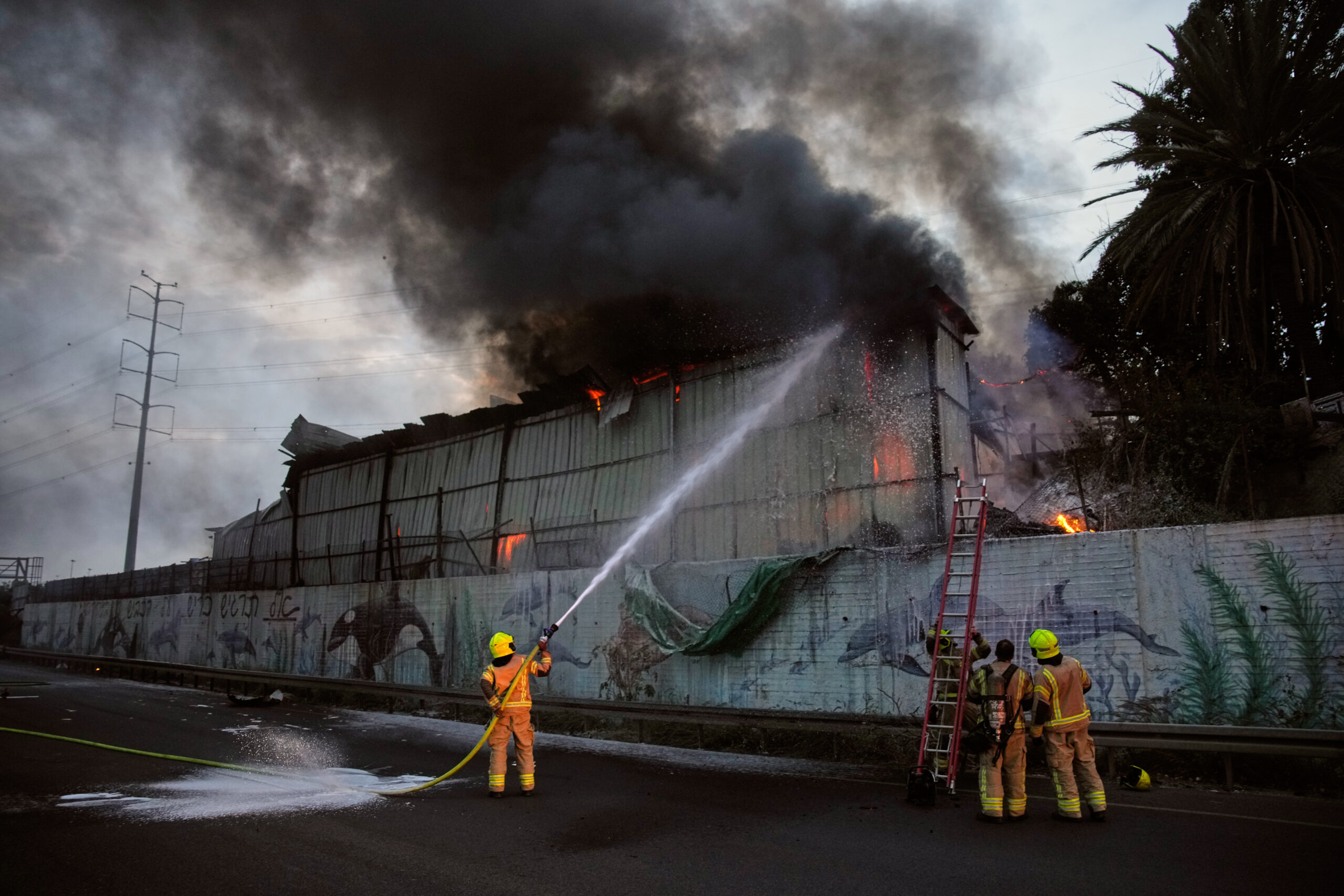
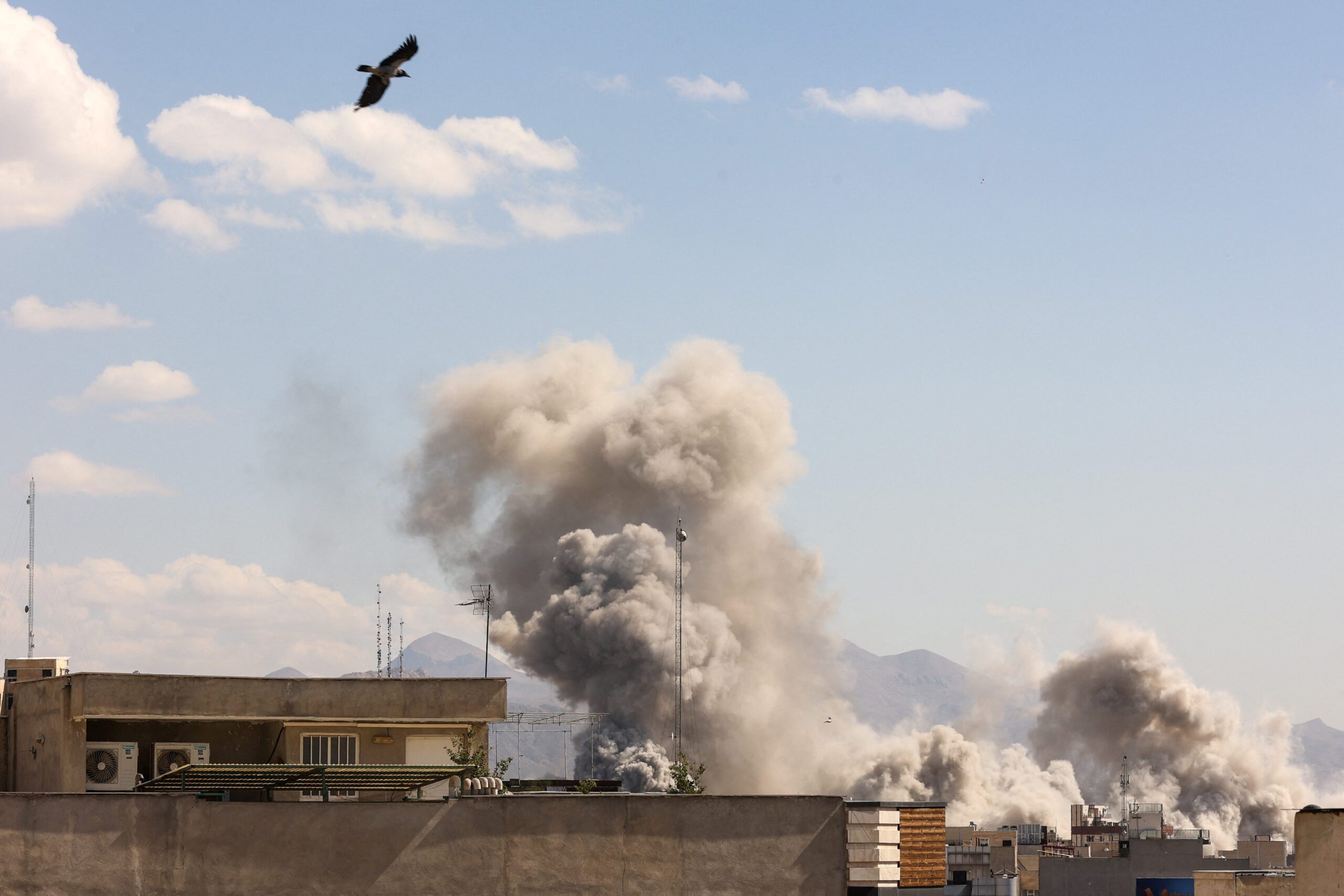
After U.S.-Israeli strikes killed Supreme Leader Ayatollah Ali Khamenei on February 28, Iran’s collective leadership has concluded that the best defense is a good offense.
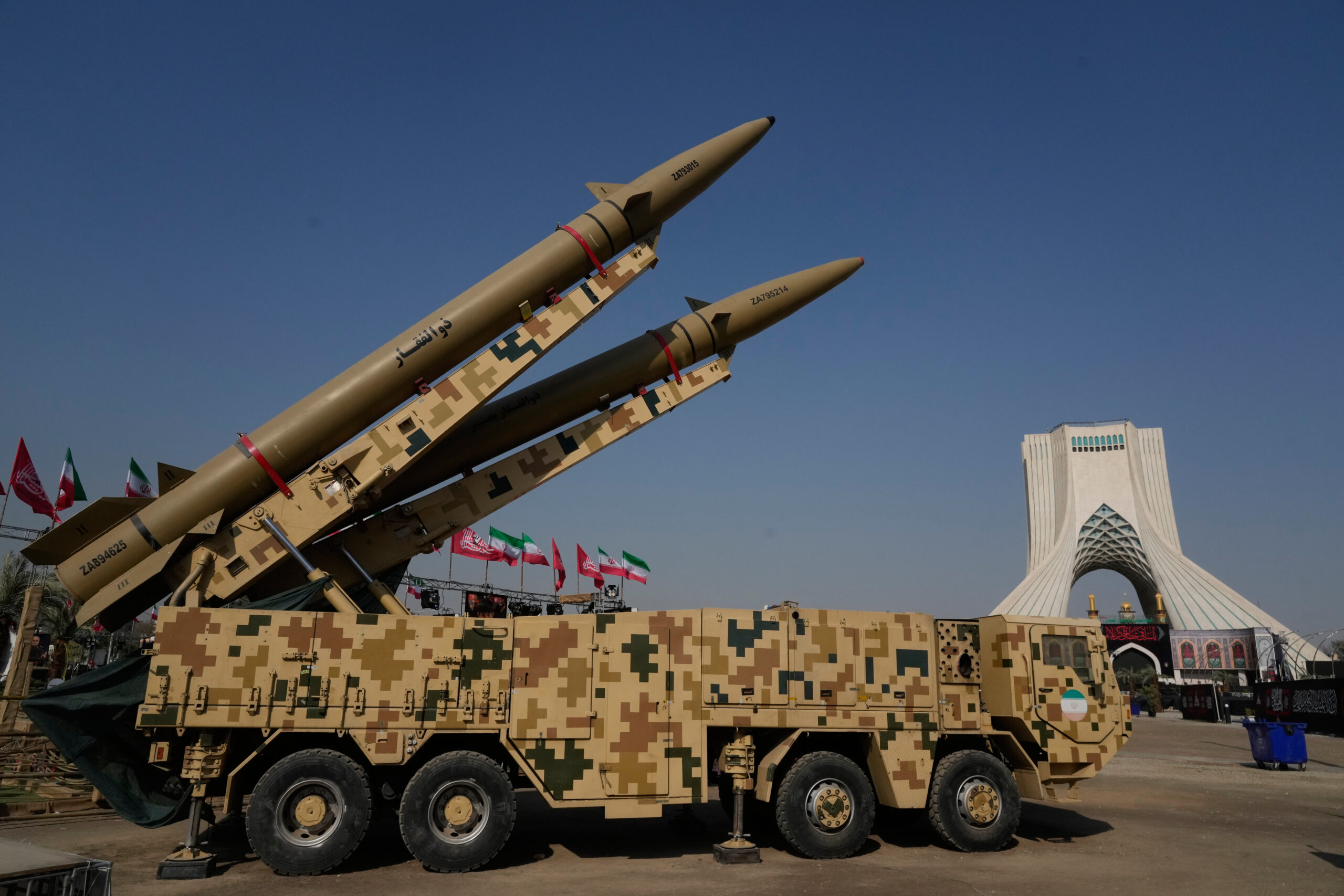
Iranian Zolfaghar missiles are displayed by the armed forces in a temporary exhibition in front of the Azadi monument in Tehran, Iran, July 29. (AP Photo/Vahid Salemi)
Since the February 28 death of Supreme Leader Ayatollah Ali Khamenei, the Islamic Republic has adopted a less restrained and more assertive survival strategy. It has retaliated across the region against neighboring states hosting U.S. forces; struck a British military base in Cyprus and targets in Azerbaijan; restricted passage through the Strait of Hormuz and, more recently, Bab el-Mandeb with the help of the Houthis; retaliated directly against Israel for strikes on Hezbollah in Lebanon, rather than only for attacks on Iranian territory; and adopted a generally harder negotiating line. In late July, during a period of relative calm, Iran also launched a surprise attack on U.S. forces in Jordan rather than waiting to retaliate for another strike.
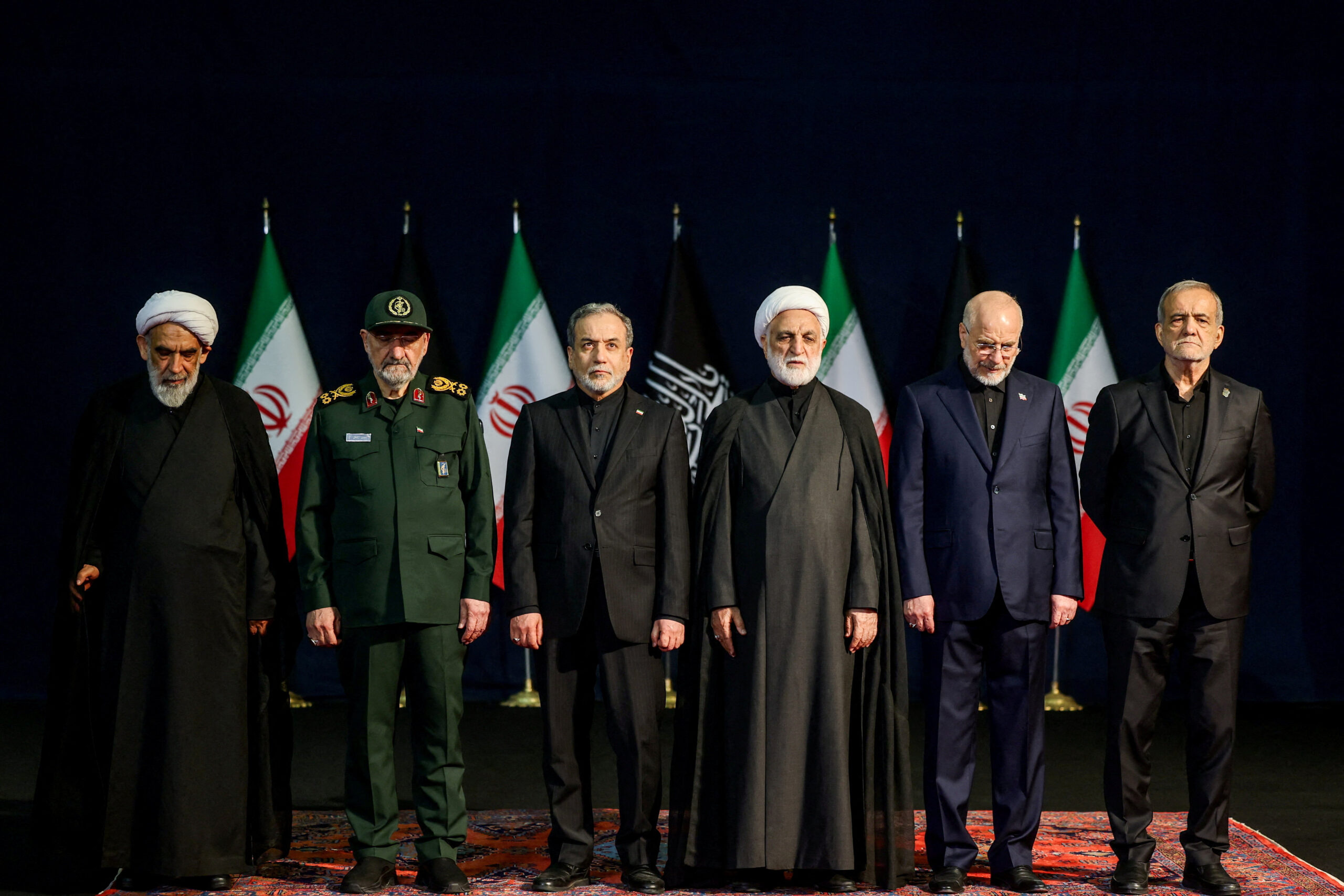
Although some of these operations were planned before February 28 – and Khamenei had authorized and even publicly announced a regional response in the event of a U.S.-Israeli attack – the relationship between his assassination and Iran’s changed behavior is not merely correlational but causal. Khamenei was a cautious, risk-averse decision maker. By contrast, the collective leadership that succeeded him – comprising the heads of the executive, legislative, and judicial branches alongside representatives of the Islamic Revolutionary Guard Corps and the regular military – has returned the regime to the offensive. Its reading of Iran’s recent experience is that Khamenei’s excessive caution did not avert conflict but emboldened Israel and the United States, ultimately proving fatal to him and discrediting the regime’s deterrence strategy. His successors appear to believe that, for the regime to survive, Iran must go on the offensive.
Khamenei’s caution was rooted in a justified fear that Israel – which, since at least early 2010, had assassinated Iranian nuclear scientists and conducted cyber and physical attacks against Iran’s nuclear and military-industrial complex – was seeking to provoke Iran into retaliating directly against Israel, thereby drawing the United States into a military confrontation with Iran. Cognizant of that risk, and despite the damage to Iran’s prestige, Khamenei largely ignored Israeli provocations, preferring to preserve the status quo. After all, despite major delays caused by Israeli sabotage, Iran’s nuclear program remained on track; the IRGC had stabilized Bashar al-Assad’s regime in Syria, securing an overland corridor to Hezbollah in Lebanon; and Iran had surrounded Israel with tactical allies, such as Hamas in Gaza, and strategic allies, such as Hezbollah, whose formidable missile arsenal helped deter Israeli strikes against Iran.
The situation, however, became untenable as Israel continued its provocations. Khamenei’s – and the regime’s – patience finally ran out after Israel’s April 1, 2024 airstrike on a consular annex adjacent to the Iranian Embassy in Damascus, killing 16 people, including a senior Quds Force commander, Brigadier General Mohammad Zahedi, and seven other IRGC officers. Treating the strike on the consular building as an attack on Iranian territory, Iran retaliated on April 13, 2024, with missile and drone strikes against Israel – the first direct Iranian attack on Israeli territory. Most of the missiles and drones were intercepted by Israeli and allied multilayered air defense systems. Israel responded six days later with a strike on the radar of an S-300 air defense battery near Isfahan. The regime denied that a meaningful attack had occurred and refrained from retaliating, hoping to end the exchange. Yet what Khamenei regarded as prudent de-escalation appeared to Israel as evidence that Iran lacked either the ability or the resolve to defend its own territory.
The pattern repeated itself after Israel’s July 31, 2024 killing of Hamas Political Bureau Chief Ismail Haniyeh, who was in Tehran to attend the inauguration of Iranian President Masoud Pezeshkian. Although the killing of Haniyeh was an even more flagrant violation of Iranian sovereignty, Khamenei once again postponed retaliation, hoping to avoid war. In the meantime, Israel turned its attention to Hezbollah. In a sensational operation on September 17 and 18, 2024, Israel remotely detonated pagers and handheld radios used by thousands of Hezbollah operatives. On September 27, 2024, it killed Hezbollah’s leader, Hassan Nasrallah, several senior Hezbollah commanders, and Iranian Brigadier General Abbas Nilforoushan, IRGC operations chief, in Beirut.
On October 1, 2024 Iran launched nearly 200 ballistic missiles against Israel in retaliation for the assassinations of Haniyeh, Nasrallah, and Nilforoushan. By then, however, Israel had nearly dismantled Hezbollah’s quasistate in southern Lebanon that Iran had spent decades constructing. This second direct Iranian attack was more effective than the first: Several missiles penetrated Israeli and allied defenses and struck or landed near Israeli military installations. Nevertheless, it caused only limited damage, did not impair the operational capacity of the Israeli air force, and failed to impose costs commensurate with the losses Iran and its allies had suffered.
Israel responded on October 26, 2024 with three waves of strikes against Iranian missile-production facilities, radars, and surface-to-air missile batteries. The operation severely damaged Iran’s most advanced air defense network, including several Russian-made S-300 systems, and expanded Israel’s freedom of operation in Iranian airspace. Iran acknowledged only limited damage and again declined to retaliate. Khamenei may have believed that absorbing the attack would prevent further escalation, but the absence of a response reinforced the impression that Israel could bombard Iran without fear of meaningful retaliation.
The collapse of Assad’s regime in Syria in December 2024 delivered another strategic blow: Iran lost its military foothold in Syria, while Hezbollah lost the overland supply route through which Tehran had armed and sustained it.
By early 2025, therefore, the pillars of Iran’s deterrence strategy had largely crumbled. Hezbollah had been neutralized as an effective strategic deterrent; Syria had been lost; Iran’s air defense network had been exposed and severely degraded; and two direct Iranian attacks had failed to inflict serious damage on Israel, as most of Iran’s missiles were intercepted by Israeli and allied defenses.
Khamenei’s caution, intended to preserve Iran’s nuclear program and regional position, had produced the opposite result. Each unanswered or belated Israeli attack revealed another layer of Iranian vulnerability. Israel increasingly concluded that Iran was practically defenseless and the risks of attacking it were far lower than previously assumed.
On June 13, 2025, Israel acted on that conclusion. In a large-scale surprise attack, Israeli aircraft struck Iran’s nuclear and ballistic-missile facilities, air defense systems, senior military leaders, nuclear scientists, and military-industrial complex. Having tested Iranian defenses in April 2024 and systematically degraded them the following October, Israel rapidly established freedom of operation over much of Iran. The June attack was therefore not an isolated decision but the culmination of a prolonged process in which Iran’s delayed, limited, or nonexistent responses failed to establish deterrence and instead persuaded Israel that the Iranian homeland could be attacked at manageable cost. Worse still, the United States subsequently entered the war and struck Iran’s nuclear facilities – the very outcome Khamenei’s caution had been intended to prevent. His restraint had neither spared Iran an Israeli attack nor kept the United States out of the conflict.
The cease-fire that ended the war on June 24, 2025 did not restore deterrence or resolve the conflict. It merely paused hostilities, leaving Israel free to prepare for another attack while Khamenei reverted to his familiar caution. Eight months later, on February 28, 2026, Israel and the United States resumed the war, killing Khamenei and demonstrating once again the fatal consequences of his restraint. His successors drew radically different lessons from that experience.
Iran’s collective leadership became convinced that Israel sought not only regime change in Tehran but also to foment a civil war that would fragment the Iranian state. That conviction was reinforced by a Jerusalem Post editorial calling for the recognition of separatist aspirations among some representatives of Iran’s ethnic minorities as well as President Donald J. Trump’s public calls for Iraqi Kurds to invade Iran. Trump’s objectives remain mysterious to the collective leadership. IRGC analysts, such as Mehdi Kharatian, however, appear to have concluded that Israeli Prime Minister Benjamin Netanyahu had some sort of leverage he was using to blackmail the White House. The leadership therefore appears to believe that it must withstand Israeli pressure while helping to defeat Trump’s party in the 2026 U.S. midterm elections. To that end, Iran continues to negotiate but no longer observes the cease-fire, seeking to keep oil prices high and weaken Trump politically. Iranian leaders also appear to expect Trump to reject an unfavorable midterm result, possibly plunging the United States into a constitutional crisis, after which the United States would have priorities other than Iran.
The IRGC persuaded Iran’s collective leadership that detente with Gulf Arab states – symbolized by the China-brokered agreement between Iran and Saudi Arabia announced in March 2023 – sent the wrong signal to the United States and Israel. Khamenei assumed that normalization with Iran’s Arab neighbors would reduce regional tensions, discourage those states from participating in a war against Iran, and deprive the United States and Israel of regional support. In the IRGC’s reading, however, detente with Saudi Arabia and the United Arab Emirates signaled to the United States that Iran would not retaliate against regional energy infrastructure. In other words, Israel and the United States could attack Iran without risking a blow to the global economy – or a politically damaging rise in U.S. gasoline prices. In the IRGC’s logic, detente invited the Israeli and U.S. attacks, and it was now time to sacrifice Iran’s relations with the Gulf Arab states to secure the regime’s survival. The IRGC consequently began targeting regional energy infrastructure.
The collective leadership opted to restrict shipping through the Strait of Hormuz and, later, Bab el-Mandeb with the help of the Houthis. Although Iranian officials issued threats before, the regime had never taken practical steps to implement them. By doing so – and with a degree of success that may have surprised even the regime – Iran took the global economy hostage to dissuade the United States, if not Israel, from continuing the war.
The IRGC also appears to have concluded that it can subject Gulf Arab states to military and economic pressure until they distance themselves from the United States and Israel, particularly if close cooperation with both countries cannot protect them from Iran’s wrath. Whether this approach will instead drive the Gulf Arab states further into the arms of the United States and Israel or create a wedge among them remains to be seen.
On June 7, Iran retaliated directly against Israel for an Israeli strike south of Beirut by firing approximately 10 missiles at an Israeli air base. This marked a departure from its previous practice of retaliating directly only for attacks on Iranian territory. By risking renewed Israeli strikes against Iran on Hezbollah’s behalf, the collective leadership demonstrated its willingness to accept significant risks in defense of its allies – an important message to the Houthis.
Iran’s surprise attack on U.S. forces in Jordan in late July marked a further departure from Khamenei’s approach. It was not presented as an immediate response to a specific attack but was conducted during a period of relative calm. The operation suggested that the new leadership no longer intended to allow Israel and the United States to determine the timing and tempo of the conflict. Rather than waiting to absorb another blow before responding, Iran sought to seize the initiative, impose uncertainty on its adversaries, and demonstrate that periods of calm would no longer provide them with strategic sanctuary.
The IRGC persuaded the collective leadership that the mass uprising in Iran preceding the February 28 attack was not an isolated domestic crisis but an integral component of Israel’s war plan. In the IRGC’s telling – partly supported by Israeli Mossad’s admissions of involvement in the unrest – Israel encouraged or orchestrated the protests to exhaust the security forces, paralyze the state, undermine military command and control, and prepare the ground for an external attack. In addition to the approximately 3,000 people the regime acknowledges were killed during the protests, the judiciary has executed at least 27 people in connection with the uprising since March 19. More than 100 others reportedly face national security charges, which carry the death penalty.
This does not mean that Iran is confident of victory. Its conventional vulnerabilities remain severe, regional network has been weakened, new strategy exposes the country to further U.S. and Israeli attacks, and economic foundations remain fragile. But the collective leadership appears to have concluded that restraint is now more dangerous than escalation. Khamenei sought survival by avoiding a wider war; his successors seek survival by widening it, regionalizing its costs, and denying Iran’s adversaries the ability to wage war on their own terms.
The views represented herein are the author's or speaker's own and do not necessarily reflect the views of AGSI, its staff, or its board of directors.
Wartime pressure has temporarily aligned the leadership’s overriding interest in regime survival, even as its members continue to differ over the costs, methods, and ultimate objectives of the war.
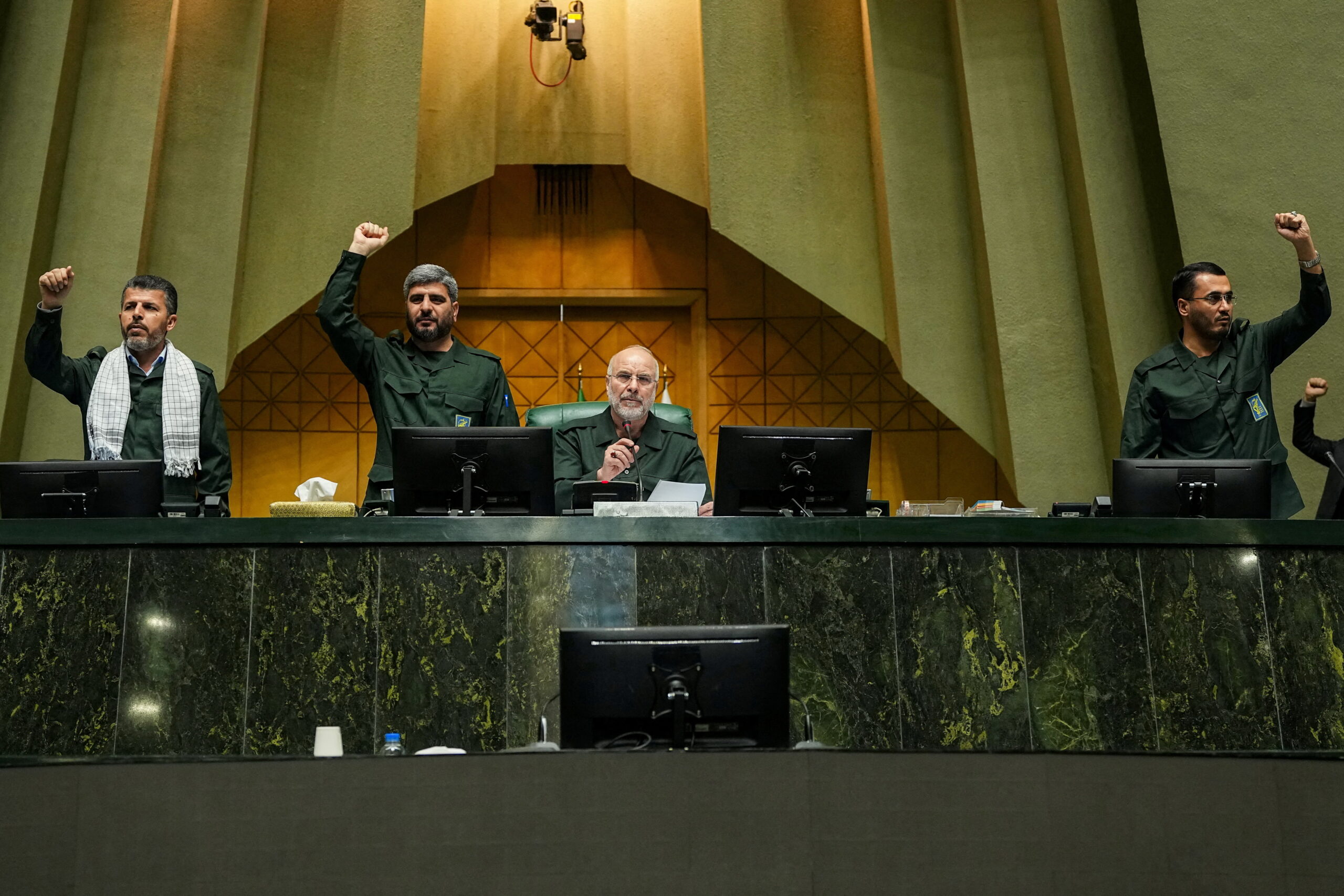
While there is historical precedent for collective leadership in Iran, today’s leadership includes representatives of the IRGC and regular military – a reflection of the IRGC’s expanding role and the necessities of governing under wartime conditions.
Iran may still call itself an Islamic Republic. In practice, however, it increasingly resembles a state in which the military governs from behind clerical robes.
Wartime pressure has temporarily aligned the leadership’s overriding interest in regime survival, even as its members continue to differ over the costs, methods, and ultimate objectives of the war.
While there is historical precedent for collective leadership in Iran, today’s leadership includes representatives of the IRGC and regular military – a reflection of the IRGC’s expanding role and the necessities of governing under wartime conditions.
Iran may still call itself an Islamic Republic. In practice, however, it increasingly resembles a state in which the military governs from behind clerical robes.