Saudis are about to Buy a Major Russian Missile System – Or are They?
The biggest deliverable arising from Saudi King Salman bin Abdulaziz’s visit to Russia is almost certainly Riyadh’s announced intention to purchase a range of Russian weapons systems, notably S-400 surface-to-air missiles. A memorandum of understanding between the two countries hasn’t been released, and neither the total value of the contracts nor the quantity of each of...
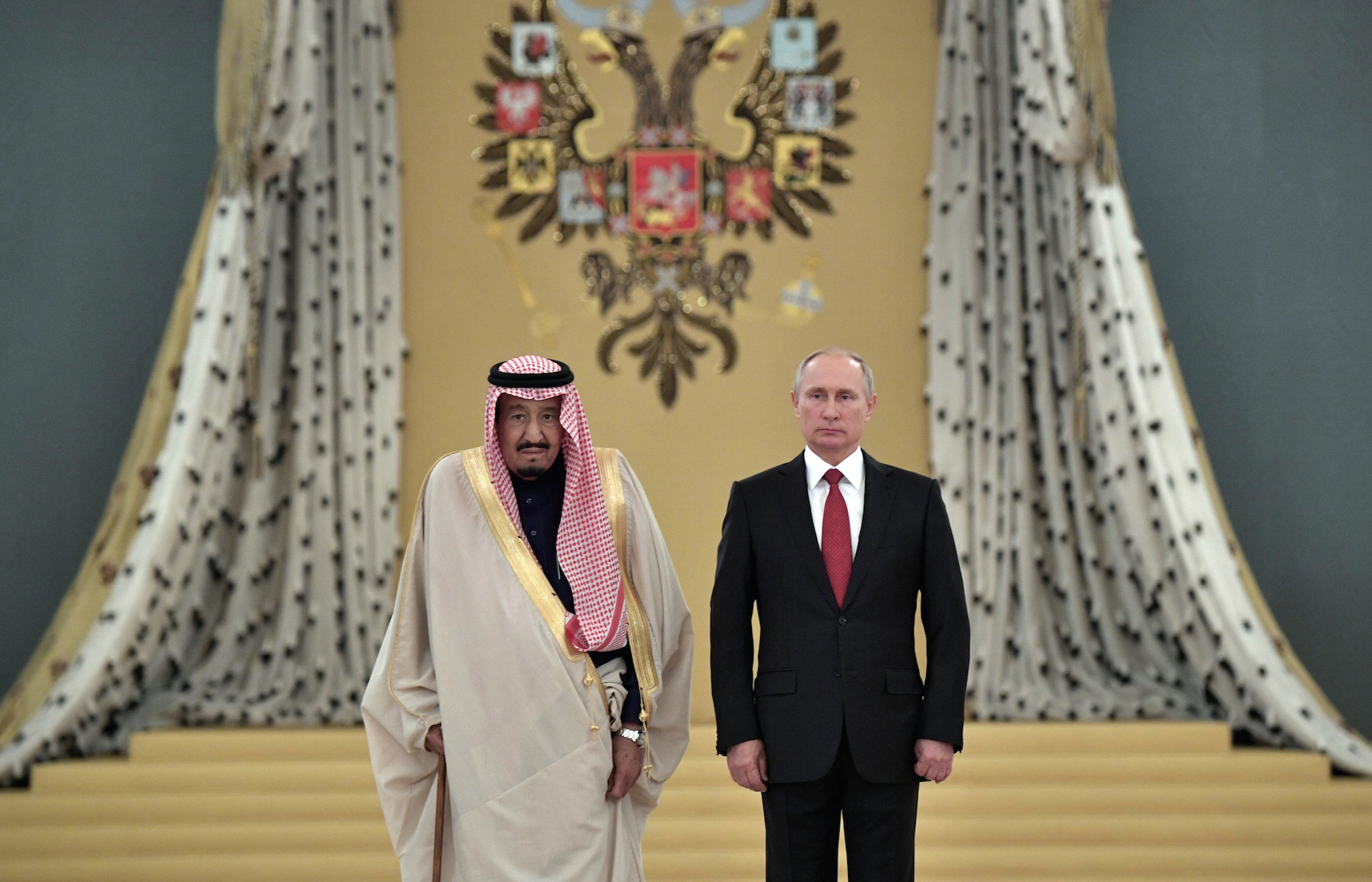
'Russian President Vladimir Putin and Saudi Arabia's King Salman pose for a photo during a welcoming ceremony ahead of their talks in Moscow, Russia, Oct. 5. (AP/Alexei Nikolsky)'
The biggest deliverable arising from Saudi King Salman bin Abdulaziz’s visit to Russia is almost certainly Riyadh’s announced intention to purchase a range of Russian weapons systems, notably S-400 surface-to-air missiles. A memorandum of understanding between the two countries hasn’t been released, and neither the total value of the contracts nor the quantity of each of the weapons systems (which also include 9M133 Kornet antitank missiles, TOS-1 rocket launchers/flamethrowers, AGS-30 automatic grenade launchers, and Kalashnikov AK-103 assault rifles) is known. But the S-400 purchase communicates several important aspects of Riyadh’s evolving national security posture and planning, practically applying and reinforcing trends in Saudi strategic thinking, most obviously the diversification of its weapons providers.
Historically, Saudi Arabia has primarily relied on the United States for military and intelligence-related goods and services. But in recent years, particularly during the second term of former President Barack Obama, Riyadh began to develop a much more independent approach to national security. In the long run, like the United Arab Emirates, Saudi Arabia intends to develop a domestic defense industry. As with the weapons purchases agreed to during President Donald J. Trump’s visit to Saudi Arabia in May, Riyadh says technology transfer was a key element of the new agreement with Russia “based on the assurance of the Russian party to transfer the technology and localize the manufacturing and sustainment of these armament systems in the Kingdom.”
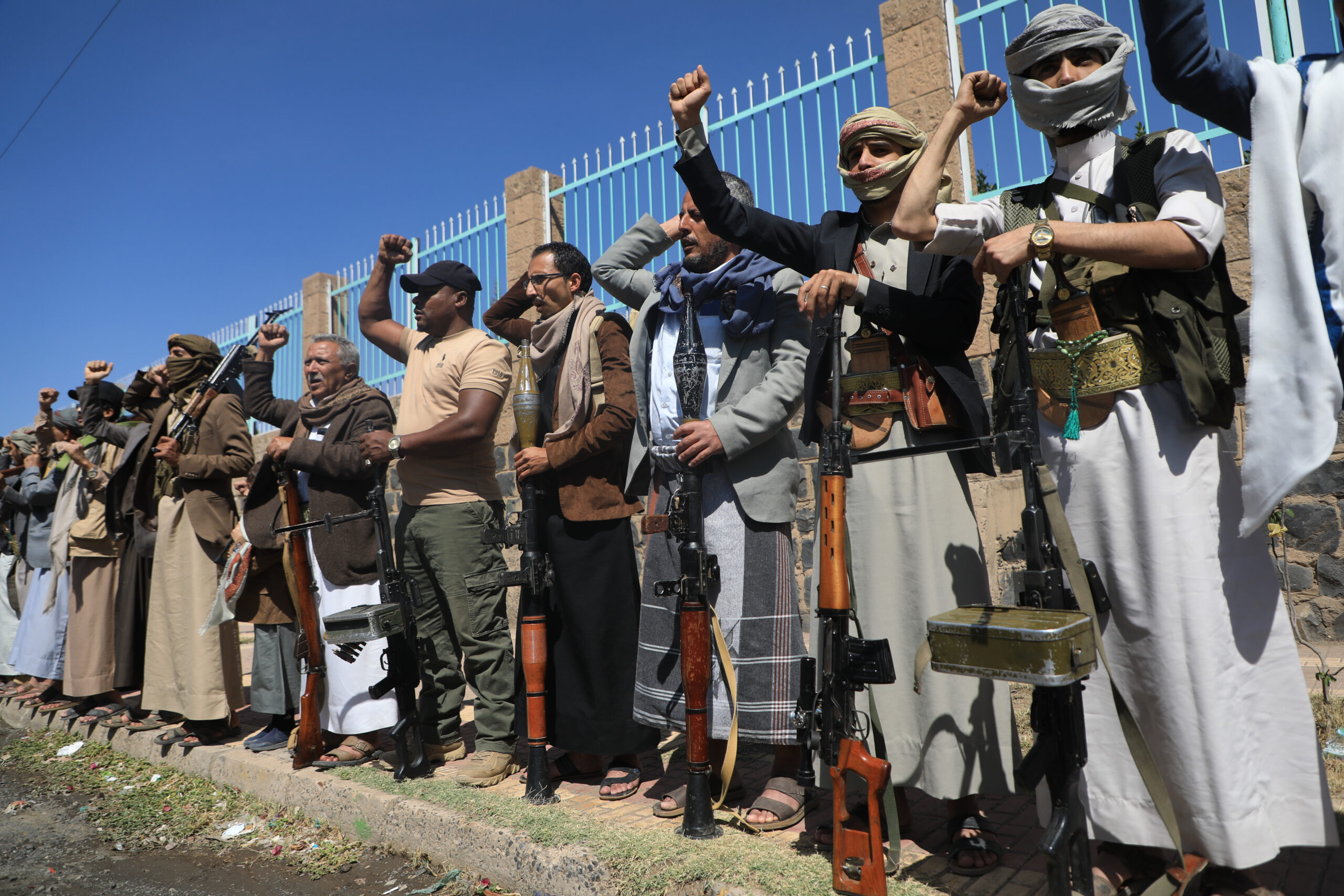
Saudi Arabia already possesses hundreds of U.S. MIM-104 Patriot missiles, which, along with the S-400 “Growlers,” are among the most sophisticated multirole air defense systems currently available. But, beyond the obvious imperatives of diversifying suppliers, strengthening relations with Russia, and generally expanding Riyadh’s options, the purchase makes sense in military and strategic terms. The Growlers wouldn’t be redundant or superfluous. To the contrary, they would add significant capabilities to the Saudi defensive arsenal. Patriots are excellent anti-missile missiles. The Saudis themselves demonstrated their efficacy in March, when the military reportedly used Patriots to shoot down four ballistic missiles launched by the Houthi militia in Yemen aimed at the southern Saudi towns of Khamis Mushayt and Abha.
But the S-400s would add several significant features beyond what the Patriots can already accomplish. The Growlers offer significant flexibility in command and control and range beyond the Patriots, which are limited to just one kind of interceptor with a range of approximately 90 miles. S-400 command nodes can use four different interceptors ranging from 25-250 miles. Growler systems therefore also include more powerful and longer-range radar and detection, and can discover, track, and attack incoming missiles much more quickly than Patriots. Moreover, it’s much easier to imagine Russian technicians participating in the deployment and maintenance of their missile systems in expeditionary contexts, in Yemen, for example, than Raytheon personnel.
However, there would be significant complications to deploying these systems if the sale does, eventually, go through. The question of the compatibility of S-400s with U.S. systems already deployed by Saudi Arabia, particularly Patriots, won’t even fully arise because Washington would not allow the co-location of Russian and U.S. systems in order to protect technology and intelligence. Turkey has also agreed to buy S-400s, but is apparently planning to deploy them separately from NATO infrastructure in the country. Turkey reportedly won’t try to integrate the systems, but rather make them interoperable by using IFF (“friend or foe”) identification coding, as Greece has already done with Russian-supplied S-300s. Even though such technical solutions are available to the problem of deploying new Russian weapon systems in an architecture largely defined by existing U.S. ones, practically it would mean the development of a set of parallel systems, including both Saudi and Russian personnel with specific training in S-400s, that would be at least burdensome if not impractical.
Indeed, some commentators have speculated that “Turkey may be using the S-400 deal as a means to enhance its political leverage to obtain better bids from NATO countries” than the ones currently on offer. A similar calculation may be driving Riyadh, which has been focused on securing the purchase of the cutting-edge Terminal High Altitude Area Defense anti-ballistic missile system, which the United States has already supplied to the UAE and South Korea. THAAD was a major subject of discussion during Trump’s trip to Saudi Arabia and was a $1 billion feature of the resulting memorandum of understanding for a series of major U.S. weapons purchases by Riyadh. However, Senate Foreign Relations Committee Chair Bob Corker responded to the confrontation between Qatar and an Arab quartet led by Saudi Arabia and the UAE by vowing to block any further weapons sales to all Gulf Cooperation Council countries until the dispute is resolved.
Acquiring new Russian Growlers, to complement existing U.S. Patriots, and, ideally, THAAD as well, would enhance Riyadh’s defense and anti-missile capabilities even if, as noted, there are significant problems with deploying them simultaneously. Moreover, it’s possible that either Ankara or Riyadh, or possibly both, could use potential S-400 purchases to send a message to their Western allies that their defense requirements can be met by a range of suppliers, if need be. The potential for technology transfer is an additional inducement, but should Riyadh be reassured that THAAD is forthcoming and the Saudis don’t have to doubt Washington’s willingness to provide anti-ballistic missile systems, the S-400 deal might have already served its purpose as an announcement and an option rather than a reality. Indeed, on Friday, the U.S. State Department announced its approval of a $15 billion THAAD sale to Saudi Arabia. As the National Defense University’s DB Des Roches put it, “there’s many a slip between cup and lip,” expressing a well-warranted degree of caution about whether Saudi Arabia will ever really add Russian S-400 missiles to its defense systems.
The views represented herein are the author's or speaker's own and do not necessarily reflect the views of AGSI, its staff, or its board of directors.
President Trump has led the United States into an impossible dilemma in which resuming and intensifying the war presents one set of alarming consequences while ending it under current circumstances offers at least as many disasters for Washington.
The Trump administration has positioned the United States at a crossroads between a new regime of containment against Iran or a historic drawdown of U.S. influence in the Gulf and broader Middle East.
Riyadh and Abu Dhabi urged President Trump not to attack Iran, but now that the war is into its second month, leaving the current situation in place would be an unthinkable fiasco for them.
Though they were unsuccessful in preventing the current conflict, and, as expected, have been dragged into the U.S.-Israeli confrontation with Iran, Gulf Arab countries remain crucial to hopes for limiting the war and bringing it to a quick resolution.