Saudi Labor Market Holds Firm in Face of Regional Conflict
The regional conflict has so far had a limited impact on the Saudi labor market.

The unemployment rate of Saudi nationals was broadly unchanged at 6.5% in the second quarter of 2026. The unemployment rate of Saudi men ticked down to 4.8% (from 4.9% in the first quarter), while the unemployment rate of Saudi women increased to 9.6% (from 9%). The Saudi employment-to-population ratio and labor force participation rate both edged lower but not significantly so.
Job creation did slow but remained positive. Saudi employment increased by 34,000 in the quarter, but the employment of non-Saudis (excluding domestic workers) fell by 17,000. This was the first quarterly decline in non-Saudi employment since the fourth quarter of 2023. It was driven by a large drop in employment in the construction sector.
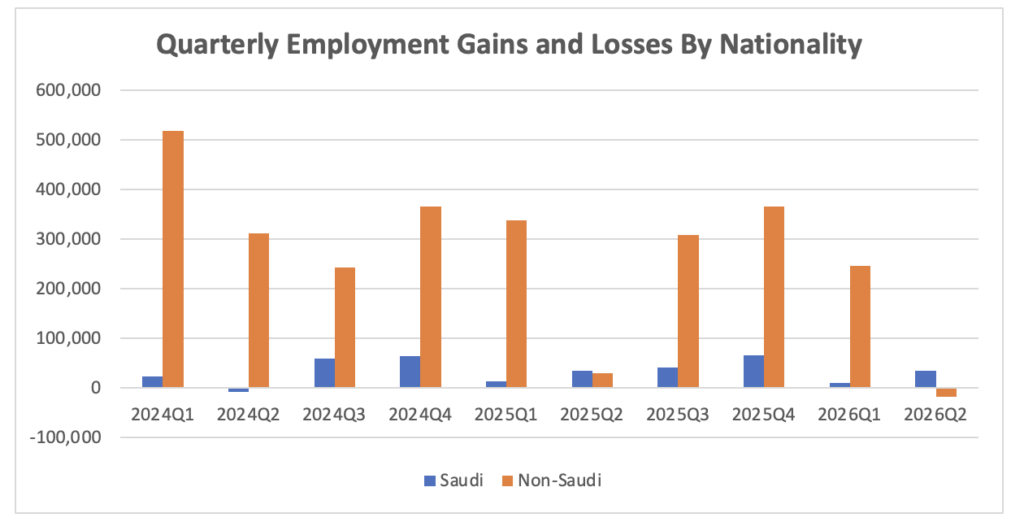
Source: General Authority for Statistics; author calculations
Aggregate job losses were evident in construction, manufacturing, retail and wholesale, and agriculture. With the exception of agriculture, these job losses are consistent with the weakening of growth in the respective sectors in the first half of the year. Interestingly, there was some substitution of Saudi for non-Saudi labor within these sectors. Saudi employment increased by 11,325 workers in the construction sector, 9,271 in manufacturing, and 4,917 in retail and wholesale, while non-Saudi employment fell in these sectors by 68,743, 19,930, and 17,652, respectively. The reasons for this apparent substitution are unclear, but it could reflect some tightening of Saudization requirements.
Bending but Not Breaking
The labor market data is another indication that the Saudi economy weathered the initial months of the regional conflict quite well. Yes, employment growth slowed sharply in the second quarter, but it stayed positive.
Labor market data, however, is a backward-looking indicator. Not only is it published with a full quarter lag, but employment tends to respond slowly to changes in economic conditions. What is not clear is how the recent attacks on Saudi Arabia will affect growth and employment. Recent reports that Saudi oil exports are passing through the Strait of Hormuz in larger quantities and that flows have been partially restored to the East-West pipeline are positive signs for the economy, but the upcoming publication of September business confidence surveys will provide the first “real-time” snapshot of prospects in the non-oil sector after the strikes.
The views represented herein are the author's or speaker's own and do not necessarily reflect the views of AGSI, its staff, or its board of directors.
Related
Saudi Economic Spotlight
Jul 31, 2026
Data Confirms a Large Economic Contraction in Saudi Arabia in the Second Quarter
The Saudi economy contracted sharply in the second quarter of 2026. Any recovery will be slowed by the recent renewal of hostilities in the region.
Saudi Economic Spotlight
May 6, 2026
Spending Surge Puts Saudi Budget in Large First Quarter Deficit
The Saudi budget recorded a large deficit in the first quarter of 2026 as spending surged, but higher oil revenue during the rest of the year should limit the size of the annual fiscal deficit.
Saudi Economic Spotlight
May 5, 2026
Gulf PMIs Raise Specter of Stagflation
Business conditions in the Gulf generally improved in April, but they remained weaker than before the Iran war. There are signs that price pressures are increasing as the conflict impedes trade.
Jul 31, 2026
Data Confirms a Large Economic Contraction in Saudi Arabia in the Second Quarter
The Saudi economy contracted sharply in the second quarter of 2026. Any recovery will be slowed by the recent renewal of hostilities in the region.
May 6, 2026
Spending Surge Puts Saudi Budget in Large First Quarter Deficit
The Saudi budget recorded a large deficit in the first quarter of 2026 as spending surged, but higher oil revenue during the rest of the year should limit the size of the annual fiscal deficit.
May 5, 2026
Gulf PMIs Raise Specter of Stagflation
Business conditions in the Gulf generally improved in April, but they remained weaker than before the Iran war. There are signs that price pressures are increasing as the conflict impedes trade.
Analysis
Saudi Economic Recovery Delayed by New Threats
Attacks on the East-West oil pipeline and other targets in Saudi Arabia will result in a larger-than-expected economic contraction in the kingdom this year.
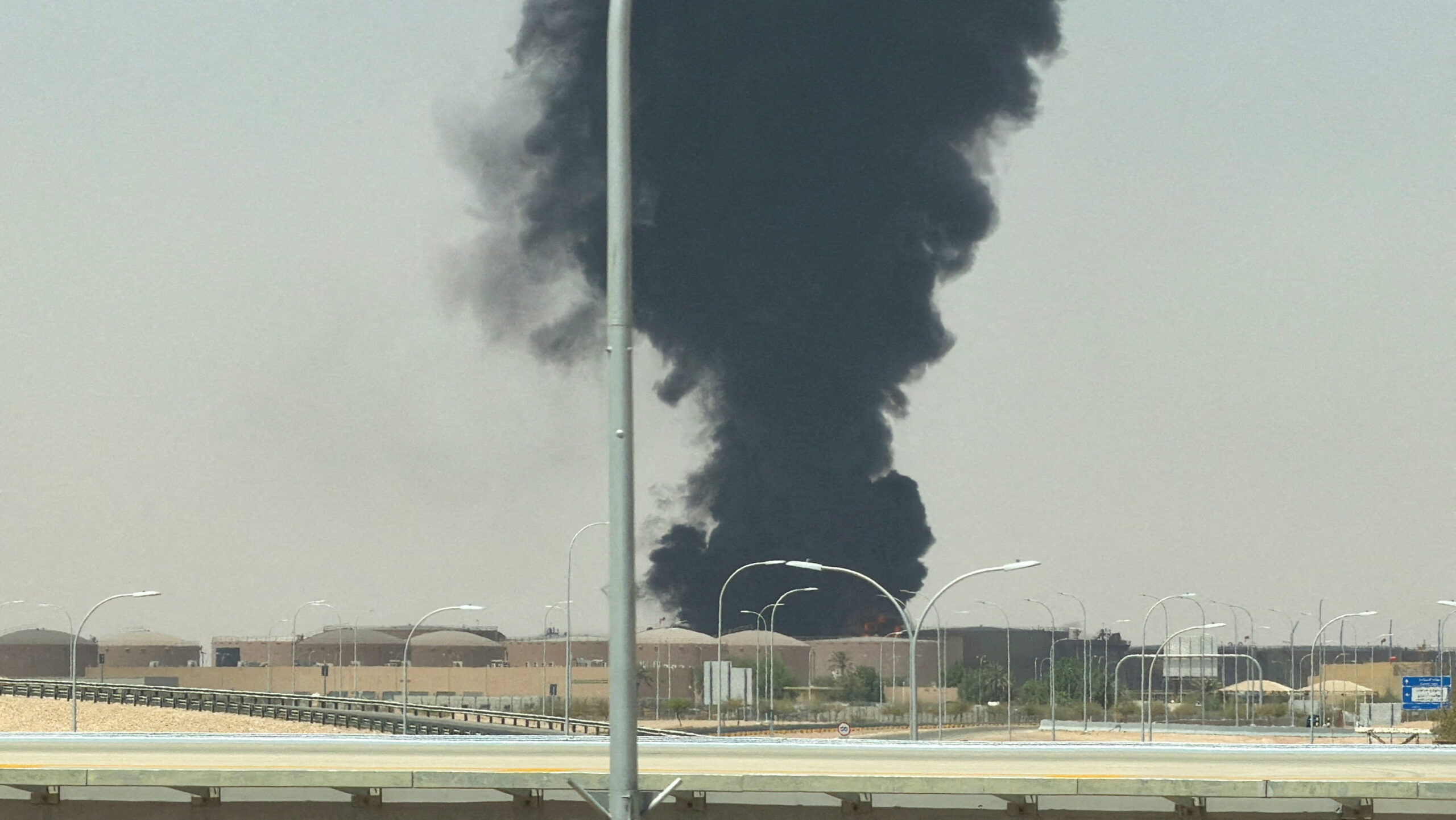
The Trump Presidency, Iran War, and U.S.-Gulf Economic Relationship
The outbreak of the Iran war has halted the deepening of the economic relationship between the United States and the Gulf countries. While likely temporary, it could take some time before the upward trajectory is restored.
Have Saudi Labor Market Reforms Run Their Course?
Recent data suggests that the positive impact of a decade of reforms to improve Saudi labor market outcomes may now be waning.

Saudi Arabia Weathers the Iran War Thanks to Investments in “Economic Resiliency”
The impact of the Iran war on the Saudi economy has been mitigated by investments in “economic resiliency,” including the East-West oil pipeline, relatively prudent fiscal policy, and the accumulation of a large stock of foreign financial assets.
Events
Mar 11, 2026
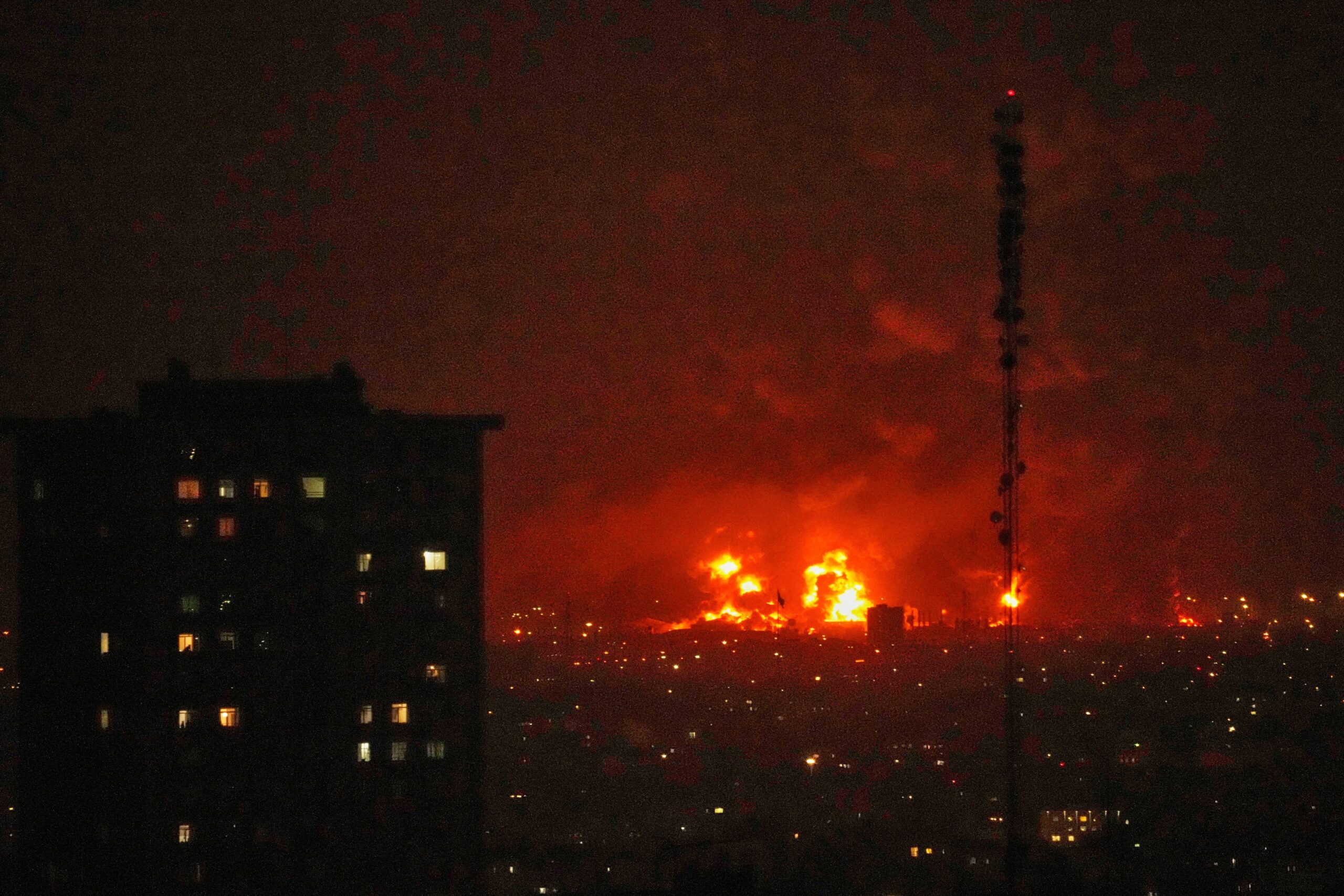
Shockwaves From Iran: Implications for Energy Markets and the Global Economy
On March 11, AGSI hosted a discussion on global energy and economic market volatility.
Speakers




Jan 8, 2026
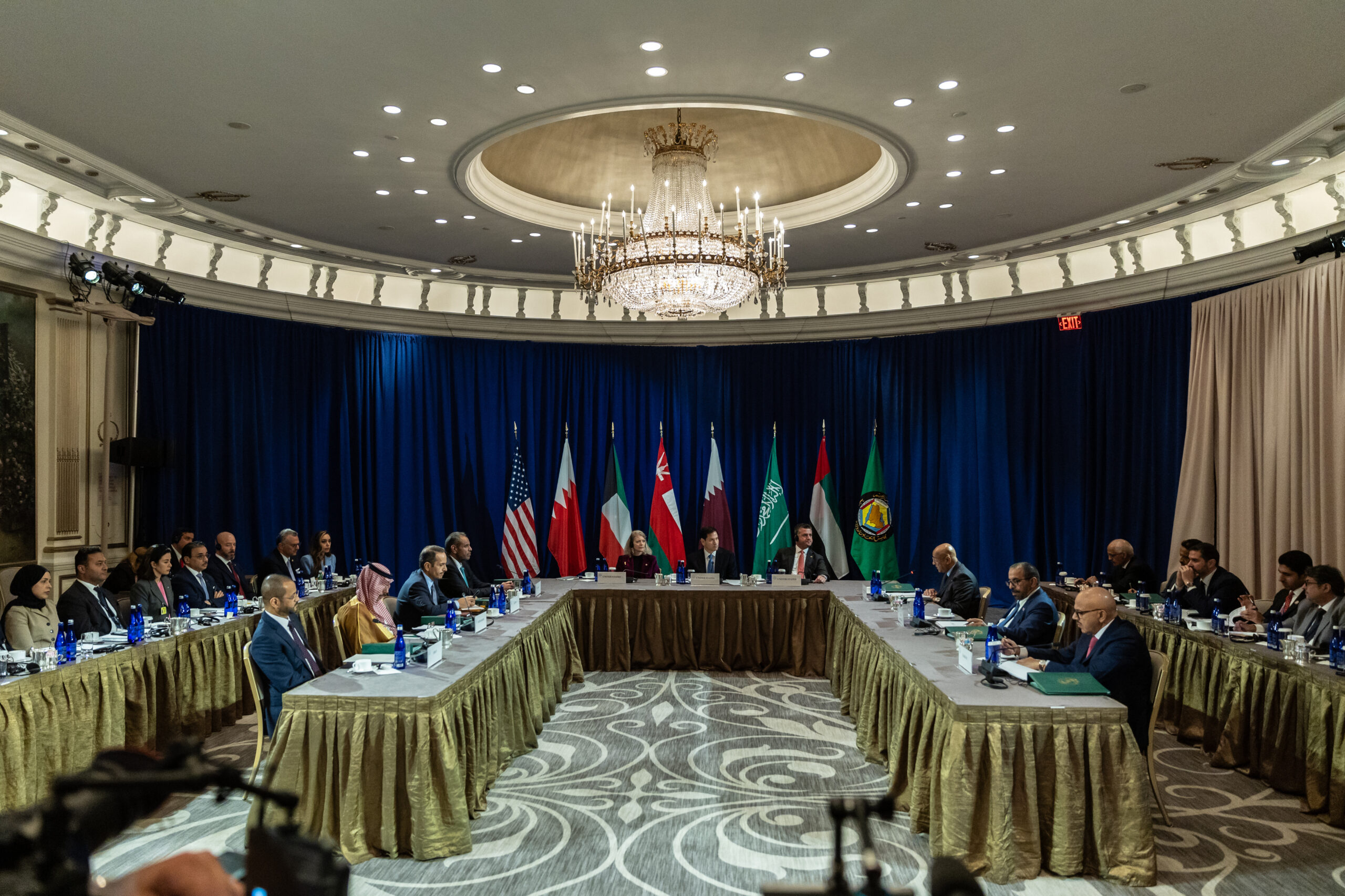
Outlook 2026: Prospects and Priorities for U.S.-Gulf Relations in the Year Ahead
On January 8, AGSI hosted a virtual roundtable with its leadership and scholars as they look ahead and assess trends likely to shape the Gulf region and U.S. foreign policy during the coming year.
Speakers





Dec 15, 2025
Looking to 2026: Economic Prospects and Policy Challenges in the GCC
On December 15, AGSI hosted a discussion on the future of Gulf economies.
Speakers


Sep 4, 2025
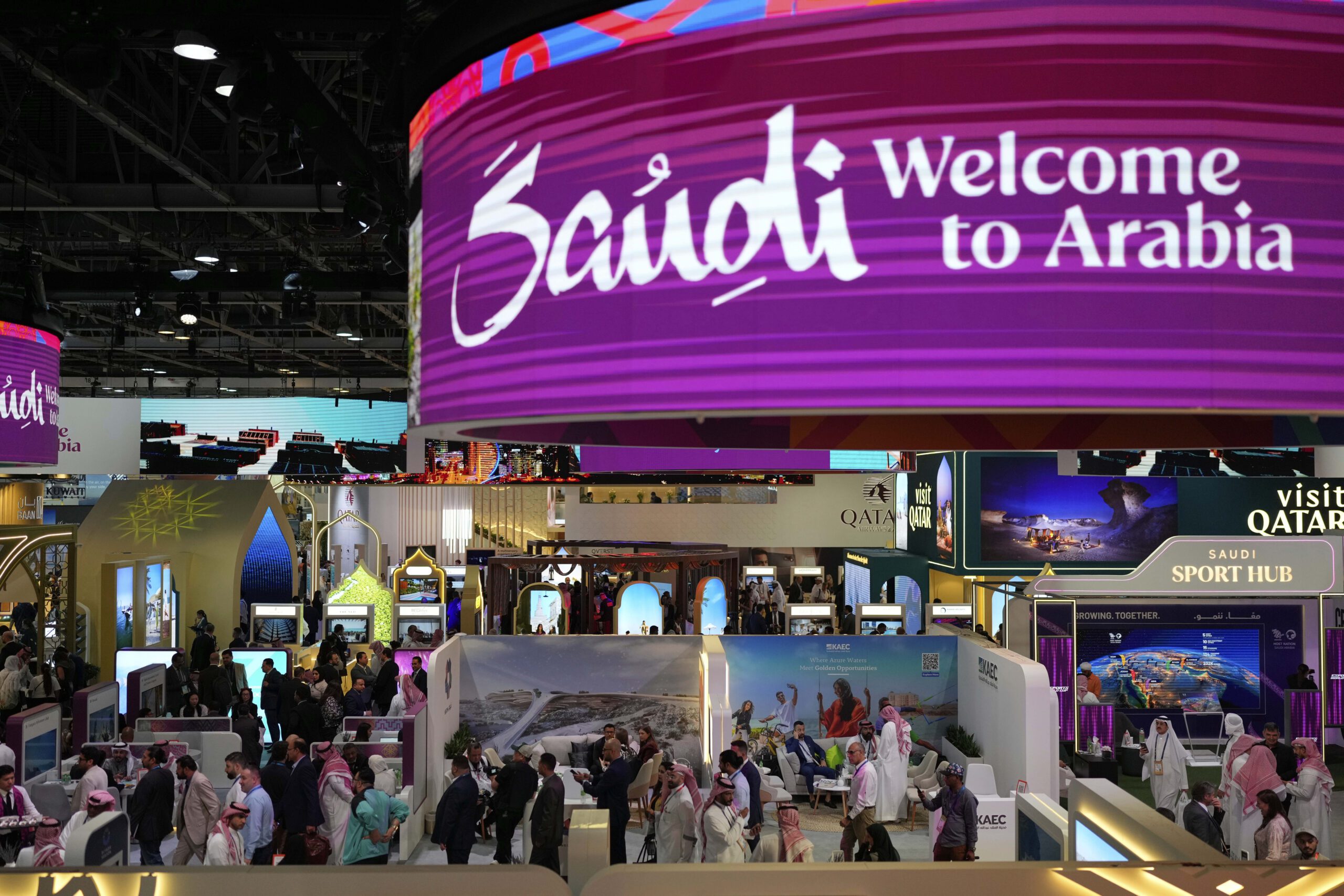
Saudi Arabia: Sustaining Strong Growth Amid Global Economic Uncertainty
On September 4, AGSI hosted a discussion on the International Monetary Fund’s 2025 Article IV report on Saudi Arabia.
Speakers