Oct 1, 2026
Saudi Fiscal Deficit To Be Larger Than Budgeted in 2026
The Saudi Ministry of Finance now expects a larger-than-budgeted fiscal deficit in 2026 as expenditure increases to support the economy.

The Ministry of Finance has published the 2027 “Pre-Budget Statement” and the 2026 “Mid-Year Economic and Fiscal Performance Report.” The documents provide updates on economic and fiscal developments in 2026 and projections and key policy goals for 2027-29.
The ministry now expects a government budget deficit of 245 billion riyals ($65 billion; 4.9% of gross domestic product) in 2026 compared to a budget forecast of a deficit of 165 billion riyals ($44 billion; 3.3% of GDP). Revenue is now expected to be 3.7% higher and expenditure 9.3% higher than budgeted. The main explanation given by the ministry for the spending overrun is “the commitment to the implementation of programs and initiatives within the third phase of Saudi Vision 2030.” Interestingly, while all spending categories are expected to exceed budget, the military and security categories are toward the lower end of these overruns. In 2027, the budget deficit is expected to narrow to 191 billion riyals ($51 billion; 3.6% of GDP) largely due to a 3% decline in nominal spending (no details are provided as to how this will be achieved). The deficit is projected to narrow slightly further as a percent of GDP by 2029.
Real GDP is forecast to contract by 3.6% in 2026. Real non-oil GDP is projected to grow by 3.2%, and while a forecast for real oil GDP is not published, it looks to be around -17%. Real GDP is projected to rebound strongly in 2027 with growth of 12.8%.
Analysis
The Ministry of Finance has had an unenviable task in putting together the “Pre-Budget Statement” at a time of considerable economic and geopolitical turmoil. Any forecast in this environment is subject to much higher-than-usual uncertainty. How and when the war ends, how much oil can be exported, and where oil prices will eventually settle are all key inputs to the forecast, but all are clouded in uncertainty.
At a policy level, the government’s fiscal response to the regional conflict has been appropriate. Despite rising over the past decade, government debt is still relatively low at around 35% of GDP. This means there is fiscal space available to pursue countercyclical fiscal policy. As the economy slows, the government can provide support through higher spending or lower taxes and let the fiscal deficit temporarily increase. This is what has happened in 2026. What is important is that when the impact of the conflict is over, spending and the fiscal deficit are reduced to reclaim fiscal space for when the next downturn occurs.
Looking at the ministry’s forecasts, revenue and expenditure are both likely to exceed the new 2026 projections. Expenditure in the first half of the year was higher than is consistent with the new full-year expenditure forecast. What will be key is how much of this spending was due to planned spending being shifted forward within the year to support the economy and how much was new and unbudgeted spending. This is not clear from the published documents. In last year’s “Pre-Budget Statement,” the 2025 fiscal deficit was underestimated by 0.5% of GDP. A similar overrun in 2026, taking the deficit to 5.5% of GDP, is a reasonable central scenario. For 2027, uncertainty about revenue is particularly high given the oil market outlook. As usual, a drop in nominal spending is projected for the next year (2027 in this case), but this is rarely achieved. History would suggest the 2027 budget deficit outcome will also exceed the 3.6% forecast.
The ministry’s forecast for real non-oil GDP growth in 2026 looks quite optimistic. It would require a strong acceleration of non-oil growth in the second half of the year to achieve (non-oil real GDP in the second half of 2026 would need to be 4.6% higher than in the second half of 2025). While monthly indicators, such as the purchasing managers’ index, have improved in recent months, they are not yet at levels consistent with such a strong growth acceleration. On the oil side, a 17% contraction in real oil GDP for the year looks reasonable if the reported increase in oil exports through the Strait of Hormuz in September is maintained.
The views represented herein are the author's or speaker's own and do not necessarily reflect the views of AGSI, its staff, or its board of directors.
Related
Saudi Labor Market Holds Firm in Face of Regional Conflict
The regional conflict has so far had a limited impact on the Saudi labor market.
Saudi Economic Spotlight
Jul 31, 2026
Data Confirms a Large Economic Contraction in Saudi Arabia in the Second Quarter
The Saudi economy contracted sharply in the second quarter of 2026. Any recovery will be slowed by the recent renewal of hostilities in the region.
Saudi Economic Spotlight
May 6, 2026
Spending Surge Puts Saudi Budget in Large First Quarter Deficit
The Saudi budget recorded a large deficit in the first quarter of 2026 as spending surged, but higher oil revenue during the rest of the year should limit the size of the annual fiscal deficit.
Saudi Labor Market Holds Firm in Face of Regional Conflict
The regional conflict has so far had a limited impact on the Saudi labor market.
Jul 31, 2026
Data Confirms a Large Economic Contraction in Saudi Arabia in the Second Quarter
The Saudi economy contracted sharply in the second quarter of 2026. Any recovery will be slowed by the recent renewal of hostilities in the region.
May 6, 2026
Spending Surge Puts Saudi Budget in Large First Quarter Deficit
The Saudi budget recorded a large deficit in the first quarter of 2026 as spending surged, but higher oil revenue during the rest of the year should limit the size of the annual fiscal deficit.
Analysis
Saudi Economic Recovery Delayed by New Threats
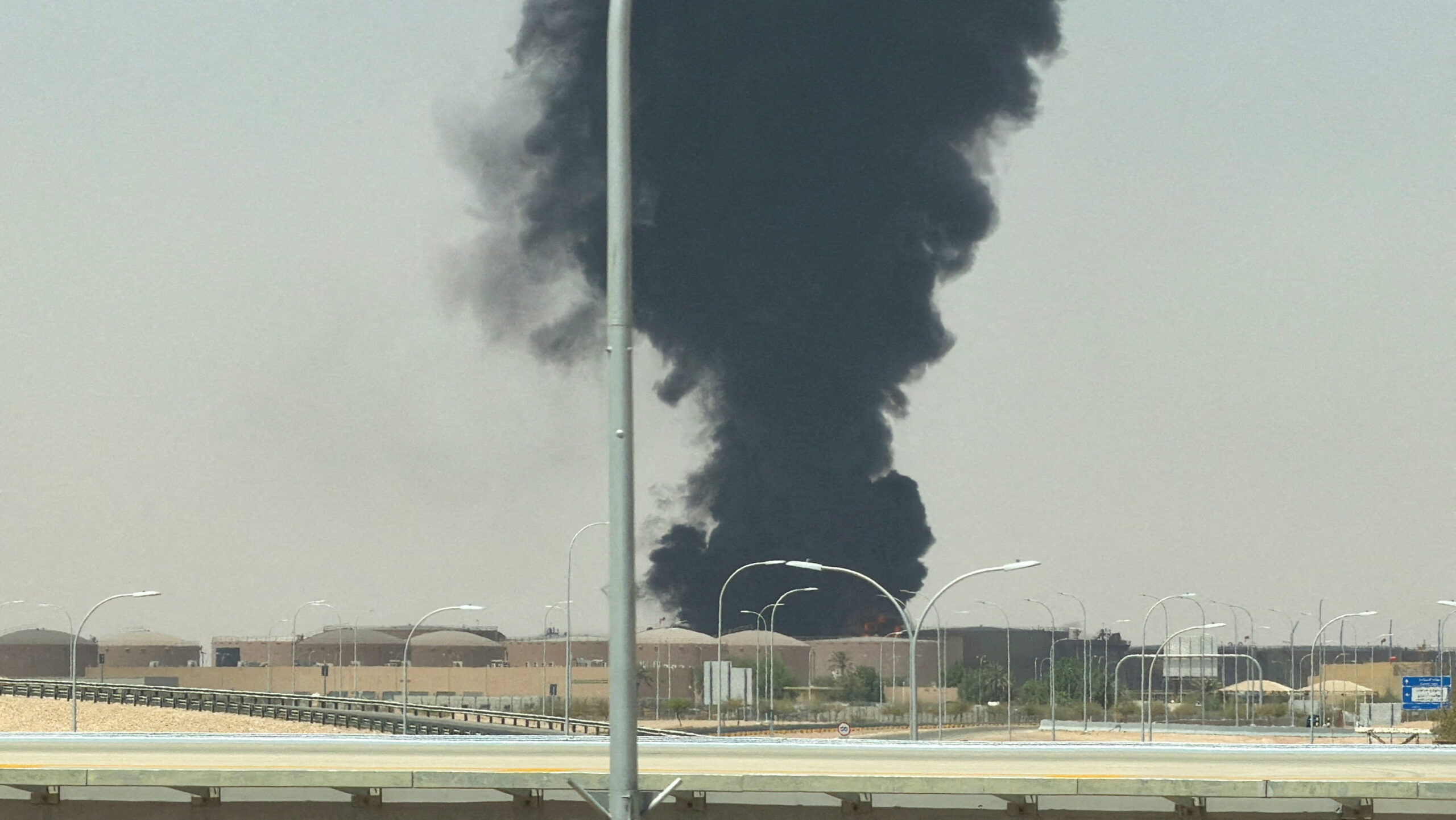
Attacks on the East-West oil pipeline and other targets in Saudi Arabia will result in a larger-than-expected economic contraction in the kingdom this year.
The Trump Presidency, Iran War, and U.S.-Gulf Economic Relationship
The outbreak of the Iran war has halted the deepening of the economic relationship between the United States and the Gulf countries. While likely temporary, it could take some time before the upward trajectory is restored.
Have Saudi Labor Market Reforms Run Their Course?
Recent data suggests that the positive impact of a decade of reforms to improve Saudi labor market outcomes may now be waning.

Saudi Arabia Weathers the Iran War Thanks to Investments in “Economic Resiliency”
The impact of the Iran war on the Saudi economy has been mitigated by investments in “economic resiliency,” including the East-West oil pipeline, relatively prudent fiscal policy, and the accumulation of a large stock of foreign financial assets.
Events
Mar 11, 2026
Shockwaves From Iran: Implications for Energy Markets and the Global Economy
On March 11, AGSI hosted a discussion on global energy and economic market volatility.
Speakers




Jan 8, 2026
Outlook 2026: Prospects and Priorities for U.S.-Gulf Relations in the Year Ahead
On January 8, AGSI hosted a virtual roundtable with its leadership and scholars as they look ahead and assess trends likely to shape the Gulf region and U.S. foreign policy during the coming year.
Speakers





Dec 15, 2025
Looking to 2026: Economic Prospects and Policy Challenges in the GCC
On December 15, AGSI hosted a discussion on the future of Gulf economies.

Speakers


Sep 4, 2025
Saudi Arabia: Sustaining Strong Growth Amid Global Economic Uncertainty
On September 4, AGSI hosted a discussion on the International Monetary Fund’s 2025 Article IV report on Saudi Arabia.
Speakers