Oct 2, 2026
Saudi Current Account Back in Deficit in the Second Quarter
The Saudi current account moved back into deficit in the second quarter of 2026, but the external sector position of the kingdom remains very strong.

The Saudi current account balance moved back into a deficit of $9.5 billion in the second quarter of 2026. The first quarter had seen a surplus for the first time in nearly two years as oil revenue jumped (higher prices offsetting lower export volumes) and imports fell (as did non-oil exports) with the closure of the Strait of Hormuz. In the second quarter, oil revenue fell by 12% and non-oil exports and imports both fell further. The surplus on the travel account narrowed with visitor spending in Saudi Arabia remaining below preconflict levels, while remittance outflows surged to their highest-ever level of $18.2 billion, up over 30% year on year.
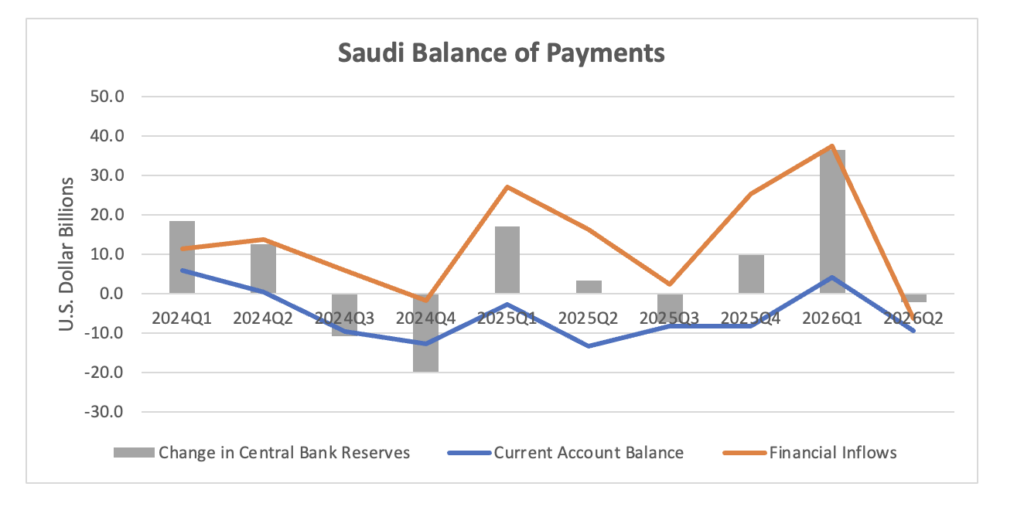
Source: Saudi central bank
Note: Financial inflows are defined as the sum of direct investment, portfolio, and “other inflows.” A positive number is an inflow into Saudi Arabia.
There was much less action recorded in the financial account than in the first quarter. The first quarter saw significant movements in financial asset holdings as Saudi residents sought liquidity in the early days of the conflict. They sold close to $23 billion of foreign equity (the largest quarterly sale on record), increased their deposits at foreign financial institutions by $13 billion, and borrowed $27 billion from nonresidents. The second quarter was more mundane, although not without questions. Saudi residents renewed purchases of foreign equities (by around $9 billion) and issued debt securities of $5 billion. It is not clear, however, if the data includes the Public Investment Fund’s purchase of SpaceX equity in June.
Foreign direct investment into the Saudi economy weakened slightly in the second quarter. While this investment does not appear to have been overly affected by the conflict, it is also not showing the upward trend that has been targeted under Vision 2030. Foreign direct investment by Saudi residents overseas fell sharply in the quarter but should rebound in the third quarter with the completion of the PIF’s leverage buyout of EA Sports in August.
Strong Position
The balance of payments continued to be affected by the impact of the regional conflict in the second quarter although less so than in the first quarter. Non-oil exports, imports, and tourism spending all remained below prewar levels and are unlikely to fully recover until the conflict ends. Worker remittances are also likely to stay above prewar levels. The outlook for oil exports is more uncertain. Export volumes through the Strait of Hormuz are reported to have picked up in September even as exports through the Red Sea have been curtailed by the attack on the East-West pipeline. With oil prices around $100 per barrel, higher export volumes will lead to higher oil revenue in the short term. The question is how long this can be sustained.
Nevertheless, Saudi Arabia has an enviably strong external position. The Saudi central bank held foreign exchange reserves of around $490 billion as of the end of August, and other public sector entities also have large foreign asset holdings. These holdings provide a considerable financial buffer to help the kingdom manage periods of economic and geopolitical uncertainty.
The views represented herein are the author's or speaker's own and do not necessarily reflect the views of AGSI, its staff, or its board of directors.
Related
Saudi Economic Spotlight
Oct 1, 2026
Saudi Fiscal Deficit To Be Larger Than Budgeted in 2026
The Saudi Ministry of Finance now expects a larger-than-budgeted fiscal deficit in 2026 as expenditure increases to support the economy.
Saudi Labor Market Holds Firm in Face of Regional Conflict
The regional conflict has so far had a limited impact on the Saudi labor market.
Oct 1, 2026
Saudi Fiscal Deficit To Be Larger Than Budgeted in 2026
The Saudi Ministry of Finance now expects a larger-than-budgeted fiscal deficit in 2026 as expenditure increases to support the economy.
Saudi Labor Market Holds Firm in Face of Regional Conflict
The regional conflict has so far had a limited impact on the Saudi labor market.
Analysis
Saudi Economic Recovery Delayed by New Threats
Attacks on the East-West oil pipeline and other targets in Saudi Arabia will result in a larger-than-expected economic contraction in the kingdom this year.
The Trump Presidency, Iran War, and U.S.-Gulf Economic Relationship
The outbreak of the Iran war has halted the deepening of the economic relationship between the United States and the Gulf countries. While likely temporary, it could take some time before the upward trajectory is restored.
Have Saudi Labor Market Reforms Run Their Course?
Recent data suggests that the positive impact of a decade of reforms to improve Saudi labor market outcomes may now be waning.
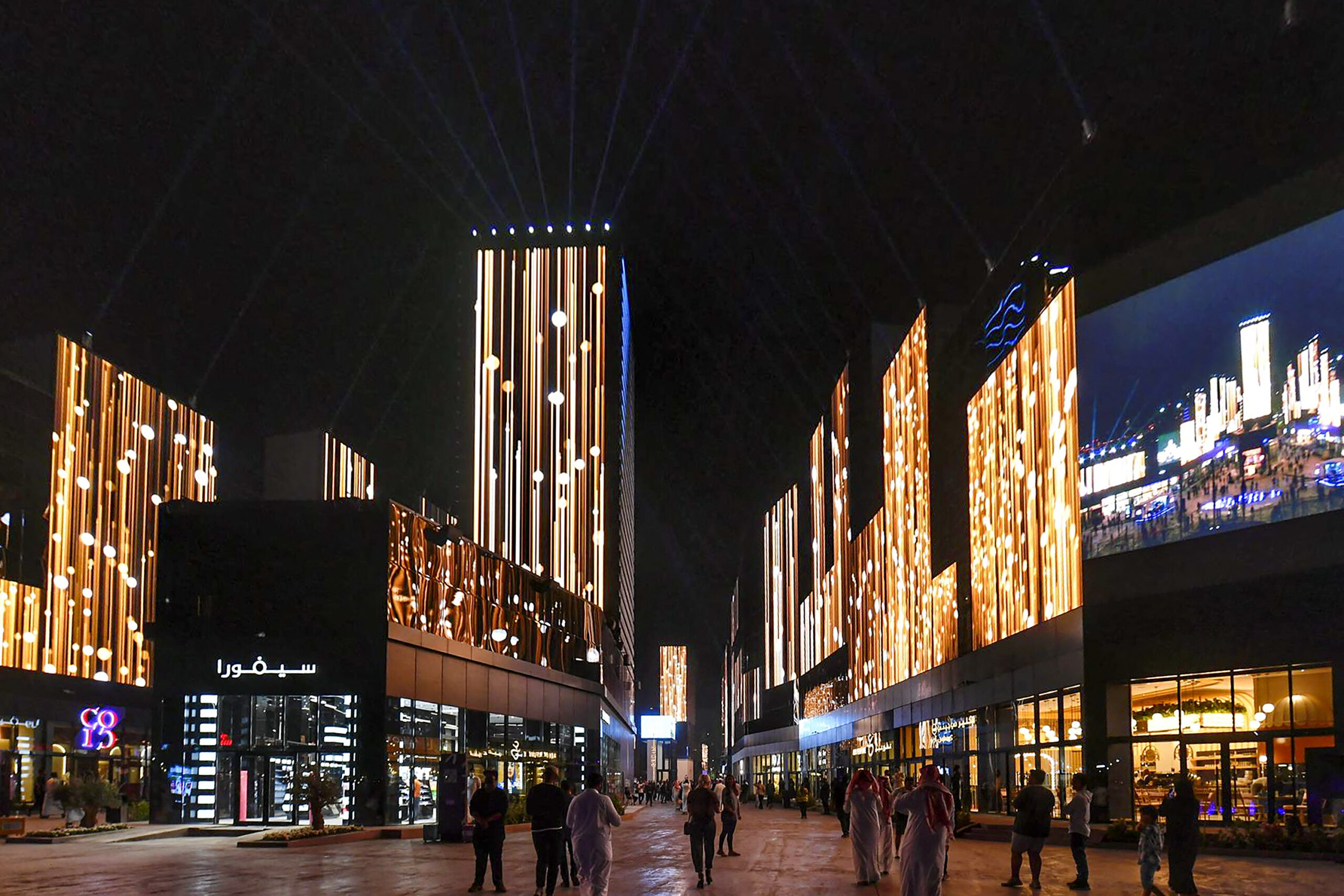
Saudi Arabia Weathers the Iran War Thanks to Investments in “Economic Resiliency”
The impact of the Iran war on the Saudi economy has been mitigated by investments in “economic resiliency,” including the East-West oil pipeline, relatively prudent fiscal policy, and the accumulation of a large stock of foreign financial assets.
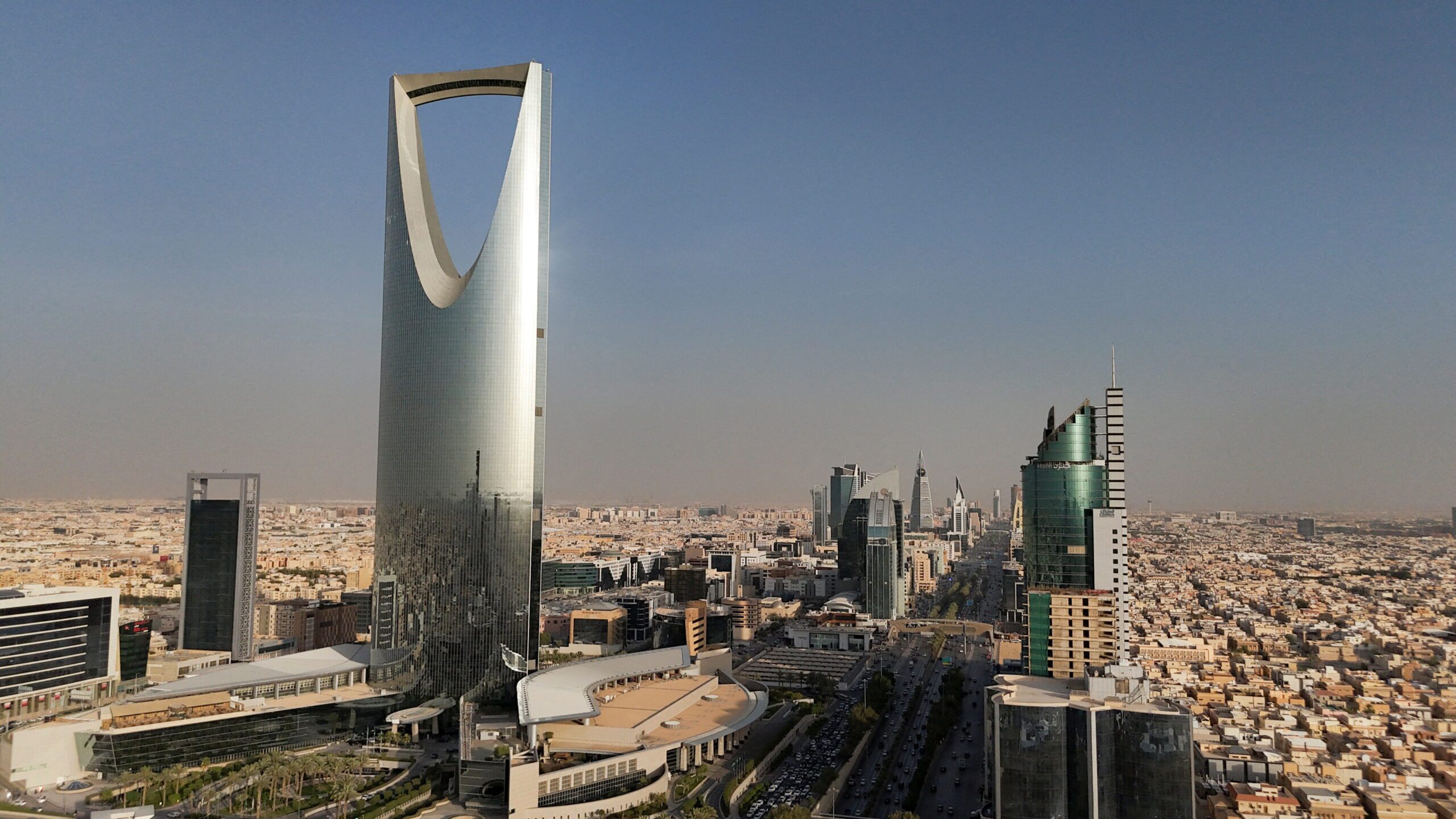
Events
Mar 11, 2026
Shockwaves From Iran: Implications for Energy Markets and the Global Economy
On March 11, AGSI hosted a discussion on global energy and economic market volatility.
Speakers


Jan 8, 2026
Outlook 2026: Prospects and Priorities for U.S.-Gulf Relations in the Year Ahead
On January 8, AGSI hosted a virtual roundtable with its leadership and scholars as they look ahead and assess trends likely to shape the Gulf region and U.S. foreign policy during the coming year.
Speakers




Dec 15, 2025
Looking to 2026: Economic Prospects and Policy Challenges in the GCC
On December 15, AGSI hosted a discussion on the future of Gulf economies.
Speakers
Sep 4, 2025
Saudi Arabia: Sustaining Strong Growth Amid Global Economic Uncertainty
On September 4, AGSI hosted a discussion on the International Monetary Fund’s 2025 Article IV report on Saudi Arabia.
Speakers