Nov 4, 2026
Saudi Growth Rebounds in Third Quarter, But Uncertainty Remains High
The Saudi economy rebounded in the third quarter due to a recovery in oil production, but the short-term outlook remains uncertain amid continuing regional tensions.

The preliminary or “flash” estimate of gross domestic product for the third quarter of 2026 shows that the Saudi economy returned to growth after contracting in the first two quarters of the year. Real GDP grew by 1.3% relative to the second quarter (although it still contracted by 3.8% compared to the third quarter of 2025). The growth rebound was driven by a recovery in oil production. Real oil GDP grew by 5.7% quarter on quarter compared to a 21.6% contraction in the second quarter. Real non-oil GDP grew by 0.2% quarter on quarter, following a 0.3% contraction in the second quarter. Non-oil growth remains well below the levels seen before the Iran conflict. The modest recovery in non-oil growth in the third quarter is consistent with the uptick in business confidence shown in the Riyadh Bank purchasing managers’ index.
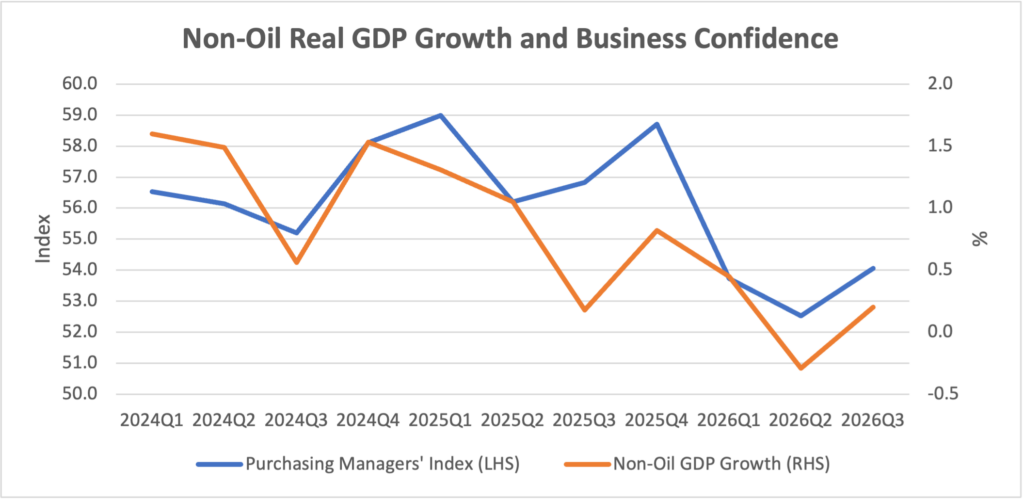
Sources: General Authority for Statistics; Riyadh Bank
Note: Non-oil real GDP growth is quarter on quarter.
Looking forward, reports from companies that track oil tanker movements suggest that Saudi oil exports remained around September levels in October despite an increase in Iranian attacks on shipping. If this level of exports is maintained in the final two months of the year, real oil GDP would likely contract by 16% in 2026 relative to 2025.
In the non-oil sector, growth should be modestly positive in the fourth quarter and around 1.3% for 2026 as a whole. While the purchasing managers’ index dipped slightly in October compared to September, it remained around its average third quarter level. Other monthly indicators, such as non-oil trade and bank credit to the private sector, also suggest that non-oil growth has stabilized at a subdued level, although the Saudi stock market has continued to weaken over the past month. Based on these oil and non-oil forecasts, overall real GDP would contract by about 4.5% in 2026.
Uncertainty Remains the Name of the Game
Saudi oil exports and production have been resilient over the past two months despite continued threats to shipping around the Strait of Hormuz and the Bab el-Mandeb and the attacks on the East-West oil pipeline. Business confidence has also held up relatively well despite the escalation of Houthi attacks on the kingdom.
Nevertheless, uncertainties remain. Chief among these are the prospects for the U.S.-Israeli war with Iran and the conflict between Saudi Arabia and the Houthis. A negotiated end to the conflict that provides a credible guarantee against future attacks on the kingdom would create the environment for a strong rebound in growth, as envisaged by the International Monetary Fund, which projects nearly 8% growth in the Saudi economy in 2027. However, if the conflicts escalate and result in increased attacks on the kingdom’s infrastructure and oil industry, growth during the final months of this year and into 2027 would be markedly weaker. This is because oil exports would be negatively affected and travel to, and investment in, the kingdom curtailed, at least temporarily. A number of high-profile events, including the Future Investment Initiative and the Asian Cup soccer tournament, have already been postponed, and a deepening of hostilities would inevitably result in further delays and cancellations.
The views represented herein are the author's or speaker's own and do not necessarily reflect the views of AGSI, its staff, or its board of directors.
Related
Saudi Economic Spotlight
Nov 3, 2026
Putting Recent Saudi Budget Data Under the Microscope
Recently published data suggests that the 2026 Saudi government budget deficit will be larger than previously forecast.
Saudi Economic Spotlight
Oct 2, 2026
Saudi Current Account Back in Deficit in the Second Quarter
The Saudi current account moved back into deficit in the second quarter of 2026, but the external sector position of the kingdom remains very strong.
Saudi Economic Spotlight
Oct 1, 2026
Saudi Fiscal Deficit To Be Larger Than Budgeted in 2026
The Saudi Ministry of Finance now expects a larger-than-budgeted fiscal deficit in 2026 as expenditure increases to support the economy.
Nov 3, 2026
Putting Recent Saudi Budget Data Under the Microscope
Recently published data suggests that the 2026 Saudi government budget deficit will be larger than previously forecast.
Oct 2, 2026
Saudi Current Account Back in Deficit in the Second Quarter
The Saudi current account moved back into deficit in the second quarter of 2026, but the external sector position of the kingdom remains very strong.
Oct 1, 2026
Saudi Fiscal Deficit To Be Larger Than Budgeted in 2026
The Saudi Ministry of Finance now expects a larger-than-budgeted fiscal deficit in 2026 as expenditure increases to support the economy.
Analysis
Evaluating the PIF’s Financial Performance and New Strategic Direction
In its new strategy, the Saudi Public Investment Fund seems to focus more on investment returns and less on asset growth. How this will work in practice is less clear, including what it means for the future of existing projects, such as Neom.

Saudi Economic Recovery Delayed by New Threats
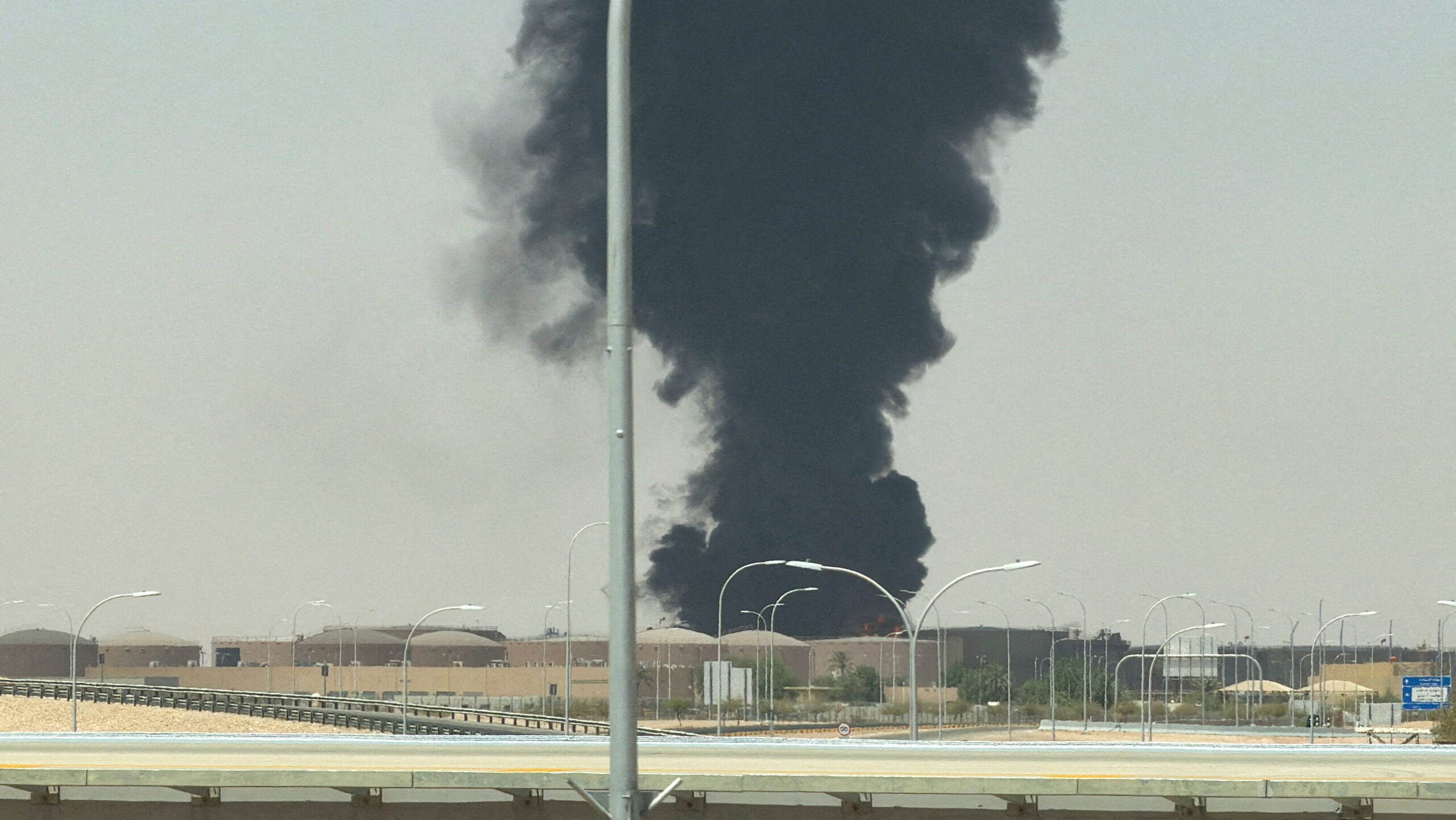
Attacks on the East-West oil pipeline and other targets in Saudi Arabia will result in a larger-than-expected economic contraction in the kingdom this year.
The Trump Presidency, Iran War, and U.S.-Gulf Economic Relationship
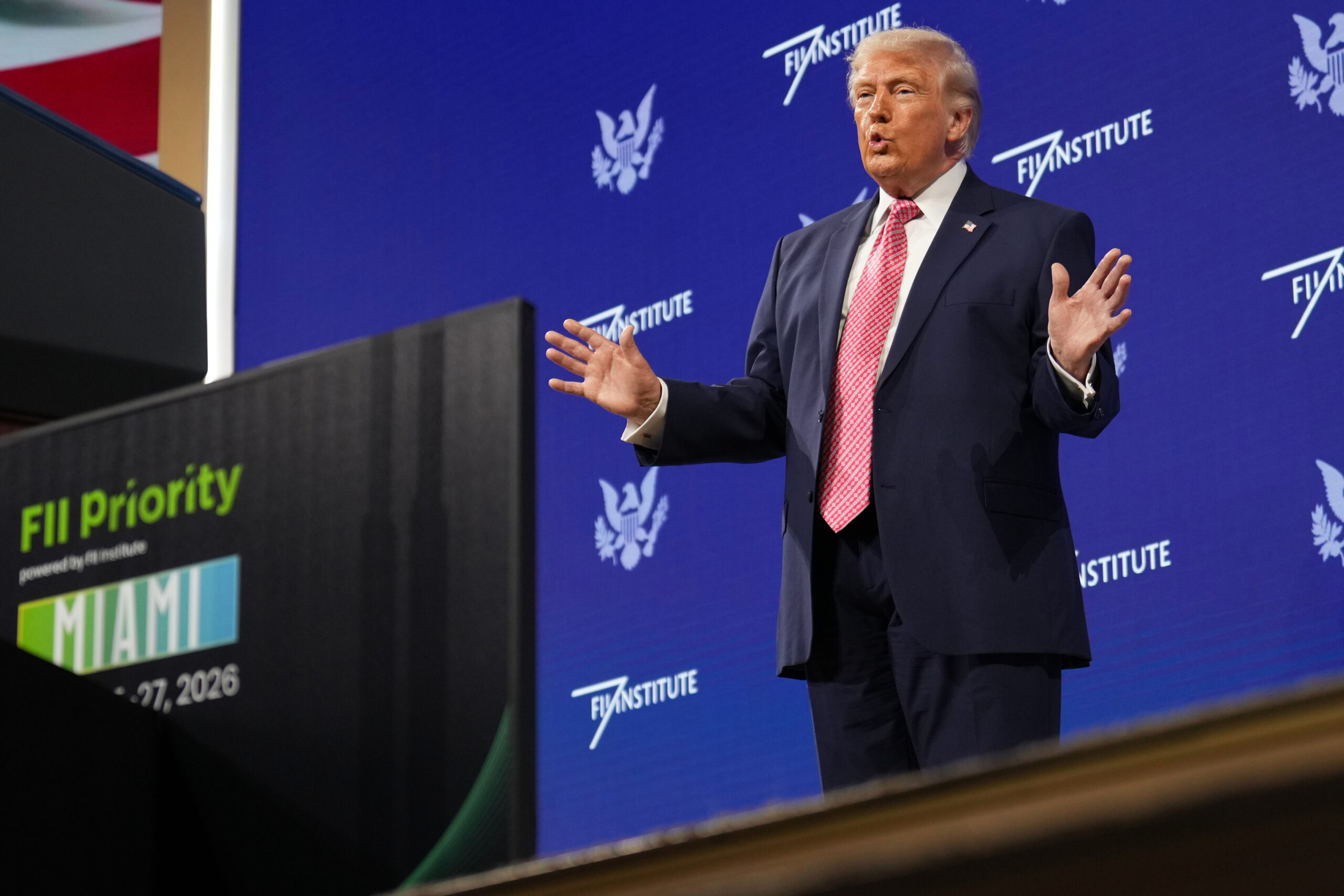
The outbreak of the Iran war has halted the deepening of the economic relationship between the United States and the Gulf countries. While likely temporary, it could take some time before the upward trajectory is restored.
Have Saudi Labor Market Reforms Run Their Course?
Recent data suggests that the positive impact of a decade of reforms to improve Saudi labor market outcomes may now be waning.

Events
Mar 11, 2026
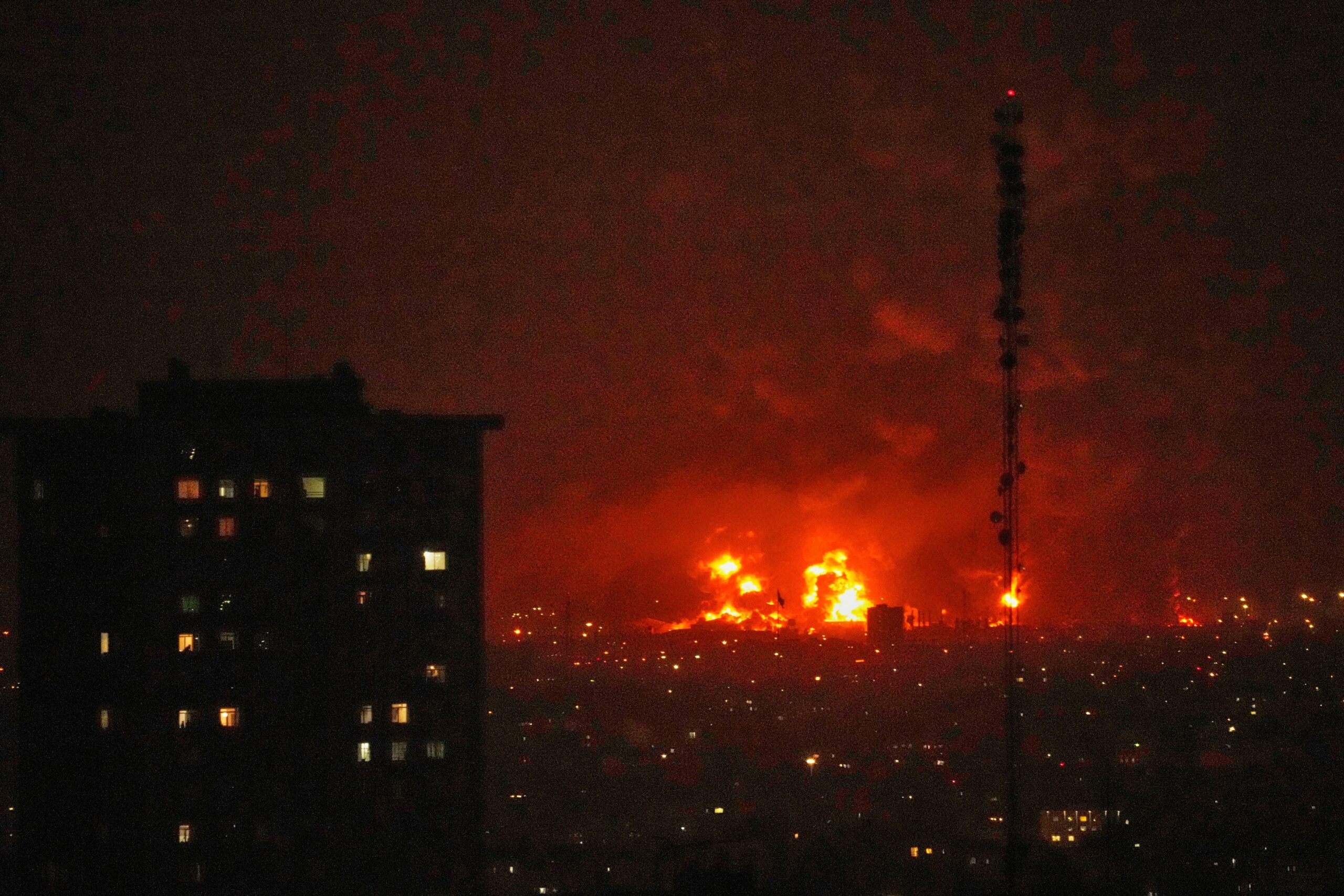
Shockwaves From Iran: Implications for Energy Markets and the Global Economy
On March 11, AGSI hosted a discussion on global energy and economic market volatility.
Speakers




Jan 8, 2026
Outlook 2026: Prospects and Priorities for U.S.-Gulf Relations in the Year Ahead
On January 8, AGSI hosted a virtual roundtable with its leadership and scholars as they look ahead and assess trends likely to shape the Gulf region and U.S. foreign policy during the coming year.
Speakers





Dec 15, 2025
Looking to 2026: Economic Prospects and Policy Challenges in the GCC
On December 15, AGSI hosted a discussion on the future of Gulf economies.
Speakers


Sep 4, 2025
Saudi Arabia: Sustaining Strong Growth Amid Global Economic Uncertainty
On September 4, AGSI hosted a discussion on the International Monetary Fund’s 2025 Article IV report on Saudi Arabia.
Speakers