The United States Plus: Gulf States Contemplate Regional Security After Iran War
The imperative for Gulf states to unify their position has grown since the onset of Iranian attacks on their countries. Yet under conditions of uncertainty about the U.S. position and the war's outcome, Gulf states are demonstrating differing regional alignments and preferences for managing the crisis.
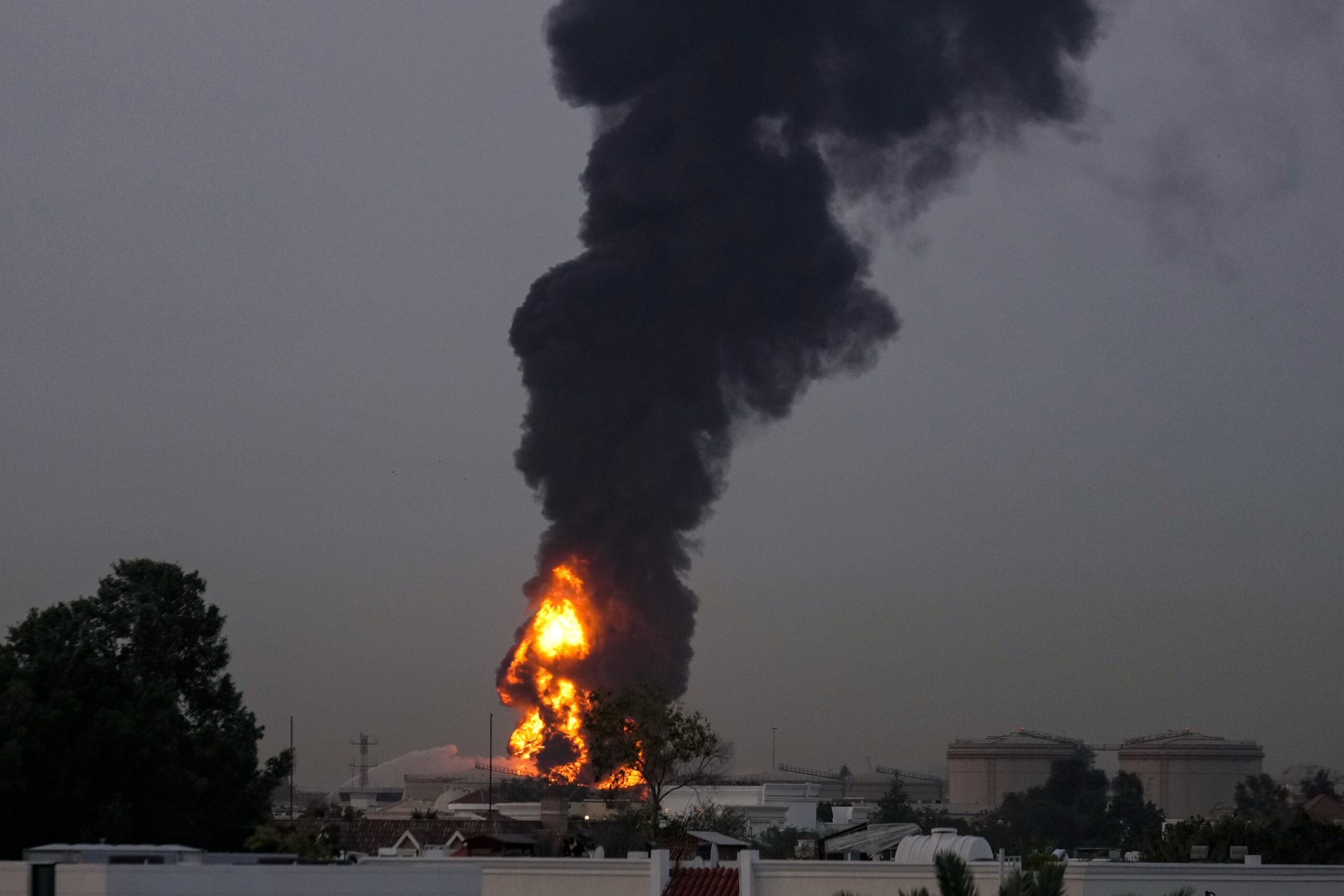
A large fire and plume of smoke are visible after the debris of an intercepted Iranian drone hit the Fujairah oil facility in Fujairah, United Arab Emirates, March 3. (AP Photo/Altaf Qadri)
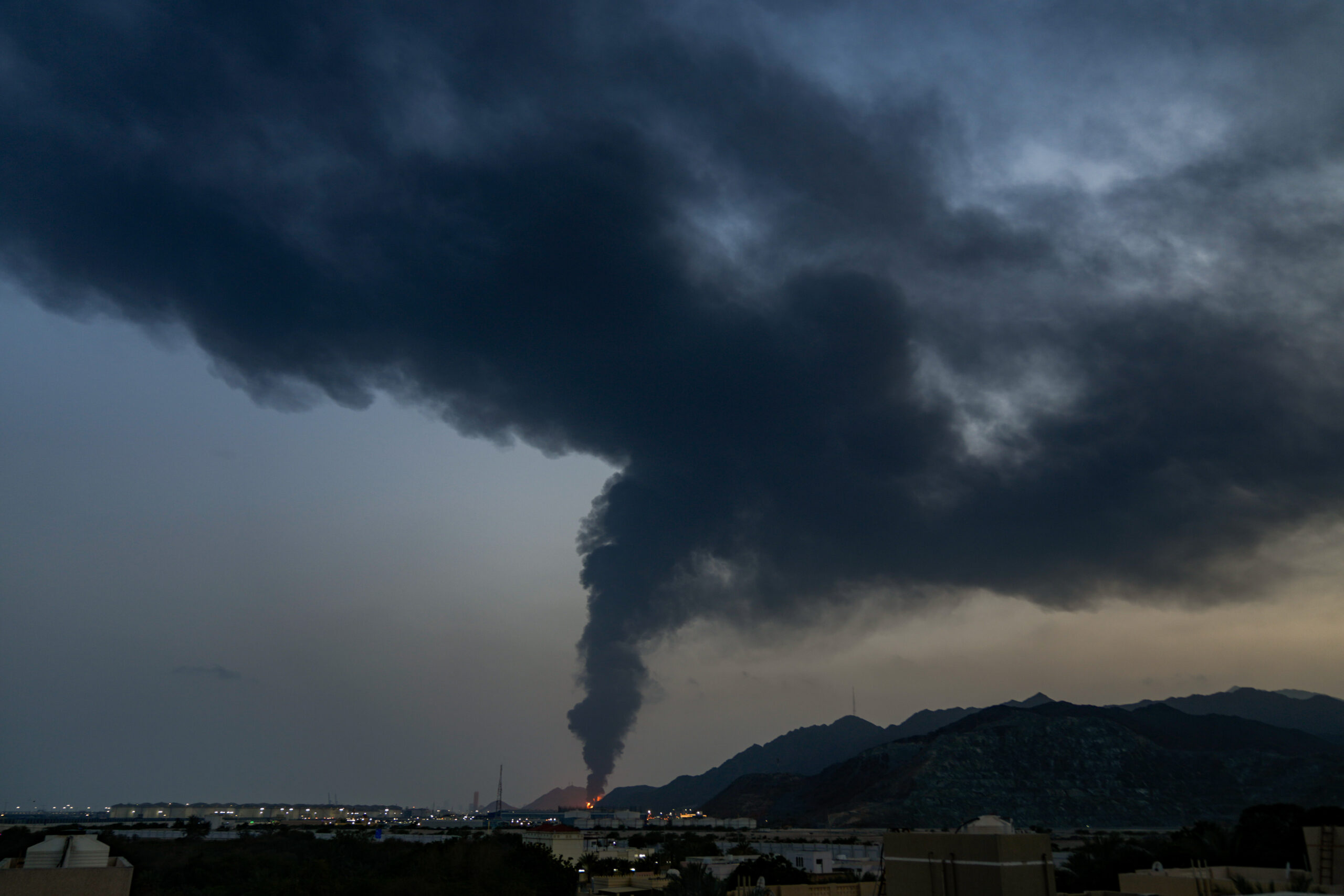
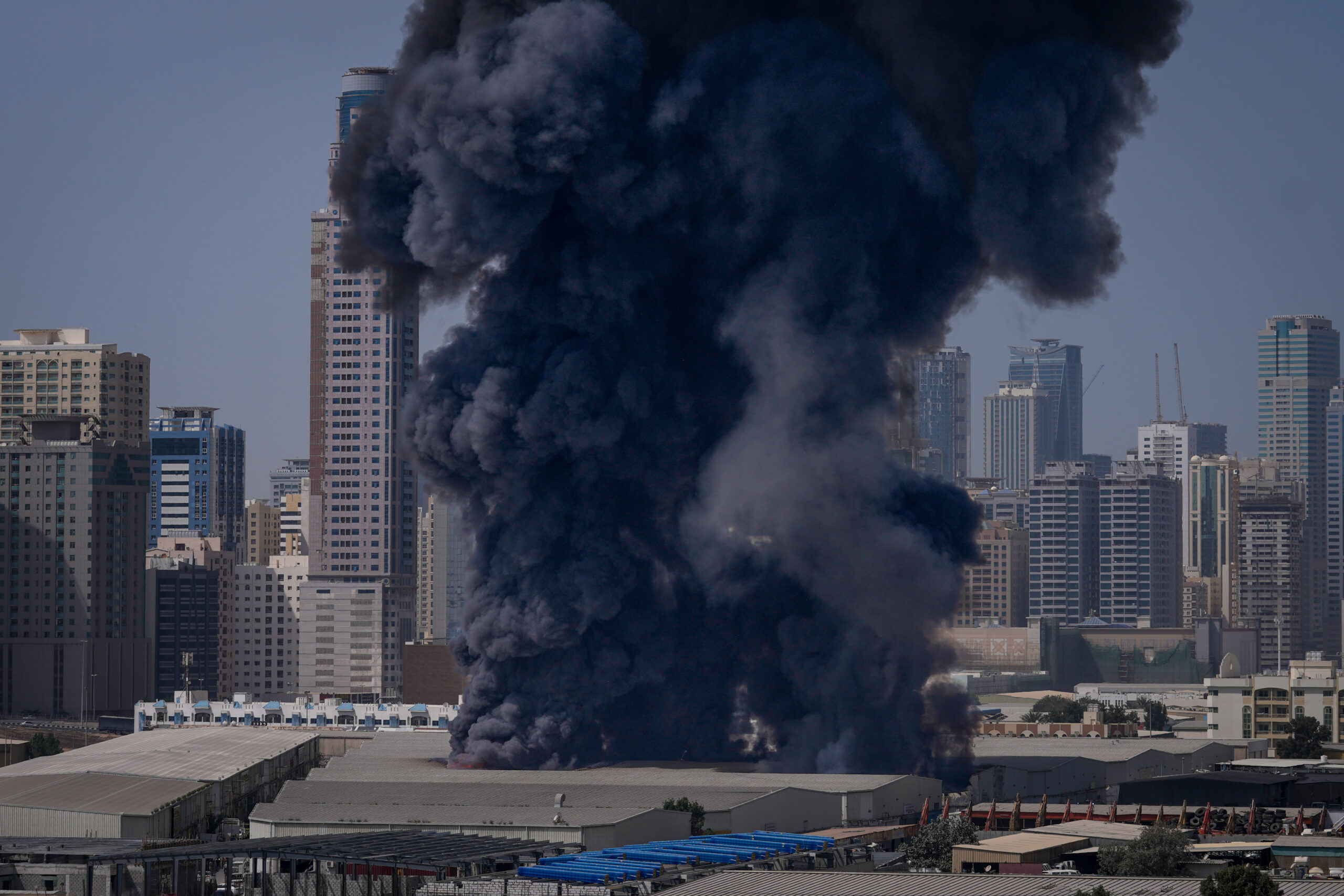
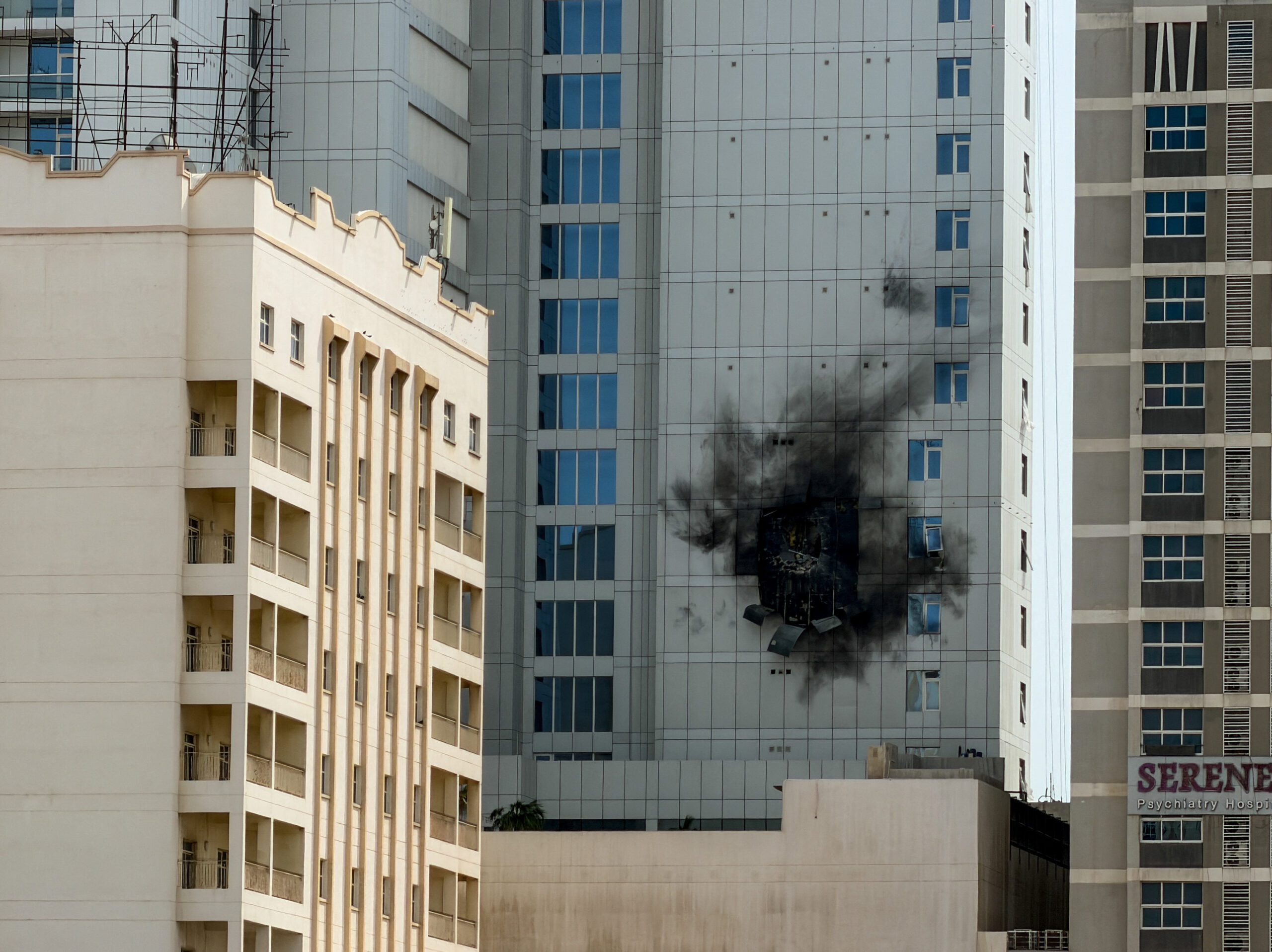
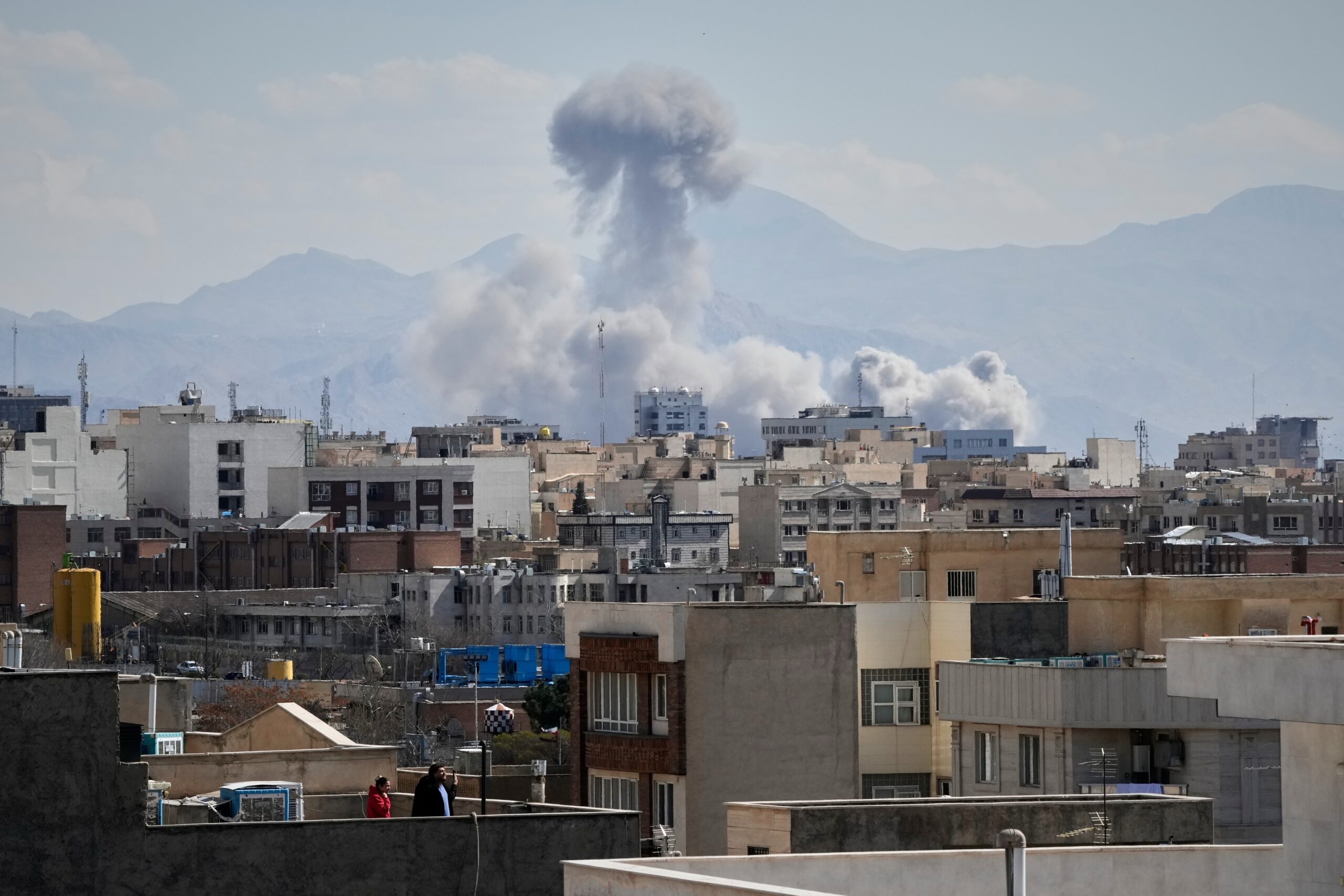
Gulf Arab states await a momentous decision in the Iran war, as another deadline imposed by President Donald J. Trump to the Iranian leadership approaches. A month into the U.S.-Israeli conflict with Iran, the threats to Gulf states’ security and economies have become increasingly grave. Frequent attacks on airports and shipping have severely disrupted the connectivity of these vital global hubs. And as Iran has looked to match or exceed the escalation of the United States and Israel, it has extended its targets in the Gulf countries to more civilian facilities: inflicting damage on gas production and oil refining that cannot be simply brought back on line when the war ends and threatening vital water desalination plants necessary for life in these countries. Were the United States to decide to escalate further, deploying more troops to secure the Strait of Hormuz, or further expand the list of civilian targets in Iran, the Gulf states may face more severe Iranian attacks.
Predictably, the position of Gulf states has hardened toward Iran. News reports have described a shift in the Gulf Arab position, from advising the United States to avoid a war with Iran to now encouraging Washington to continue the conflict until Iran can no longer threaten them and their interests. The impression, amplified from the clear and public position taken by the United Arab Emirates, is of countries that are growing closer to the United States and Israel and are prepared to join the campaign to take the Strait of Hormuz from Iran.
This line of argument is speculative and unlikely to apply universally across the Gulf. It conflates shared condemnation of Iran with unified action and inadequately appreciates the varied degrees and methods of opposition available to Gulf Arab states. It also poses a stark choice: the United States or Iran, which fails to capture how uncertainty and risk have complicated theses states’ decision making. The lack of clarity surrounding U.S. war aims and the realization that the Gulf states will face a very different regional landscape postwar have persuaded Gulf states to deepen coordination with regional powers and, for some states, despite anger and distrust, to confer with Iran itself.
Gulf States Navigate Regional Uncertainty
For Gulf Arab states the regional picture is one of uncertainty. Today, Iran holds the Strait of Hormuz, fully blocking the exports of Iraq, Kuwait, Bahrain, and Qatar and impeding those of Saudi Arabia and the UAE. Iran’s ability to launch missiles and drones continues to paralyze much economic activity. The detection and arrest of saboteurs working on behalf of Iran or Hezbollah in Qatar, Bahrain, Kuwait, and the UAE suggests dormant but real threats to internal security.
U.S. military support remains vital to Gulf Arab missile defense and overall security. Yet Gulf confidence in the U.S. commitment and ability to protect them has been further shaken. Both options contemplated by the Trump administration – a military campaign to retake the Strait of Hormuz from Tehran or negotiations to end the conflict – present substantial risks to Gulf states. Will they face more escalatory bombing that imperils their economic futures? Will U.S. compromises leave them subjected to greater Iranian control over the Gulf? Paradoxically, fears of abandonment by the United States, which have existed at least since the strategic “pivot to Asia” by the administration of President Barack Obama remain in spite of the massive U.S. aerial campaign underway.
Amid this risk and uncertainty, Gulf Arab states are hearing competing visions for regional security. There is the long-standing – and long dismissed – pitch from Iran: Expel U.S. bases from the region and coordinate with Iran on adopting a regional approach to managing security in the Gulf. There is a pitch coming from Israel to normalize ties and strengthen economic cooperation. Israeli Prime Minister Benjamin Netanyahu recently suggested building pipelines across the Arabian Peninsula to Israeli ports to circumvent the Strait of Hormuz. And in reserve there remains a third pitch: Turkey as a security partner and Sunni counterbalance. None of these options are politically compelling or able to meet all Gulf security needs.
Still Gulf Arab states are currently weighing likely political outcomes and placing their bets. None of the three most prominent Gulf Arab actors – the UAE, Saudi Arabia, or Qatar – are prepared to abandon their strong security commitment with the United States but rather mean to augment it. Their choices – differing constellations of the United States plus one – mirror patterns that emerged prior to the current Iran campaign, deepening the process of regionalization that began before the war started.
Living With Iran
The Iranian aerial assault on Gulf Arab states has broken the trust built during the prior period of detente. Most Gulf Arab states have formally downgraded their relations with Iran: The UAE has severed diplomatic ties and closed its embassy in Tehran; Saudi Arabia and Qatar have expelled military and security attaches. Bahrain’s ties with Iran were severed in 2016 after an attack on the Saudi Embassy in Tehran and were never formally reestablished. The arrest of alleged Iranian conspirators by Qatar, Kuwait, Bahrain, and the UAE prompted a joint statement signed by these countries joined by Saudi Arabia and Jordan condemning Iran’s continued use of proxies abroad and sponsorship of subterfuge in their own countries.
Yet despite this deep distrust and anger, the need to coordinate with Iran – both to manage the current crisis and defuse it – remains. The possibility of Iran emerging from the war in control of the Strait of Hormuz and with even greater leverage over Gulf economic and political security is real.
Oman has maintained its close ties to Tehran, continuing a position of “positive neutrality” allowing it to continue mediation seeking a negotiated settlement among all parties. An op-ed Omani Foreign Minister Sayyid Badr bin Hamad Al Busaidi published in the Economist at the start of the war made clear Oman’s dismissal of the war in distinction from its Gulf Cooperation Council partners. He argued that “America has lost control of its own foreign policy” and described Iran’s attacks on its Gulf neighbors as “probably the only rational option available to the Iranian leadership.” Oman’s formal congratulations to Ayatollah Mojtaba Khamenei upon his appointment as Iran’s new supreme leader certainly turned some heads.
Oman declined to sign a joint statement from the United States and Gulf Arab states condemning the attack on their countries. It later condemned the attacks, along with Israeli attacks on Iran, in its own independent statement issued by its representative to the United Nations Human Rights Council. Iran’s early strikes on an Omani port in Duqm did not deter Oman in its neutrality, with Oman’s foreign minister claiming the origins of the attack are still under investigation.
Nonetheless, Oman’s continued contact with Tehran has proved beneficial to its neighbors. Back-channel Omani mediation helped secure safe flight paths for the UAE to provide emergency flights and partially resume air travel from the country. Oman is also currently reported to be working with Iran on a formula for providing smooth transit through the Strait of Hormuz, although it is unlikely such a formula will find favor with all Gulf countries. As the war lengthens, Gulf communication with Iran could be vital to allow them to govern during wartime and perhaps end the war altogether.
Unlike Oman, Qatar has aligned more closely with its Gulf partners while maintaining a consistent call for de-escalation throughout the war. It has forcefully counseled against the targeting of civilian infrastructure that violates international law and increases the danger for all involved. An Israeli strike on the South Pars gas field elicited immediate reaction by an exasperated Qatar, which later fell victim to a counterattack on its Ras Laffan industrial complex, destroying 17% of the country’s liquified natural gas capacity. The Trump administration’s statement after the fact, defending Qatar and promising no future attacks on energy facilities, only highlighted U.S. neglect of Gulf concerns, especially when followed a week later by yet another threat to destroy Iran’s civilian infrastructure.
It is notable that since the damaging Iranian strike on Qatar’s LNG facilities, Iranian strikes against Qatar have decreased. While Qatari officials deem the moment not ripe for their mediation, they appear to prefer a negotiated settlement and finding a way to live with their near neighbor who, after all, shares their greatest economic asset and the world’s largest natural gas field, the South Pars/Northern Dome.
Israel’s Expanding Influence
Israel’s partnership with the United States is a complicating factor in Gulf decision making. Gulf states, along with Arab and Islamic partners, are universally troubled by Israel’s territorial expansion in the region as it pursues Iran and its proxies, most recently its decision to reoccupy southern Lebanon. Gulf countries have joined other Arab and Islamic countries in voicing concern about U.S. statements supporting Israel’s policies holding Arab territory.
The UAE’s normalization of ties with Israel facilitates its coordination with the United States and is likely a factor in its willingness to go further in publicly aligning itself with the U.S. campaign and its maximalist objectives. In a recent op-ed, Emirati Ambassador to the United States Yousef Al Otaiba wrote: “A simple cease-fire isn’t enough. We need a conclusive outcome that addresses Iran’s full range of threats: nuclear capabilities, missiles, drones, terror proxies and blockades of international sea lanes.” The UAE and fellow Abraham Accord signatory Bahrain are the only Gulf countries to have formally joined the coalition to secure the Strait of Hormuz, an effort that is being spearheaded in the U.N. by Bahrain, and, with caveats, has significant buy-in from major European allies of the United States. And the UAE may have a role to play were the United States to design a military campaign involving Abu Musa and two other islands held by Iran and claimed by the UAE. The Emirati government has begun to take tangible nonmilitary measures against Iran, closing regime-linked institutions in Dubai and limiting entry or transit of Iranians into the country.
The UAE also has been upfront in how it views postwar regional security. In an on-the-record interview, Anwar Gargash, a presidential advisor, predicted the Gulf would strengthen its ties to the United States out of recognition of the vital importance of the missile defense provided by the country. He went further in arguing that all Gulf Arab states would likewise expand their coordination with Israel, seeing it as a useful security partner and counterweight to Tehran. In another post on X, he implicitly criticized other Arab countries that have not taken as clear a stance standing against Iran.
Saudi Arabia’s Arab and Islamic Outreach
Saudi Arabia’s positioning in the war has been more ambiguous. There have been several published reports that the Saudi leadership is taking a hawkish position much in line with the UAE, privately encouraging the United States to deepen the war against Iran and decisively defeat it. Saudi leaders have formally denied these reports and in all their public statements remain in favor of de-escalation and negotiations to end the war. In pursuit of these ends, Saudi Arabia has been working to assemble a broader coalition of Arab and Islamic states – to both condemn Iran’s attacks on the Gulf and secure their end. The current mediation role played by Pakistan, supported by Turkey, emerged from these diplomatic initiatives.
This convening power of Saudi Arabia also mirrors some of its prewar diplomacy, notably its diplomacy on Gaza, which sought to mobilize the Arab and Islamic communities through the Arab League and Organization of Islamic Countries and bridge them with like-minded European countries. It is also reflective of Saudi Arabia’s growing coordination with Turkey, particularly in Syria.
Gulf Solidarity and Strategic Differences
All the Gulf Arab states have strongly condemned Iranian attacks on their territory as well as attacks on their neighbors. They have coordinated their civil and missile defense through the GCC. And they have offered mutual support as all of the countries face impediments to the flow of goods and people. Still, their strategic postures – expressed in diplomatic and military activity – suggest distinct approaches to the crisis.
Examining these differences paints a more complete picture of how the Gulf strategic landscape is shaping up, as the United States and its Israeli partner face a critical decision whether to escalate the war, negotiate, or walk away. It is appearing increasingly likely that the Gulf region will be left with a less than complete defeat of the Iranian regime, which may even enjoy an enhanced strategic position in the Gulf. Likely the Gulf Arab states will be facing a region with an ascendant Israel, an embittered but still dangerous Iran, and a potential Turkish counterweight. The complexity of navigating these competing interests – as is evident even as the war continues – make it unlikely that they will consolidate into one unified position.
The views represented herein are the author's or speaker's own and do not necessarily reflect the views of AGSI, its staff, or its board of directors.
Riyadh and Abu Dhabi urged President Trump not to attack Iran, but now that the war is into its second month, leaving the current situation in place would be an unthinkable fiasco for them.
The Gulf Arab states have discovered that wealth without hard power, and alliance without political influence, leave them exposed to other countries' wars.
Though they were unsuccessful in preventing the current conflict, and, as expected, have been dragged into the U.S.-Israeli confrontation with Iran, Gulf Arab countries remain crucial to hopes for limiting the war and bringing it to a quick resolution.
Syria hopes to use the Iran war to deepen its connection to its Gulf Arab partners. Can it compete for inclusion within the regional security order and emerging trade corridors?
Caught between Iranian strikes and U.S.-Israeli pressure to join the fight, Gulf Arab states strive to maintain their autonomy over decision making, playing defense and preserving the space to maneuver when the war ends.
When the Saudi crown prince meets President Trump in Washington, the main topics of discussion are likely to be commercial deals, a defense pact, a Saudi civilian nuclear program, and normalization with Israel.