As supreme leader, Ayatollah Ali Khamenei cannot exonerate himself from the government’s decision to adjust the fuel price, and as commander in chief, he must shoulder responsibility for the deaths, injuries, and arrests of protesters.
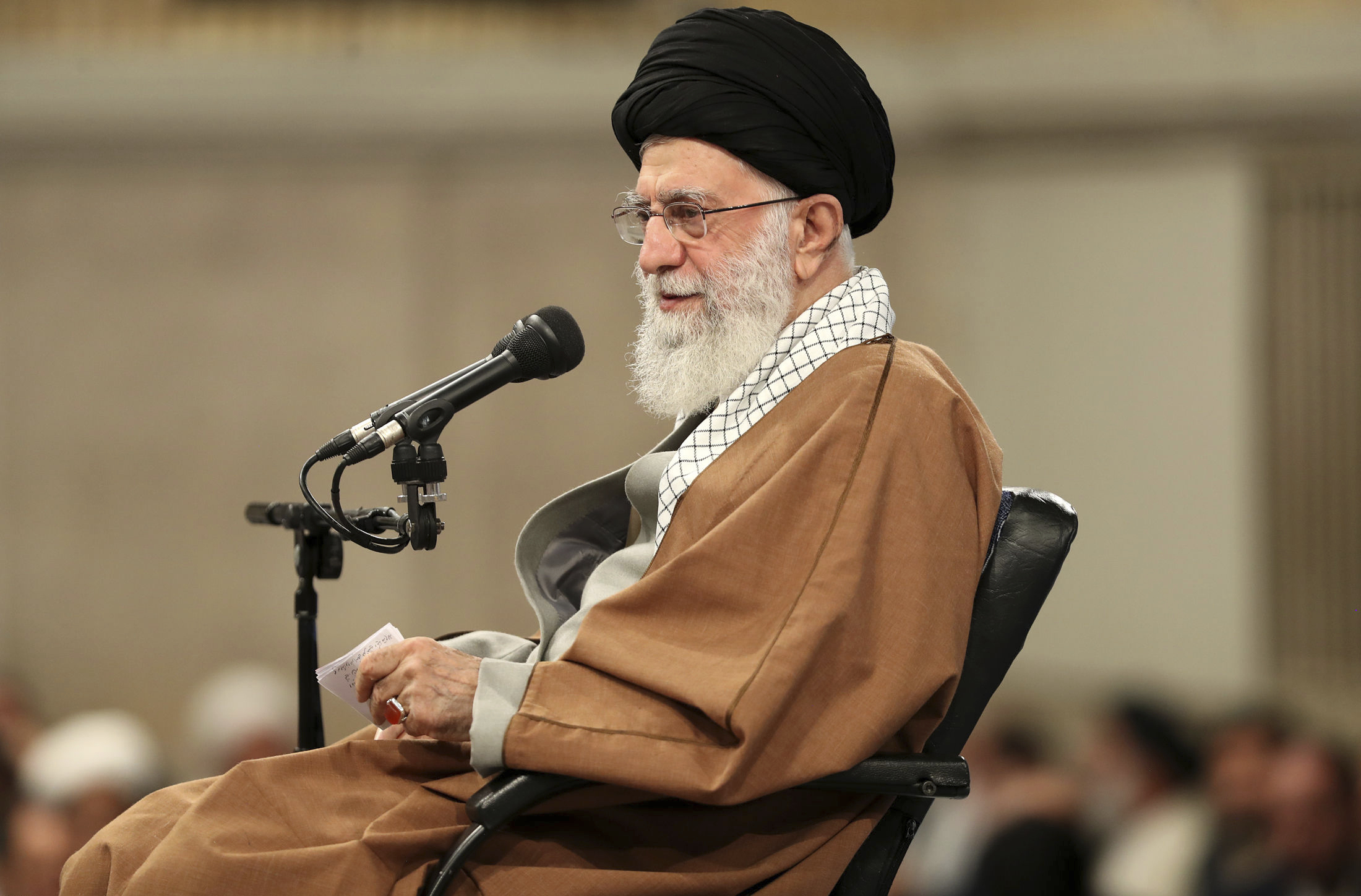
Iranian Supreme Leader Ayatollah Ali Khamenei speaks in a meeting with members of the Islamic Revolutionary Guard Corps' Basij force, Tehran, Iran, Nov. 27. (Office of the Iranian Supreme Leader via AP)
With Iran’s February 21, 2020 parliamentary elections approaching fast, Supreme Leader Ayatollah Ali Khamenei dedicated his December 1 theology class to the subject of strength of character and political leadership. Referring to a hadith quoted in 10th century scholar al-Shaykh al-Tusi’s book “Al-Amali,” Khamenei recounted the Prophet Muhammad’s advice to a follower: “You are a weak man, beware of ruling even over just two people!” Khamenei said, “Let this be a lesson for us.” He told potential parliamentary candidates that “A position brings with it certain responsibilities,” and asked them, “Are you capable of living up to that or not?”
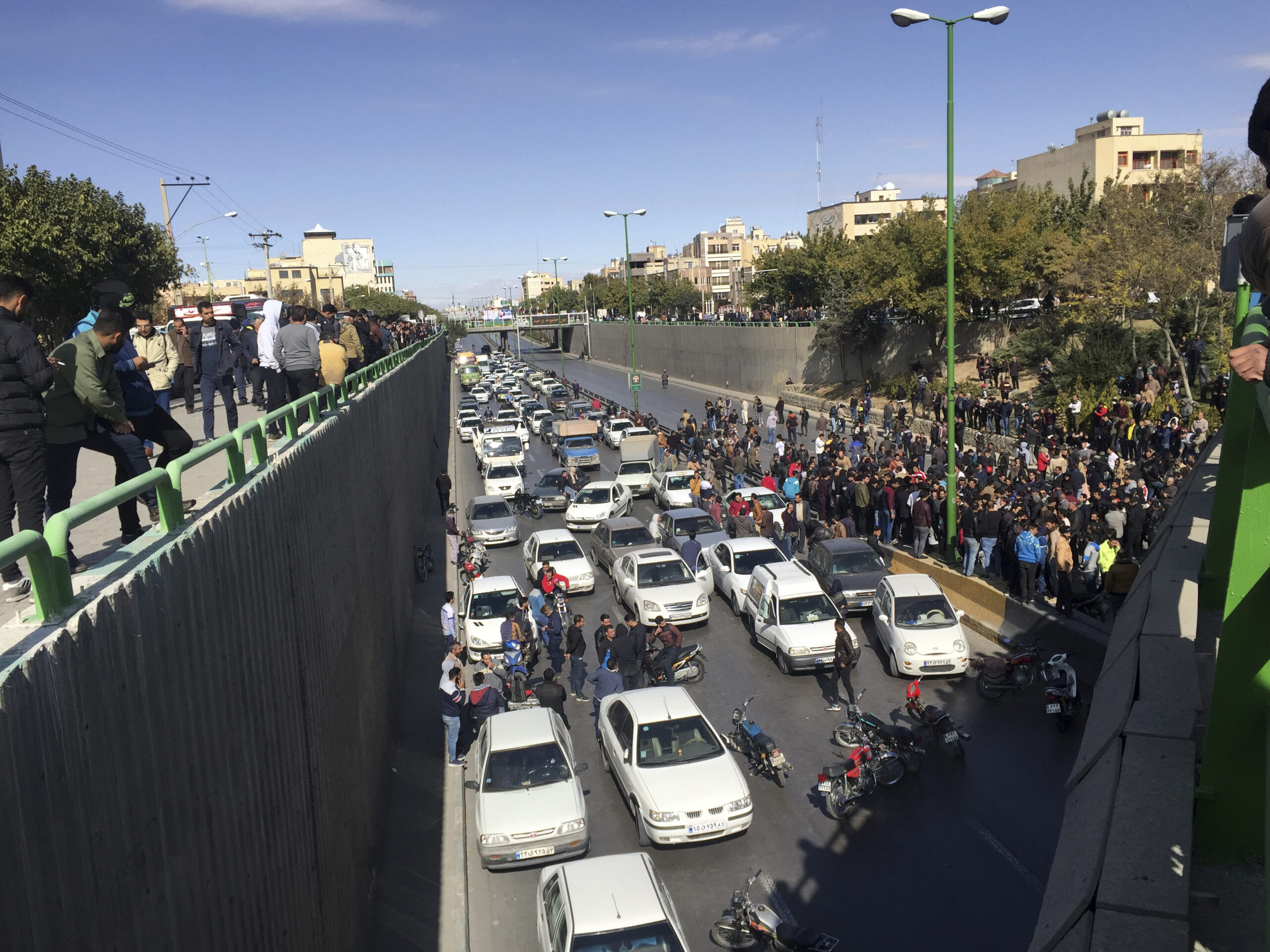
Khamenei has gotten himself into the position he warned against: He authorized the use of force to suppress economic protests in November but is disinclined to take political responsibility for the suppression, which raises questions about the regime’s ability to effectively stifle future protests.
As the protests broke out on November 15, Khamenei remained silent for almost 48 hours. On November 17, in his first reaction to the protests, the supreme leader supported the government’s decision to introduce gasoline rationing and price hikes but simultaneously deflected responsibility by arguing he is not an expert and just follows the decisions of the heads of the three branches of the government. Commenting on the protests, he distinguished between “some people, who are concerned or consternated by the policy,” and “villainous people, who burn down this or that bank.”
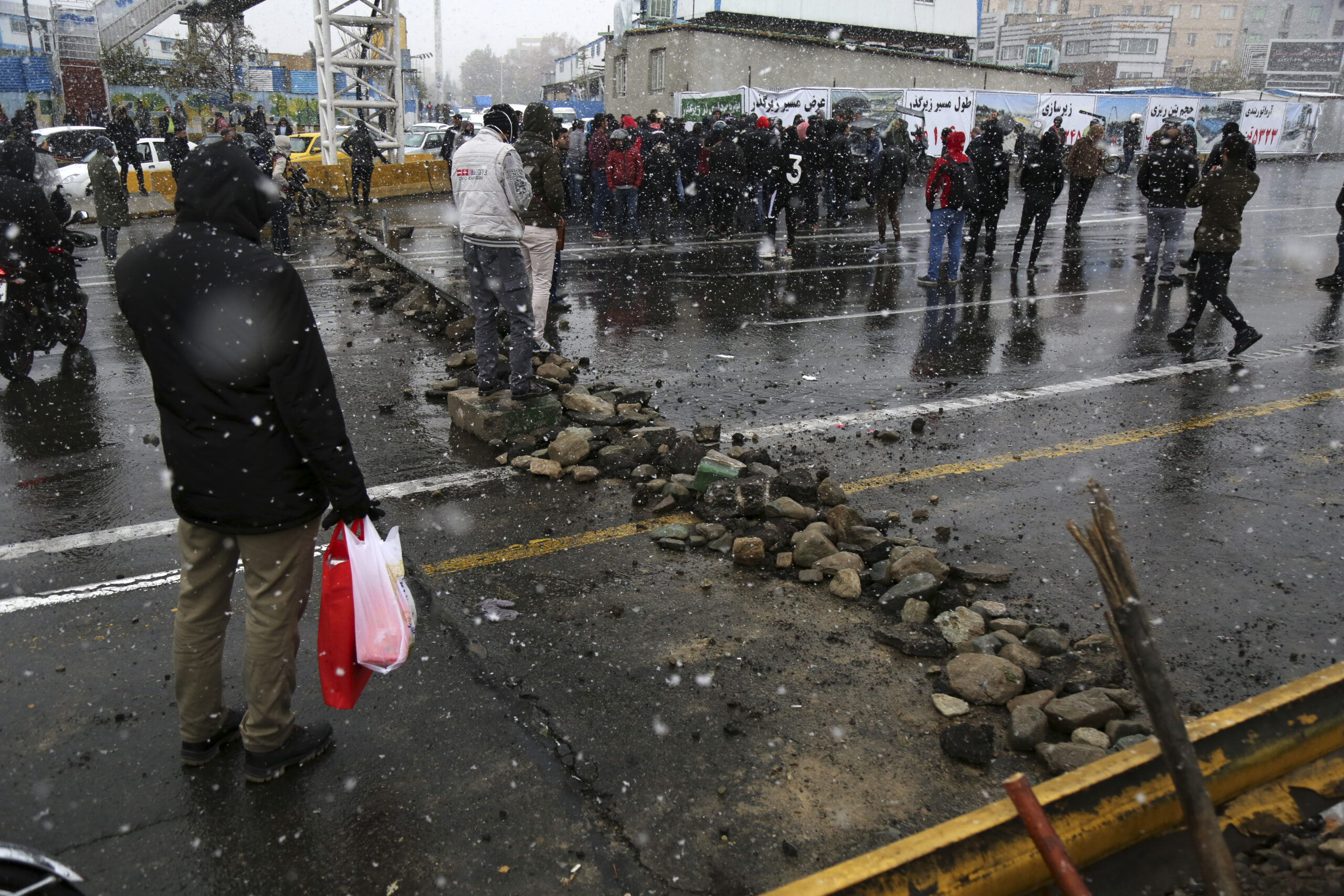
On November 19, following violent suppression of the protesters by the security services, during which at least 208 people were killed and more than 7,000 arrested, Khamenei made fleeting comments: “Friends and foes alike should know: We forced the enemy to retreat in military, political, and security fields. The affair of the past couple of days was all about security [threats]. This was not the work of the people. They were forced to retreat …”
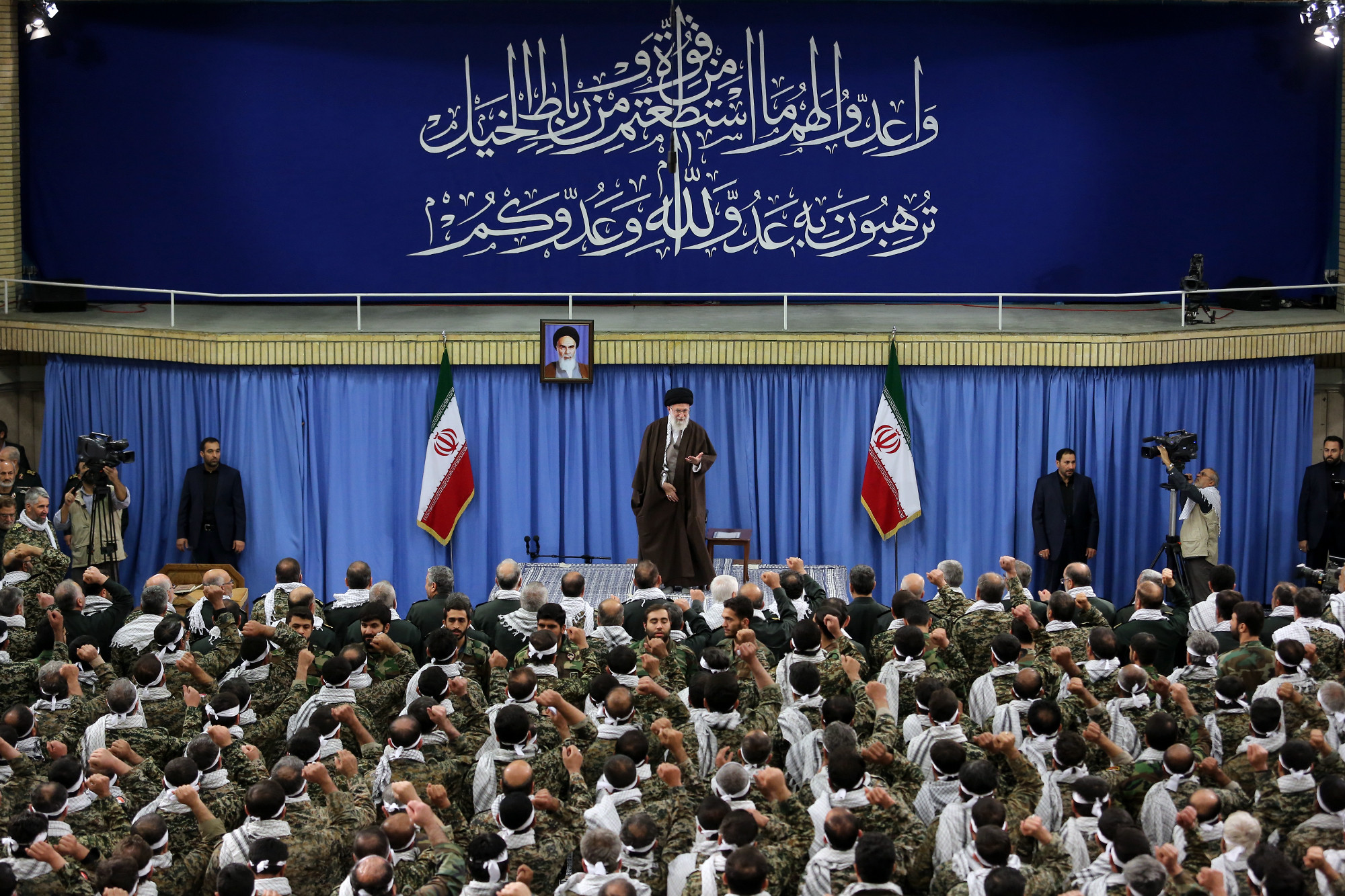
Khamenei remained on the offensive in his November 27 address to members of the Basij militia by warning against “enemy conspiracies”: “They thought they could take advantage of the fuel issue and they let their forces loose … But they were routed by the hard encounters of the Basij and others … Law Enforcement Forces, the Basij, [Islamic Revolutionary Guard] Corps, and others …” Khamenei also urged the Basij to emulate the neighborhood watch methods of the Revolutionary Committees during the revolution and the 1980-88 war with Iraq to prevent future unrest.
But on December 3, Khamenei reversed course and accepted recommendations in the Supreme National Security Council secretary’s report on the unrest and its victims. The report recommended for “regular citizens, who, without playing any role in recent protests and unrest, were killed, to be considered martyrs and their families be under the [lifelong] protection of the Martyr Foundation.” It also recommended providing one-time compensation to “respectable families” who lost members in armed struggle against the security forces and showing “Islamic mercy” on arrested rioters.
As supreme leader, Khamenei cannot exonerate himself from the government’s decision to adjust the fuel price, and as commander in chief, he must shoulder responsibility for the deaths, injuries, and arrests of protesters. Still worse, from the regime’s perspective, Khamenei’s support for measures that would seem to legitimize actions of the protesters risks undermining the regime’s ability to effectively suppress future protests.
The Islamic Republic depicts itself as the defender of the downtrodden, yet the regime, with Khamenei at its helm, is now enacting policies that negatively affect the livelihood of the unprivileged classes from which both the protesters and members of the security services have arisen. This poses a serious challenge to the regime: The social strata hardest hit by the government’s fuel price adjustments is also the recruitment base for agencies tasked with defending the regime. The Basij members are recruited from the lower middle class, while personnel of the IRGC and Law Enforcement Forces appear to be recruited from the middle and lower middle class.
Members of the security services may also find it difficult to believe Khamenei’s claims that the protesters – in some cases, their own family members and neighbors – who have taken their grievances to the streets, are agents of foreign powers rather than angry citizens. The few members of Iran’s security services who might believe Khamenei’s claim may nevertheless find it difficult to consider killed “agents” as “martyrs.” After all, if the protesters are “martyrs,” a position Khamenei has accepted, the security forces responsible for their martyrdom are unjust assailants responsible for the deaths of innocent people.
This logic to some extent undermines morale among members of the security services. Possessing both the will and capability to remain in power, the Islamic Republic is not facing an immediate risk of collapse. But with no end in sight for U.S. sanctions against Iran and in view of the regime’s inability to provide for its supposed social base and Khamenei’s perilous crisis management, the Islamic Republic may encounter insubordination and desertion among its security services in future protests.
The views represented herein are the author's or speaker's own and do not necessarily reflect the views of AGSI, its staff, or its board of directors.
As long as U.S. sanctions are in place, Iran is likely to encounter more unrest. How the recent crisis compares to earlier crises in the Islamic Republic may provide insights into the regime’s behavior in future protests.
Iran’s leadership has for years downplayed the impact of sanctions on the economy. Now that President Hassan Rouhani and the regime are compelled to make economic adjustments, they are facing predictable public anger and protests for which they were unprepared.
Rival camps within the Islamic Republic are increasingly turning to YouTube for policy debate, but there is a limit to the regime’s tolerance for that debate.
After U.S.-Israeli strikes killed Supreme Leader Ayatollah Ali Khamenei on February 28, Iran’s collective leadership has concluded that the best defense is a good offense.