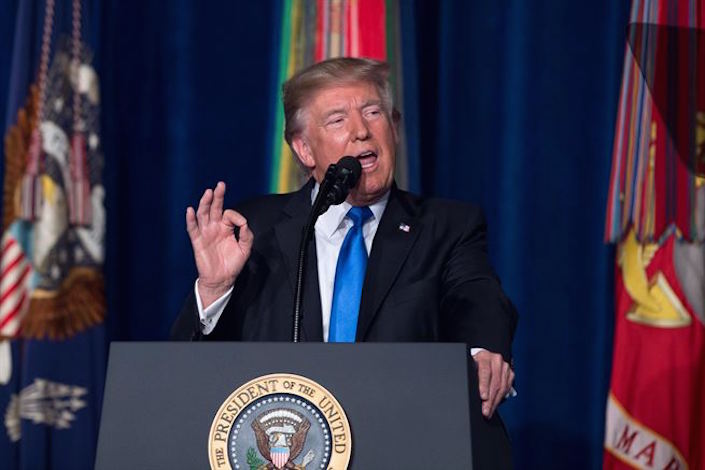
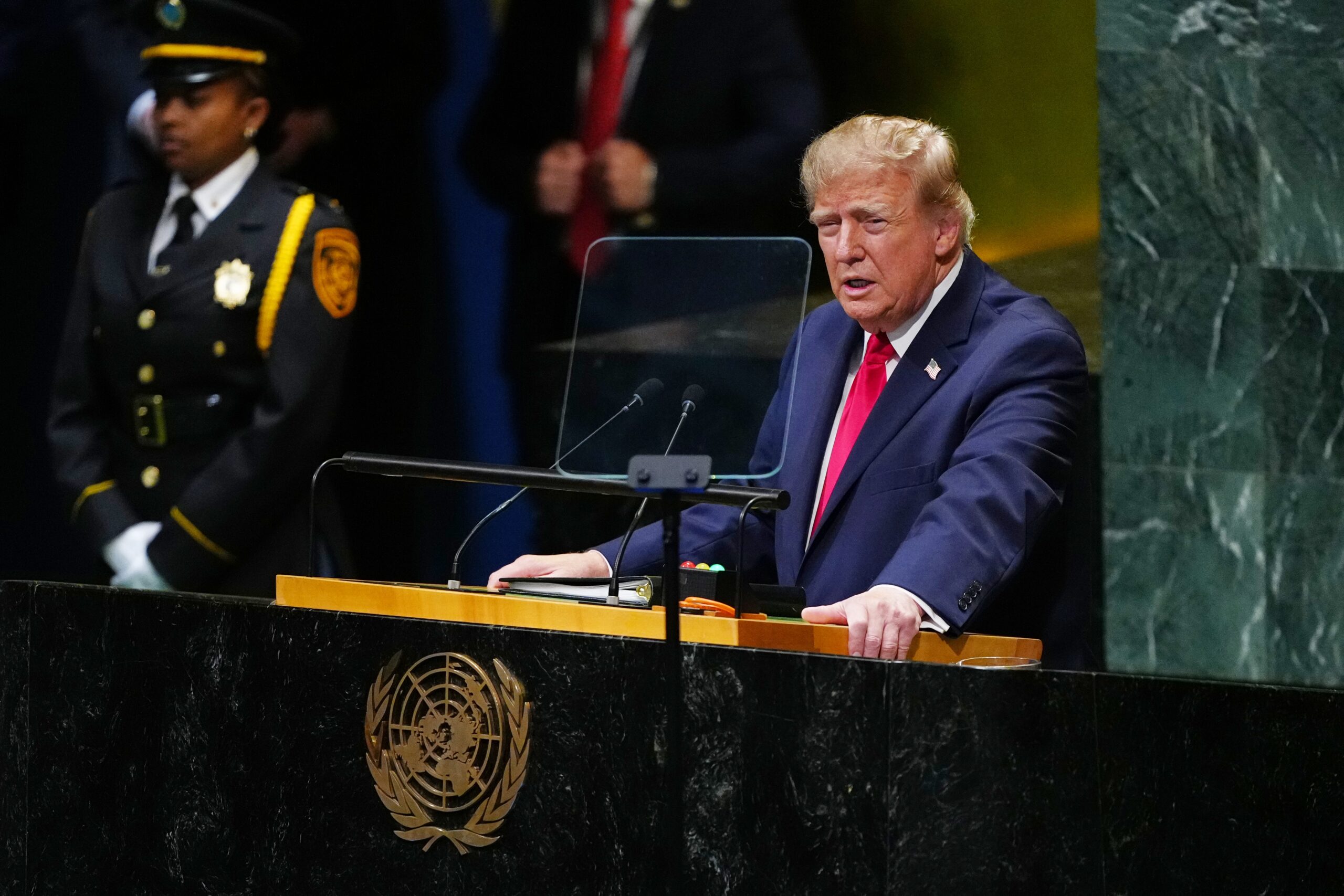
After the announcement of Donald Trump’s “new Iran strategy” everyone, both those panicked and elated, need to take a deep breath. For all the drama and bluster of the Trump speech and the White House’s companion Iran strategy summary document, very little has changed thus far. And there’s little indication of when, how, or into what, US policy will change.
Mr Trump did not assert that Tehran is not in compliance with the nuclear deal. That is because it is. However, Washington is also still fully in compliance with the deal. And there’s no clear reason to expect that either side will really walk away from it now.
Mr Trump and others point out that many of the agreement’s terms will expire in 10 to 15 years. Arms control agreements are, by their very nature, temporary, and Iran would still be bound by the terms of the nuclear non-proliferation treaty.
Moreover, Mr Trump focused on Iranian misbehaviour that the deal doesn’t – and couldn’t have – addressed. Missile testing and development, sponsorship of terrorist groups and militias around the Middle East, and the unjust detention of Americans and others were all elements of a lengthy and accurate bill of particulars against Tehran.
But the scope and passion with which Mr Trump denounced the agreement, and his anger against Iran for its real transgressions, is wholly inconsistent with the remedies he announced, especially regarding the nuclear agreement.
Mr Trump is asking US Congress to legislate a new set of conditions in which sanctions would be automatically re-imposed against Iran. This is very odd indeed. Mr Trump does not need it to legislate any new sanctions. He could re-impose them himself. Moreover, he doesn’t need Congress to legislate new sanction triggers. He could simply announce them himself.
One of the biggest mysteries – and there are several – is why any president would ask Congress to take a series of actions that are well within the prerogative of the executive? It is highly unusual for any president to defer to it on foreign policy, even when the legislature has a plausible claim on authority. In this case, it seems inexplicable.
Alas, one possible answer is that Mr Trump wants to make a big show over the issue, but actually force the real decisions onto someone else. He has done that many times since taking office, though this seems the most striking example yet.
At any rate, for all his bluster, Mr Trump has thus far done exactly nothing practical to end US participation in, and compliance with, the nuclear agreement. He has merely invited others to consider mapping a possible path to potentially doing so.
So, fans of the nuclear deal can relax a little.
But those who are excited about the new White House strategy to counter Iran – which has been officially praised by the governments of Saudi Arabia, the UAE, Bahrain and Israel – should probably attenuate their expectations.
True, the White House is talking a great game. Both the strategy summary and Trump speech invoked an ambitious, but very vague, agenda to counter Tehran, with the strengthening partnerships with Washington’s regional allies repeatedly highlighted.
Mr Trump pledged to stop Tehran’s “destabilising activity and support for terrorist proxies in the region.” He also promised “additional sanctions on the regime to block their financing of terror,” and measures to counter the “proliferation of missiles and weapons that threaten its neighbours, global trade and freedom of navigation.”
All that certainly sounds good. But there may well be a lot less here than meets the eye. For example, Mr Trump announced a range of new treasury department sanctions against the Islamic Revolutionary Guard Corps for its support of terrorism. But there have already been two previous treasury sanctions executive orders against the IRGC, with little impact.
Had the White House wanted to really impress Tehran, they could have added the IRGC as an entity to the state department’s list of Foreign Terrorist Organisations, a far more meaningful threat.
Therefore, while the accusations about Iran’s malfeasance may sound reassuring, no one should expect that much serious action after the kabuki show over decertifying the nuclear deal and the third-rate sanctions gesture.
A final reason not to get too enthusiastic about Mr Trump’s new Iran approach is that nothing in his speech or policy summary statement actually suggests there’s a coherent or comprehensive strategy in place or underway.
If it seems emotional, melodramatic, rhetorical and, above all, political, that’s because it probably is.
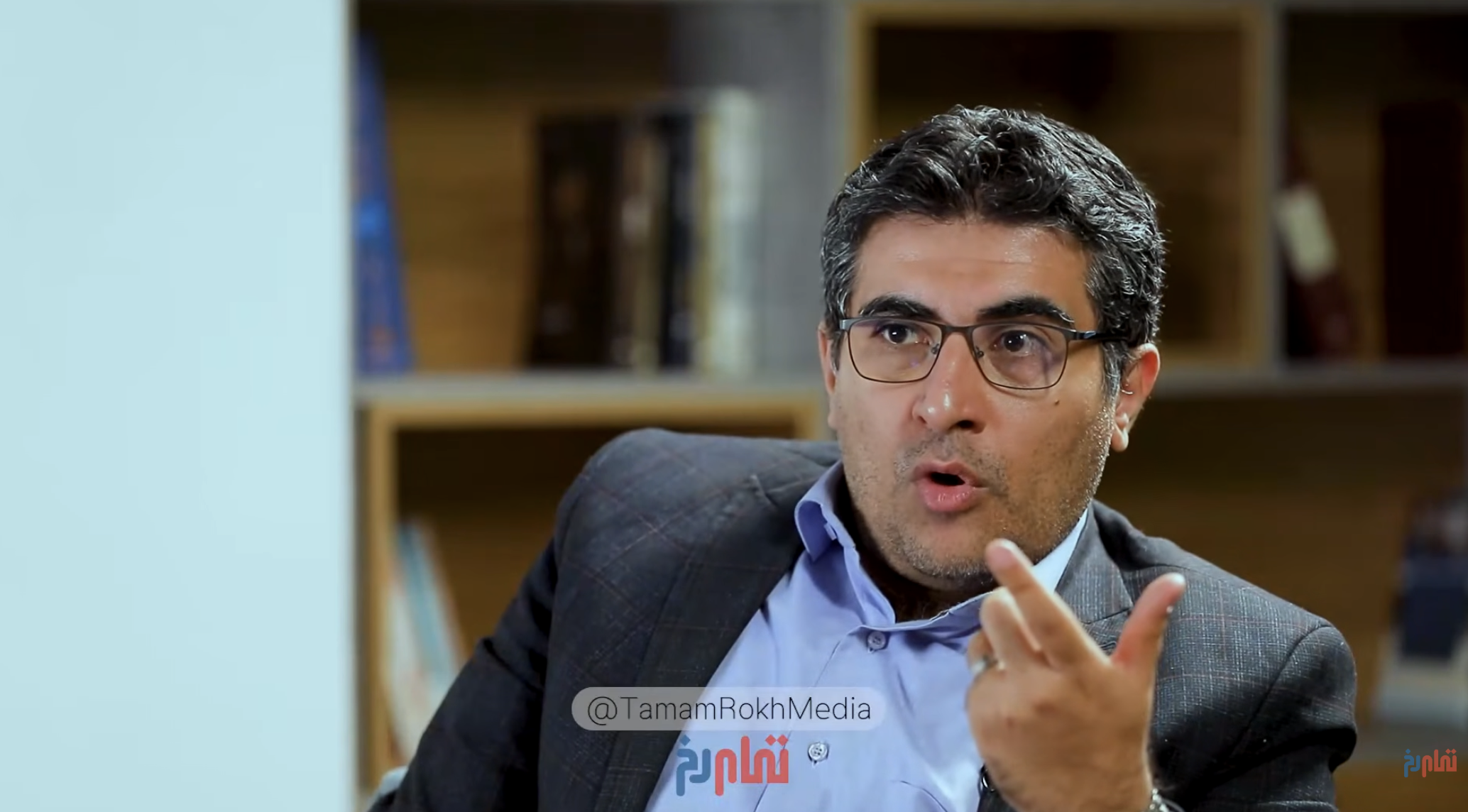
Rival camps within the Islamic Republic are increasingly turning to YouTube for policy debate, but there is a limit to the regime’s tolerance for that debate.
President Trump has led the United States into an impossible dilemma in which resuming and intensifying the war presents one set of alarming consequences while ending it under current circumstances offers at least as many disasters for Washington.
The Trump administration has positioned the United States at a crossroads between a new regime of containment against Iran or a historic drawdown of U.S. influence in the Gulf and broader Middle East.
Riyadh and Abu Dhabi urged President Trump not to attack Iran, but now that the war is into its second month, leaving the current situation in place would be an unthinkable fiasco for them.
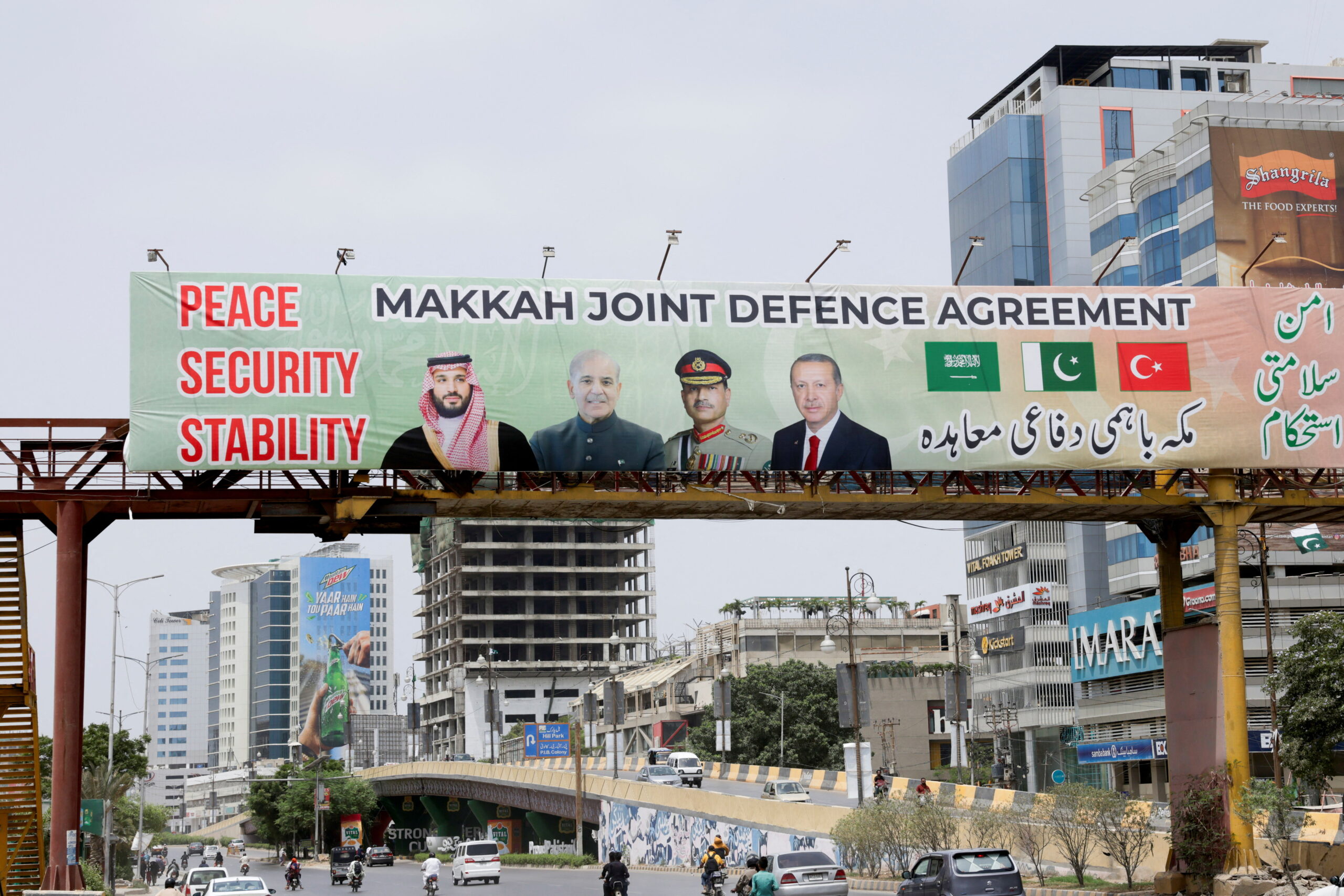
Though they were unsuccessful in preventing the current conflict, and, as expected, have been dragged into the U.S.-Israeli confrontation with Iran, Gulf Arab countries remain crucial to hopes for limiting the war and bringing it to a quick resolution.