The revived Hejaz Railway could become one of the region’s most significant transportation and integration projects as a land route connecting Europe to the Gulf.
A drone view shows the Hejaz Railway station in Damascus, Syria December 11, 2024. (REUTERS/Mahmoud Hassano)
Since the Strait of Hormuz crisis, the race to redefine Middle Eastern trade routes is gathering momentum. Turkey and Saudi Arabia are moving to strengthen regional connectivity, placing transportation infrastructure at the center of their growing economic partnership. During a June 9 visit to Riyadh, Turkish Transport and Infrastructure Minister Abdulkadir Uraloglu and Saudi Minister of Transport and Logistics Services Saleh bin Nasser Al-Jasser discussed plans for a railway connecting the two countries via Syria and Jordan, a project envisioned as a key pillar of regional transportation integration. By signing two memorandums of understanding on railway cooperation and logistics services, the ministers signaled a shared commitment to expanding trade and mobility across the region.
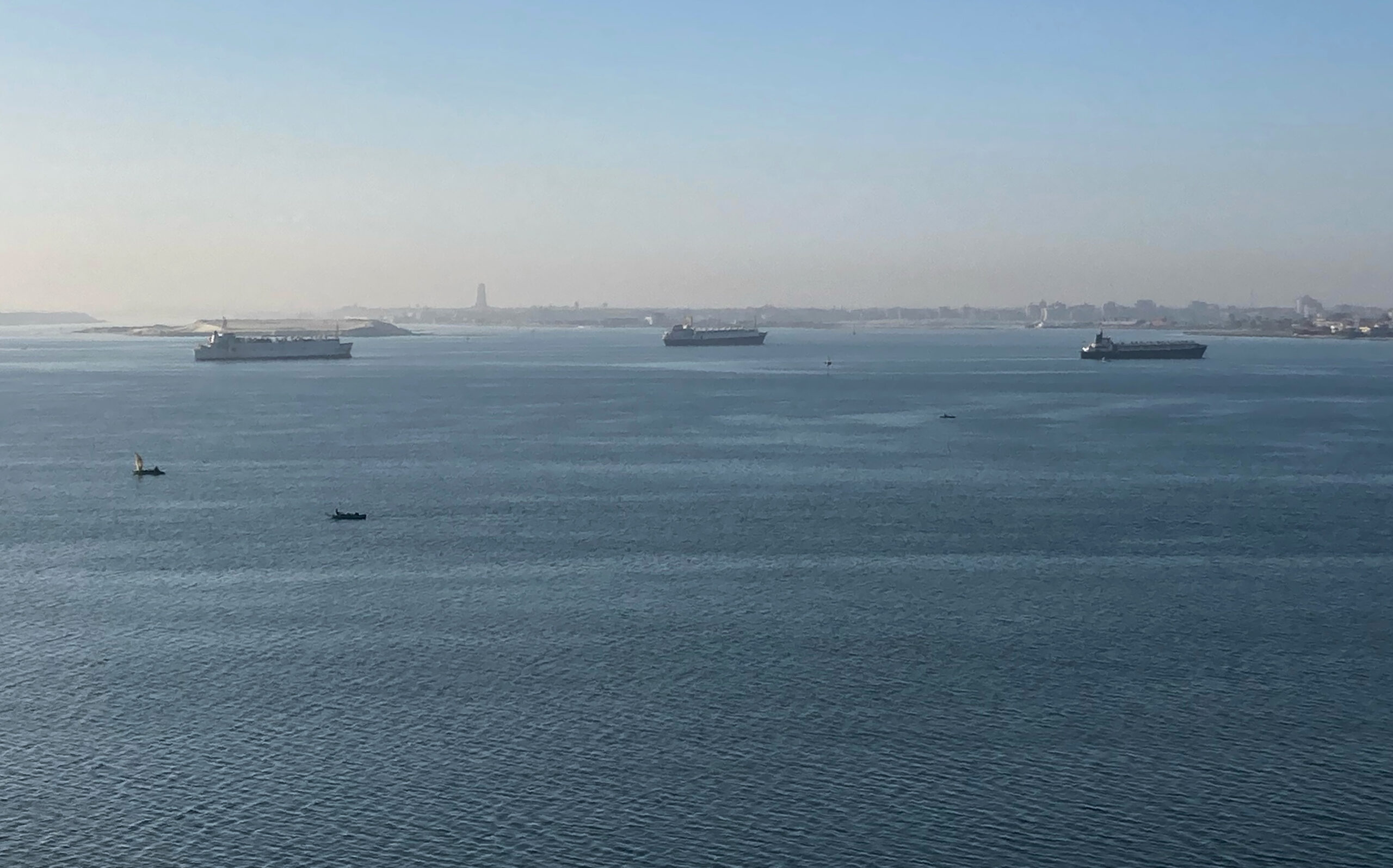
This initiative aims to restore the historic Hejaz Railway, establishing a strategic north-south transportation corridor connecting Istanbul, Adana, Aleppo, Damascus, Amman, Medina, Mecca, and Jeddah, offering an alternative to maritime transit through the Strait of Hormuz, Bab el-Mandeb, and Suez Canal. Longer-term plans envision extending the network to Oman, creating a land corridor between Europe and the Gulf of Oman.
The Historic Hejaz Railway
The historic Hejaz Railway was one of the Ottoman Empire’s grand infrastructure projects. Construction began in 1900 under Sultan Abdulhamid II, and by 1908 the railway had connected Istanbul to Medina, before its completion in 1913. Stretching roughly 800 miles through Damascus, present-day Jordan, Lebanon, and Israel-Palestine, the line carried pilgrims from Constantinople to the Prophet’s Mosque in Medina.
Yet its promise was short-lived because World War I destroyed large sections of the railway. Half a century later, the 1967 Arab-Israeli War disrupted subsequent plans to restore the network. Then discussions between Turkish and Saudi officials about reviving the railway, beginning in 2009, were ultimately derailed by the eruption of the Syrian civil war in 2011.
Now, efforts to restore the railway are coming from governments and businesses seeking to quickly develop alternative transport corridors amid escalating instability since the start of the Iran war. With the Strait of Hormuz having been effectively blocked for months, and risks heightened in the Red Sea and Suez Canal, there is a growing imperative to build more resilient logistics networks. Even with talks progressing between the United States and Iran aimed at opening the strait and ending the war, the vulnerability of these critical waterways to major disruptions has increased the appeal of overland routes linking Turkey to the Gulf that bypass maritime chokepoints.
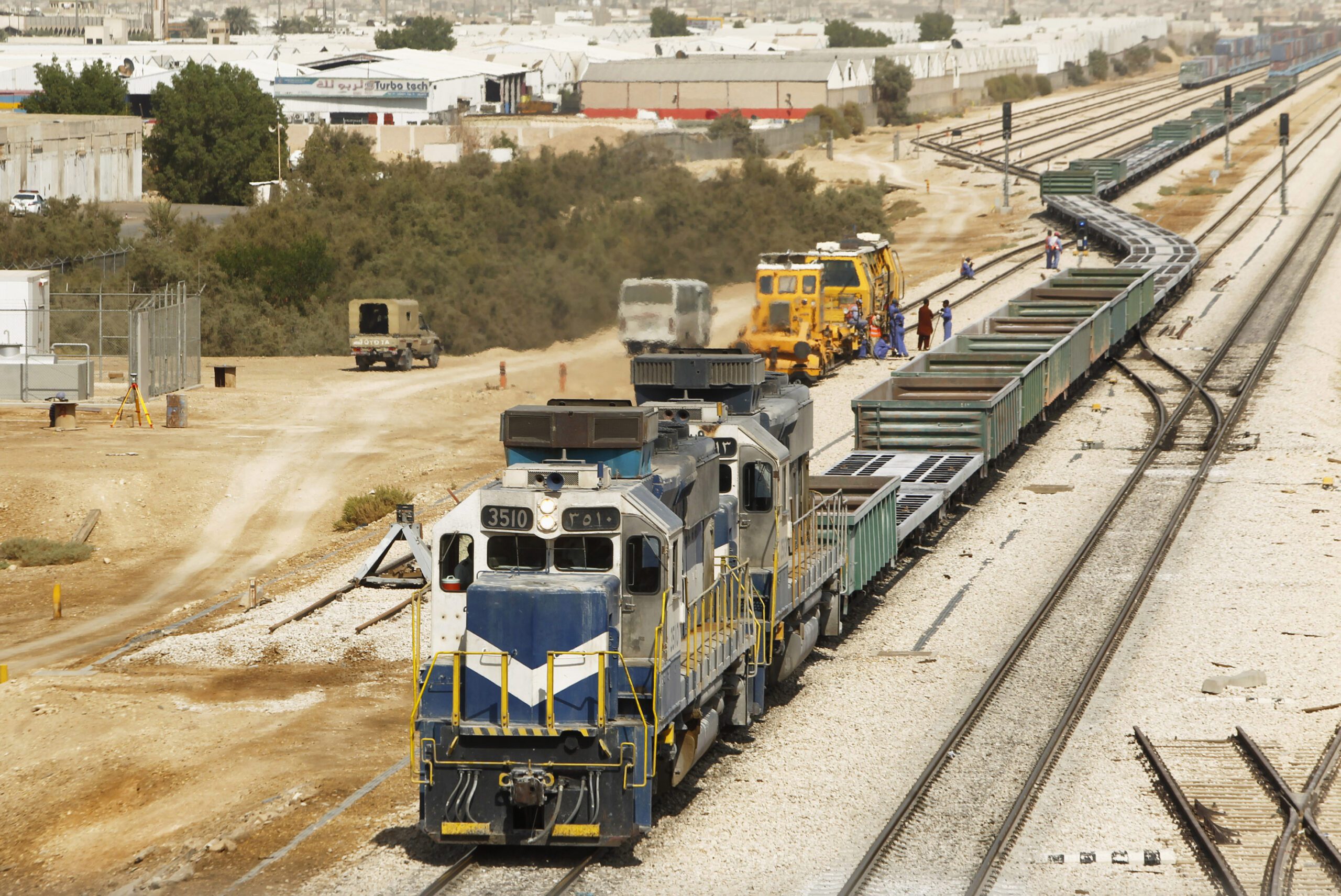
It remains a bit unclear how such a railroad would ease pressure on these vulnerable maritime transport corridors. Like many of the corridor discussions being bruited about, there are attractive narrative elements to Hejaz Railway discussions that help drive project plans, some historical and some related to tourism and heritage visit possibilities in addition to relatively generalized considerations focused on alternative logistics routes. Discussing what commercial products a revived Hejaz Railway would carry requires some informed speculation and consideration of the categories of freight best suited to such corridors. Refrigerated (“cold chain”) cargo, such as food products, pharmaceuticals, and certain chemicals, could move efficiently in temperature-controlled railcars. The railway could also transport containerized consumer goods, agricultural exports, construction materials, such as cement and steel, and industrial equipment between Gulf markets and the Levant. For Jordan, improved rail access could boost exports of fruit and vegetables while lowering transportation costs for imported raw materials. This revived railway would likely combine freight operations with passenger services. Although air travel has largely replaced rail for long-distance journeys across the Middle East, passenger trains could still attract domestic travelers and tourists, particularly those interested in religious and heritage tourism, while also providing an additional transportation option within the region. What a railroad would not do is ease pressure for alternative shipping routes for oil.
Competition
In September 2023, the India-Middle East-Europe Economic Corridor was unveiled at the G20 summit. The ambitious trade and investment initiative envisioned an eastern corridor linking India with the United Arab Emirates, Saudi Arabia, Jordan, and Israel and a northern extension connecting these Middle Eastern states to the European Union. Designed to complement existing road and maritime routes, IMEC sought to deepen Asia-Europe connectivity and economic integration through integrated networks of energy infrastructure, railways, high-speed data cables, and shipping links.
Launched shortly before Hamas attacked southern Israel on October 7, 2023, IMEC was premised on improving Saudi-Israeli relations and the normalization of ties between the two countries. However, the Gaza war sharply strained those dynamics, stalling plans for a trade corridor that positions Israel as a pivotal logistics hub. Turkey, meanwhile, viewed its exclusion from IMEC as a significant blow to its interests, giving Ankara much reason to oppose the corridor. Conversely, the Hejaz Railway notably omits Israel and reasserts Turkey’s historical role as an East-West bridge. To Ankara’s advantage, IMEC is currently structurally locked, while the revived Hejaz Railway project does not need any diplomatic breakthrough among the countries the corridor transits to proceed.
Turkey’s Regional Ambitions and Soft Power
The Hejaz Railway’s revival could serve to bolster Turkish soft power while further embedding Turkey into the Arab region’s economic geography, creating a structural role for Turkey as a transit hub for trade, logistics, and digital infrastructure – particularly as the project also includes fiber-optic networks. This underscores Turkey’s infrastructural influence, as growing reliance among regional states on systems routed through or standardized with Turkey steadily reinforces Ankara’s position as a central partner in long-term economic planning and regional connectivity.
At the same time, the project advances Ankara’s quest to strengthen its political and symbolic presence in the Arab world while competing in wider corridor geopolitics. Carrying strong Ottoman-era associations, the railway ties modern Turkish foreign policy to the historical geography of the Hejaz route from over a century ago, reinforcing narratives of shared history and cultural proximity between Turks and Arabs of the Levant and Arabian Peninsula. This symbolic dimension enhances Turkey’s soft power appeal, particularly in societies where historical and religious connectivity resonates.
The railway ultimately affords Ankara ways to participate in, if not reshape, competing regional trade architectures. By embedding itself in a Saudi-linked overland trade axis through Syria and Jordan, Turkey also increases its diplomatic leverage while deepening interdependence with key Arab states and strengthening its aspiration to act as a pivotal middle power in the regional order that will emerge following the Iran war.
Syria as a Strategic Land Bridge
No longer a “rogue” state isolated from much of the global economy by sanctions and war, Syria has the potential to reemerge as a major trade, commerce, and logistics hub in the Middle East. The restoration of the Hejaz Railway will depend heavily on Syria’s stabilization. As a critical link in this corridor, Syria is well positioned to evolve into a strategic land bridge connecting Europe to the Gulf. If it can secure this role, Syria could attract substantial investment in reconstruction and infrastructure projects spanning railways, highways, logistics facilities, and digital networks, such as fiber-optic corridors, while generating significant transit revenue.
Such a transformation would deepen the stakes that regional powers, particularly Turkey and Saudi Arabia, have in Syria’s long-term stability. Rather than remaining economically dependent and politically fragmented, Syria could become an indispensable transit state embedded within West Asia’s emerging trade architecture and central to European-Gulf connectivity. In the years ahead, the country may prove to be a decisive corridor shaping the extent to which Turkish-Gulf trade can bypass vulnerable maritime chokepoints while providing alternatives to routes that depend on Israel. In this sense, Syria is poised to become a high-stakes strategic arena, where Turkish, Jordanian, and Gulf Arab interests converge.
However, Syria is also a central risk point for this ambitious project given its security dilemmas, with the country targeted by perpetual Israeli attacks and the Damascus government grappling with fragmentation. Additionally, while the Islamic State group no longer represents the threat to Syria that it did from 2014-19, there are concerns of it rebuilding in Syria. The Hejaz Railway’s long linear infrastructure will be vulnerable to sabotage, smuggling, and disruption in Syria’s less stable areas.
Challenges Ahead
Plans for the Hejaz Railway face a mix of interconnected challenges beyond Syria’s security dilemmas. There are issues regarding technical incompatibility between fragmented national rail systems, differing standards, and the need to essentially rebuild large missing sections across Syria, Jordan, and Saudi Arabia rather than simply restoring old tracks.
Financially, the project requires tens of billions of dollars in capital expenditure with uncertain returns, uneven fiscal capacity among participating states, and heavy reliance on external financing, such as sovereign wealth funds or multilateral lenders, all while competing with cheaper maritime shipping if security conditions improve in the Strait of Hormuz and Red Sea and other emerging regional trade corridors. Institutionally, no single governing authority exists to enforce standards, manage operations, or harmonize customs and logistics procedures, meaning the system will likely depend on fragile multilateral agreements instead of a unified regulatory framework.
A Test for Regional Cooperation and Stability
If implemented successfully, the revived Hejaz Railway could become one of the region’s most significant transportation and integration projects, linking economic development with a broader geopolitical transformation. Beyond its immediate economic utility, the railway could help reshape patterns of regional interdependence by anchoring long-term trade flows in overland infrastructure rather than depending on the Strait of Hormuz, Bab el-Mandeb, and Suez Canal.
However, its strategic promise will ultimately depend on sustained political alignment among participating states and the durability of fragile postconflict environments along its route, particularly the Syrian leg of the project. In this sense, this railway will be a major test for regional cooperation and stability. The outcome may indicate much about Turkey and Saudi Arabia’s ability to advance their shared interests in promoting a more stable and prosperous Middle East.
The views represented herein are the author's or speaker's own and do not necessarily reflect the views of AGSI, its staff, or its board of directors.
A misreading of the Belt and Road Initiative has prompted a regional scramble to develop economic corridors ahead of the more foundational development of integrated manufacturing and intraregional trade.
One silver lining of the Iran conflict may be the emergence of new, more durable foundations for regional economic integration via more agile trade corridors in the Gulf and beyond.
A strong relationship with the GCC acts as a stabilizing force for an inherently fragile Iraqi state. But to maintain this, Iraq needs to pair sophisticated regional diplomacy with assertive control over the nonstate actors operating within its borders.
The significance of Kuwait’s defense pact with Pakistan lies less in any immediate military transformation than in what it reveals about the evolving security landscape of the Gulf.
Iranian attacks on Omani ports and oil tankers are straining Oman’s long-standing “friend to all” regional foreign policy, but Muscat still has a part to play in achieving peace.
Through its increasing ties with Serbia, the UAE has secured a lasting strategic foothold in the Western Balkans, and Serbia has gained an influential Arab partner that is likely to remain central to Belgrade’s multipolar foreign policy calculus.