The Fractured Bureaucracy Behind Tehran’s Response to November Protests
Iran's supreme leader demanded the establishment of a "war room" to safeguard the regime against economic pressure from the United States. This left politicians and bureaucracies engaged in a blame game as the Islamic Republic faced mass protest.
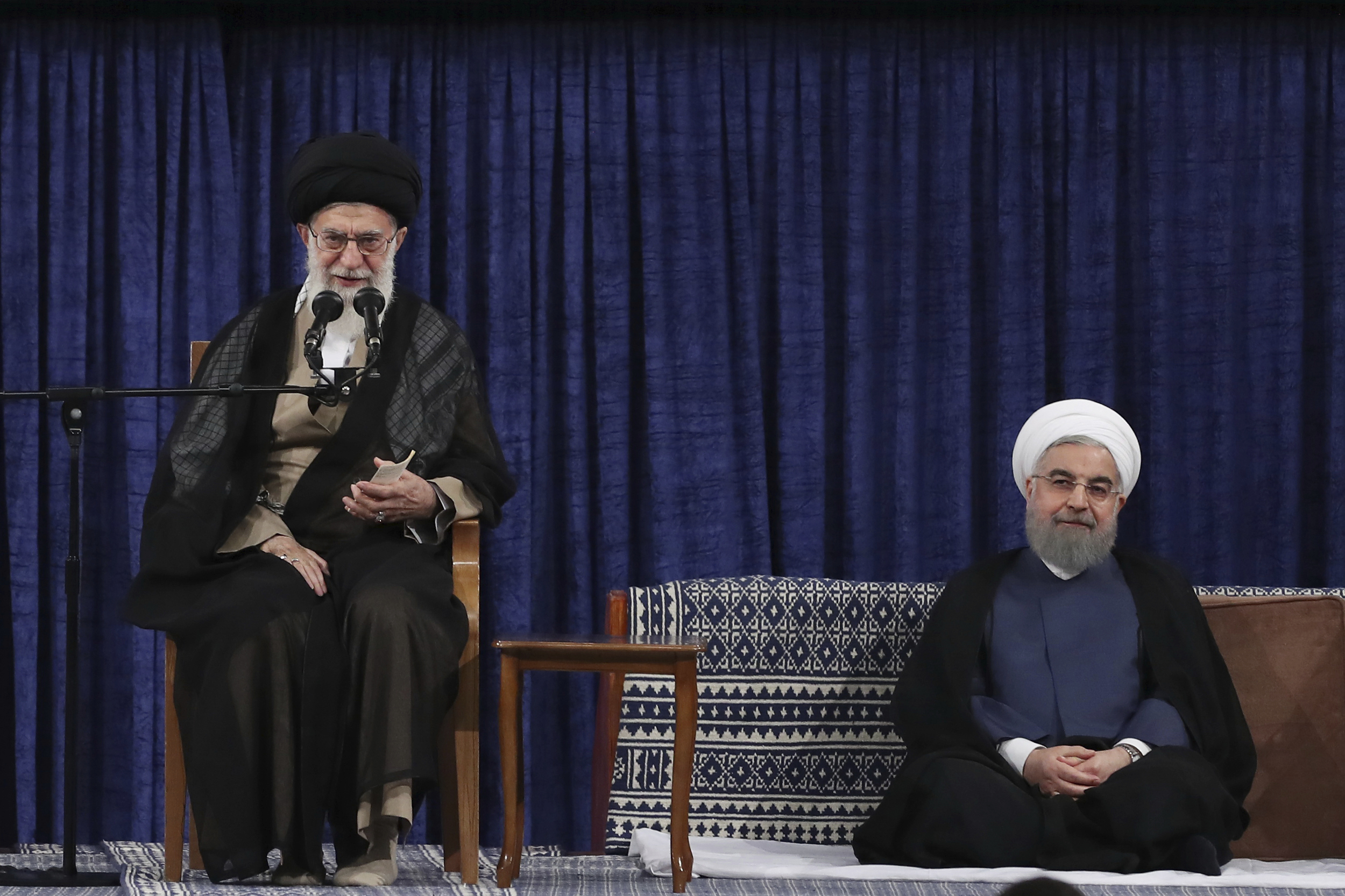
'Iranian Supreme Leader Ayatollah Ali Khamenei, left, speaks during the official endorsement ceremony of President Hassan Rouhani, right, in Tehran, Iran, Aug. 3, 2017. (Iranian Presidency Office via AP)'
“If it ain’t broke, don’t fix it,” the saying goes, yet Iranian Supreme Leader Ayatollah Ali Khamenei did exactly that: In spite of having an extremely well-functioning Supreme National Security Council successfully managing all crises since the institution’s establishment in 1989, Khamenei ordered the creation of a new bureaucratic body to safeguard the regime against economic pressure from the administration of U.S. President Donald J. Trump. The result has been a fractured bureaucracy, which led to an unpopular government policy initiative that was never explained to the public, violent public protests prompting a heavy-handed government response, and most sponsors of the policy evading responsibility.
All strategic decisions in the Islamic Republic have been made by the Supreme National Security Council since it was established by a constitutional amendment in 1989. The council has also served as the premier consultative body among the ruling elites of the regime. Its composition is described in the constitution, and the membership includes the heads of the three branches of the government, ministers from strategic Cabinet ministries, and representatives from different branches of the armed forces, including the Islamic Revolutionary Guard Corps.
Little is known about the inner deliberations of the Supreme National Security Council, but according to anecdotal accounts, the council is unique in two aspects: Khamenei, weary of shouldering responsibility for decisions, never imposes his will, and prefers consensus decision making. Once a decision is agreed upon in the Supreme National Security Council, all members stick by it.
This model has served the regime well in the past. Regardless of the severity of political tensions, the Supreme National Security Council has maintained a modicum of cohesion among the ruling elites of the regime.
But on April 28, 2018 during a classified meeting with the heads of the three branches of the government, Khamenei demanded the establishment of a “war room” to counter the U.S. economic warfare against Iran. This was within the portfolio of the Supreme National Security Council, but a new bureaucratic forum was created – the Supreme Economic Coordination Council of the Heads of the Three Branches of Government.
The difference between the Supreme National Security Council and the Supreme Economic Coordination Council is clear: In the former, representatives from the entire body of the ruling elites of the Islamic Republic, including the IRGC, reach consensus decisions. In the latter, only the president, judiciary chief, and parliamentary speaker need to agree among themselves on grand economic policies. Khamenei also actively urged the Supreme Economic Coordination Council not to “waste time while waiting for approval” from the Office of the Supreme Leader before making decisions and enacting policies.
Familiar with Khamenei’s micromanaging leadership style, and his disinclination to accept responsibility for unpopular decisions, President Hassan Rouhani and the Supreme Economic Coordination Council did not act on their own but asked for written approval from Khamenei in September to enact the gasoline rationing and price regulation that came on November 14.
Upon receiving written authorization from Khamenei, Rouhani claims he asked a subsidiary of the Supreme National Security Council, the State Security Council (which deals with domestic security, is headed by the minister of interior, and is composed of representatives from all internal security services) to execute the Cabinet’s gasoline rationing and price regulation decision. The president further claims: “I even emphasized they should not inform me about the timing of the decision and I too became aware of its execution at the same time as the general public.”
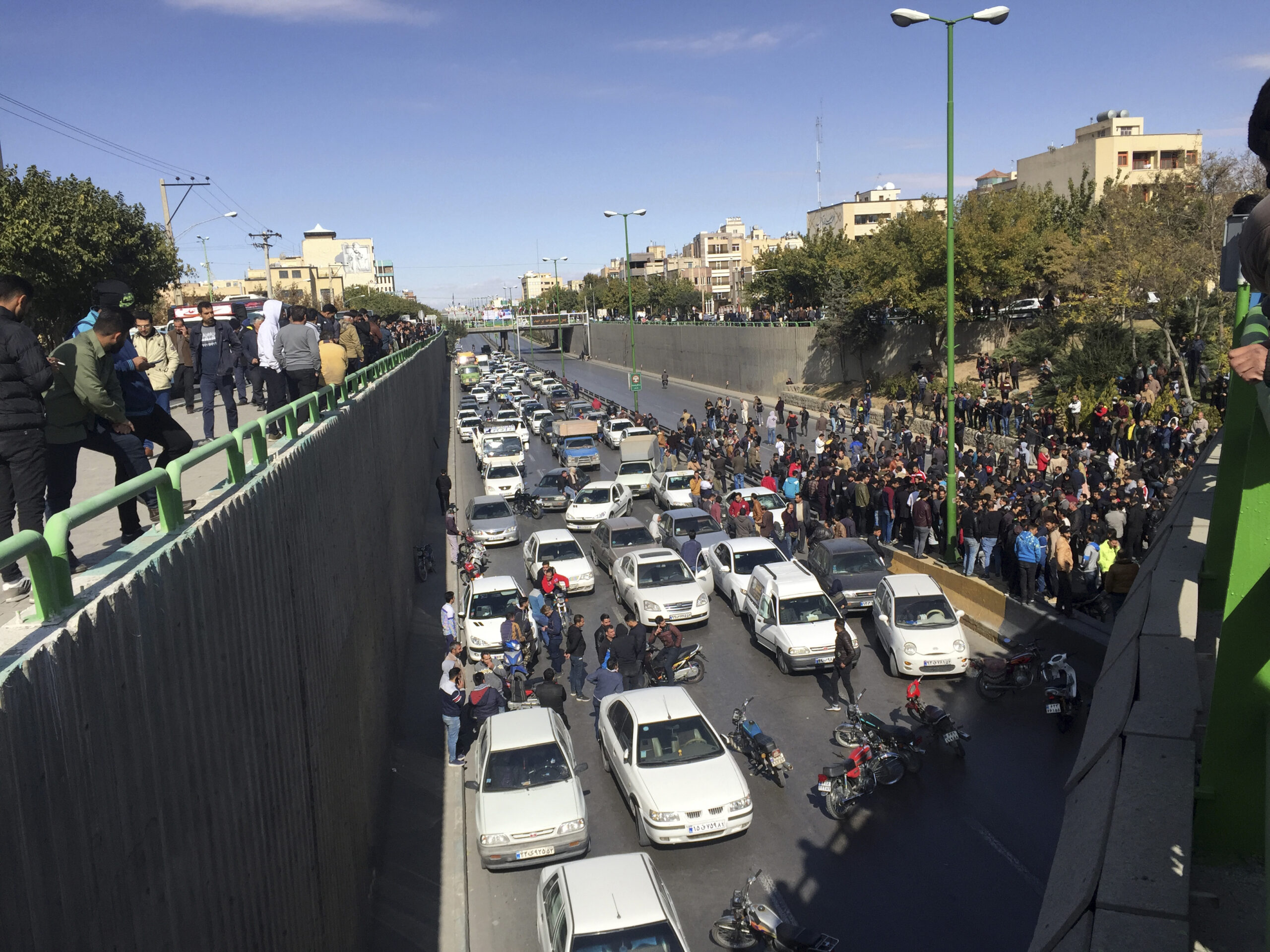
Rouhani’s claims are questionable. Why would the president intentionally demand to be kept in the dark about the timing of execution of a highly controversial measure, which he likely knew from experience would spark protests? It is even questionable if Rouhani indeed tasked the State Security Council with implementing the plan. When Iran’s National Petroleum Products Distribution Company suddenly introduced gasoline rationing and price hikes of at least 50% in an overnight press release November 14, sparking protests on November 15, the Law Enforcement Forces, IRGC, and Basij militia were all caught off guard, which indicates they were not informed by the State Security Council.
It is therefore more likely that prior to the announcement, the heads of the three branches of the government who comprise the Supreme Economic Coordination Council, expecting fierce opposition, kept the decision secret. Apart from Rouhani’s claim, there is no evidence of the Supreme Economic Coordination Council bringing the issue up at the State Security Council and Supreme National Security Council.
Still worse for the Islamic Republic, regime elites, those who were not involved in decision making, and even those who were, systematically began to dissociate themselves from the unpopular decision. Sadeq Larijani, the Expediency Council chairman, issued a statement exonerating himself. The IRGC, enraged with being kept in the dark, and free from decision-making responsibility, sent its former chief commander, Major General Mohammad Ali Jafari, to the media to launch a direct public assault against the government’s decision. The Parliament prepared a double urgency bill calling on the Cabinet to withdraw the initiative. However, the Parliament withdrew the bill after Khamenei warned against intervening in the Cabinet’s decision to adjust the fuel price. Then, Khamenei himself on November 17 deflected responsibility by saying he has no “expertise” in economic matters but followed the advice of the heads of the Supreme Economic Coordination Council. One of those heads, Judiciary Chief Ebrahim Raisi, blamed the Cabinet and the Expediency Council for the price increase.
While the politicians and bureaucracies were engaged in the blame game, the Ministry of Intelligence, Law Enforcement Forces, IRGC, and Basij militia saved the day for the regime by effectively, if also brutally, suppressing the protests. None of the political drama would have taken place had Khamenei kept strategic decision making within the Supreme National Security Council.
This process is bound to have consequences. Logically, the regime should engage the Supreme National Security Council in future crises in order to reduce intra-institutional rivalries. Should the Islamic Republic keep establishing new decision-making forums excluding major actors, such as the IRGC, there is no guarantee these parties will come to the rescue of the decision makers if and when future crises erupt.
The views represented herein are the author's or speaker's own and do not necessarily reflect the views of AGSI, its staff, or its board of directors.
Iran’s leadership has for years downplayed the impact of sanctions on the economy. Now that President Hassan Rouhani and the regime are compelled to make economic adjustments, they are facing predictable public anger and protests for which they were unprepared.
After U.S.-Israeli strikes killed Supreme Leader Ayatollah Ali Khamenei on February 28, Iran’s collective leadership has concluded that the best defense is a good offense.
Wartime pressure has temporarily aligned the leadership’s overriding interest in regime survival, even as its members continue to differ over the costs, methods, and ultimate objectives of the war.