Feb 11, 2025
Khamenei Nixes U.S. Negotiations, Sparks Rumors of Pezeshkian’s Resignation
The February 11 edition of the Iran Media Review examines Iranian media responses to Supreme Leader Ayatollah Ali Khamenei’s shifts on negotiations with the United States.

Supreme Leader Ayatollah Ali Khamenei has once again recalibrated his strategic posture concerning diplomatic engagement with the United States. In a January 28 address, he appeared to tacitly endorse diplomatic negotiations with Washington. However, on February 7, Khamenei asserted that engaging in negotiations with President Donald J. Trump’s administration is “neither wise and intelligent, nor is it honorable.” The rationale behind this apparent policy shift remains unclear, though some Iranian analysts speculate it may be a reaction to Trump’s recent presidential memorandum. Khamenei’s statements have also fueled speculation regarding President Masoud Pezeshkian’s purported threats to resign, in protest of Khamenei’s opposition to negotiations. The statements have also reignited a contentious discourse in which both proponents and opponents of diplomatic engagement with the United States selectively interpret Khamenei’s remarks to advance their respective political narratives.
- February 7: Addressing Iranian air force commanders, Supreme Leader Ayatollah Ali Khamenei articulated his position on negotiations with the United States in remarks published on his website:
- “Negotiating with the United States has no effect on solving the problems of the country. We must understand this properly. Nobody should pretend that negotiations with this or that government solve the country’s problems. No, no problem will be solved through negotiations with the United States. The reason? In the 2010s, we negotiated with the United States for two years, and it was not just the United States. There were also other countries, but the negotiations were mainly with the United States. At the time, our government engaged in negotiations – they went and came back, convened for meetings, negotiated, talked, laughed, shook hands, and befriended each other. They did all sorts of things and reached an agreement” – the Joint Comprehensive Plan of Action. “In this agreement, the Iranian party was very generous and granted numerous concessions to the counterpart. But the Americans did not uphold their commitments. This gentleman who is now in office,” referring to President Donald J. Trump, “tore the agreement to pieces. He had said he would do it, and he did it. They did not deliver. Even before this person, they did not act in accordance with the agreement. The agreement was intended to remove U.S. sanctions, but they were not lifted. The agreement also contains a painful mechanism,” referring to the so-called snapback mechanism, “through which the United Nations remains an ever-present danger to Iran. This is the result of two years of negotiations. Well, this is our experience. Let us use this experience. We negotiated and made concessions but did not achieve our objective. However, the counterpart even sabotaged this agreement with all of its deficiencies. One must not negotiate with such a government. Negotiating is neither wise and intelligent, nor is it honorable. Of course, we have problems in the country, and nobody is denying this, particularly regarding the people’s livelihood … but what solves those problems is work that can be done within Iran.”
- February 7: Gholam-Reza Sadeqian, chief editor of the Islamic Revolutionary Guard Corps mouthpiece Javan, wrote in an editorial:
- “The leader of the revolution has articulated his stance on negotiations with the United States in unequivocal terms … The Cabinet must, without delay, align its position with that of the leader to preserve internal cohesion. However, we can expect certain factions within the government to resist this directive,” referring to the reformist camp, “and potentially even encourage President Pezeshkian to resign.”
- February 7: Hesam al-Din Ashena, a presidential advisor to former President Hassan Rouhani, wrote on X, formerly known as Twitter:
- “Interpretation: Negotiations with the United States must be conducted in an intelligent, wise, and honorable manner, and they must yield tangible benefits in addressing the country’s challenges.”
- February 7: Mehdi Fazaeli, an employee of the Office of the Preservation and Propagation of the Works of His Holiness Grand Ayatollah Khamenei, immediately responded to Ashena on X: “Clear distortion.”
- February 7: Akbar Alami, a reformist and former parliamentarian, posted on his Telegram channel:
- “His Excellency has not categorically closed the door to negotiations between Iran and the United States but is instead employing negotiation tactics.”
- February 7: The Seda-ye Hashemi Telegram channel, which is associated with late Ayatollah Ali Akbar Hashemi Rafsanjani, in a direct critique of Khamenei’s rationale, published a post under the headline: “Foreign Policy or Historical Stubbornness.” The post continued:
- “If we follow this logic,” that Iran should not negotiate with Trump due to his withdrawal from the JCPOA, “why did the Islamic Republic negotiate with Saddam Hussein in 1990? Had he not also reneged on his obligations under the 1975 Algiers Agreement before launching an invasion of Iran?”
- February 7: Ali Gholhaki, a hard-line journalist and critic of Pezeshkian’s foreign policy, wrote on X:
- “The leader’s statements must be understood within the broader geopolitical and regional context. It may be a response to recent covert communications received or to new sanctions targeting Iran’s oil exports to China, both of which have exacerbated tensions. Alternatively, Tehran may be preparing a strategic maneuver,” possibly alluding to Iran’s nuclear program.
- February 8: Ali Ahmadnia, the Cabinet’s public relations director, dismissed rumors of Pezeshkian’s resignation in a post on X.
- February 8: Nour News Agency, which has ties to the Supreme National Security Council, published an editorial reflecting Khamenei’s latest position, emphasizing “unity” and the necessity of “speaking with a single voice” on foreign policy matters.
- February 8: Columnist Mohammad-Javad Akhavan, writing for Javan, accused the reformists of suffering from “political Alzheimer’s” disease and urged them to examine Trump’s presidential memorandum to understand how the United States is “systematically undermining Iran’s national strength.”
- February 8: Parliamentary Speaker Mohammad-Bagher Qalibaf, addressing IRGC commanders, was quoted by the economic newspaper Donya-ye Eqtesad saying:
- “Yesterday, the supreme leader of the revolution articulated a definitive stance on negotiations, and the president and Cabinet members must execute their duties in accordance with his directives.”
- “Trump is the killer of martyr Suleimani,” a reference to Quds Force commander Qassim Suleimani. “When the leader of the revolution declares that ‘negotiating with the United States is not honorable,’ he is underscoring this reality. It is also a direct response to the executive order and strategic directive signed by Trump, which explicitly calls for Iran’s disarmament in the realms of missile capabilities, the nuclear, and other military dimensions.”
- February 9: Columnist Morteza Simiari claimed in Javan that reformist political actors are attempting to pressure Pezeshkian into resigning – or at least threaten resignation – over Khamenei’s opposition to negotiations with the United States:
- “This approach seeks to plunge the country into a deep political crisis, which will inevitably lead to internal unrest.”
The views represented herein are the author's or speaker's own and do not necessarily reflect the views of AGSI, its staff, or its board of directors.
Related
Iran Media Review
Feb 7, 2025
Presidential Memorandum: Trump Regrets, Tehran Rejoices
The February 7 edition of the Iran Media Review discusses Iranian official and media responses to Trump’s press conference reimposing a “maximum pressure” campaign on Iran.
Iran Media Review
Feb 4, 2025
Renewed Trump Optimism in Tehran
The February 4 edition of the Iran Media Review highlights remarks by Iranian officials and commentary from political analysts showing an Iranian interest in negotiations with the United States.
Feb 7, 2025
Presidential Memorandum: Trump Regrets, Tehran Rejoices
The February 7 edition of the Iran Media Review discusses Iranian official and media responses to Trump’s press conference reimposing a “maximum pressure” campaign on Iran.
Feb 4, 2025
Renewed Trump Optimism in Tehran
The February 4 edition of the Iran Media Review highlights remarks by Iranian officials and commentary from political analysts showing an Iranian interest in negotiations with the United States.
Analysis
Under Mojtaba, the IRGC Will Reign Supreme
Iran may still call itself an Islamic Republic. In practice, however, it increasingly resembles a state in which the military governs from behind clerical robes.
Political Life and Legacy of Iran’s Ayatollah Khamenei
Ayatollah Ali Khamenei was killed in his office in Tehran at age 86, leaving behind a country in ruins and on the verge of civil war and potential disintegration.
Iranian Regime Fighting for Survival
Iran is signaling that it will not absorb attacks passively. But whether this strategy ensures the regime’s survival, seals its fate, or accelerates a broader catastrophe will shape the region for years to come.
Iran’s 2025-26 Protests in Perspective
The erosion of the regime’s legitimacy across broad segments of society, combined with the breadth of the 2025-26 protest coalition, raises the possibility that a new confrontation could trigger renewed anti-regime mobilization.
Events
Mar 2, 2026
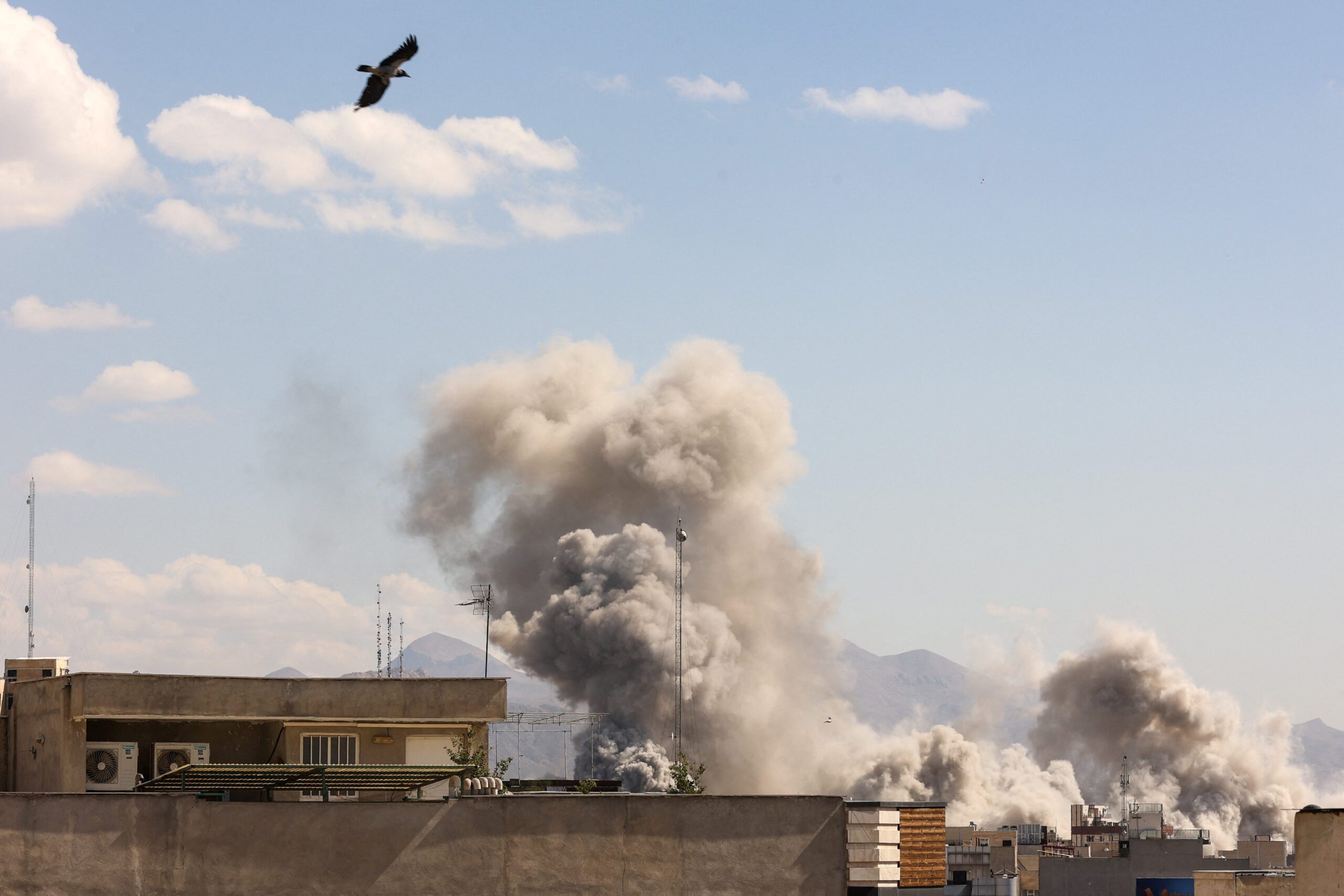
After the Shock: Implications of the U.S.–Israeli Strikes and Iran’s Leadership Transition
On March 2, AGSI hosted a discussion on the U.S.-Israeli strikes on Iran.
Speakers




Jan 8, 2026
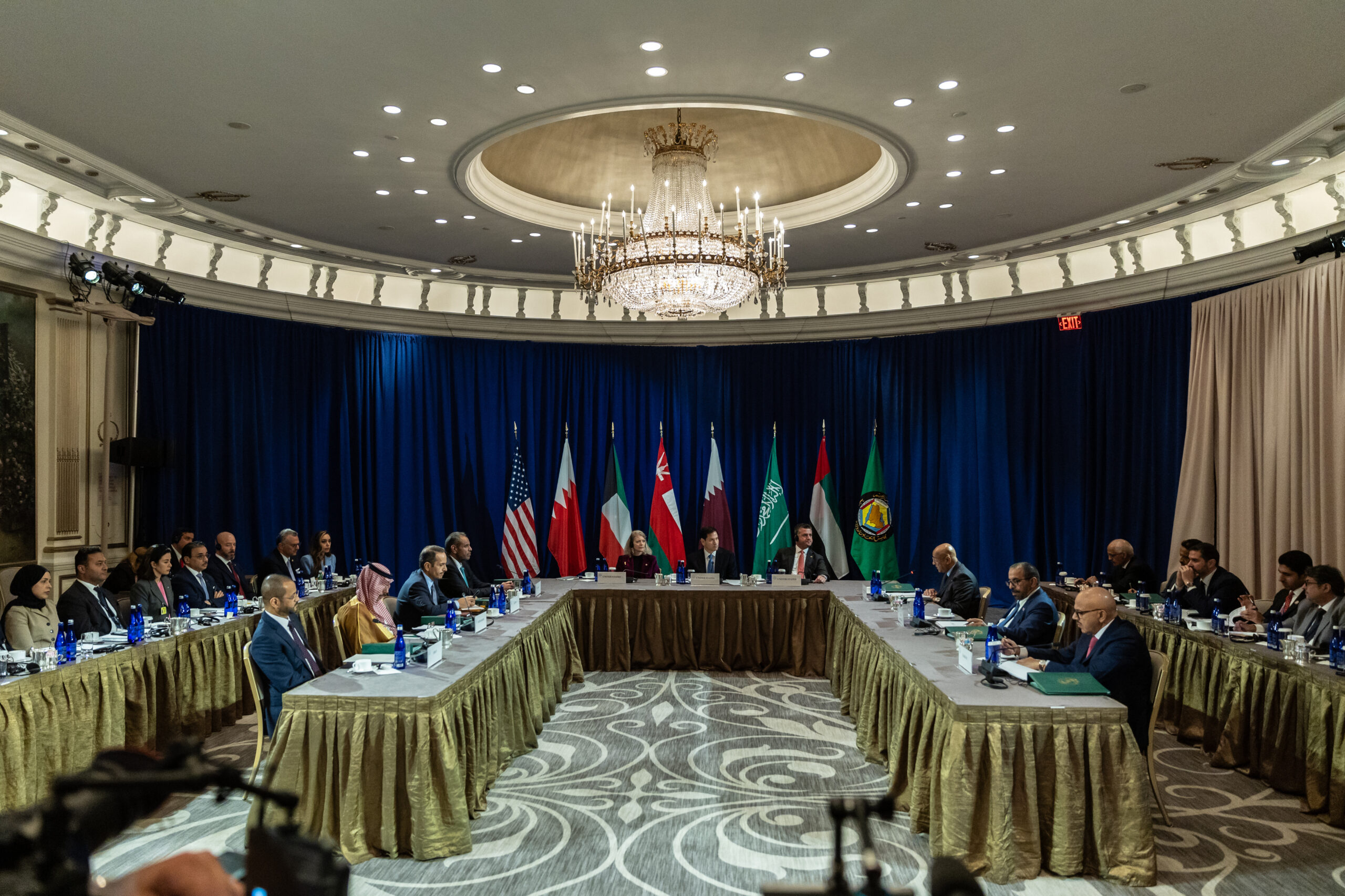
Outlook 2026: Prospects and Priorities for U.S.-Gulf Relations in the Year Ahead
On January 8, AGSI hosted a virtual roundtable with its leadership and scholars as they look ahead and assess trends likely to shape the Gulf region and U.S. foreign policy during the coming year.
Speakers
Sep 16, 2025
Book Talk: Iran’s Grand Strategy: A Political History
On September 16, AGSI hosted a discussion on the roots of Iran's strategic outlook.
Speakers
Jun 23, 2025
U.S. Strike on Iran: Regional and Diplomatic Fallout
On June 23, AGSI hosted a discussion on the United States' attack on Iranian nuclear sites.
Speakers
