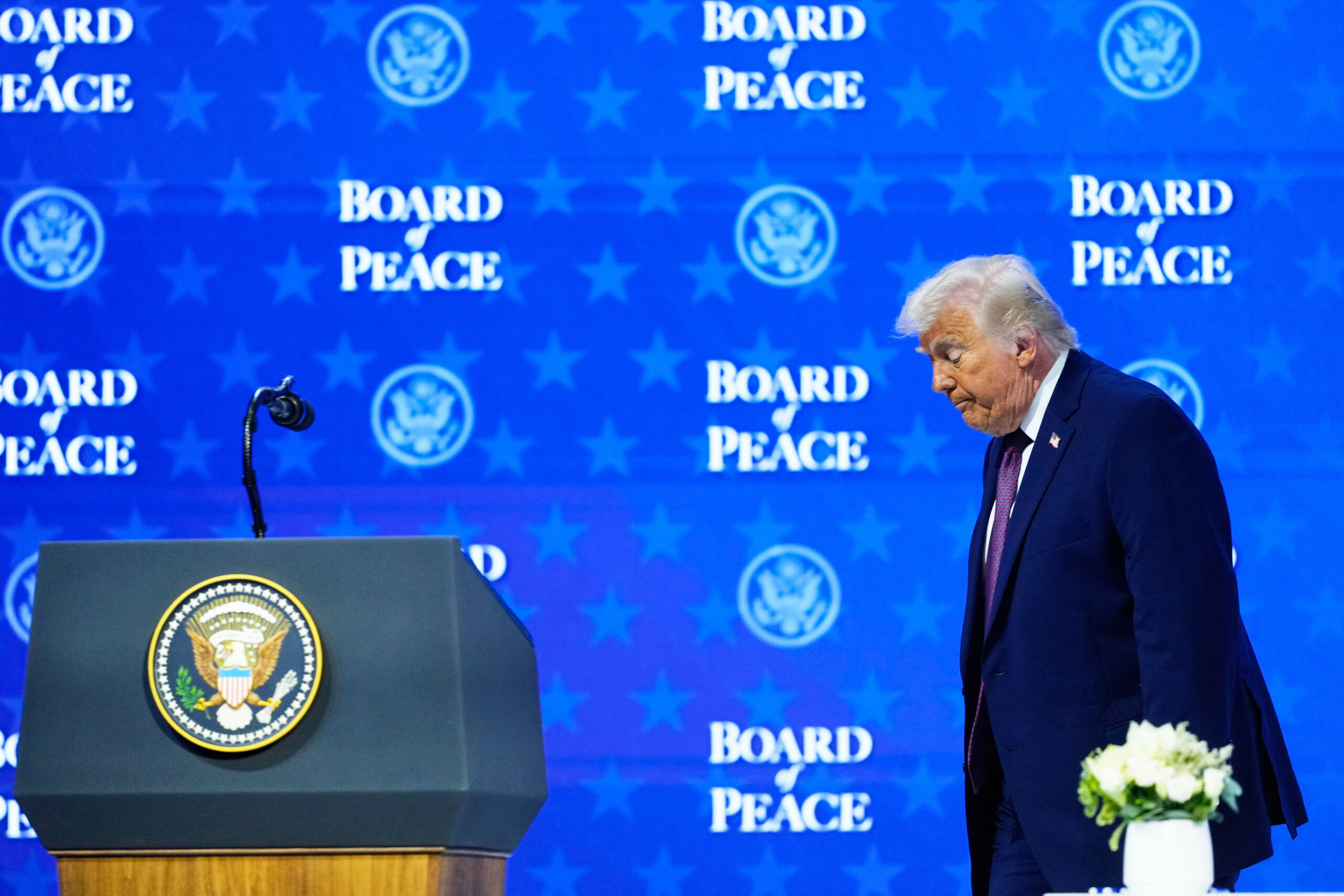
President Donald J. Trump walks on the podium after a signing ceremony of his Board of Peace initiative at the Annual Meeting of the World Economic Forum in Davos, Switzerland, January 22. (AP Photo/Markus Schreiber)
The prospects of U.S. airstrikes on Iran have receded (at least for the time being) after tensions rose sharply when President Donald J. Trump pledged to help Iranian citizens in the face of violent suppression of mass protests that erupted across the country in late-December 2025. Having claimed on January 2 that the United States was “locked and loaded and ready to go” and urged Iranians on January 13 to “take over your institutions,” confrontation seemed imminent. And yet, Trump pulled back from military intervention on January 14 on the basis that the authorities in Tehran had canceled plans for mass executions of demonstrators. Reports that officials from Oman, Qatar, Saudi Arabia, and Egypt were active in a diplomatic effort to avert escalation drew attention to regional concerns over issues of political risk and instability.
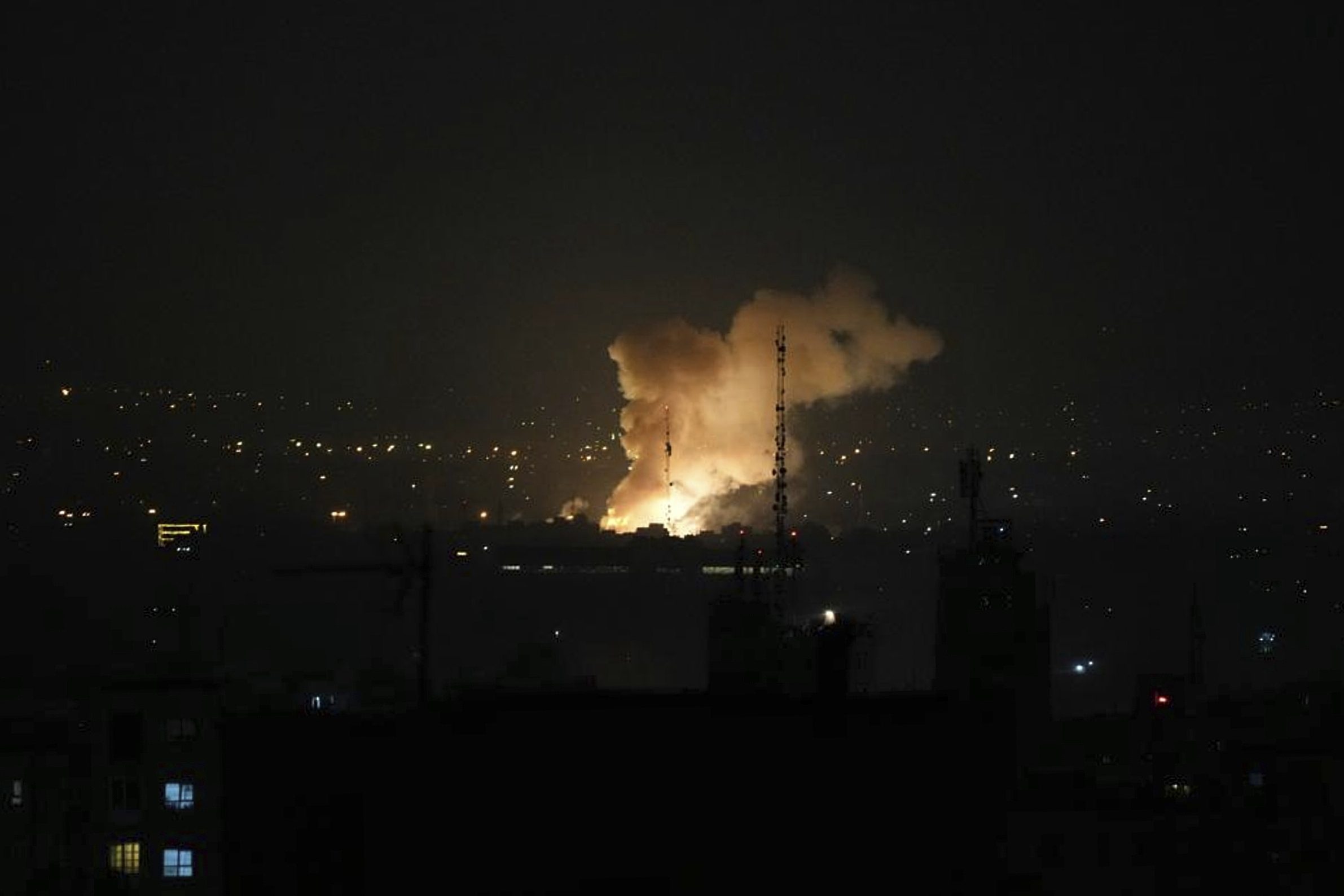
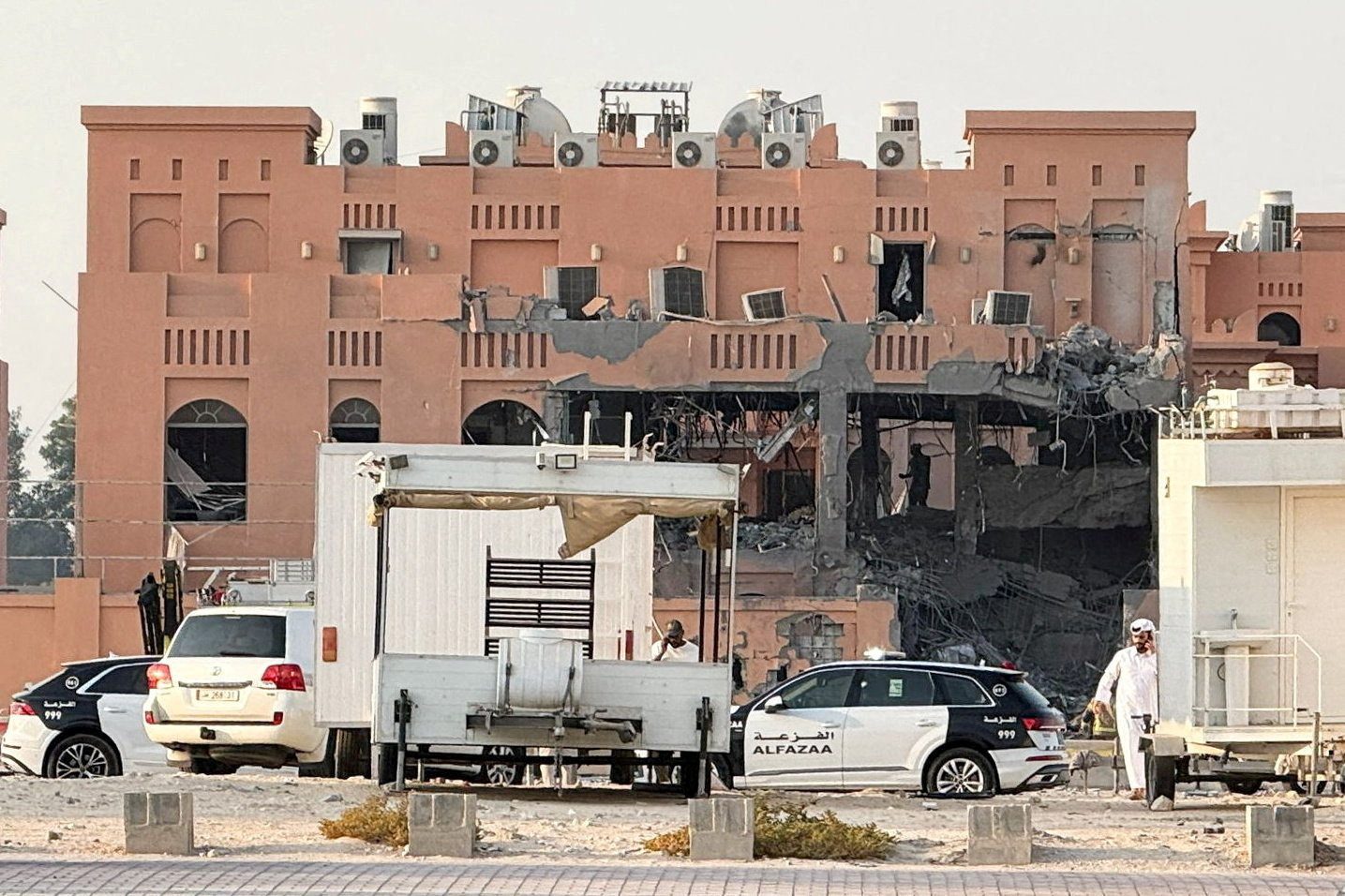
Leaders in the Gulf states largely escaped the whiplash treatment meted out by the administration to allies and adversaries alike. However, this sweet spot, cemented by the commercial and investment partnerships that characterized the first year of Trump’s second term, is offset by the precarity of being on the frontline of increasing U.S.-Iran volatility. Both the June 2025 12-day war between Israel and Iran, which ended with a U.S. attack on Iranian nuclear facilities, and the separate Iranian and Israeli missile strikes on Qatar in June and September 2025, respectively, illustrated the challenges in maintaining order and security in the Gulf and the rising cost of any sustained clash in human as well as political and economic terms.
Multiple dilemmas are metastasizing in U.S.-Gulf relations as the White House has grown increasingly unpredictable and, post-Venezuela intervention, arguably more cavalier in its conduct of foreign policy. Seeming U.S. tolerance for (geo)political uncertainty, globally as well as regionally, cuts against the de-risking approaches of governments in the Gulf, especially in Saudi Arabia, as major economic and energy projects move toward delivery. The planned buildout of artificial intelligence infrastructure in Saudi Arabia and the United Arab Emirates would be put at risk from any new or prolonged conflict with Iran. So, too, would the trillions of dollars in pledged investments in the United States made during Trump’s three-country tour of the Gulf in May 2025 and visits of senior figures to the White House in the president’s first year back in office.
AI has rapidly emerged as one of Saudi authorities’ key areas of focus as Vision 2030 enters its final stage, alongside mining and critical minerals as a priority for investment. The prospect of a U.S. strike on Iran came as thousands of delegates attended the fifth annual Future Minerals Forum in Riyadh and the Saudi Arabian Mining Company, known as Maaden, unveiled plans to become one of the biggest commodity producers in the world over the next decade. Large delegations from Saudi Arabia, Qatar, and the UAE traveled to Davos in Switzerland to participate in the World Economic Forum’s annual meeting, which began on January 19, the same day that DIMDEX, a major maritime defense exhibition, convened in Doha. Dubai, meanwhile, is gearing up to host the annual World Government Summit in early February, as the Gulf states cement their positioning as connectors of capital, energy, and trade flows.
Calls for diplomacy by Gulf officials (which Saudi analysts have been at pains to emphasize were not aimed at influencing the White House either way) likely reflect two points of specific concern at any new escalatory spiral with Iran. The first is a sense of doubt that the Trump administration has a coherent plan that goes beyond a renewed campaign of airstrikes as well as a feeling that military intervention is unlikely to trigger any positive political outcome. Mixed messaging from the Trump administration after the removal of Nicolás Maduro from power in Venezuela may only have amplified feelings of unease that U.S. policymakers lack a “day after” plan. While there is little affinity in Gulf capitals for the regime of Supreme Leader Ayatollah Ali Khamenei in Tehran, there is also a risk that leadership with its back to the wall and facing decapitation might engage in a desperate last stand by abandoning all restraint in responding to any new kinetic action.
This links to a second point of concern: From a Gulf perspective, “red lines” keep being crossed, and the threshold for getting entangled in conflict seems to draw closer each time. The “tit-for-tat” strikes exchanged by Iran and Israel in April and October 2024 were followed by the June 12-day war, which bypassed the Gulf states during the conflict itself. However, the Iranian decision to respond to the June 22 U.S. bombing of its nuclear sites by striking Al Udeid Air Base in Qatar, home to the forward headquarters of U.S. Central Command, the following day, was a significant act of aggression (even if it was choreographed, unlike the Israeli missile strike on Doha in September) against the territory of a Gulf state. The pattern of escalation in each round of conflict has heightened uncertainty over what line may be crossed next, such as the targeting of energy and other critical infrastructure vulnerabilities, including desalination plants, or severe disruption to shipping in the Gulf.
There are multiple reasons why officials in the Gulf Cooperation Council and other regional states wish to de-escalate tensions with Iran. Recent developments in Yemen and the Horn of Africa have highlighted the Saudi interest in avoiding further state collapse and fragmentation of authority in regions deemed vital to the kingdom’s security. Policymakers in Doha are not only aware of the threat of new strikes against Qatar – which would be the third in less than a year – but also cognizant of their large-scale expansion of natural gas liquefaction capacity in the North Field, whose first phase is nearing completion. Their counterparts in Muscat recently unveiled a new five-year development plan and an international financial center as part of Oman’s continuing economic diversification. Leaders in Egypt will not want to see renewed regional instability cast a shadow over the gradual return of international shipping to the Red Sea and passage through the Suez Canal.
Gulf leaders have agency and leverage with the Trump administration, which includes direct as well as indirect channels to the White House, the former through key interlocutors, such as advisors Steven Witkoff and Jared Kushner (both present in Davos) as well as Massad Boulos. Emirati officials are likely seeking clarification from the administration over Trump’s January 13 claim that countries trading with Iran will be hit by new 25% tariffs, given that the UAE is the second-largest trade partner of Iran after China. The UAE and Qatar both signed onto the Pax Silica Declaration in mid-January as part of the U.S.-led initiative to safeguard technology supply chains and integrate U.S. partners into global hi-tech agreements. Such webs of positive interconnectivity present win-win solutions for the United States and Gulf states but need a predictable and reliable decision-making landscape if they are to maximize results.
The views represented herein are the author's or speaker's own and do not necessarily reflect the views of AGSI, its staff, or its board of directors.
AGSI explains what Israel’s sudden and massive attack on Iran is likely to mean for Gulf Arab states, Iran, the United States, and global and regional economies.
Gulf states need to prioritize enhanced regional defense cooperation with an expanded group of potential partners, consider using the financial leverage of sovereign wealth funds’ action, and ramp up diplomatic pressure to deter such attacks in the future.
AGSI explains what Israel’s sudden and massive attack on Iran is likely to mean for Gulf Arab states, Iran, the United States, and global and regional economies.
Given how Syria after 2011 became a cockpit for external intervention in domestic affairs, the early signs this time for engagement of Gulf states appear more promising, particularly due to their ability to convene and lead in regional affairs.
Any escalation in the tit-for-tat exchanges of fire between Iran and Israel could heighten the Gulf states’ vulnerability to being caught in the crossfire.
Saudi Arabia’s King Salman bin Abdulaziz is conducting a six-country tour of Asia that will take him to Malaysia, Indonesia, Brunei, Japan, China, and the Maldives. Aside from its monthlong duration, the trip is significant for the commercial and strategic messages it conveys in the context of Saudi Arabia’s ambitious program of economic reform and...