Energy in Crisis: Markets and Geopolitics of Supply
The Iran war has triggered what energy experts have described as the world’s worst energy crisis. And what is certain is that the prewar energy order will be redrawn.
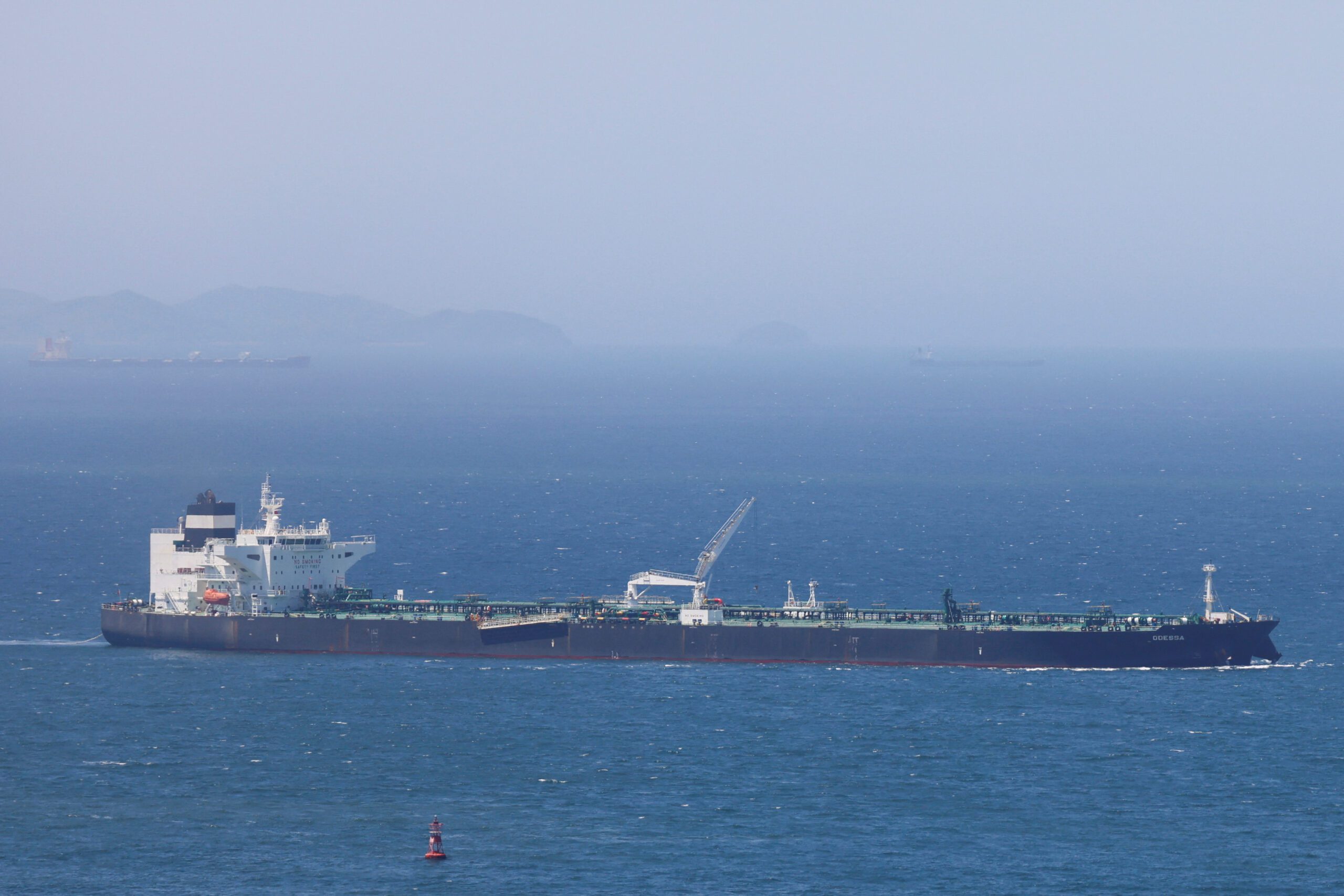
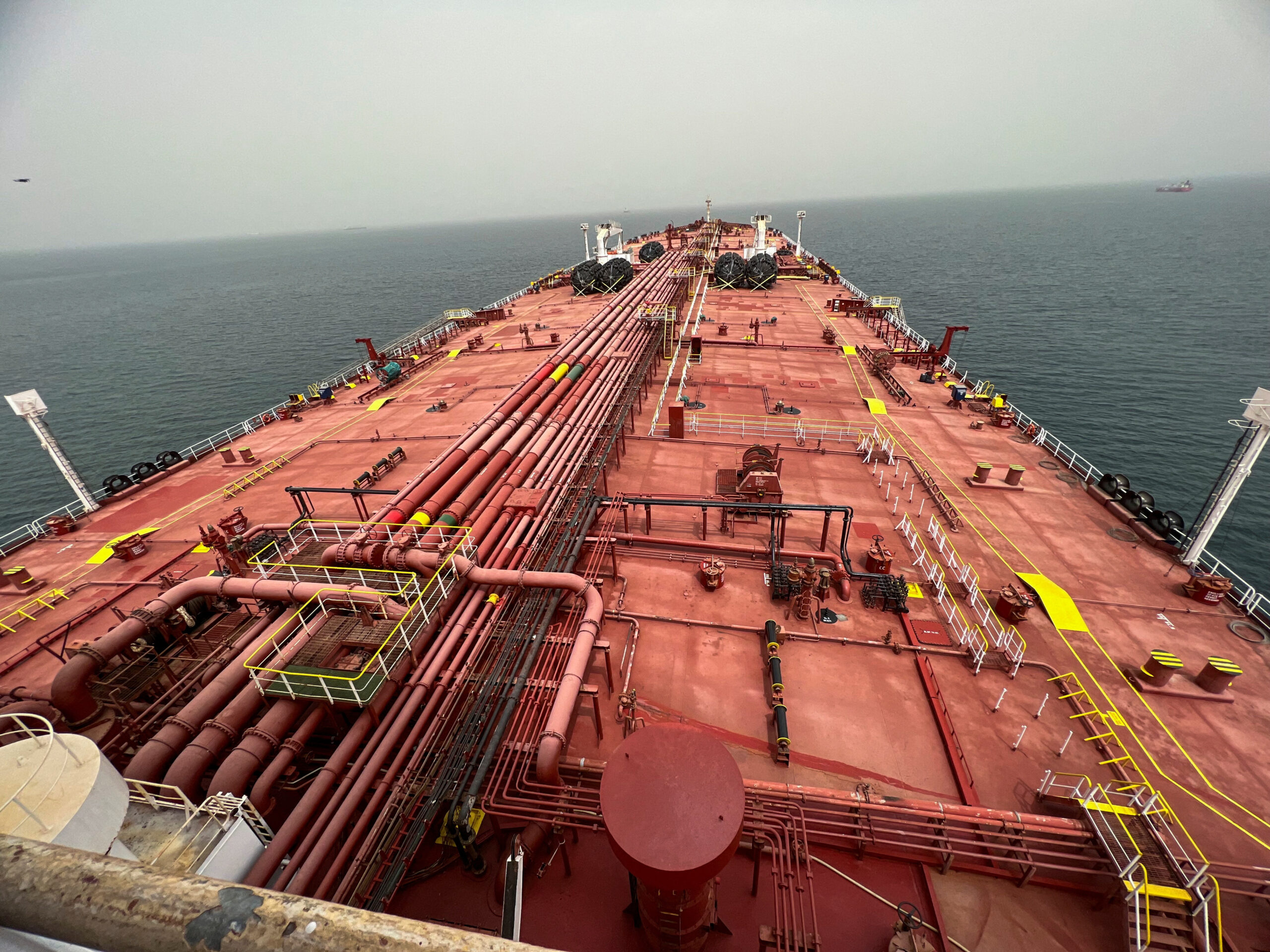
The crude oil tanker Odessa, carrying UAE crude after passing through the Strait of Hormuz with its automatic identification system transponder turned off, navigates the waters at Daesan port, where it is expected to discharge crude oil, in Seosan, South Korea, May 8. (REUTERS/Kim Soo-hyeon)
The conflict that erupted in the Gulf February 28 – and the closure of the Strait of Hormuz that followed – has triggered what the International Energy Agency’s executive director, Fatih Birol, has said is the world’s worst energy crisis, although the full economic effects have yet to materialize. Never has the energy industry faced multiple challenges simultaneously and at this scale. Oil prices surged in response to the supply disruption with benchmark Brent crude rising to nearly $120 per barrel in a highly volatile market driven by headlines and false hopes of a resolution to the conflict.
While oil prices have declined in recent weeks to below $100 per barrel, and may decline further if the conflict ends, the immediate crisis is far from resolved. It is too early to assess the long-term consequences of the disruption and whether it leads to long-term structural changes and a more resilient global energy system. What is certain is that the prewar energy order will be redrawn.
Energy Market Under Severe Stress
The closure of the Strait of Hormuz, through which roughly one-fifth of the world’s seaborne oil trade and a significant share of global liquefied natural gas normally flows, has disrupted supply chains and energy trade routes that have served the global market reliably for decades.
Iran had long threatened to shut down the Strait of Hormuz if attacked but had never acted on the threat. The conflict that began February 28, when the United States and Israel launched coordinated strikes against Iran, gave Tehran the justification it had been waiting for.
The scale of the supply shock is without modern precedent. Global oil supply declined by 1.8 million barrels per day in April from March, falling to 95.1 mb/d, according to the IEA’s May “Oil Market Report.” This took total losses since the start of the conflict to 12.8 mb/d. Output from Gulf countries affected by the strait’s closure was running 14.4 mb/d below prewar levels, the IEA estimated. As a result, OPEC crude production fell to its lowest level since Iraq’s invasion of Kuwait in August 1990, with Saudi output down by 1.66 mb/d and Kuwait’s production at levels last seen in 1992, when the country was recovering from the damage to its energy infrastructure following the Iraqi invasion.
Cumulative oil supply losses exceed 1 billion barrels and counting. Sultan Ahmed Al Jaber, the CEO of Abu Dhabi’s ADNOC, said in a May 20 webinar hosted by the Atlantic Council that each week the strait remains closed, the world loses another 100 million barrels.
The supply disruption has pushed oil prices to near record levels. In the immediate aftermath of the war on Iran, Brent crude oil soared, rising to $120/bbl on April 29 as tanker traffic through the strait ground to a halt.
As the crisis deepened in April and physical crude markets tightened further, the price of physical barrels surged to record levels near $150/bbl, at one point reaching a premium of $35/bbl over the futures price before sliding back. The IEA noted in the May “Oil Market Report” that the premium had weakened “from a record $35/bbl in mid-April to a more normal $3/bbl in early May.”
The loss of Middle Eastern mainly heavy crude grades pushed up differentials with Oman and Dubai physical grades fetching a high premium over lighter grades. The Platts Dubai benchmark came under serious structural pressure as the crisis exposed the fragility of Middle East-linked pricing mechanisms in a way that will have lasting implications for how Gulf crude is priced and traded.
For the Gulf’s largest producers, the closure of the Strait of Hormuz forced a rapid reconfiguration of export logistics. Saudi Arabia is relatively better placed than most, given its ability to redirect crude flows through the 7-mb/d East-West pipeline to the Red Sea coast. This allowed Saudi Aramco to export roughly 60% of preconflict volumes despite having to shut in some 3 mb/d of oil production.
Iran targeted the Saudi pipeline on April 9, hitting a pumping station that was repaired quickly by Saudi Aramco. However, the attack exposed the pipeline’s vulnerability to future strikes either by Iran or its Houthi allies in Yemen, who previously disrupted shipping through the Red Sea and may do so again.
For Kuwait, Qatar, and Iraq, the picture has been considerably worse. With limited or no bypass infrastructure, they have faced near-total interruption of their primary export routes. Iraq has managed to reroute modest volumes through Turkey, but the majority of its export revenue has been lost, presenting a challenge to the newly elected government.
Qatar faces a structural constraint that sets it apart from crude oil producers because LNG cannot be rerouted via alternative pipelines or export terminals. Iranian missile strikes knocked out an estimated 17% of capacity at the LNG hub of Ras Laffan, forcing QatarEnergy to declare force majeure on all exports. Saad Sherida Al Kaabi, Qatar’s minister of energy and CEO of QatarEnergy, said in a statement that the March 18-19 missile strikes had knocked out 12.8 million metric tons per year of LNG, and he expected the damage “to cost about $20 billion a year in lost revenue and to take up to five years to repair, impacting supply to markets in Europe and Asia.”
Ras Laffan is the lifeline of Qatar’s economy, and the closure of the Strait of Hormuz has left it almost entirely cut off from its markets. The loss of roughly 20% of global LNG supply – including 77 million mt/y from Qatar and 6 million mt/y from the UAE – has tightened the market, driven prices sharply higher, and fundamentally altered expectations for future balances.
Prior to the Gulf disruption, the industry had widely expected a wave of new LNG projects to push the market into surplus later this decade. That outlook has now changed.
Major market participants increasingly believe the anticipated glut has been postponed by at least two years. The disruption stems not only from immediate supply losses but also from damage to existing Qatari liquefaction infrastructure and delays to the massive North Field expansion project that was to add 65 million mt/y to global LNG supplies.
The result is a much tighter and more uncertain outlook for global gas markets, with Europe and Asia likely to face intensified competition for available cargoes just as demand growth from industry, power generation, and emerging sectors, such as artificial intelligence-driven data centers, accelerates.
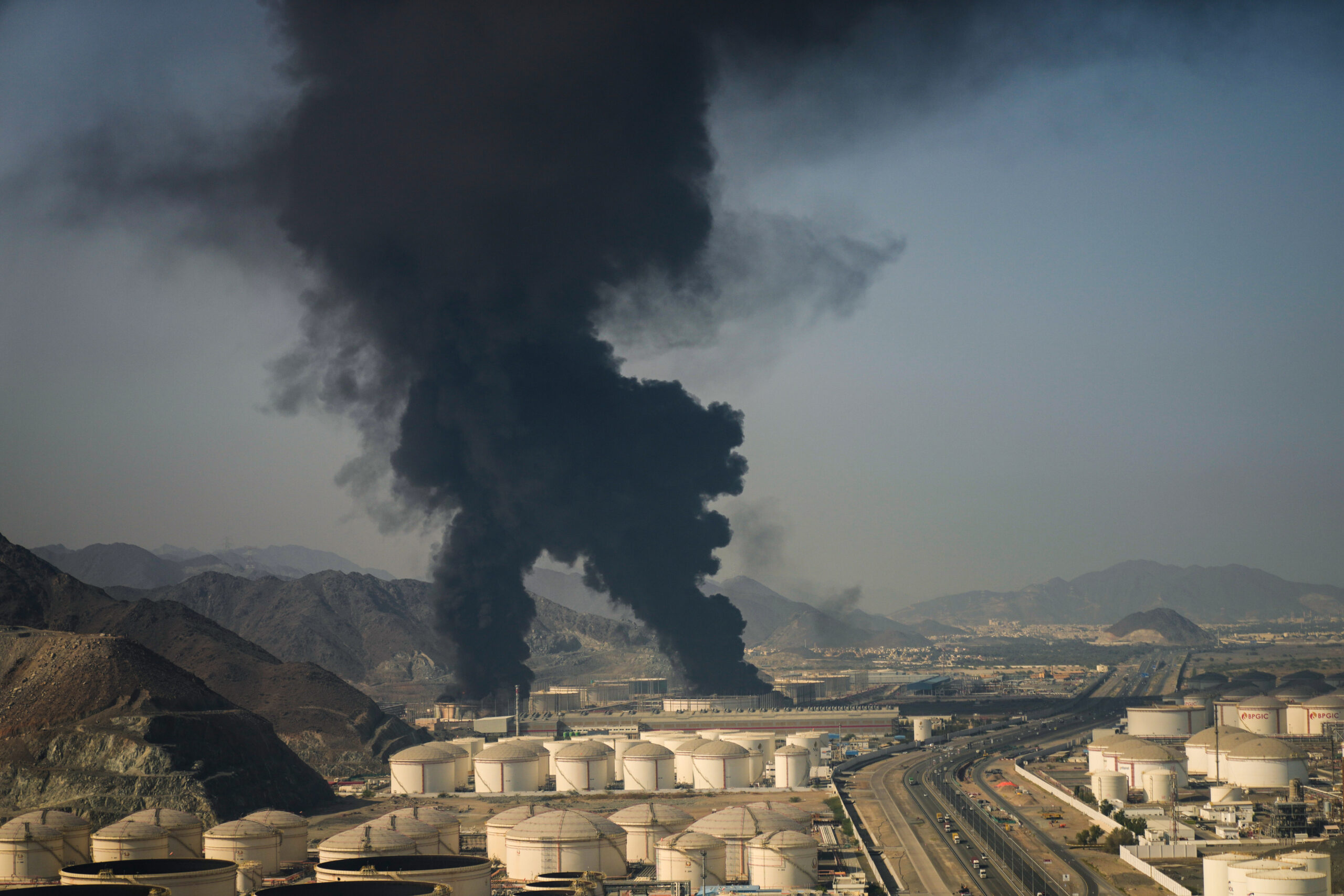
Within the Gulf Cooperation Council, the crisis has exposed strategic differences that were previously obscured by shared interests. The UAE’s long-term investment in bypass infrastructure has paid off. The 1.8 mb/d Abu Dhabi Crude Oil Pipeline to Fujairah allowed the UAE to maintain exports, though it was forced to shut down offshore production that has no alternative outlet to the Strait of Hormuz. A parallel pipeline under construction will increase bypass capacity through Fujairah to 3.3 mb/d when completed in 2027, allowing the UAE to export crude oil from both onshore and offshore fields. Jaber said at the Atlantic Council event that the pipeline was 50% complete, and construction was being accelerated. However, because Fujairah is located directly across the Gulf of Oman from the Iranian coastline, it has been the target of Iranian attacks, and that exposure carries risk while the conflict remains unresolved.
Even with these bypass export routes, the decline in Gulf exports has led to a rapid drop in global oil inventories. In the May “Oil Market Report,” the IEA, citing preliminary data, estimated that global inventories were drawn down by 129 million barrels in March and a further 117 million barrels in April, as strategic petroleum reserves were deployed to cushion the supply shock. With inventories at low levels, markets become vulnerable to subsequent supply disruptions and price spikes. Assuming flows through the strait resume gradually from June, the IEA projects global oil supply will decline by 3.9 mb/d on average for 2026.
Another aspect of this crisis is that it has locked in most of the world’s spare production capacity, nearly all of which is concentrated in Saudi Arabia, the UAE, Kuwait, and Iraq.
The crisis has hit both supply and demand simultaneously. World oil demand is forecast by the IEA to contract by 420,000 b/d year on year in 2026 to 104 mb/d – 1.3 mb/d below prewar forecasts. The sharpest decline is expected in the second quarter, when demand is expected to fall by 2.45 mb/d year on year.
Gas and LNG: Flexibility Under Pressure
The LNG market has demonstrated both flexibility and structural limitations since the crisis began. Flexible spot cargoes have been redirected away from Asian destinations toward European buyers willing to pay premium prices, mirroring the dynamics during Europe’s post-2022 scramble for non-Russian gas – but under considerably tighter overall supply conditions.
Infrastructure bottlenecks have constrained the market’s ability to respond as fluidly as spot price signals might suggest. The United States and Qatar remain the pivotal swing suppliers in this environment, and their strategic positioning – commercial in the case of the United States, more complex in Qatar’s case given its Strait of Hormuz exposure – will determine whether markets move from tightness to shortage in the coming months.
Downstream Disruption and Product Shortages
The slump in crude oil supplies has also affected refinery output, which also dropped sharply across the region. This was either because of damage from Iranian strikes or because the refineries are located along the Gulf coast and unable to export. As a result of the downstream disruption, the global products market, particularly for jet fuel, has experienced shortages that pushed up prices.
The slowdown in global refinery activity, which the IEA noted was running around 5 mb/d below year-ago levels in April, temporarily eased tensions in the crude market, but the tightness spread rapidly to product markets.
The petrochemical and aviation sectors were the most affected, with jet fuel prices having nearly tripled after Gulf exports were cut off. Higher prices, a deteriorating economic environment, and demand-saving measures will further weigh on global oil consumption through the second half of the year.
The disruption in downstream and product markets has been even more consequential with higher prices feeding into nearly all aspects of the global economy and stoking inflation. The closure of the Strait of Hormuz has not simply reduced the volume of crude oil available to global refiners – it has created severe product imbalances across the diesel, jet fuel, and petrochemical sectors.
Refining margins remain at historically high levels as refiners adapt to the crisis and new trade flows emerge to compensate for lost Gulf product exports. Jet fuel markets have been particularly hard hit, reflecting the geographic concentration of major jet-producing refining capacity in the Gulf. The implications for aviation – and through aviation for global business, tourism, and supply chains – are significant and still unfolding. Diesel markets have been disrupted in ways feeding directly into inflation, freight costs, and industrial activity across Europe and Asia.
These product market dislocations are feeding into consumer prices, government fiscal calculations, and political pressures across importing economies in ways that are shaping diplomatic and policy responses to the crisis. Understanding the downstream dimension is essential to understanding the full geopolitical weight of what is happening in the Gulf.
Price Volatility Returns
The regional spillovers from the conflict have extended well beyond the Strait of Hormuz closure. Gulf Arab states have navigated complex pressures, balancing long-standing security partnerships with the United States against the economic damage inflicted by the disruption. The Houthi threat to Red Sea shipping, which predates the current conflict but has not been resolved, adds a further layer of vulnerability to Saudi Arabia’s primary bypass route. And how China, as the dominant buyer of Gulf crude, positions itself diplomatically and commercially in this environment will shape the medium-term evolution of global energy trade.
Even if a diplomatic resolution is reached, the energy market implications will not simply reverse. Mine-clearing operations in the strait, the rebuilding of supply chains and tanker routing patterns, the resumption of production facilities, and the replenishment of strategic reserves all take time – months, not days. Jaber warned that Middle East oil production would not recover fully until 2027. “Even if this conflict ends tomorrow, it will take at least four months to get back to 80% of preconflict flows, and full flows will not return before the first or even second quarter of 2027,” he said in his remarks at the Atlantic Council. The IEA’s base case assumes flows through the strait begin to resume gradually from June but projects that the oil market remains in deficit until the final quarter of the year.
A New Urgency Around Resilience
There are already signs that the crisis is forcing a recalibration of energy policy, particularly in hard-hit importing regions across Europe, Asia, and Africa.
How the current disruption ultimately reshapes global energy markets remains uncertain. In the near term, governments have responded pragmatically, switching fuels where possible and even turning back to coal in some markets because of its availability and lower cost. Yet the broader direction of travel remains unresolved. The way markets emerge from this crisis will shape not only future trade flows but also the long-term balance among hydrocarbons, gas, nuclear power, and renewables in the global energy mix.
What is already clear is that the crisis has created new urgency around resilience. Governments and companies are accelerating investment in bypass pipelines, storage infrastructure, strategic reserves, shipping capacity, and alternative supply corridors. Energy security is no longer being viewed simply through the lens of production volumes but increasingly through redundancy, logistical flexibility, and the ability to withstand geopolitical shocks.
At the same time, the crisis is generating competing pressures. The fiscal burden of disruption is straining both producer and consumer governments, while market volatility is complicating capital allocation across the energy sector. Long-term infrastructure planning becomes significantly harder when policymakers and investors are operating in an environment shaped by conflict, sanctions risk, and uncertainty over future demand patterns.
Supply growth outside the Middle East has provided some relief. The IEA has revised up expected 2026 supply growth from the Americas by more than 600,000 b/d since the start of the year to around 1.5 mb/d. Crude exports from the Atlantic Basin to East of Suez markets have risen sharply since February, with increased volumes from the United States, Brazil, Canada, Kazakhstan, and Venezuela helping offset part of the disruption. But these gains alone cannot replace fully the volumes effectively trapped inside the Gulf.
The implications for the energy transition are equally complex. On one level, the crisis strengthens the strategic case for accelerating the shift toward cleaner and more diversified energy systems. The vulnerability of concentrated fossil fuel supply routes has been exposed in stark terms, reinforcing the argument that renewables, electrification, storage, and grid resilience are not simply climate objectives but national security priorities. Europe reached similar conclusions after the 2022 gas crisis, and many importing states are now arriving at the same realization.
Yet the crisis also risks slowing parts of the transition. The immediate imperative of securing supply, controlling inflation, and stabilizing economies may take precedence over longer-term investment priorities. Higher financing costs, tighter fiscal conditions, and renewed focus on energy affordability could delay aspects of decarbonization policy, particularly in developing economies already struggling with debt and infrastructure constraints.
Another emerging pressure point is the rapid growth in electricity demand from AI infrastructure and hyperscale data centers. Governments in the Gulf, Europe, Asia, and the United States increasingly view AI as a strategic industry, but the enormous power requirements of large-scale computing facilities are beginning to reshape energy planning assumptions. Ensuring reliable and affordable electricity supply for AI-driven growth is likely to intensify competition for gas, renewables, nuclear power, and grid capacity in the years ahead.
What the current crisis has demonstrated is that energy security and geopolitics are intertwined. The architecture of global energy trade – built over decades on assumptions of relative stability, open sea lanes, and manageable geopolitical risk – is now being stress tested like never before.
Whether the result is greater fragmentation, deeper regional integration, or accelerated diversification remains uncertain. Regardless of how the immediate conflict evolves, governments, producers, and consumers alike are being forced to rethink the resilience of the global energy system before the next shock arrives.
The views represented herein are the author's or speaker's own and do not necessarily reflect the views of AGSI, its staff, or its board of directors.
The UAE’s move to leave OPEC underscores Abu Dhabi’s effort to widen its room for maneuver beyond Saudi-led frameworks, but the Iran war gives this decision a new meaning.
The oil market is no longer anchored by a shared baseline. Instead, it is being pulled in different directions by competing assumptions about geopolitics, prices, and economic resilience.
Saudi Arabia’s ability to maintain its reputation as a reliable supplier in the months ahead will depend on how quickly it can repair damaged assets and keep several imperfect routes operating at the same time.
Egypt has become the indispensable transit state linking Saudi Arabia's Red Sea infrastructure with global markets. But that strategic importance may also have exposed it to the same risks facing Gulf producers.
The vulnerability of the world's most important energy chokepoint has been laid bare, setting in motion changes that are likely to outlast the conflict.