The UAE’s move to leave OPEC underscores Abu Dhabi’s effort to widen its room for maneuver beyond Saudi-led frameworks, but the Iran war gives this decision a new meaning.
People walk past a logo of the Abu Dhabi National Oil Company during the annual energy industry event Abu Dhabi International Petroleum Exhibition and Conference in Abu Dhabi, United Arab Emirates, November 3, 2025. (REUTERS/Amr Alfiky)
More than merely an energy-market adjustment, the United Arab Emirates’ decision to leave OPEC was a strategic act. On the surface, Abu Dhabi is seeking freedom from production quotas at a moment when liquidity, flexibility, and market access matter more than quota discipline. The Abu Dhabi National Oil Company has described the move as a “sovereign decision” tied to the UAE’s long-term strategic and economic interests. But beneath the oil-market logic lies a geopolitical shift. The move underscores Abu Dhabi’s effort to widen its room for maneuver beyond Saudi-led frameworks, while its security alignment with the United States, and increasingly Israel, becomes more visible. The issue gained further salience in May, when Iranian Foreign Minister Abbas Araghchi accused the UAE at a BRICS foreign ministers’ meeting of involvement in military operations against Iran. The accusation came amid a diplomatic controversy following Israeli Prime Minister Benjamin Netanyahu’s claim that he had visited the UAE during the Iran war, an assertion Abu Dhabi strongly denied.
The UAE’s exit from OPEC comes amid the still-unresolved U.S.-Israeli confrontation with Iran, in which Gulf states have found themselves exposed to Iranian retaliation. Tehran has long warned its Gulf neighbors against hosting U.S. assets or participating, directly or indirectly, in an anti-Iranian security architecture. In the current conflict, those warnings have moved from rhetoric to military action. The UAE has been among the most targeted states in the Gulf having faced 2,256 drone and 563 missile attacks.
For a country whose global brand depends on safety, connectivity, and predictability, this is concerning. The UAE is small in territory and population, heavily dependent on foreign labor, and built around the promise that capital and people can move through it securely. This reputation has been reinforced by high safety rankings, including Numbeo’s 2025 “Safety Index,” which placed the UAE first globally and ranked several Emirati cities among the world’s safest. Iranian strikes put Dubai’s safe-haven status under pressure, challenging the assumption that the UAE could remain relatively insulated from the region’s conflicts.
Iran understands this vulnerability. Tehran is targeting oil facilities and military-linked infrastructure, but more importantly it is targeting the Emirati model itself.
The UAE’s economic structure explains why this matters. The country has spent decades reducing its dependence on crude exports and building a diversified economy around trade, finance, real estate, transportation, tourism, and logistics. Official UAE figures for 2024 show non-oil sectors accounting for 75.5% of gross domestic product. The country’s economy depends on confidence: Airports, ports, hotels, property markets, financial services, and expatriate inflows all rely on the perception of stability.
That is precisely why Iranian strikes, or even the credible threat of them, can have an impact beyond physical damage. A refinery can be repaired, a port can reopen, and a hotel can be refurbished. Confidence is harder to restore. Once uncertainty enters the calculation of investors, insurers, tourists, and skilled expatriates, the UAE’s comparative advantage becomes more expensive to maintain. Iran’s aim appears to be the injection of insecurity into a state whose power depends on being perceived as secure.
The May attacks around Fujairah sharpened this point. The port’s importance lies in its location on the Gulf of Oman, which allows the UAE to export oil while bypassing the Strait of Hormuz. When Iranian-linked attacks struck near Fujairah, and when Abu Dhabi accused Iran of targeting an ADNOC-affiliated tanker in the Strait of Hormuz, the message was that even the UAE’s alternative routes are vulnerable. Tehran is signaling that Emirati energy autonomy remains exposed if Abu Dhabi is perceived as part of the U.S.-Israeli security architecture.
For years, the UAE has been uncomfortable with the constraints imposed by OPEC and OPEC+. Abu Dhabi has invested heavily in expanding production capacity, but quota restrictions limited its ability to fully monetize that capacity. The dispute with Saudi Arabia over production baselines was already visible in 2021, and analysts at the time saw it as part of a broader economic rivalry between the two Gulf powers. More recent analysis describes the UAE’s exit as the culmination of a longer frustration with Saudi-dominated production discipline and a desire to make sovereign decisions over its own output.
Yet, the war gives this decision a new meaning. Leaving OPEC gives the UAE the opportunity to pursue revenue at a time when Iranian pressure is raising the cost of security. It also allows Abu Dhabi to present itself to global markets as a stabilizing supplier. In a world facing energy volatility, that message matters. The UAE can say, implicitly if not explicitly, that it is willing to provide barrels when others restrict them.
But the move also weakens the appearance of Gulf unity. It exposes the fact that the Gulf states, while tied by shared threat perceptions and institutional frameworks, do not always share the same strategic priorities. Saudi Arabia remains the largest regional actor and the traditional heavyweight within OPEC. The UAE, by contrast, has increasingly sought to escape the shadow of Saudi predominance. Like Qatar, it has pursued autonomy. The UAE has done so through a more assertive regional policy, from the Horn of Africa to Yemen, Libya, and the Red Sea.
The OPEC exit fits the Emirati search for economic sovereignty and security depth. Israel matters in that context. The Abraham Accords were presented through the language of tolerance, interfaith dialogue, and economic normalization. The UAE’s domestic branding, from the Year of Tolerance to the Abrahamic Family House, helped prepare the symbolic ground. But the deeper logic was always strategic. For Abu Dhabi, Israel offered access to advanced security technologies, intelligence cooperation, cyber capabilities, and another channel into Washington’s defense and security establishment. For Abu Dhabi, Israel provided an additional source of leverage in Washington, particularly on defense files where Israeli acquiescence could shape the politics of U.S. arms transfers. After the Abraham Accords, for example, Israel withdrew its opposition to the proposed U.S. sale of F-35 fighter jets to the UAE, helping remove a political obstacle to congressional approval.
The current war has made that logic visible. Israel reportedly sent an Iron Dome battery and personnel to the UAE. What had previously been a diplomatic framework became, under pressure, an operationalized wartime security mechanism. The integration of Israeli capabilities into the UAE’s wartime security architecture has reinforced Tehran’s perception that the normalization of ties with Israel has transformed Abu Dhabi into a strategic node within a hostile network.
From Abu Dhabi’s perspective, however, this is pragmatic: Israel offers capabilities Abu Dhabi considers useful. The UAE’s leadership has consistently tried to build a state that can withstand regional shocks by diversifying its economy, military suppliers, diplomatic relations, and energy routes. Israel strengthens that architecture, while the United States provides the broader strategic umbrella. OPEC, by contrast, increasingly looks like a constraint rather than a shield.
Iran’s military calculus reflects Abu Dhabi’s unusual position in the Gulf. For Tehran, the UAE is at once a logistics center, financial platform, energy supplier, U.S. partner, and security partner of Israel. Striking it punishes a state aligned with Iran’s adversaries, undermines confidence in the Gulf’s safest investment destination, and warns other Arab states against deeper security integration with Israel.
The result is a feedback loop. Iranian strikes push the UAE closer to Israel and the United States. That alignment reinforces Iran’s perception of the UAE as part of a hostile security architecture. The more Abu Dhabi seeks protection through external partnerships, the more Tehran sees it as a pressure point. That is what gives the OPEC exit its wider significance. The move reflects more than a dispute over production quotas. It points to a fragmented Gulf consensus, weaker Saudi dominance over regional energy discipline, the militarization of the Abraham Accords, and the vulnerability of economic models built on stability amid conflict.
For decades, Gulf states tried to keep regional instability at a distance through wealth, global connectivity, and external security guarantees. The UAE perfected that model, and Iran is now trying to show that deeper integration with the U.S.-Israeli security order carries direct costs.
The UAE’s move deepens its alignment with the United States and Israel while breaking with the old Gulf energy consensus. It also points to a harsher Middle Eastern security environment, where influence will depend on how much exposure states can absorb and how much resilience they can build.
The views represented herein are the author's or speaker's own and do not necessarily reflect the views of AGSI, its staff, or its board of directors.
Abu Dhabi’s departure from OPEC signals that discipline within the group is becoming harder to sustain at a time when the global energy market is facing the prospect of a more volatile and uncertain future.
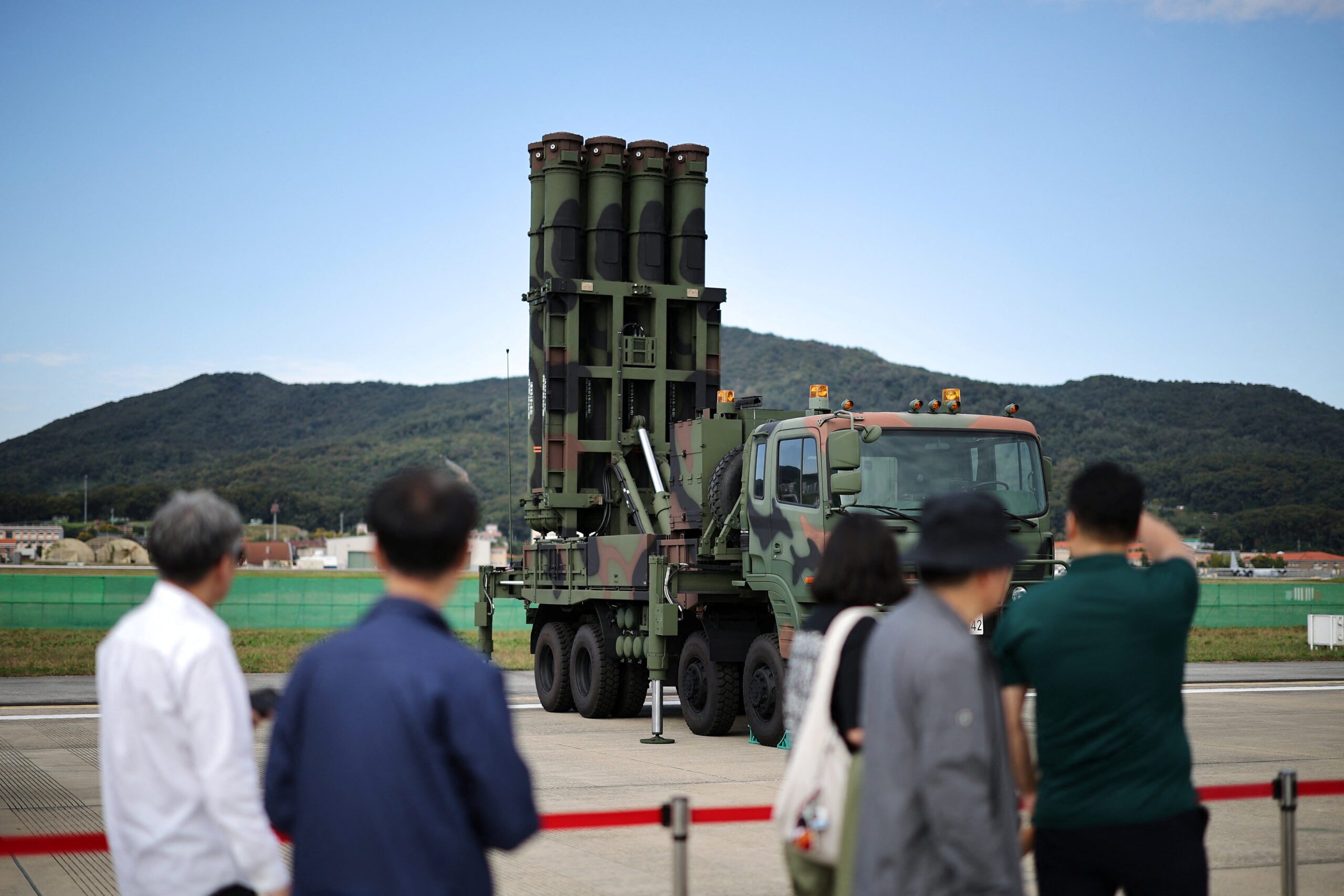
As Iranian strikes exposed structural gaps, Gulf states are expanding their air defense architecture through new suppliers, lower-cost systems, and operational partnerships.
In the future landscape of Gulf security, the United States may remain an essential arms supplier but wield less influence over force structure and military doctrine.