Beyond the U.S. Umbrella: Gulf States and the Diversification of Air Defense After Iran
As Iranian strikes exposed structural gaps, Gulf states are expanding their air defense architecture through new suppliers, lower-cost systems, and operational partnerships.
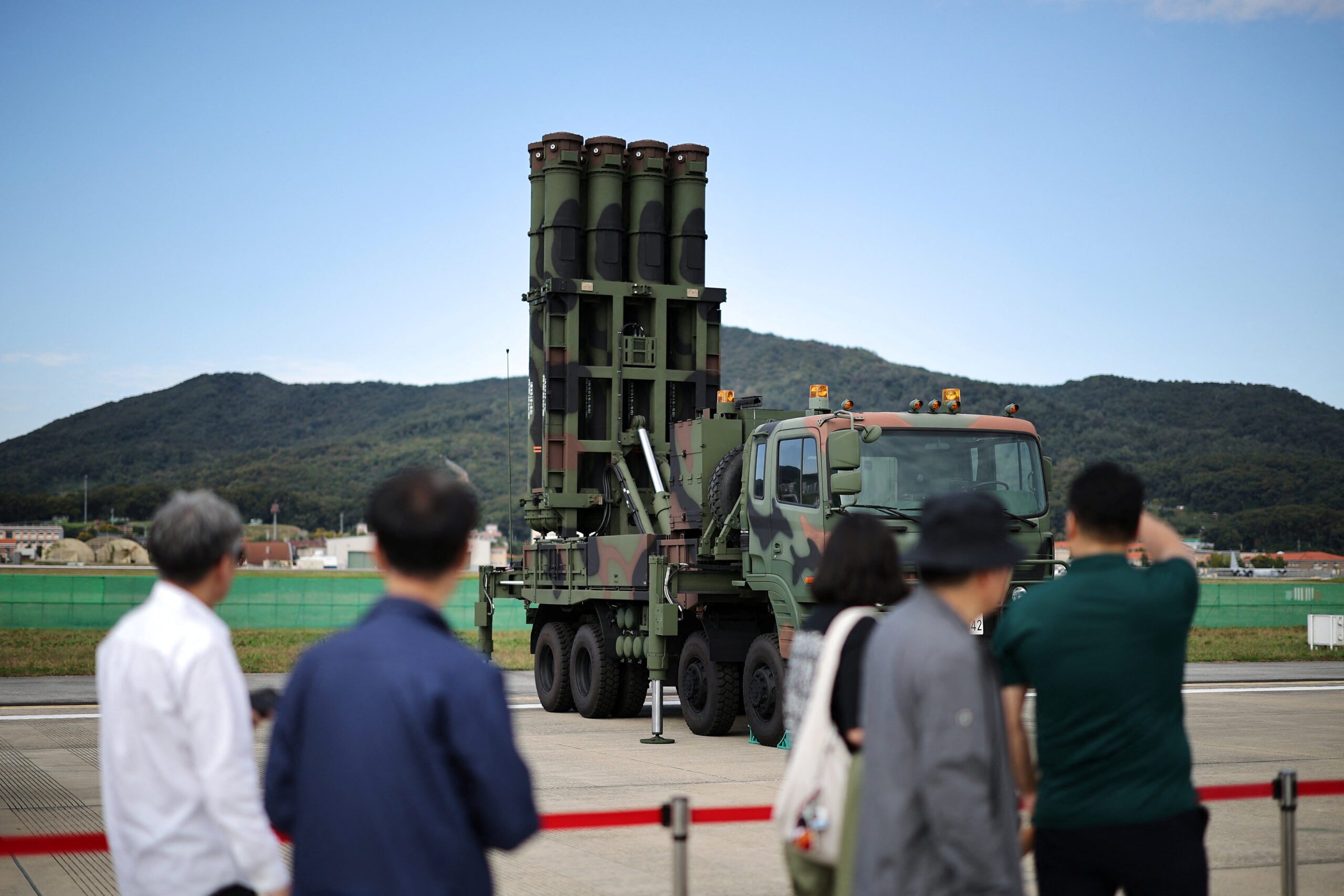
Spectators look at the Cheongung missile (KM-SAM) during the Seoul International Aerospace & Defense Exhibition in Seongnam, South Korea, October 17, 2025. (REUTERS/Kim Hong-Ji)
The recent cycle of Iranian missile and drone strikes across the Gulf has forced a quiet but consequential reassessment of regional air defense. Over roughly 40 days of sustained attacks – combining ballistic missiles, cruise missiles, and large volumes of one-way attack drones – Saudi Arabia, the United Arab Emirates, and Qatar were pushed into a high-tempo defensive posture that exposed both the strengths and structural limits of their existing architectures.
While interception rates remained operationally significant, the conflict underscored a deeper problem: Gulf air defense systems, long optimized for high-end threats and anchored in U.S.-supplied platforms, are not configured for prolonged, high-volume, cost-asymmetric engagements. The result has been a rapid drawdown of interceptor stockpiles and growing concerns over the financial and operational sustainability of current defense models.
In response, Gulf states are not abandoning their reliance on the United States. Rather, they are recalibrating it. The emerging model points toward a more layered and diversified architecture, in which legacy systems, such as the MIM-104 Patriot and Terminal High Altitude Area Defense systems, are increasingly complemented by lower-cost interceptors, mobile short-range systems, and counter-unmanned aerial systems sourced from a broader set of partners. This shift is already reshaping procurement patterns, operational concepts, and defense partnerships across the region.
The U.S. Backbone
The United States remains the cornerstone of Gulf air and missile defense. According to SIPRI data, Washington accounted for 77% of Saudi Arabia’s arms imports, 48% of Qatar’s, 62% of Kuwait’s, and 42% of the UAE’s from 2021-25. That level of dominance reflects not only decades of strategic alignment but also a dense web of interoperability requirements, training pipelines, maintenance dependencies, and command-and-control integration that no other supplier can yet replicate.
In the interceptor domain, this architecture is built around a layered combination of systems. At the upper tier, THAAD batteries provide exo-atmospheric interception against ballistic missiles for Saudi Arabia and the UAE. At the main engagement layer, Patriot systems – especially in their PAC-3 and PAC-3 Missile Segment Enhancement variants – form the backbone of missile defense across Saudi Arabia, the UAE, Qatar, Kuwait, and Bahrain. These are supported by U.S.-supplied radar and sensor infrastructure and tied into wider early warning, air picture management, and command networks. Qatar also fields the National Advanced Surface-to-Air Missile System – the U.S.-Norwegian system optimized for aircraft, cruise missiles, and certain categories of drones – thus adding an important lower-tier layer to Doha’s air defense posture.
Yet the confrontation with Iran has exposed three structural constraints. The first is the economics of interception. High-end interceptors, such as Patriot PAC-2 and PAC-3 missiles, each costing millions of dollars, have repeatedly been used against far cheaper threats, including Shahed-type one-way attack drones and other loitering munitions costing perhaps tens of thousands of dollars. In wartime, and especially in campaigns designed around attrition, this mismatch becomes a strategic vulnerability, forcing Gulf defenders into an unfavorable cost exchange in which even successful interception erodes readiness.
The second is magazine depth. Even the most sophisticated missile-defense architecture is constrained by launcher capacity, reload rates, and the finite number of ready interceptors in theater. The recent Iranian campaign has demonstrated that high-end systems alone cannot reliably absorb large, repeated salvos over time. This is particularly true when ballistic missiles, cruise missiles, and drones are launched in mixed waves designed to stress sensors, compress reaction times, and complicate target prioritization. A report by the Jewish Institute for National Security of America estimated that the UAE and Bahrain together – two states that have reportedly absorbed roughly 44% of total Iranian attacks during the war – had expended more than three-quarters of their Patriot PAC-3 interceptor inventories. Even treating such estimates cautiously, the core point is that stockpile depletion has become a central strategic concern.
The third is replenishment. The United States is still willing to sell, and the administration of President Donald J. Trump has moved ahead with a $23 billion package for the UAE, Kuwait, and Jordan that includes air-defense systems, radars, and Patriot PAC-3 missiles. But willingness doesn’t necessarily translate to speed. Reuters and other reports indicate that some of these supplies may take years to arrive, at a time when global demand for air-defense interceptors has already been stretched by the war in Ukraine and rising demand across Europe, East Asia, and the Middle East. Gulf states are confronting not a political crisis of alliance with Washington but a material crisis of availability.
Taken together, these pressures are driving a shift from platform-centric defense to system-of-systems resilience. Diversification, in this sense, is not a diplomatic gesture; it is an operational necessity.
South Korea’s Rapid Breakthrough
South Korea has emerged as one of the clearest beneficiaries of this recalibration, above all through the growing role of its Cheongung-II, also known as KM-SAM Block II or M-SAM II, a medium-range surface-to-air missile system developed as a more affordable but capable layer between strategic defenses and point protection.
The UAE already signed a major deal for the system in 2022, valued at roughly $3.5 billion. By mid-March, two KM-SAM batteries were already in service in the UAE, according to IISS, and the system reportedly achieved an operational intercept rate of around 90% to 96% in Emirati service during the conflict. Still, these results should be understood as the product of a layered and integrated Emirati air-defense network rather than of a single standalone system operating in isolation – with air-defense engagements typically involving the launch of multiple interceptors per target; in this case, the reported use of around 60 Cheongung-II missiles suggests roughly 30 assigned targets, of which about 29 were successfully neutralized.
That caveat aside, the significance is considerable. For Seoul, this was the first major wartime validation abroad of a national air-defense system originally designed to counter North Korean missiles. For Abu Dhabi, it offered proof that a non-U.S. supplier could provide a credible, combat-relevant middle layer in a regional architecture long dominated by U.S. platforms. This matters because the KM-SAM strengthens the segment Gulf states now most urgently need to reinforce: the zone between high-altitude ballistic missile defense and short-range point defense, especially against cruise missiles, lower-flying threats, and mixed salvos that can strain Patriot batteries.
South Korean systems are also attractive because they are faster to deliver, comparatively cheaper (each interceptor costing about one-third the cost of a Patriot missile), and politically less encumbered than many Western alternatives. Seoul has shown a willingness to move quickly, scale production, and work within more flexible industrial arrangements than traditional suppliers. This is particularly important for Gulf states seeking not just new hardware but diversified supply chains, reduced delivery risk, and greater bargaining leverage vis-à-vis legacy partners.
The spillover effect is already visible. Saudi Arabia, which signed its own $3.2 billion KM-SAM deal in 2024, has been pushing to accelerate delivery timelines. Iraqi efforts to fast-track comparable systems also reflect the widening regional appeal of South Korea’s air-defense portfolio. More broadly, the South Korean case illustrates a shift in Gulf procurement logic: from buying the most prestigious or politically symbolic system to acquiring an equally usable and scalable one for the relevant layer of the threat environment.
South Korea is not replacing the United States in the Gulf air-defense market. It is doing something potentially more enduring: establishing itself as the supplier of the middle layer, the segment where affordability, readiness, and interoperability matter as much as raw performance.
Ukraine’s Battlefield Adaptation
If South Korea represents the hardware dimension of diversification, Ukraine increasingly embodies its doctrinal and adaptive side. Since early 2026, President Volodymyr Zelensky has signed defense cooperation agreements with Saudi Arabia, the UAE, and Qatar, while Kuwait has shown interest in parallel arrangements. These understandings are not centered on prestige platforms or large-ticket missile systems. Their value lies in low-cost interception, rapid production, technical training, and the transfer of wartime knowledge accumulated under the pressure of Russia’s drone and missile campaigns.
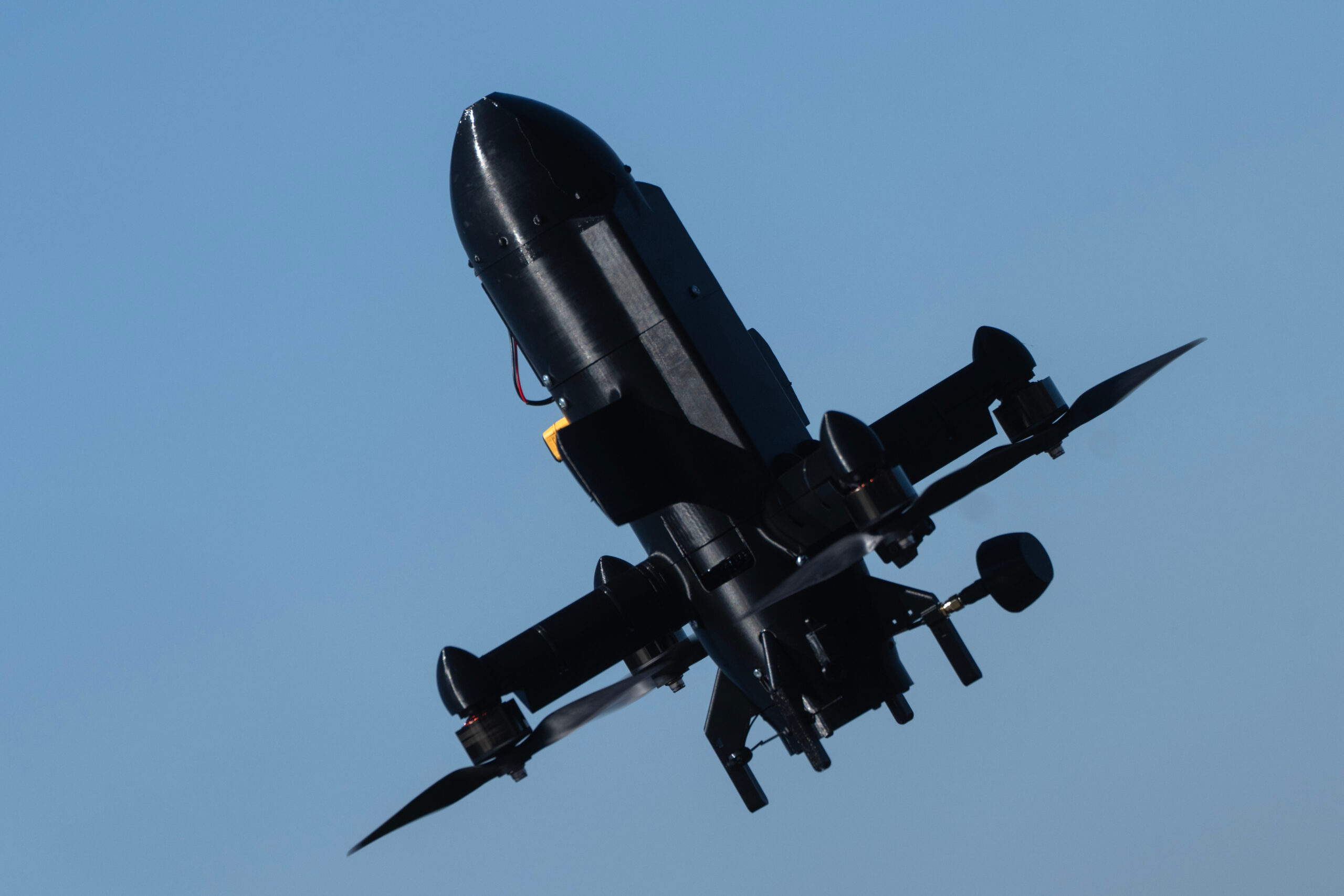
At the center of this cooperation are Ukrainian interceptor drones developed in response to the large-scale use of Shahed-type systems. These platforms cost between $800 and $3,000 per unit, according to Kyiv, and are often built through rapid manufacturing processes, including 3D printing, and are optimized for a task that Gulf defenses now urgently need to solve: how to defeat large numbers of relatively cheap incoming drones without consuming scarce and costly surface-to-air missiles. Zelensky stated in late March that Ukraine could supply up to 1,000 interceptor drones per day to international partners.
For Riyadh, Abu Dhabi, and Doha, the attraction of Ukrainian cooperation is therefore twofold. First, it offers access to a lower-cost interception layer that can sit beneath Patriot, THAAD, or KM-SAM systems and preserve them for more sophisticated threats. Second, it offers a transfer of adaptive know-how from one of the few militaries in the world that has had to improvise an integrated response to sustained drone warfare in real time.
Ukrainian forces have spent years learning how to fuse radar coverage, electronic warfare, decentralized response chains, and rapid battlefield innovation into an evolving air-defense ecosystem. Gulf militaries, by contrast, have often had access to advanced imported systems without necessarily having undergone the same level of improvisational stress testing. In that sense, Ukraine is not simply exporting hardware. It is exporting methods of adaptation: how to organize layered defense under pressure, how to conserve expensive interceptors, how to assign different classes of threat to different classes of response, and how to shorten the loop between operational feedback and procurement decisions.
This marks an important conceptual shift in Gulf security cooperation. For decades, defense diversification was mainly understood as a question of supplier diversity. The Ukrainian case suggests that it is now also becoming a question of learning diversity. On the operational side, Ukrainian sources confirmed that, as of mid-March, 201 Ukrainian military specialists were already deployed across the UAE, Saudi Arabia, and Qatar, with an additional 34 en route to the region. These personnel are tasked with sharing battlefield experience gained in countering Russian drone attacks.
It is also one reason why Ukrainian cooperation fits so well with the broader Gulf trajectory toward partial localization. Co-production of interceptor drones, local assembly, maintenance support, and training pipelines all offer a more politically and financially sustainable path than relying exclusively on imported missile stocks. In this sense, Ukraine complements existing systems by filling the lower-cost, rapidly scalable counter-unmanned aerial system layer that the recent war has shown to be indispensable.
U.K.: Scalable Defense Layer
The United Kingdom’s role in the Gulf’s evolving air-defense landscape is somewhat different from that of either South Korea or Ukraine. Britain does not offer a wholesale alternative architecture nor does it bring the same wartime improvisational cachet as Kyiv. Its importance lies instead in its ability to bridge high-end Western air-defense integration with modular, more rapidly deployable, and increasingly lower-cost counterdrone systems.
From the early phase of the Iranian escalation, British assets were moved to reinforce Gulf airspace security. Reports indicate that the U.K. bolstered support to Qatar – hosting the U.K.-Qatari Joint Typhoon 12 Squadron – and later expanded deployments across other Gulf states, including Saudi Arabia, Bahrain, and Kuwait. These moves were part of a wider attempt to reinforce deterrence and shore up confidence among Gulf partners without fundamentally altering the U.S.-led strategic architecture.
The most consequential step came with the reported deployment of the Sky Sabre air-defense system to Saudi Arabia, likely at or near King Fahd Air Base, operated by the 16th Regiment Royal Artillery. Sky Sabre is built around the Common Anti-Air Modular Missile and is designed to counter aircraft, drones, and certain precision-guided munitions at medium range. Defense reports indicate that the system, described as Britain’s “most modern” short-range or local-area air-defense system, was moved to the kingdom in early April.
Its value in the Gulf context is straightforward. Sky Sabre cannot replicate the THAAD or Patriot role against high-end ballistic threats. Instead, due to its maximum range of around 15 miles and capability to engage 24 projectiles at the same time, it adds a more affordable and flexible engagement layer, reducing the burden on more expensive U.S. interceptors. In a threat environment increasingly shaped by mixed salvos and one-way attack drones, this niche is becoming strategically central.
London is also beginning to tie this operational role to a more agile industrial offer. On April 10, the U.K. Ministry of Defense announced that the artificial intelligence startup Cambridge Aerospace would supply “hundreds” of new interceptor missiles and launchers to Gulf partners, with first deliveries beginning in May and follow-on shipments over the next six months. The system – Skyhammer – is designed specifically to counter Shahed-style one-way attack drones. Additional reports place its range at over 18 miles, suggesting it is intended for point defense against low-cost, high-volume threats. The contract also covers integration, technical support, and end-user training.
This approach is now extending beyond immediate deployments. During an April visit to Kuwait, U.K. Deputy Prime Minister David Lammy announced a new phase of bilateral defense cooperation focused on joint drone development and advanced military technologies, building on the earlier deployment of the U.K.’s Rapid Sentry air defense system following Iranian drone strikes. For Kuwait, this marks a shift from procurement toward co-development and integration of unmanned capabilities in response to evolving missile and drone threats. This is strategically significant for two reasons. First, it shows that Britain is trying to position itself not just as a provider of traditional air-defense systems but as a supplier of the next generation of lower-cost counterdrone interceptors. Second, it gives Gulf states access to a Western partner that can still plug into existing alliance structures while offering more affordable and scalable solutions than legacy missile-defense systems alone.
Notably, with the partial exception of Italy – engaged in discussions over the potential provision of the SAMP/T system – the U.K. has emerged as the most responsive European defense partner, moving rapidly to reinforce Gulf air defenses during the postcrisis period.
The views represented herein are the author's or speaker's own and do not necessarily reflect the views of AGSI, its staff, or its board of directors.
In the future landscape of Gulf security, the United States may remain an essential arms supplier but wield less influence over force structure and military doctrine.
As the Gulf states pursue defense localization and seek to reduce dependence on the United States and Europe, Ankara offers cost-effective technology and a model of how to build capacity.
Moscow relied on Iranian drones in Ukraine. Now that the situation is reversed, will Russia help Iran rebuild its deterrence after Israel’s deep strikes?
As Tehran and Moscow deepen their nuclear and space technology collaboration, concerns over dual-use applications and regional security implications grow.