After the Hormuz Crisis, No Return to the Status Quo
The vulnerability of the world's most important energy chokepoint has been laid bare, setting in motion changes that are likely to outlast the conflict.
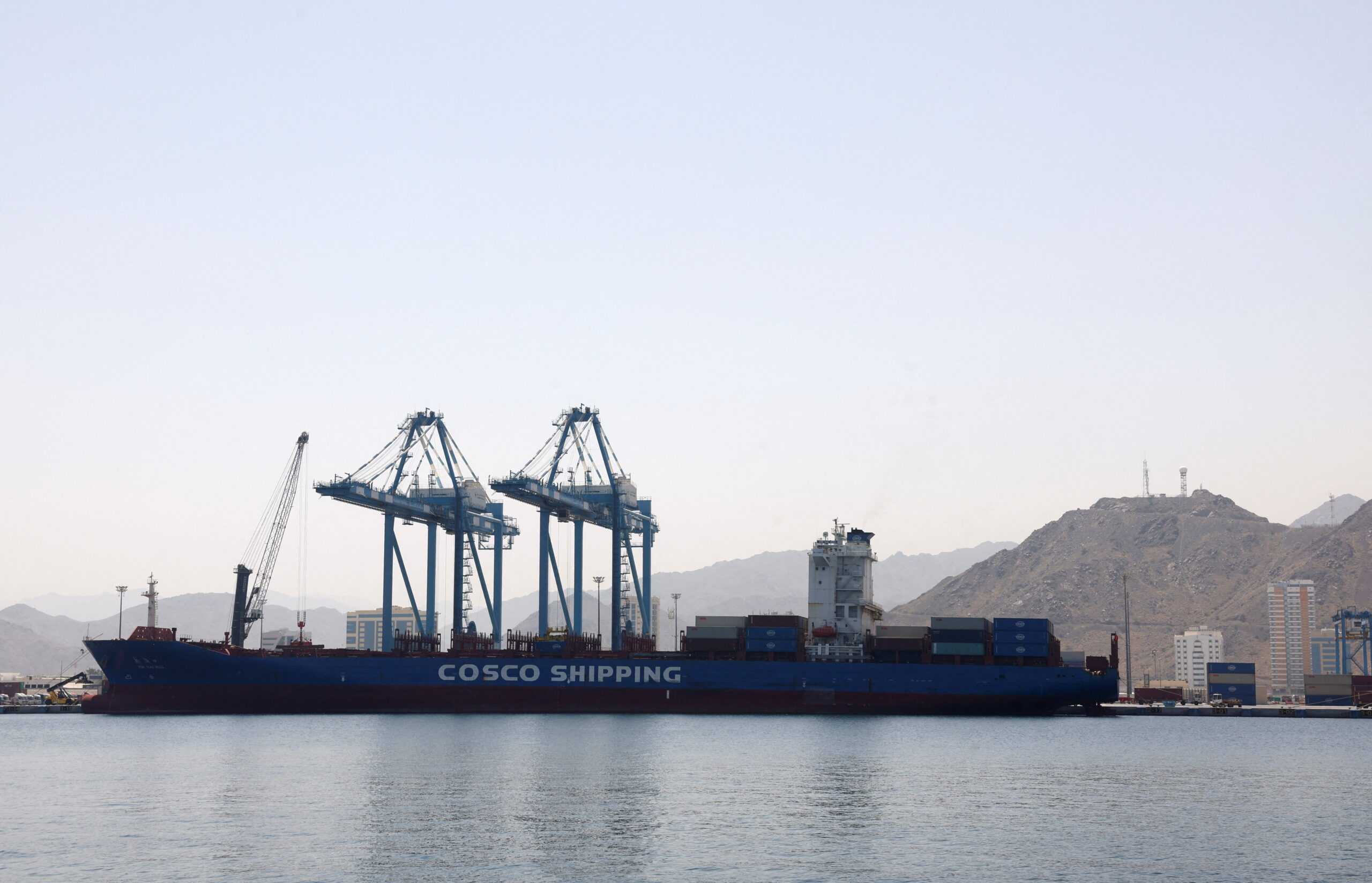
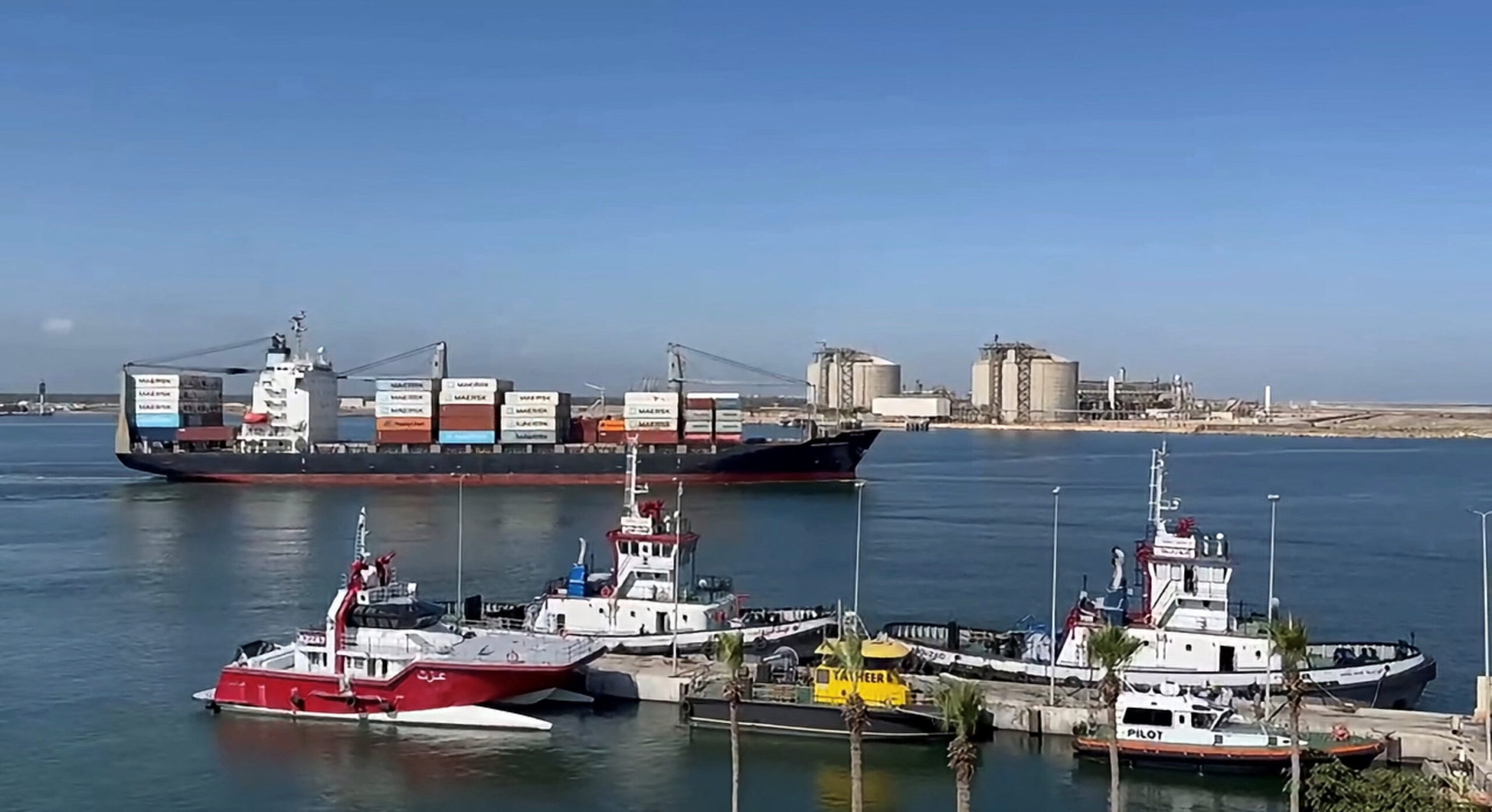
A Xin Hai Kou container ship docked at the Port of Fujairah, as the U.S.-Israel conflict with Iran limits marine traffic in the Strait of Hormuz, in Fujairah, United Arab Emirates, May 6. (REUTERS/Amr Alfiky)
The preliminary agreement reached by the United States and Iran may have brought an end to hostilities and tentatively reopened the Strait of Hormuz, but few participants at the Arab Gulf States Institute’s June 8 Petro Diplomacy conference believed any such agreement would return the region to business as usual. Instead, the consensus was that the conflict had fundamentally changed how governments, companies, and investors view energy security. Even if tanker traffic returns to normal, the vulnerability of the world’s most important energy chokepoint has been laid bare, setting in motion changes that are likely to outlast the conflict.
The conference, held before Washington and Tehran announced their June 17 memorandum of understanding, was dominated by the unprecedented disruption caused by the effective closure of the Strait of Hormuz. The interruption of Gulf exports removed more than 1 billion barrels of crude oil and around 20% of global liquefied natural gas supplies from the market, prompting the International Energy Agency to describe it as the biggest energy crisis in history.
Although the fighting has subsided, participants argued that the geopolitical questions exposed by the conflict remain unresolved. Iran continues to insist that it has sole authority to determine the routes tankers may use through the strait and has held discussions with Oman, whose territorial waters also encompass part of the strait, on its future management. Iran’s assertion suggests that freedom of navigation could remain a source of tension.
More fundamentally, the crisis exposed the fragility of a chokepoint through which roughly one-fifth of global oil supplies and all LNG exports from Qatar and the United Arab Emirates normally pass. The lesson, speakers agreed, was not simply that energy markets remain vulnerable to geopolitical shocks but that governments can no longer afford to rely so heavily on a single strategic corridor.
For Majid Jafar, CEO of Crescent Petroleum, the crisis was deeply personal. Speaking during a fireside chat, he described the challenge of protecting his family in the UAE, which came under repeated Iranian missile and drone attacks, while ensuring the safety of company employees in Iraq. “We talk a lot about systems, supply chains, markets, and security,” he said. “But when something like this hits, it hits people first; it hits families first; it hits communities first; and then you have the impact on the economies.”
Jaafar reminded participants that before the conflict around 20 million barrels per day of crude oil and petroleum products transited the Strait of Hormuz, with more than 80% destined for Asia, “the engine of the global economy.” Yet oil is only part of the story. The waterway also carries up to one-third of the world’s fertilizer trade, around 40% of global helium supplies used in medical equipment and semiconductor manufacturing, and a wide range of industrial feedstocks. “Only when it happened did we appreciate global dependence on this critical chokepoint,” he said. “When it’s blocked, it’s not just energy markets that are impacted; it’s the food on your table, it’s the planes in the sky, it’s the chips in your phone.”
The economic costs continue to mount. Jaafar estimated that direct damage to Gulf energy infrastructure exceeded $60 billion, while lost export revenue and disrupted trade had already surpassed $150 billion.
Yet despite the scale of the disruption, oil prices rose far less than many analysts had feared. Speakers attributed that resilience to relatively healthy market fundamentals before the conflict began, lower-than-expected demand growth, and the availability of inventories that helped cushion the initial shock. Several participants underscored that those inventories, representing a mix of commercial, strategic, and precautionary stockpiles, are now largely depleted.
Timothy Hess, product manager for the U.S. Energy Information Administration’s “Short-Term Energy Outlook,” estimated that between April and May around 10 mb/d to 11 mb/d of crude oil and another 3 mb/d of liquids were removed from the market, while global inventories were being drawn down at a rate of 8 mb/d to 9 mb/d. Although prices briefly climbed above $100 per barrel, they failed to reach the levels many analysts had anticipated because demand weakened more quickly than expected. Chinese imports declined sharply, while several Asian governments introduced conservation measures, reducing global demand by an estimated 1.5 mb/d during the first three months of the conflict.
Mason Hamilton, vice president of economics and research at the American Petroleum Institute, sought to put the disruption into perspective. The loss of up to 16 mb/d of crude and liquids exceeded total U.S. oil production, while the loss of more than 10 billion cubic feet per day of LNG was equivalent to China’s daily gas imports. Even after emergency stock releases and increased exports through pipelines bypassing the Strait of Hormuz, the market still faced a supply shortfall of between 11 mb/d and 13 mb/d. “We’re able to quantify all the supply impacts,” Hamilton observed. “What we can’t quantify right now is the reduction in demand, and that’s what’s really right now hanging over us as like a big black box.”
Phillip Cornell, principal at Economist Impact, argued that China unexpectedly became one of the principal stabilizing forces in the market. The collapse in Chinese imports accounted for around three-quarters of the global decline in demand, creating “an enormous buffer” that prevented an even more severe supply shortage. Elsewhere in Asia, however, the consequences were immediate. Shortages of liquefied petroleum gas affected households in countries such as India, fertilizer disruptions threatened food production, and governments were forced to increase subsidies to shield consumers from soaring prices.
The market ultimately proved more resilient than many analysts expected. The conference’s broader conclusion, however, was that governments are unlikely to draw comfort from that outcome. Instead, the Strait of Hormuz crisis has reinforced the determination of producers and consumers to reduce their dependence on vulnerable supply routes through greater investment in alternative pipelines, strategic storage, and more resilient energy infrastructure.
As Jaafar concluded, “The next great investment cycle will be driven not only by new supply but by resilience.” If that proves correct, the most enduring legacy of the Strait of Hormuz crisis may not be the barrels that were lost during the conflict but the infrastructure that is built because of it.
The views represented herein are the author's or speaker's own and do not necessarily reflect the views of AGSI, its staff, or its board of directors.
The Iran war has triggered what energy experts have described as the world’s worst energy crisis. And what is certain is that the prewar energy order will be redrawn.
Saudi Arabia’s ability to maintain its reputation as a reliable supplier in the months ahead will depend on how quickly it can repair damaged assets and keep several imperfect routes operating at the same time.
Egypt has become the indispensable transit state linking Saudi Arabia's Red Sea infrastructure with global markets. But that strategic importance may also have exposed it to the same risks facing Gulf producers.
The Iran war has triggered what energy experts have described as the world’s worst energy crisis. And what is certain is that the prewar energy order will be redrawn.