The battle for Aleppo could be a turning point in Syria’s civil war — not simply because it may prove a decisive moment in the struggle between the government and the opposition, but because the leadership of the rebel forces is at stake. Rebel groups have struggled to reorganize and recover from the heavy blows dealt them by...
The battle for Aleppo could be a turning point in Syria’s civil war — not simply because it may prove a decisive moment in the struggle between the government and the opposition, but because the leadership of the rebel forces is at stake.
Rebel groups have struggled to reorganize and recover from the heavy blows dealt them by the joint Russian and Iranian military surge that began last fall and has shifted the military momentum back toward the government. Yet the already powerful Qaeda franchise Jabhat al-Nusra (or Nusra Front) has now moved to ensure its indispensability and consolidate its influence over more moderate opposition militias.
The Nusra Front fighters have been key players in a loose alliance in the crucial struggle over Aleppo that has recently produced significant rebel victories. Nusra is seeking to build on this success with a deft tactical rebranding: On July 28, its leader, Abu Mohammed al-Jolani, announced that the organization was breaking ties with Al Qaeda and forming a new organization, Jabhat Fatah al-Sham (or Levant Conquest Front).
In practice, this rebranding is virtually meaningless. Mr. Jolani left no doubt that his group, under whatever name, retains its Qaeda-inspired ideology: His announcement was peppered with effusive praise for Al Qaeda, its current leadership and Osama bin Laden, and he promised no deviation from standard existing doctrines.
Analysts believe that the timing of Mr. Jolani’s announcement was linked to American and Russian air attacks — and especially a proposed but as yet unrealized joint air campaign — against his group. (Russia has already started targeting it.) For their part, Al Qaeda’s leaders said they approved the supposed split, strongly implying its tactical purpose.
Timing aside, the move is not merely defensive; it is a bid for influence, even control. As Nusra increased its influence among armed Syrian rebel factions in the wake of the Russian intervention, it sought to position itself as first among equals leading a broad opposition coalition.
Efforts to secure greater unity earlier this year failed because other rebel groups, most notably the powerful Ahrar al-Sham faction, said they could not consider a formal alliance with any organization affiliated with Al Qaeda. Countries like Turkey, Saudi Arabia and especially Qatar, which back other Islamist rebel groups, reportedly told Nusra that, among other conditions, it must drop its Qaeda affiliation if it sought closer ties to their Syrian allies.
Nusra’s long-term game plan, in which this move is an “advanced stage,” most likely anticipates the establishment of local rule in parts of Syria — particularly as the Islamic State’s “caliphate” will probably be unsustainable in the face of universal opposition. Nusra would seek to be the decisive power in any new “Islamic emirate” established in rebel-held areas of Syria.
If, in effect, Al Qaeda in Syria is moving from strength to strength, this is a profound challenge for American policy in Syria. Some observers fear that, unchecked, the rebranded group could use the Syrian conflict to construct the most powerful terrorist base since Al Qaeda lost its Afghan strongholds following the post-Sept. 11 downfall of the Taliban in Afghanistan. The conundrum for American policy makers is how to block the creeping ascendancy of Qaeda-linked rebels in the armed coalition fighting the dictatorship of President Bashar al-Assad.
The considerations behind American military action against Fatah al-Sham are complex and delicate. If the United States coordinates airstrikes with Russia, as Secretary of State John Kerry proposes, Charles Lister of the Middle East Institute warns that such action will “only serve to drive more young Syrians” into the arms of Fatah al-Sham and undermine moderate forces.
The key for the United States is to find a way to halt and ultimately reverse the influence of Al Qaeda, under whatever name, in the Syrian opposition. The first course of action should be to put the new group’s professed separation from Al Qaeda to the test.
The United States should lay out a series of benchmarks — building on the position shared by both Washington and the other Syrian rebel groups that Fatah al-Sham will be judged by deeds, not words — that would indicate a real break with Al Qaeda, rather than a rhetorical and tactical contrivance. These could include the renunciation of “takfiri” ideology (which brands other, non-jihadist Muslims as death-deserving apostates), the repudiation of Al Qaeda’s goals and methods, the abandonment of terrorism and a commitment to a nonsectarian future for Syria.
A precedent for this policy exists in the uneasy but apparently sustainable modus vivendi the United States has developed toward Hezbollah in Lebanon. The radical Shiite group is on the State Department-designated list of foreign terrorist groups, and it is illegal for Americans to provide it with any support. But the United States is not in an open conflict with Hezbollah, despite the group’s sending thousands of fighters to support the Assad government in Syria.
The benchmarks would operate in the full understanding that the former Nusra leaders are unlikely, and probably unable, to move toward such a moderate stance. The indications are that Mr. Jolani and his followers will remain committed followers of Al Qaeda and its broader agenda. But it would be essential to demonstrate their noncompliance to the other Syrian opposition groups in order to counter the extremists’ maneuver.
Al Qaeda in Syria emerged as a leading player in the Syrian opposition because it proved itself one of the strongest military forces in the resistance against the brutal offensives of the Assad government. But Nusra’s rise also owed something to the absence of effective international and American engagement with the moderate rebel groups. If the United States wants to ensure that terrorists are not the primary beneficiaries of Syria’s collapse, it should begin by calling their bluff and exposing them as unreconstructed fanatics.
This article was originally published by The New York Times.
The views represented herein are the author's or speaker's own and do not necessarily reflect the views of AGSI, its staff, or its board of directors.
U.S. force projection in the Gulf is increasingly relying on artificial intelligence, unmanned platforms, and space technology, using these systems to augment existing military infrastructure.
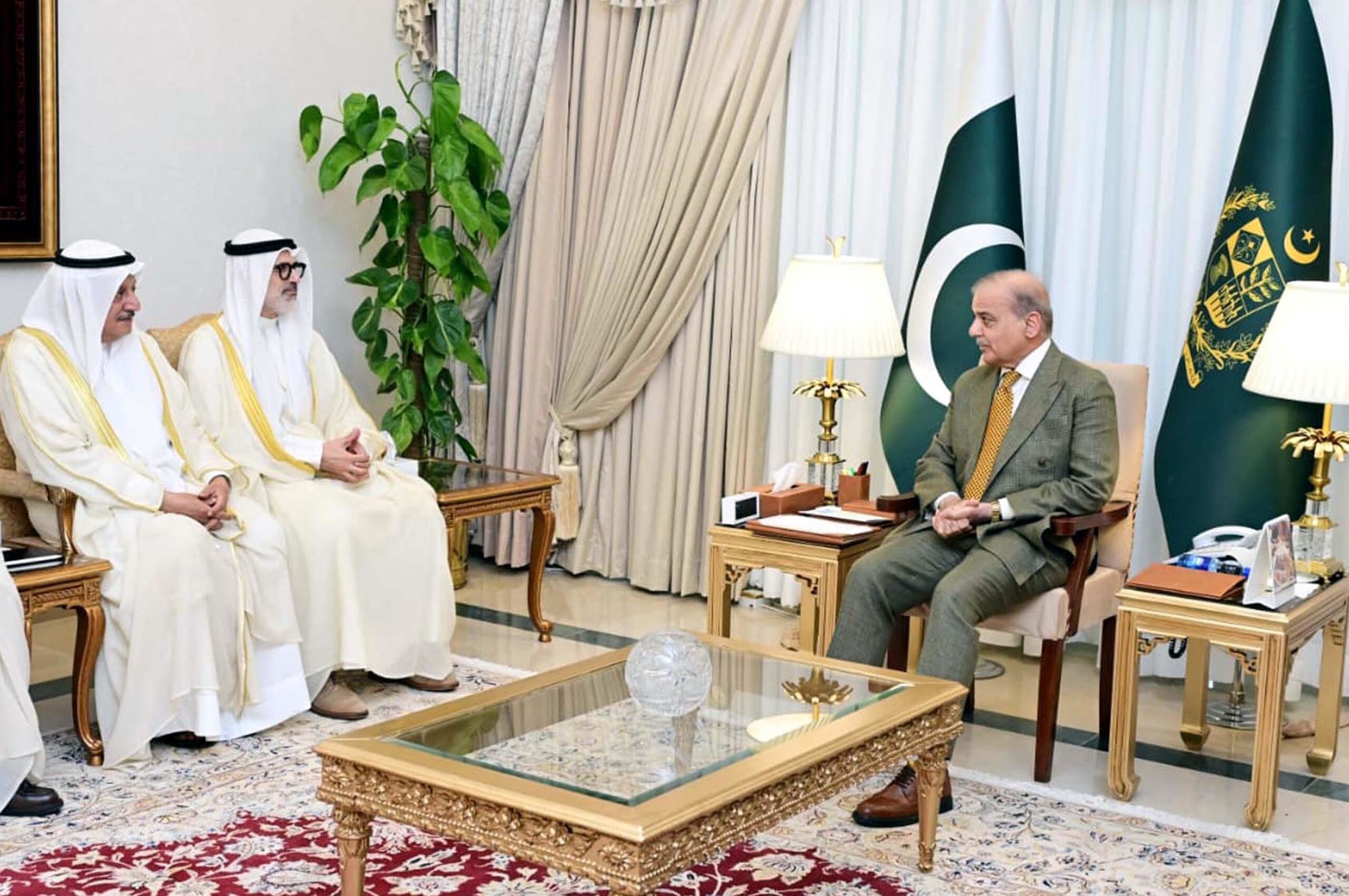
The significance of Kuwait’s defense pact with Pakistan lies less in any immediate military transformation than in what it reveals about the evolving security landscape of the Gulf.
President Trump has led the United States into an impossible dilemma in which resuming and intensifying the war presents one set of alarming consequences while ending it under current circumstances offers at least as many disasters for Washington.
The Trump administration has positioned the United States at a crossroads between a new regime of containment against Iran or a historic drawdown of U.S. influence in the Gulf and broader Middle East.
Riyadh and Abu Dhabi urged President Trump not to attack Iran, but now that the war is into its second month, leaving the current situation in place would be an unthinkable fiasco for them.
Though they were unsuccessful in preventing the current conflict, and, as expected, have been dragged into the U.S.-Israeli confrontation with Iran, Gulf Arab countries remain crucial to hopes for limiting the war and bringing it to a quick resolution.








Aug 18, 2016
Calling Al Qaeda’s Bluff
The battle for Aleppo could be a turning point in Syria’s civil war — not simply because it may prove a decisive moment in the struggle between the government and the opposition, but because the leadership of the rebel forces is at stake. Rebel groups have struggled to reorganize and recover from the heavy blows dealt them by...
9 min read