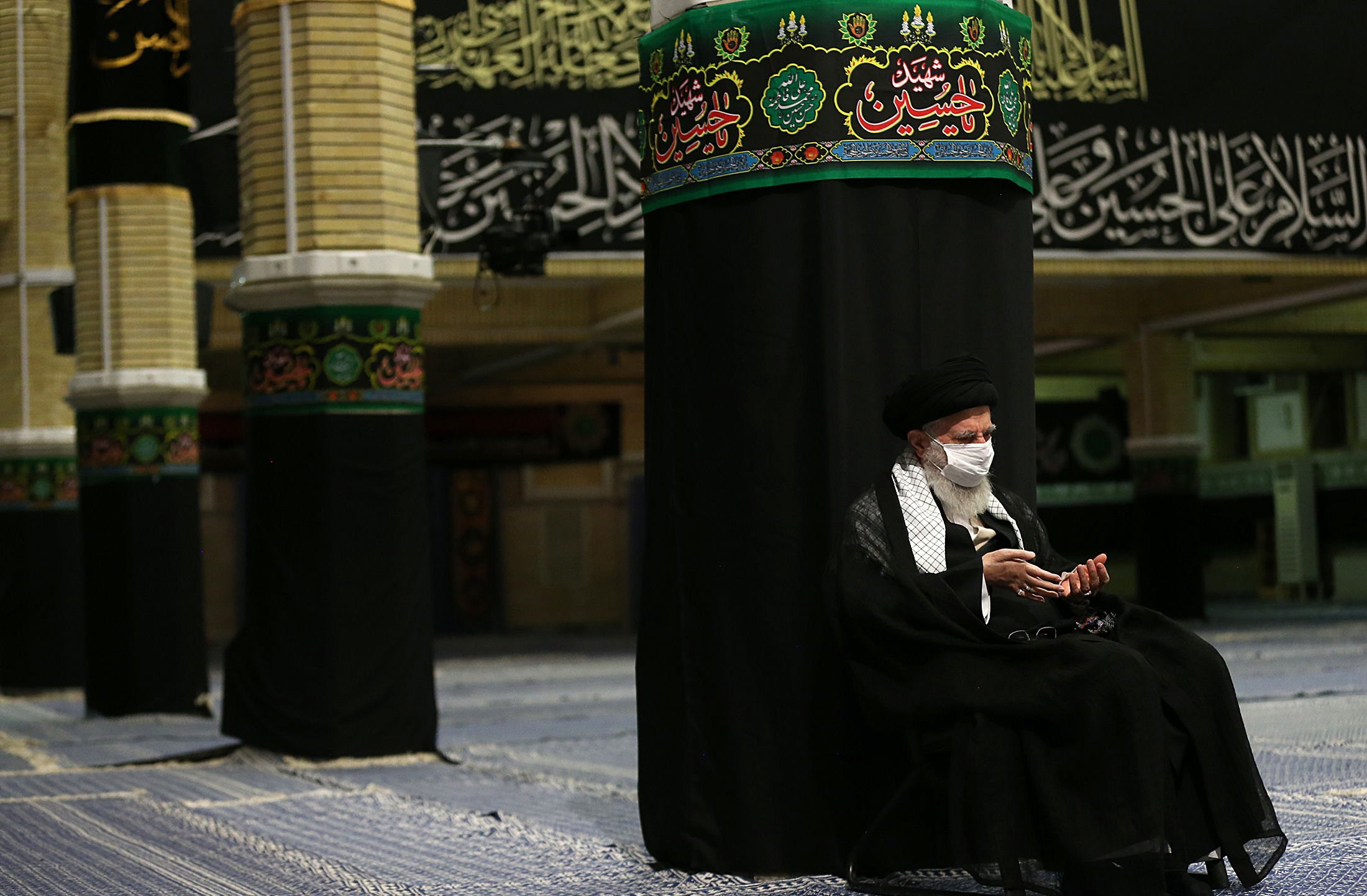
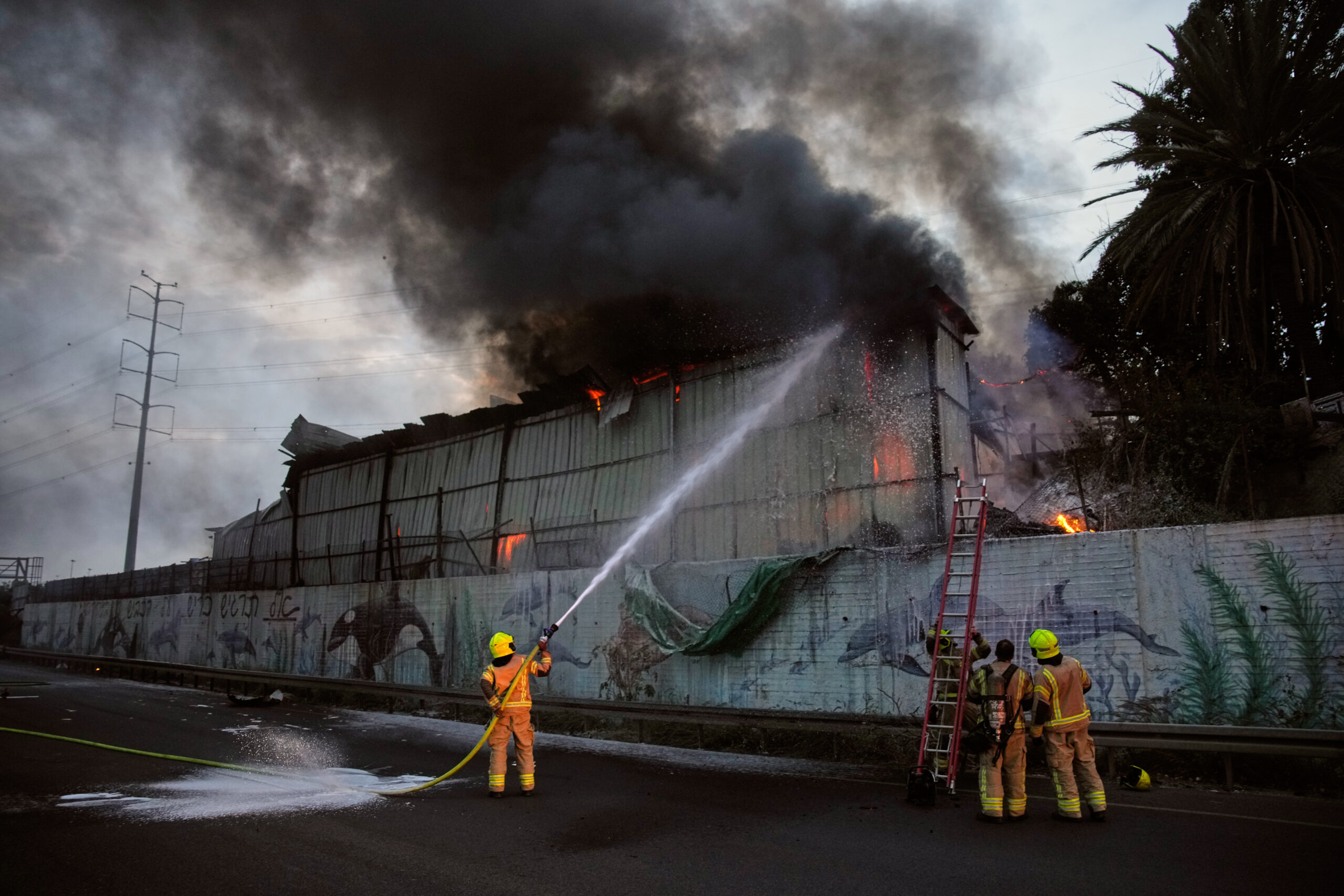
Iran'sSupreme Leader Ayatollah Ali Khamenei wears a protective face mask to help prevent spread of the coronavirus as he listens to a reciting of the Quran and a speaker at the empty mosque in his residence compound in Tehran, Iran, Aug. 26. (Office of the Iranian Supreme Leader via AP)
With half a million confirmed infections and 27,419 fatalities (although the real death toll may be twice as high), Iran is one of the countries hardest hit by the coronavirus pandemic. Within Iran, the political and religious elites of the Islamic Republic feature prominently among the victims, which raises the possibility of Supreme Leader Ayatollah Ali Khamenei’s exposure to the coronavirus. What happens in the case of incapacity or passing of Khamenei? How is the factional struggle for succession after Khamenei likely to play out, and how will it affect the trajectory of U.S.-Iranian relations?
In theory, the Islamic Republic can have a well-ordered transition as Article 111 of the Constitution of the Islamic Republic addresses the succession problem at some length: “In the event of the death, or resignation or dismissal of the leader,” the 88-member large Assembly of Experts appoints the new supreme leader based on “essential qualifications” described in Article 109 of the constitution. Until the appointment, a council consisting of the president, the head of the judiciary, and a clerical member of the Guardian Council temporarily takes over all the duties of the supreme leader.
But if history is any guide, succession after Khamenei may in practice play out very differently. Khamenei himself broke all the rules to seize leadership after Grand Ayatollah Ruhollah Khomeini’s passing in 1989: For years, Khamenei and his allies had conspired against Grand Ayatollah Hossein Ali Montazeri, Khomeini’s successor designate, who belonged to a rival faction and presented a challenge to Khomeini’s authority. Montazeri was finally dismissed in March 1989, and Khomeini passed away that June, clearing the way for Khamenei’s emergence as a last-moment leadership candidate. As a junior cleric, Khamenei lacked “essential qualifications” for leadership, but, supported by Ali Akbar Hashemi Rafsanjani, then parliamentary speaker, the politically savvy cleric was elected “temporary leader,” a position for which there was no constitutional provision. As temporary leader, Khamenei retroactively changed the constitutional “essential qualifications” for leadership to fit his own in an attempt to create a semblance of legality.
There is no reason to expect a different course of action in the struggle over succession after Khamenei. Fearing a challenge to his authority and repetition of the Montazeri experience, Khamenei has no successor designate and the chain of command remains obscure: When Khamenei underwent surgery in September 2014, the head of his medical team incredibly claimed the supreme leader had received only “local anesthetics.” Had he gone under general anesthesia, the regime would have been forced to explain the chain of command while Khamenei was incapacitated. By claiming only local anesthesia, the regime managed to keep secret the chain of command, if there ever was one.
President Hassan Rouhani is doubtlessly trying to shape succession after Khamenei. He may have inherited the late Rafsanjani’s political legacy, ambitions, and network and may even perceive himself as a candidate for supreme leader. But this time around, Rouhani and other clerical leadership hopefuls will face competition from the Islamic Revolutionary Guard Corps.
In the face of decadeslong internal demand for political and economic reforms, which Khamenei is neither capable of nor willing to deliver, and external economic sanctions imposed by the United States, Khamenei has made himself increasingly dependent on the IRGC. But each time he turns to the IRGC commanders to suppress popular demands and anti-regime protests or protect him against the United States, the IRGC demands economic and political concessions, which in turn have made it a formidable economic and political powerhouse. Therefore, in contrast to the 1989 succession, which was decided by the clerical elites, the IRGC is likely to emerge as kingmaker in the succession after Khamenei.
The Iranian public is more concerned about the government’s mismanagement of the economy, failure to protect them in the face of the disastrous coronavirus pandemic, and incapacity to neutralize the impact of the U.S.-imposed sanctions. Accordingly, those who may have leadership aspirations, including Rouhani, Chief Justice Ebrahim Raisi, Hassan Khomeini (grandson of Ruhollah Khomeini), and Mojtaba Khamenei (son of Ali Khamenei), alternate between aligning themselves with or blaming each other and the IRGC for Iran’s chronic problems. But none of the leadership hopefuls can seize power in Iran without IRGC support, and any future leader of the Islamic Republic will, for all practical purposes, be beholden to the IRGC.
The IRGC will also most likely decide the fundamental tenet of Iran’s behavior toward the United States. Regardless of the outcome of the November U.S. presidential election, Washington and Tehran will remain at odds over the IRGC’s vision for the Islamic Republic as a regional hegemon. In this regard, there will most likely be a greater degree of continuity than change in Iran’s behavior.
Notwithstanding the pandemic, those engaged in formulating U.S. policy toward the Islamic Republic should look beyond Khamenei, shift the focus away from potential individual leadership candidates, and pay more attention to the likely transformation of the Islamic Republic into a military-style dictatorship, albeit one with a clerical figurehead.
The views represented herein are the author's or speaker's own and do not necessarily reflect the views of AGSI, its staff, or its board of directors.
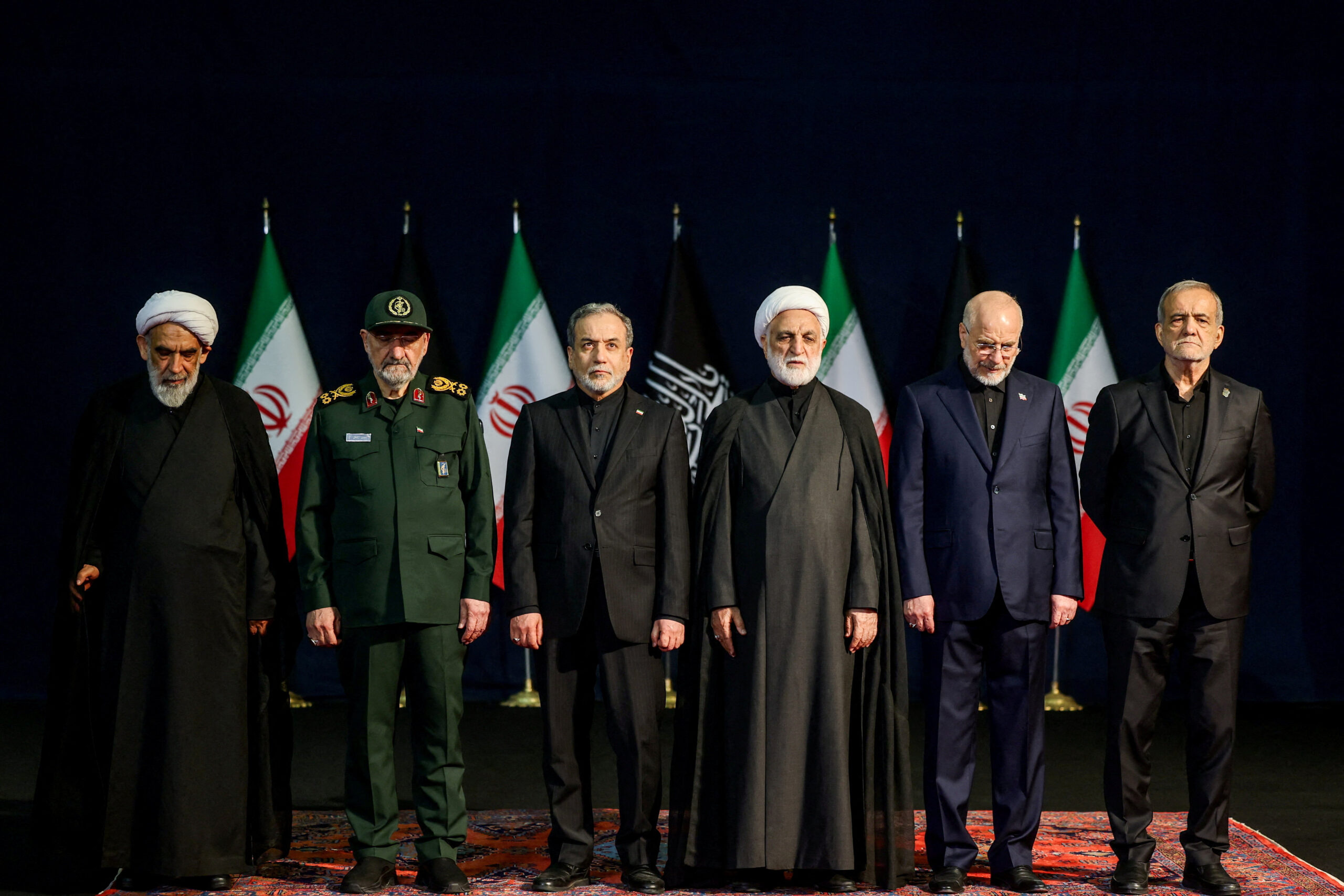
After U.S.-Israeli strikes killed Supreme Leader Ayatollah Ali Khamenei on February 28, Iran’s collective leadership has concluded that the best defense is a good offense.
Wartime pressure has temporarily aligned the leadership’s overriding interest in regime survival, even as its members continue to differ over the costs, methods, and ultimate objectives of the war.
While there is historical precedent for collective leadership in Iran, today’s leadership includes representatives of the IRGC and regular military – a reflection of the IRGC’s expanding role and the necessities of governing under wartime conditions.