Arab Gulf States Wary of Iran’s Role in the Battle for Mosul
As the battle to drive the Islamic State in Iraq and the Levant out of Mosul, the second largest city in Iraq, is waged by Iraqi government troops, supported by an array of Kurdish, Shia, and Sunni forces, concerns about growing Iranian influence in Iraq are rising. The countries of the Gulf Cooperation Council, Turkey,...
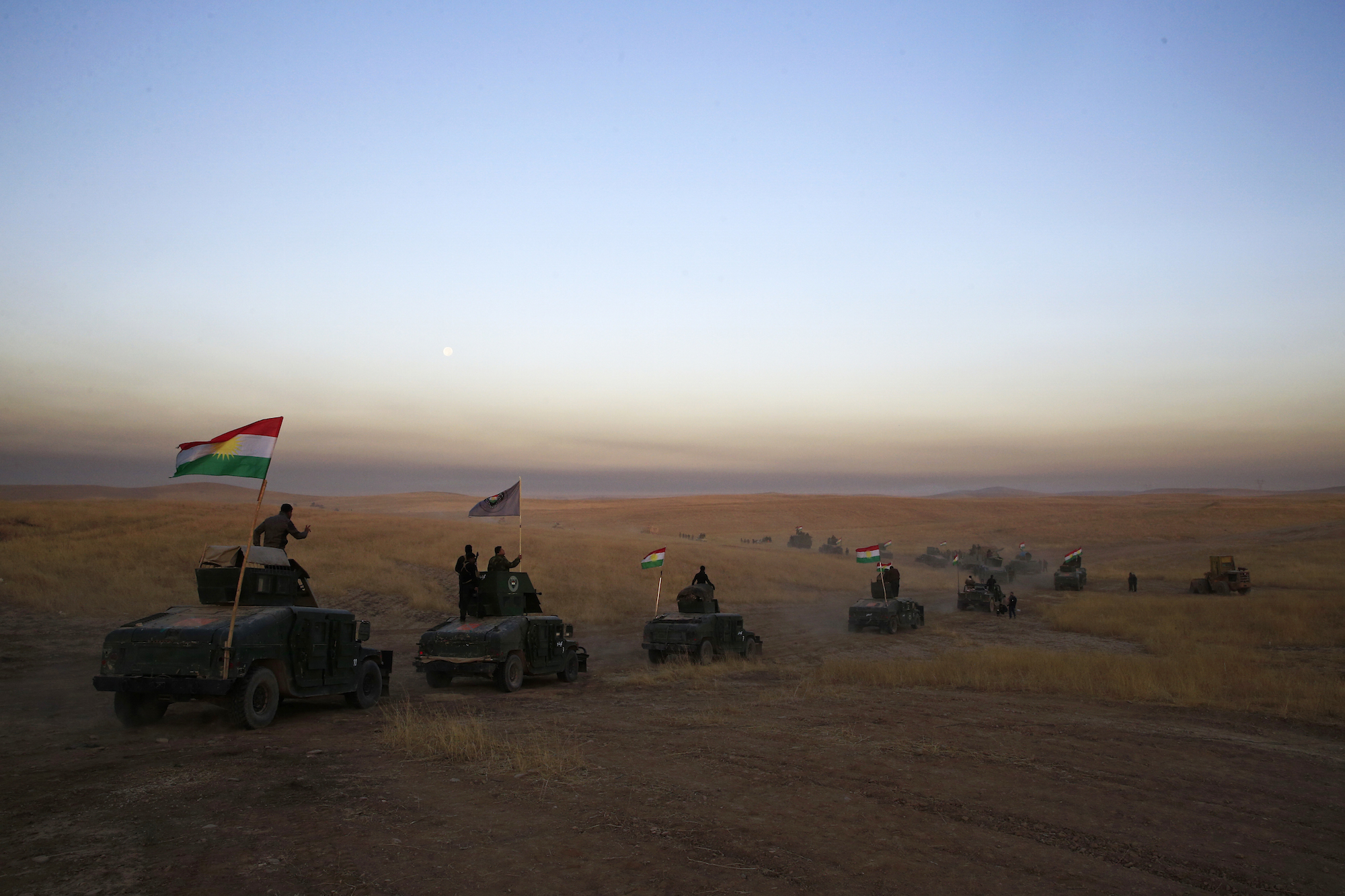
A Peshmerga convoy drives towards a frontline on Monday, Oct. 17, 2016. The Iraqi military and the country’s Kurdish forces say they launched operations to the south and east of militant-held Mosul early Monday morning.
(AP Photo/Bram Janssen)
As the battle to drive the Islamic State in Iraq and the Levant out of Mosul, the second largest city in Iraq, is waged by Iraqi government troops, supported by an array of Kurdish, Shia, and Sunni forces, concerns about growing Iranian influence in Iraq are rising. The countries of the Gulf Cooperation Council, Turkey, and the Kurdistan Regional Government are concerned about the role that the Iranian-backed Shia mobilization militias are playing in the campaign. The GCC states, Turkey, and the KRG are all supportive of eliminating ISIL from the city, but worry that the expansion of influence by Iranian-backed Shia militias could pose a serious strategic threat.
Last week, Mosul dominated talks between Saudi Foreign Minister Adel al-Jubeir and his Turkish counterpart, Mevlut Cavusoglu, in Riyadh. Both officials expressed concerns about the role of Shia militias in the campaign to liberate the city. Jubeir warned of a potential “catastrophe” should these militias enter Mosul. “This sectarian, Iran-linked militia has caused problems and committed crimes in different parts of Iraq. If it enters Mosul, it could lead to catastrophe,” Jubeir said. “If Iraq wants to confront the terrorism of [ISIL] and avert bloodshed and sectarianism, it would be better to use its national army and elements not associated with Iran and not known for their sectarianism and extremism,” he added.
Unlike Saudi Arabia, Turkey has sought a direct role in the Mosul campaign. With the consent of the KRG, Ankara has deployed hundreds of troops near the town of Bashiqa in Nineveh province. But the Iraqi government has ruled out direct Turkish military participation in the offensive. Turkish President Recep Tayyip Erdogan said Ankara would not remain silent about Mosul. “We will be in the operation and we will be at the table. Our brothers are there and our relatives are there. It is out of the question that we are not involved,” he said in a televised speech on October 17.
Saudi Arabia and Turkey consider themselves sectarian protectors of the Sunnis in Mosul and other parts of Iraq, and they are keenly aware that Nineveh province is a crucial strategic area for the possible expansion of Iranian influence in Iraq. Indeed, Iran appears to be actively participating in efforts to liberate the city under the guidance of Major General Qassim Suleimani, the head of the Islamic Revolutionary Guard Corps international expeditionary wing, the Quds Force. In an image posted on the Farsi Ahlubait website, Suleimani appears to be on the outskirts of Mosul, planning the offensive alongside some well-known commanders of the Badr Corps Shia militia.
According to the Guardian, Iran is seeking to secure a land route that would link Tehran to the Mediterranean Sea, cutting through the Sunni heartland of Iraq in Salahuddin province and west of Mosul in Nineveh. Were such a corridor ever established, it would pose a serious strategic threat to many Sunni Arab countries in the Middle East and further consolidate Tehran’s foothold in the Levant. Local Sunni leaders in Iraq also believe that the determination of Shia militias to take part in Mosul operations is part of Iran’s grand strategy to expand its influence in the Sunni Arab heartland. A former governor of Nineveh, Atheel al-Nujaifi, said in August that “Iran, via proxy militias, wishes to extend its influence across Iraq encompassing strategic swathes of land in Mosul, Irbil and Dahuk.”
The future of Mosul after its liberation from ISIL is also a major concern for the KRG. Kurdish military commanders have long warned about the dangers that could be posed by Shia militias once Mosul is retaken, believing that Kurdish and Shia forces could be the main actors in the next internal conflict in Iraq. In the past two years, Kurdish peshmerga forces and Iraqi Shia militias have clashed several times in the town of Tuz Khurmatu, south of Kirkuk.
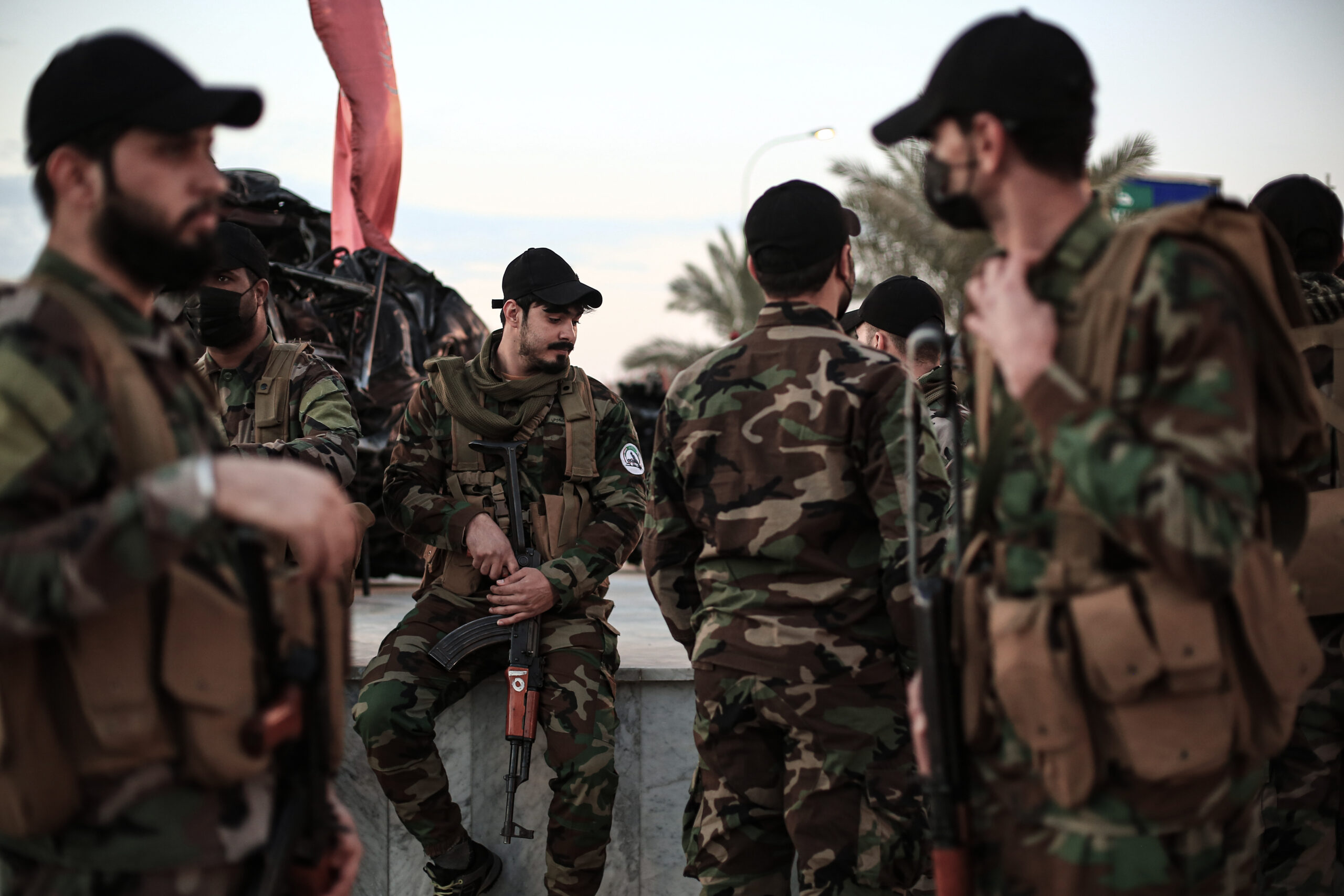
The Shia-led government in Baghdad insists that only members of the Iraqi security forces and Sunni tribal groups will enter Mosul to eject ISIL. But news reports and other independent accounts suggest otherwise. Just days before the onset of the new offensive, Kurdish security forces had to stop Shia militias from flying sectarian banners while on their way to the outskirts of Mosul. The Kurdish forces asked that the flags be replaced by the Iraqi national flag to avoid deepening sectarian tensions.
The United States appears to have mixed feelings regarding the participation of these Shia militias in Mosul operations, despite their extensive record of serious human rights violations. Only three weeks away from the U.S. presidential election, the administration of President Barack Obama is focused on defeating ISIL in Mosul, perhaps even hoping that might give an edge to Democratic presidential nominee Hillary Clinton. Earlier in October, State Department Spokesperson John Kirby praised the Popular Mobilization Units (PMU), an umbrella name given to an array of these Iraqi Shia militias, saying, “They have been useful in helping expel [ISIL] from areas of Iraq, and they will continue to be useful.” Kirby added that Washington expects the PMU to continue to play an important role in the battle against ISIL.
Given the array of forces operating on the ground, and particularly in the new offensive, it is far from clear how the GCC countries and Turkey can contain or roll back expanding Iranian influence in Sunni-majority areas of Iraq once ISIL is defeated in Mosul. However, one potential solution to this conundrum could be for these powers to champion the KRG and Sunni political groups within a federal Iraq and use them to balance power between Baghdad and Tehran. One of the key factors in determining the success or failure of such a policy would be the U.S. response, given Washington’s strong support of the Baghdad government and relatively cooperative relations with Iran in the struggle against ISIL, and in Iraq more broadly. Washington has long considered a balance of power between key constituencies to be the cornerstone of stability in Iraq. Such an initiative by Turkey and the Gulf states, with U.S. support, could be a major step in that direction.
The views represented herein are the author's or speaker's own and do not necessarily reflect the views of AGSI, its staff, or its board of directors.
Rival camps within the Islamic Republic are increasingly turning to YouTube for policy debate, but there is a limit to the regime’s tolerance for that debate.
With the Strait of Hormuz closed and alternative export routes infeasible in the short term, a comprehensive agreement with Erbil can help Baghdad address its critical lack of oil export capability.
The flow of Kurdish oil via the Iraq-Turkey pipeline to the international market after more than two years demonstrates the effectiveness of sustained U.S. diplomacy.