Iraq’s Oil Export Crisis Needs a Durable Baghdad-Erbil Deal
With the Strait of Hormuz closed and alternative export routes infeasible in the short term, a comprehensive agreement with Erbil can help Baghdad address its critical lack of oil export capability.
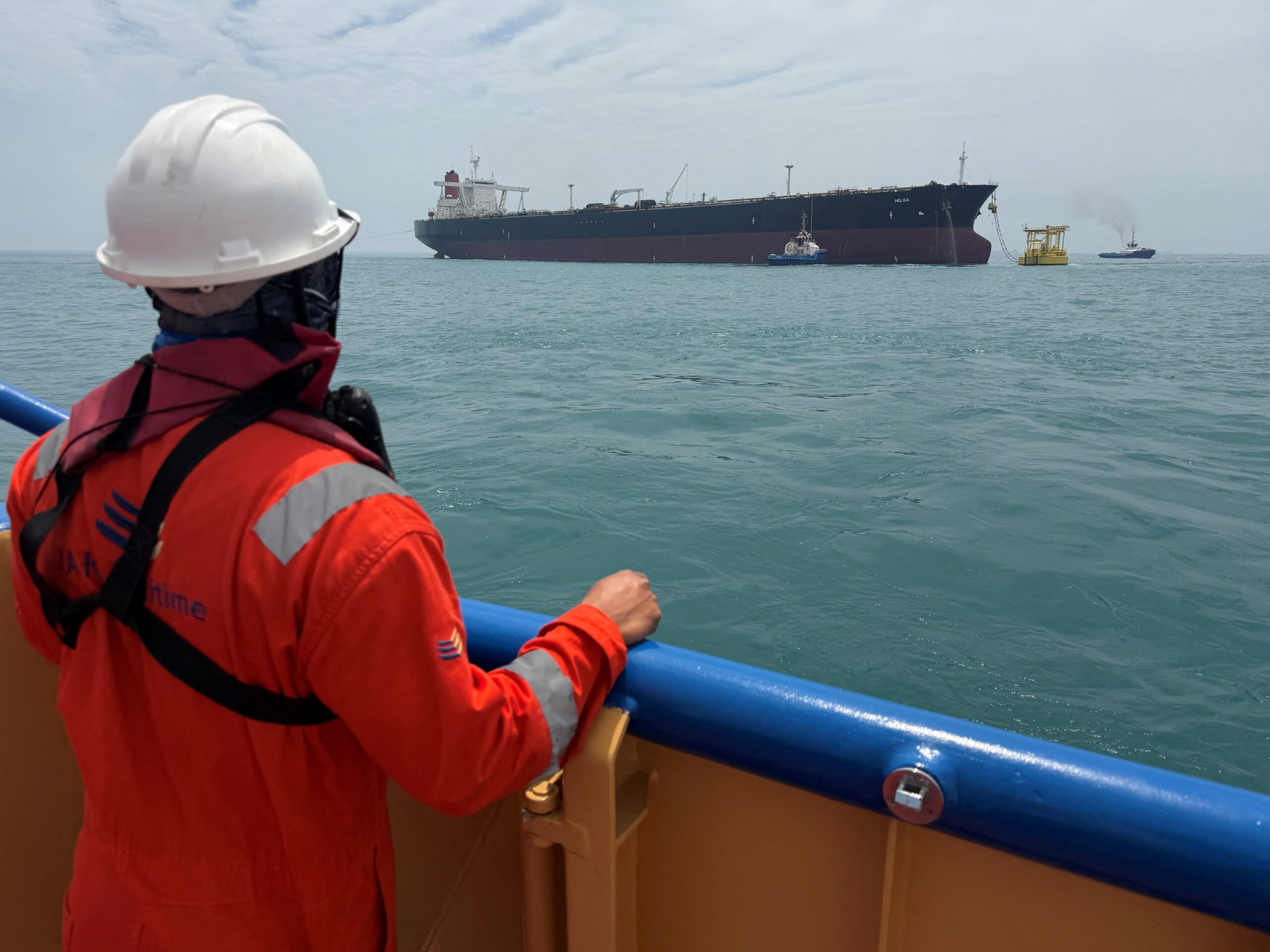
A sailor observes the oil tanker Helga, which is moored at one of Iraq's southern offshore oil terminals near Basra, as it prepares to load crude oil, becoming the second vessel to arrive since the closure of the Strait of Hormuz, April 24. (REUTERS/Mohammed Aty)
The U.S.-Israeli conflict with Iran and closure of the Strait of Hormuz have highlighted Iraq’s heavy reliance on southern export routes and its high fiscal exposure with export disruption. Iraqi production from the Rumaila, West Qurna-2, and Maysan oil fields has collapsed by roughly 70%, from 4.3 million barrels per day to around 1.3 mb/d. Exports have crashed to roughly 800,000 b/d, with only two tankers loading at southern terminals because vessels cannot move freely through the strait. Iraq’s storage was full within days. At current Brent crude oil prices, Baghdad is losing over $300 million a day in foregone oil revenue in a country where crude sales fund about 90% of the government budget. Salaries, security forces, and the patronage networks that hold the country together all run on oil revenue.
An increase in Iraqi oil flows depends more on achieving a durable settlement between Baghdad and the Kurdistan Regional Government than on constructing major new infrastructure. A comprehensive Erbil-Baghdad agreement could restore significant volumes through the northern system via Ceyhan, bolster the federal budget, and mitigate internal tensions. While Iraq’s Basra-Aqaba pipeline project remains relevant to the conversation, it is a longer-term initiative whose value is diminished by significant financial constraints, security and political uncertainty, and expected complex transit dynamics.
To achieve immediate export gains, Baghdad and Erbil would need to prioritize a comprehensive agreement on northern exports. Coordinated engagement with Turkey is also necessary to secure uninterrupted flows and prepare for a successor arrangement after the Iraq-Turkey pipeline treaty expires in the summer of 2026. Focusing on these priorities would enable Iraq to stabilize export volumes and public finances efficiently.
Therefore, the northern export corridor and the political settlement required to sustain it are crucial for Iraq. On March 17, the KRG extended an olive branch to Baghdad and allowed oil exports from federally controlled oil fields, which let Baghdad resume oil flows via the Kirkuk-Ceyhan pipeline, initially at 170,000 b/d and with a target of 250,000 b/d. These flows were stopped for two weeks in early March by the KRG when it had a falling out with Baghdad over customs revenue from ports and border crossings in the Kurdistan region and the KRG’s access to the dollar at the Iraqi central bank.
This flow resumption proposal shows that the northern route can be rapidly reactivated when the federal government and KRG collaborate. They can seize on this opening and shift from viewing exports as a sovereignty contest to recognizing them as a shared fiscal imperative.
However, a partial restart does not constitute a sustainable solution. Prior to the 2023 shutdown, exports via the Iraq-Turkey system averaged approximately 417,000 b/d to 450,000 b/d. Restoring the full stranded capacity, around 500,000 b/d, requires more than reopening the pipeline; it necessitates a comprehensive Baghdad-Erbil agreement. Essential steps would include establishing a transparent revenue-sharing and payment mechanism, Baghdad offering security guarantees to the Kurdish energy sector, mutually recognizing upstream contracts to enhance confidence among international operators, and clarifying the operational role of Iraq’s state oil company, SOMO, in marketing Kurdish oil. Both parties should also agree on a timetable to resolve outstanding cost recovery issues and ensure regular budget transfers linked to crude deliveries. These measures are essential to restore upstream operating confidence. Iraq’s 2025 budget amendment established KRG producer compensation at $16 per barrel for crude transported through the federal system, serving as a temporary measure rather than a final resolution.
The main source of tension between Erbil and Baghdad continues to be sovereignty over the strategic sectors. Baghdad has long viewed strategic infrastructure in Kurdish areas as a threat to Iraq’s territorial integrity, fearing it could increase Kurdish leverage and force government concessions. This concern explains why the original Iraq-Turkey pipeline avoided Kurdistan, despite that being a less expensive route. Instead, the pipeline was routed from the Kirkuk oilfields through Saladin province and into Nineveh, with only limited exposure to Kurdish territory near the Turkish border. Recent Baghdad governments have consistently sought to limit KRG control over energy infrastructure, including pipelines, to prevent Erbil from gaining leverage that could prompt federal concessions.
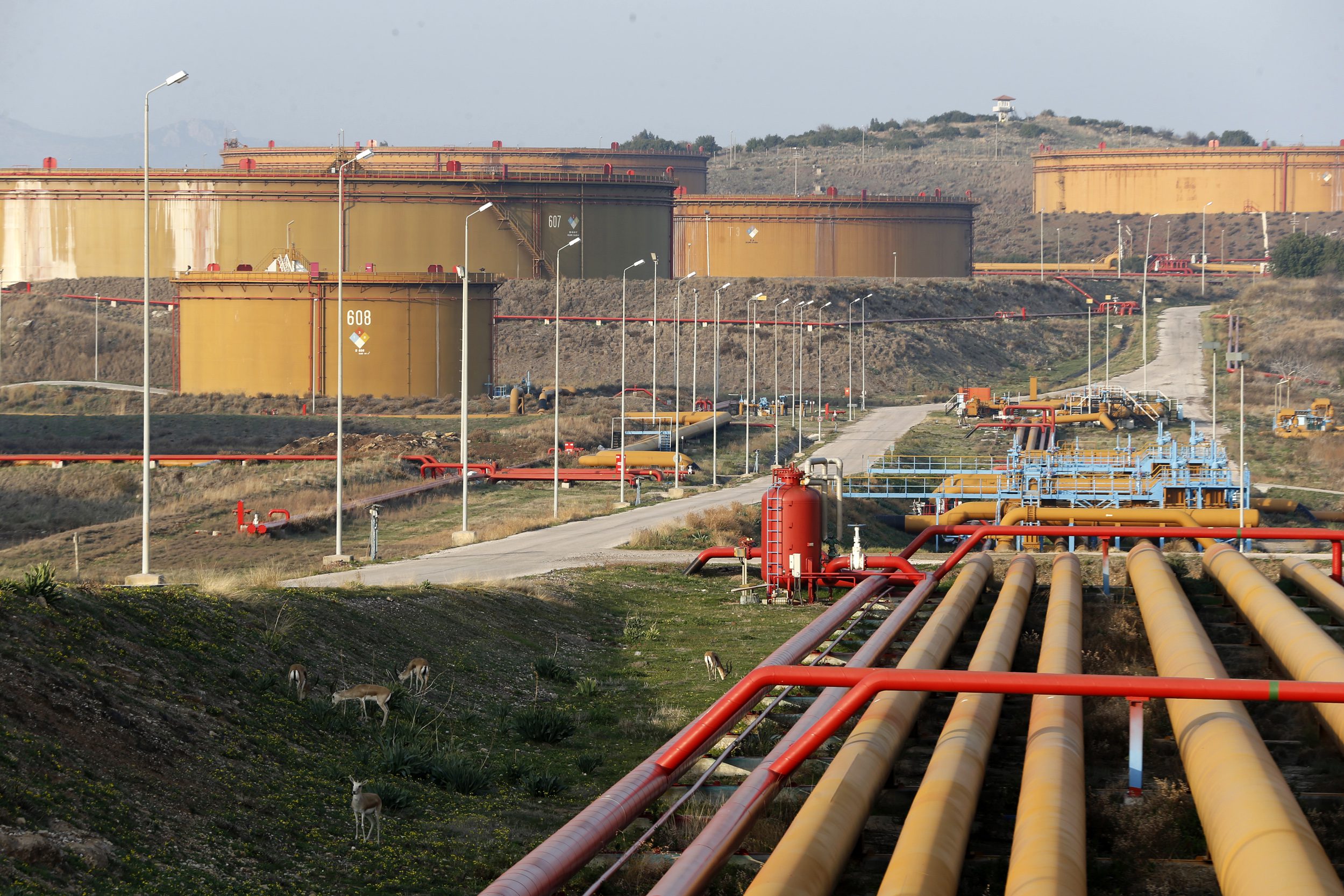
The Iraq-Turkey pipeline via Kurdistan has the capacity to handle up to 700,000 b/d, but it has never been fully utilized because there simply isn’t enough oil flowing from the north. Production across the Kurdistan region has fallen to minimal levels, largely because Iranian-backed militia groups have repeatedly targeted energy infrastructure in the area, while Kirkuk oil fields produce 360,000 b/d, with 100,000 b/d used for domestic consumption. While a recovery in northern exports would help Iraq partially substitute for stranded southern barrels, stabilize revenue, and regain some operational flexibility, it would not allow Baghdad to unilaterally increase its market volumes. Even if the route were fully operational, Iraq’s total oil exports would still sit roughly 80% below prewar levels. A pipeline restart improves the picture, but it does not come close to solving it.
A broader agreement between Baghdad and Erbil on this issue would provide benefits beyond increased export volumes: It would strengthen the federal budget and help address Iraq’s most persistent internal division. The federal budget framework is already contingent on substantial KRG crude deliveries in exchange for budget transfers to the KRG. When this arrangement fails, the consequences extend beyond oil: Erbil experiences payment stress, Baghdad loses fiscal inflows, and the disagreement escalates into a broader contest over state authority. An effective export agreement would restore the Iraq-Turkey pipeline’s export capacity, reinforce federal revenue, and reduce political friction between the federal government and the Kurdistan region.
But Baghdad and Erbil aren’t the only parties in the deal: Turkey is the third critical stakeholder, and its leverage is increasing. Ankara has reminded Baghdad that the existing Iraq-Turkey pipeline framework will expire July 27. Turkish officials have also said that they want any successor agreement to extend beyond maintaining the status quo. Turkey seeks a broader energy partnership involving increased pipeline utilization and potentially expanded cooperation in oil, gas, petrochemicals, electricity, and transportation. Time is against Baghdad – each month without a finalized federal-KRG mechanism strengthens Turkey’s negotiating position. While Iraq has considered developing direct federal routes from Kirkuk to Ceyhan that bypass the KRG network, these alternatives can’t address immediate needs because of technical, financial, and political constraints. Thus, Iraq needs to cooperate with both Erbil and Ankara to ensure sustained northern exports.
To counter Turkey’s growing leverage, Iraq could prioritize finalizing a unified federal-KRG stance before the July deadline, expedite work on alternative routes to Ceyhan, and intensify diplomatic engagement with other regional actors to diversify export options. Baghdad might also consider international mediation to align Turkish, federal, and KRG interests and establish contingency agreements for minimal export flows during extended negotiations. These strategies would help Iraq reduce vulnerability to Turkish pressure while maintaining export continuity.
But in the long term, Iraq will require other sovereign export routes outside the Gulf to mitigate exposure to a single maritime chokepoint, given its heavy reliance on oil revenue. Some of the pipelines under consideration include Basra-Haditha-Aqaba, Basra-Oman, and Kirkuk-Baniyas. The Basra-Haditha-Aqaba pipeline proposal could be the most credible long-term diversification option. In late 2024, Baghdad approved the Basra-Haditha segment, with a reported cost of approximately $4.56 billion. And on April 9, Iraq’s prime minister authorized the Ministry of Oil to start a bidding process for the first leg of the project. Industry sources described the project as a phased western corridor, with the Basra-Haditha trunk line designed for 2.25 mb/d and the Haditha-Aqaba export leg for around 1 mb/d. This project, if completed, would significantly address Iraq’s structural dependence on Gulf terminals.
Nevertheless, the Basra-Aqaba pipeline is a strategic hedge rather than an immediate solution, and it carries its own geopolitical risks. It does not address Iraq’s current export shortfall, as it remains in the approval and procurement phases. Furthermore, bypassing the Strait of Hormuz does not eliminate risk; a Red Sea outlet introduces exposure to another contested maritime region. The Red Sea is subject to Houthi threats, elevated risk premiums, rerouting costs, and the potential for regional conflict spillover. Although naval interventions have mitigated some risks, they have not eliminated them. The pipeline’s value, if and when it is constructed, will be contingent on the Red Sea remaining accessible, insurable, and politically stable.
The Basra-Aqaba pipeline also faces significant political economy challenges. Its success depends on sustained external creditors and Iraqi state financing, consistent Jordanian transit cooperation, maintained security in western Iraq, and a durable political commitment from Baghdad. It will also have to overcome persistent domestic opposition from pro-Iranian militia groups, which have repeatedly delayed westbound export projects. These militia groups have, for example, objected to undetermined Israeli potential to benefit from the pipeline. While no individual obstacle is insurmountable, their combined effect is making the project expensive, slow, and susceptible to further delays.
Iraq’s oil export recovery will be determined primarily by political developments in Baghdad, Erbil, and Ankara rather than by new infrastructure projects. The Iraq-Turkey pipeline is underperforming. A comprehensive Erbil-Baghdad agreement could restore much of the stranded northern export system – around 500,000 b/d – which could meet short-term market and budgetary needs. Such an agreement could rapidly unlock substantial export volumes, stabilize revenue flows, enhance payment credibility with international oil companies, and mitigate one of Iraq’s most persistent internal disputes. The outcome now hinges on whether Baghdad and Erbil can reach a durable export agreement before Turkey’s leverage increases in July.
The views represented herein are the author's or speaker's own and do not necessarily reflect the views of AGSI, its staff, or its board of directors.
While the Basra-Aqaba pipeline project promises economic, energy, and security benefits for Iraq and Jordan, high costs and political and security risks pose huge feasibility challenges.
The flow of Kurdish oil via the Iraq-Turkey pipeline to the international market after more than two years demonstrates the effectiveness of sustained U.S. diplomacy.
Decentralized governance efforts in the region, while offering promise to societies fractured by years of dictatorship and war, will be messy, inconsistent, and vulnerable to reversal and external manipulation.
Baghdad is weaponizing economic levers to punish the Kurdistan region for signing energy pacts with U.S. firms and for aligning with President Trump’s commercial diplomacy.