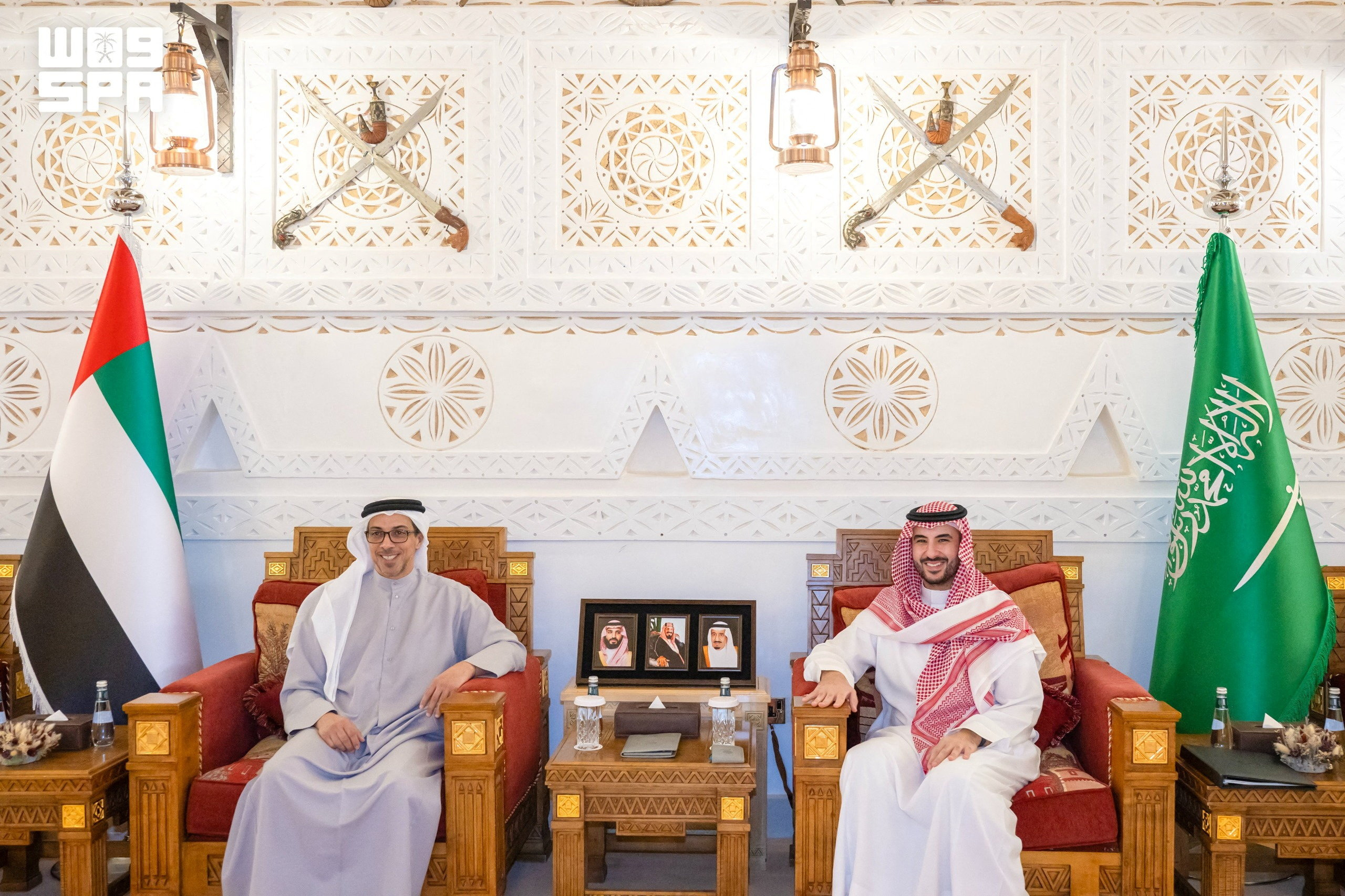
Saudi Defense Minister Prince Khalid bin Salman meets UAE Vice President and Deputy Prime Minister Mansour bin Zayed al-Nahyan in Riyadh, Saudi Arabia, September 29. (Saudi Press Agency/Handout via REUTERS)
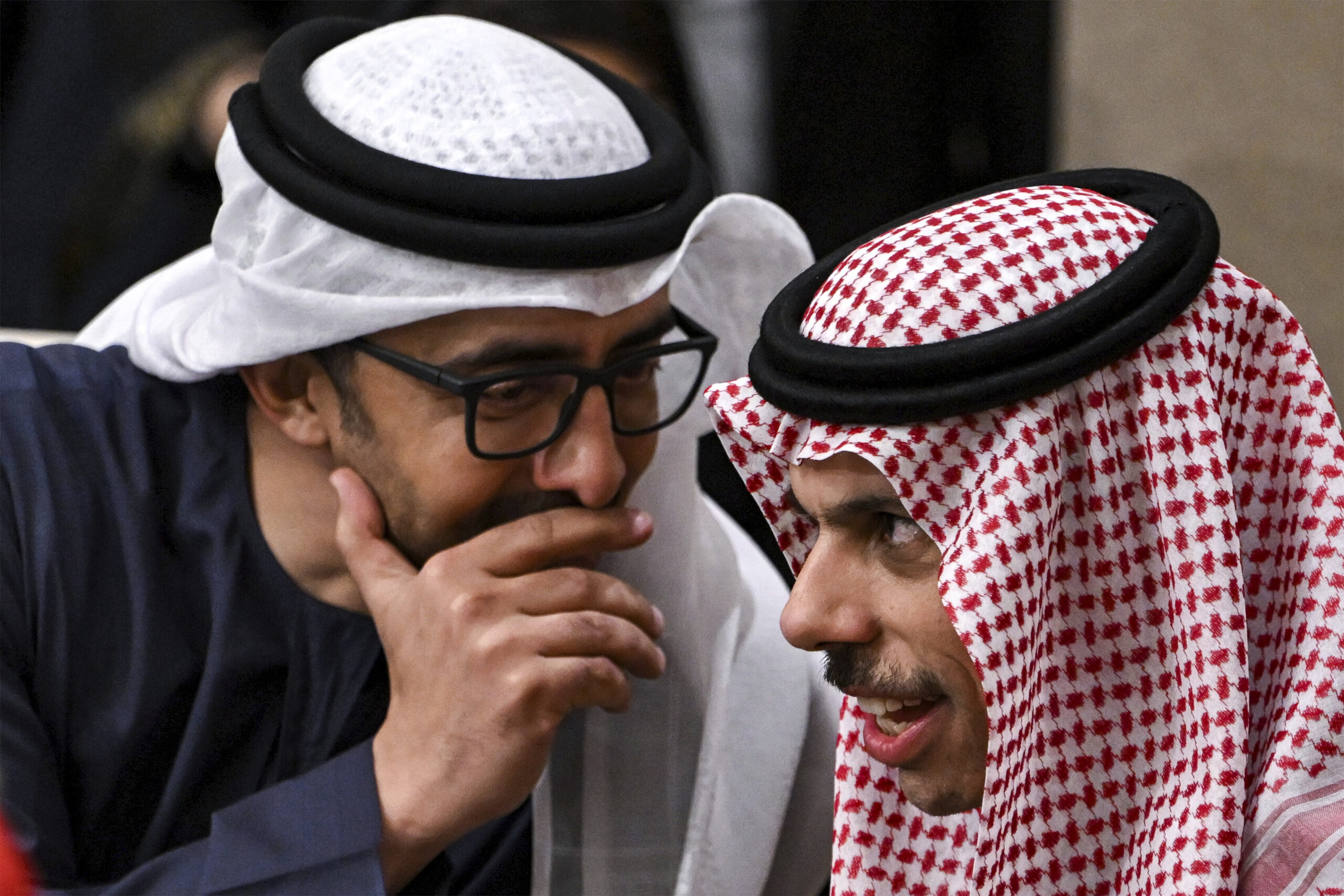
On September 29, United Arab Emirates Vice President and Deputy Prime Minister Mansour bin Zayed al-Nahyan visited Saudi Arabia and met with Crown Prince Mohammed bin Salman and his brother, Minister of Defense Prince Khalid bin Salman. The meetings seemed designed to reaffirm the coming back together of Saudi Arabia and the UAE, particularly over Yemen, after their acrimonious clash over the country in late-2025. The reignition of civil war in Yemen, renewal of Houthi attacks on Saudi Arabia, and ongoing regional tensions with Iran appear to have altered the strategic calculus in Riyadh and Abu Dhabi, at least for the time being, in favor of pragmatic coordination over confrontation.
Although Saudi Arabia and the UAE were the two most significant members of the Arab coalition that intervened militarily in Yemen in March 2015, the two countries gradually diverged, as they backed different and sometimes competing groups on the ground. By 2019, when the UAE withdrew from the frontlines in Yemen, and Saudi- and Emirati-backed groups clashed in Aden, the differences in approach were publicly visible and clear on the ground. Tensions remained largely contained until December 2025, when forces of the UAE-backed Southern Transitional Council swept into the eastern provinces of Hadramout and Mahra and established operational control over much of southern Yemen. This was perceived as crossing a redline in Saudi border security considerations and complicating the local resistance to the Houthis in northwestern and central Yemen, and Saudi airstrikes in late December contributed to the retreat of STC forces and a UAE drawback from Yemen.
Other points of tension during the spring indicated that the rift between Riyadh and Abu Dhabi continued into the first – and most kinetic – phase of the Iran war. In late April, three weeks after the U.S. and Israeli cease-fire with Iran went into effect, the UAE declared that it was withdrawing from OPEC, giving just two days’ notice before departing. Over the summer, reports emerged that suggested that financial transfers from Saudi Arabia to accounts based in the UAE were being disrupted or delayed. The UAE was then notably absent from the 14-member Multinational Maritime Defense Alliance launched by Saudi Arabia in late July to protect shipping in the Red Sea from Houthi attacks as well as from the Mecca Joint Defense Agreement signed by Riyadh with Turkey and Pakistan in early August.
While none of these points of contention indicated a political rupture along the lines of the 2017-21 severing of relations with Qatar, they nevertheless shed light on aspects of a bilateral relationship under considerable strain. However, the sharp deterioration in July in the fragile coexistence between Saudi Arabia and the Houthis, which began after a Houthi delegation traveled to Iran to attend the funeral of late Supreme Leader Ayatollah Ali Khamenei, changed the regional security dynamic facing the kingdom. It may therefore not have been a coincidence that senior Saudi and Emirati officials issued simultaneous statements affirming their close historical ties and current relationship on July 21, the same day that Turki Al-Sheikh, an advisor to the Saudi Royal Court, released a photograph of Khalid bin Salman and Mansour bin Zayed smiling and relaxed in each other’s company.
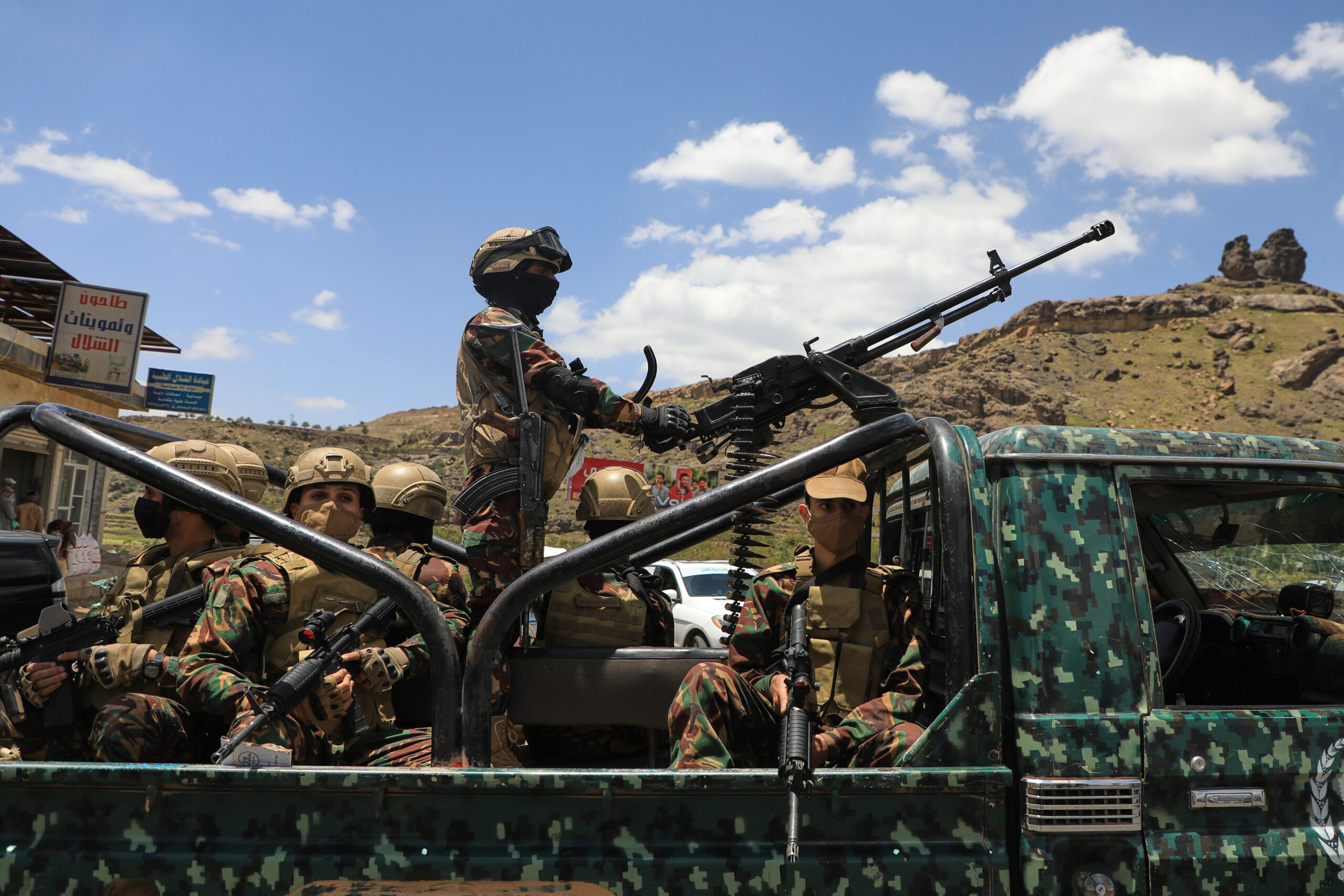
If the July 21 statements and photo were a public display of unity, developments since then have raised the stakes. Houthi attacks threatened the Saudi Red Sea workaround to the restrictions in the Strait of Hormuz (which itself shows signs of easing) and raised the specter of the Iran and Yemen fronts converging, just as the optimism engendered by the signing of the U.S.-Iran memorandum of understanding in mid June was also breaking down. Faced with the prospect of a prolonged on-off period of conflict and, in the Saudi case, missile and drone attacks from Iranian-aligned militias in Iraq as well as the Iranian-backed Houthis in Yemen, the need to at least repair ties with the UAE took on greater urgency and utility. With Khalid bin Salman holding the Yemen file on the Saudi side and Mansour bin Zayed playing a greater role in the UAE’s regional files on the Emirati side, their September 21 meeting was likely meant to signal that the thaw in July (symbolized by their photo together) was real.
As signs mount of a potentially imminent escalation in Saudi-Houthi tensions, anything the Saudis can do to strengthen the disparate forces in non-Houthi-controlled areas of southern and eastern Yemen may become vital to whatever happens next. In the initial phase of the coalition’s operations in Yemen in 2015, the UAE was the most effective member and played a critical role in pushing the Houthis back from Aden, while Emirati-backed groups in southern Yemen were also among the most effective on the ground. Those forces, including the National Resistance Forces in southwestern Yemen, lost their Emirati support after the UAE’s withdrawal in January and were unable to prevent the Houthis’ advance to take Mokha and establish themselves on the shore of the Bab el-Mandeb in early September.
It is therefore likely that the Saudi-Emirati thaw is designed to enable a more coordinated approach to managing the forces ranged against the Houthis in southern and central Yemen. Faced with the newfound threat from the Houthis and the likelihood that tensions with Iran will continue into an indefinite future, it appears that Riyadh and Abu Dhabi, and by extension potentially the other four Gulf Cooperation Council states, have concluded that a united front is the way forward, especially if the Yemen truce in place since 2022 definitively breaks down. It remains unlikely that the UAE will reengage in Yemen, but it retains the capacity and networks to project influence. And having the UAE aligning, rather than competing, with Saudi Arabia at least resolves one issue that otherwise risked severely undermining the latest in a decade-long attempt to address the threat posed by the Houthis to the Gulf states.
The views represented herein are the author's or speaker's own and do not necessarily reflect the views of AGSI, its staff, or its board of directors.
Saudi-Emirati public reconciliation, a result of hard-earned lessons about the difficulty of going it alone, bodes well for a region at war and under attack, but there are still issues left to resolve.
In tandem with President Trump’s refusal to offer help with the Houthis, the Saudis are facing grim options to reverse Houthi military successes and a chokehold over their oil exports.
The UAE’s decision to halt trade and commercial ties with Iran reflects an exercise in applying carefully calibrated geoeconomic pressure amid an uncertain and evolving geopolitical context.
Saudi-Emirati public reconciliation, a result of hard-earned lessons about the difficulty of going it alone, bodes well for a region at war and under attack, but there are still issues left to resolve.
Following Saudi Arabia’s early exit from the World Cup, the kingdom’s soccer authorities may enter a period of introspection considering challenges that have cast a shadow over the post-2023 landscape of Saudi soccer.
Gulf capitals are facing immediate policy choices around how to restore order in a regional setting that is greatly changed – for the worse – as a result of the Iran war.