Saudi-Emirati public reconciliation, a result of hard-earned lessons about the difficulty of going it alone, bodes well for a region at war and under attack, but there are still issues left to resolve.
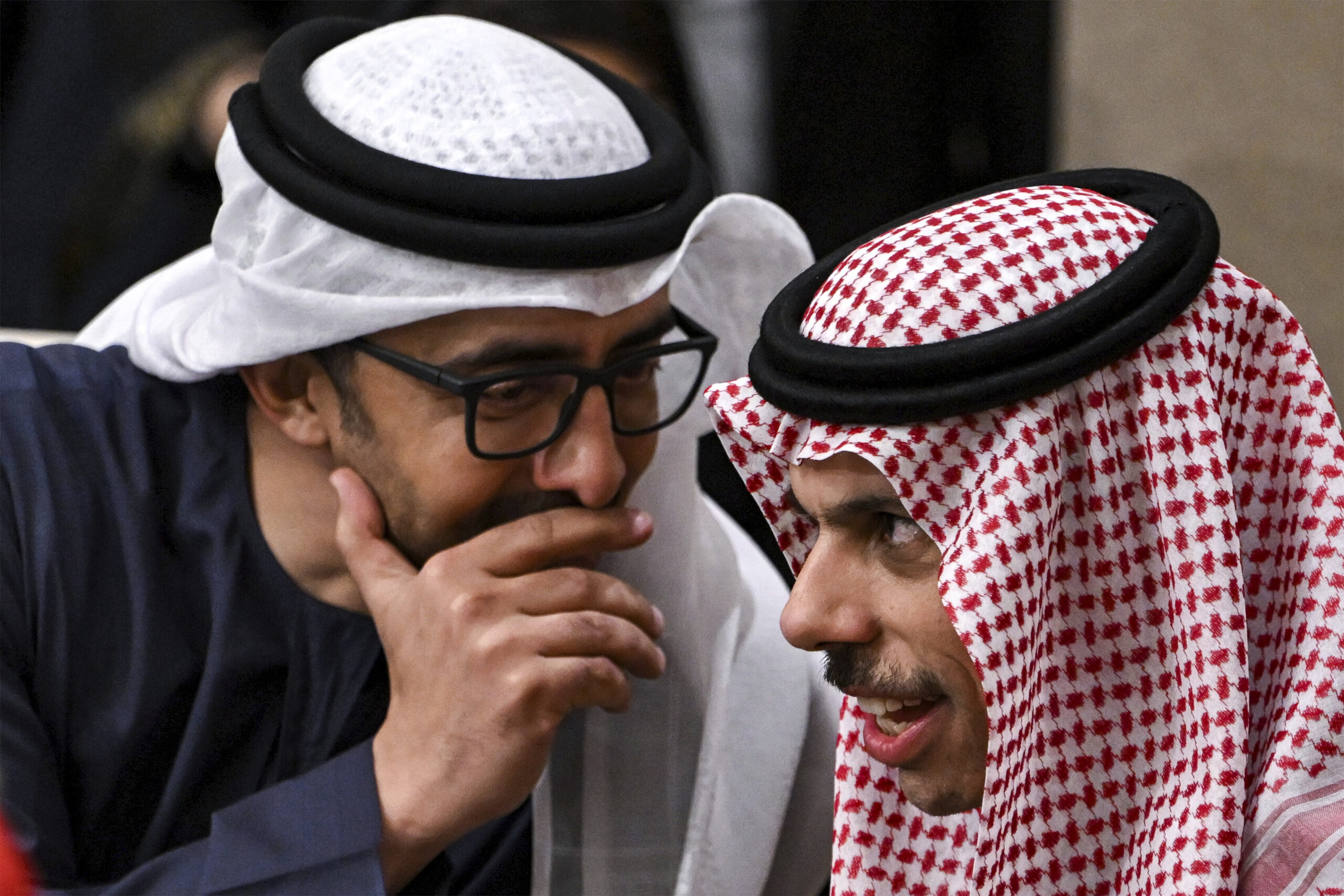
Then Emirati Foreign Minister Abdullah bin Zayed al-Nahyan, left, speaks with Saudi Foreign Minister Prince Faisal bin Farhan during a meeting with the foreign ministers of the Arab Contact Group on Syria in Aqaba, Jordan, December 14, 2024. (Andrew Caballero-Reynolds/Pool via AP)
On July 21, senior Saudi and Emirati officials released simultaneous statements that affirmed the close historical and current relationship between Saudi Arabia and the United Arab Emirates and called on “responsible media” to “reflect this reality objectively.” The tone and timing of the social media posts by Saudi Minister of Media Salman bin Yousuf Al-Dossary and UAE National Media Authority Chair Abdulla bin Mohamed Al Hamed suggested a coordinated move to end months of speculation about a breakdown in bilateral relations. So, too, did a photograph shared on X the same day by Turki Alalshikh, an advisor to the Saudi Royal Court, of a smiling Khalid bin Salman and Mansour bin Zayed al-Nahyan, brothers, respectively, to Saudi Crown Prince Mohammed bin Salman and UAE President Mohammed bin Zayed al-Nahyan and very senior figures in their own right.
The very public display of unity came against the backdrop of a plethora of new threats to regional security arising from the U.S.-Israeli war with Iran, now into its sixth month, and after an unusually sharp clash between Saudi Arabia and the UAE in Yemen in December 2025. The abrupt April 28 announcement of the UAE’s withdrawal from OPEC, made on the day that Gulf officials were meeting in Saudi Arabia to discuss the war, added to perceptions that the two countries had drifted apart on key issues. So, too, did the apparent doubling down of UAE security and defense relations with Israel during the Iran war vis-a-vis the Saudis’ closer alignment with Pakistan, Egypt, and Turkey in an effort to end the crisis through diplomacy.
To be sure, significant differences in approach to regional issues do exist, not only in Yemen but also Sudan, but it is also the case that Saudi-Emirati ties have fluctuated fairly widely over time, from boundary disagreements before and after the formation of the UAE as a federation of seven emirates in 1971-72 to a series of flashpoints in the mid- and late-2000s. The latter included Saudi opposition to the construction of the Dolphin natural gas pipeline from Qatar to Abu Dhabi in 2006 and a split in 2009 over the location of a Gulf Cooperation Council Monetary Council as part of a planned single currency. Emirati officials reacted with frustration to a decision to site the council in Riyadh rather than Abu Dhabi, and, within weeks, the UAE became the second GCC state to withdraw from the monetary union project, after Oman in 2007, dealing a mortal blow ahead of its (subsequently aborted) 2010 launch.
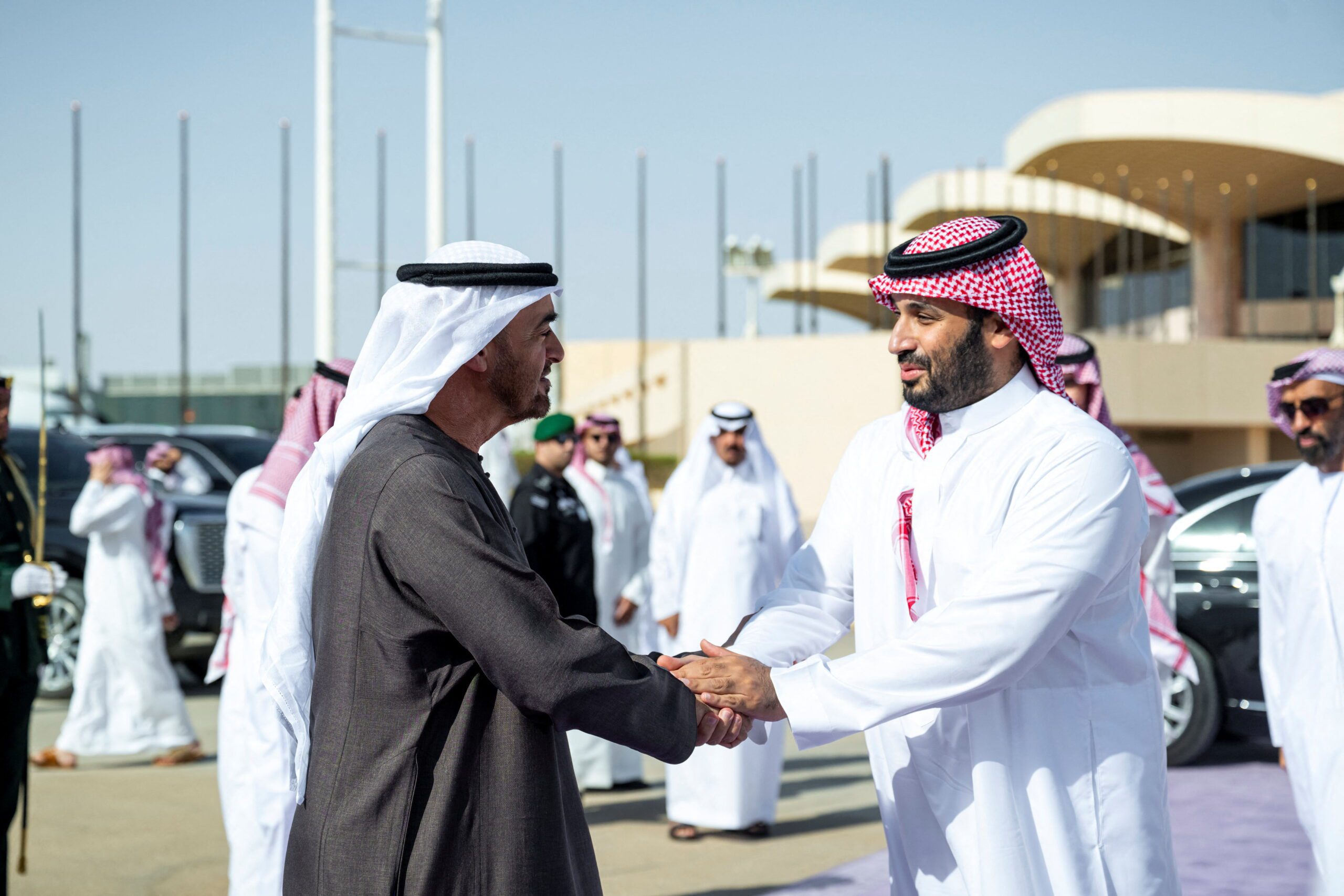
Relations improved substantially during the turbulent decade spanning the Arab uprisings that shook much of the broader region in 2011 and the coronavirus pandemic in 2020. As GCC states diverged over the direction and pace of post-2011 changes in Egypt, Libya, Syria, and Yemen, Riyadh and Abu Dhabi grew closer, and a bond developed between Mohammed bin Zayed and his emerging Saudi counterpart, Mohammed bin Salman. While the 24-year age gap led some to perceive a mentor-mentee dynamic at work, it is more likely that a set of shared leadership characteristics, including a proclivity to see the bigger picture, think outside the box, and be willing to take risks to achieve results, brought them together.
Saudi Arabia and the UAE cooperated closely against Qatar both in the diplomatic standoff in 2014 and the subsequent embargo that began in 2017 as well as the military coalition that intervened in Yemen in 2015. Moreover, the creation of a Saudi-Emirati Coordination Council in 2016 provided an institutional imprint for closer coordination across a wide array of political, economic, and military spheres. Whereas the axis between the two crown princes in Abu Dhabi and Riyadh dominated intra-Gulf politics in the late-2010s, diverging positions over Yemen (in 2019) and within OPEC+ (on oil output and price levels) in 2020-21 suggested that the era of acting in lockstep was over.
The post-coronavirus pandemic period saw an intensification of economic and commercial competition, particularly as Mohammed bin Salman launched a series of gigaprojects and other initiatives associated with Saudi Vision 2030. Many of these initiatives in travel, tourism, hospitality, and entertainment were focused on sectors in which the UAE had a first-mover advantage that dated back to the 1990s and 2000s. As the two largest economies in the GCC went head to head, it was inevitable that elements of competitive tension emerged as the Saudis encroached on markets and domains hitherto led by Abu Dhabi and Dubai. One high-profile example was Saudi Arabia’s Regional Headquarters Program, which sought to ensure that major multinational corporations doing business with state agencies established their regional headquarters in the kingdom. The scheme was announced in 2021 and took effect in 2024. Another was the formation, in 2023, of Riyadh Air, a new flag carrier for Saudi Arabia, which began commercial operations in 2026 under the leadership of Tony Douglas, who had earlier served as chief executive officer of Etihad Airways in Abu Dhabi from 2018-22.
It is noteworthy that no political rupture between Saudi Arabia and the UAE has occurred, such as happened with Qatar in June 2017. This alone suggests that tensions have been manageable and containable, even in the aftermath of the December 30, 2025 Saudi airstrike in Yemen on a suspected shipment of weapons from the UAE: Both sides refrained from crossing red lines and escalating further. Close working ties between Saudi Defense Minister Khalid bin Salman and UAE National Security Advisor Tahnoun bin Zayed al-Nahyan have been an additional anchor of bilateral ties as well as a reminder that not everything revolves around the heads of state and government.
It may be that lessons have been absorbed from the Saudi-Emirati rift with Qatar in 2017 and the challenges of taking inflexible policy stances and attempting to force rivals into submission. Older friction within the GCC between a top-heavy Saudi centricity and the rapidly rising ambitions of the smaller Gulf states has, to an extent, given way to diverging views on how to engage with weak states and an unstable regional order. The fallout from the Iran war and its associated economic and energy disruption has added additional layers of uncertainty to a regional system in a state of considerable flux. When Saudi officials unveiled a naval coalition of 14 states to protect commercial shipping in the Red Sea, in response to an increase in Houthi attacks on vessels, the UAE was noticeably absent (as was Oman). And when the restrictions on shipping in the Strait of Hormuz are eventually resolved, the longer-term implications of the UAE’s oil strategy outside OPEC may cause new tensions if Abu Dhabi moves rapidly to increase production while Riyadh seeks to prop up prices. These, however, are issues that Saudi and Emirati officials may wish to park for the present time.
The views represented herein are the author's or speaker's own and do not necessarily reflect the views of AGSI, its staff, or its board of directors.
Abu Dhabi’s departure from OPEC signals that discipline within the group is becoming harder to sustain at a time when the global energy market is facing the prospect of a more volatile and uncertain future.
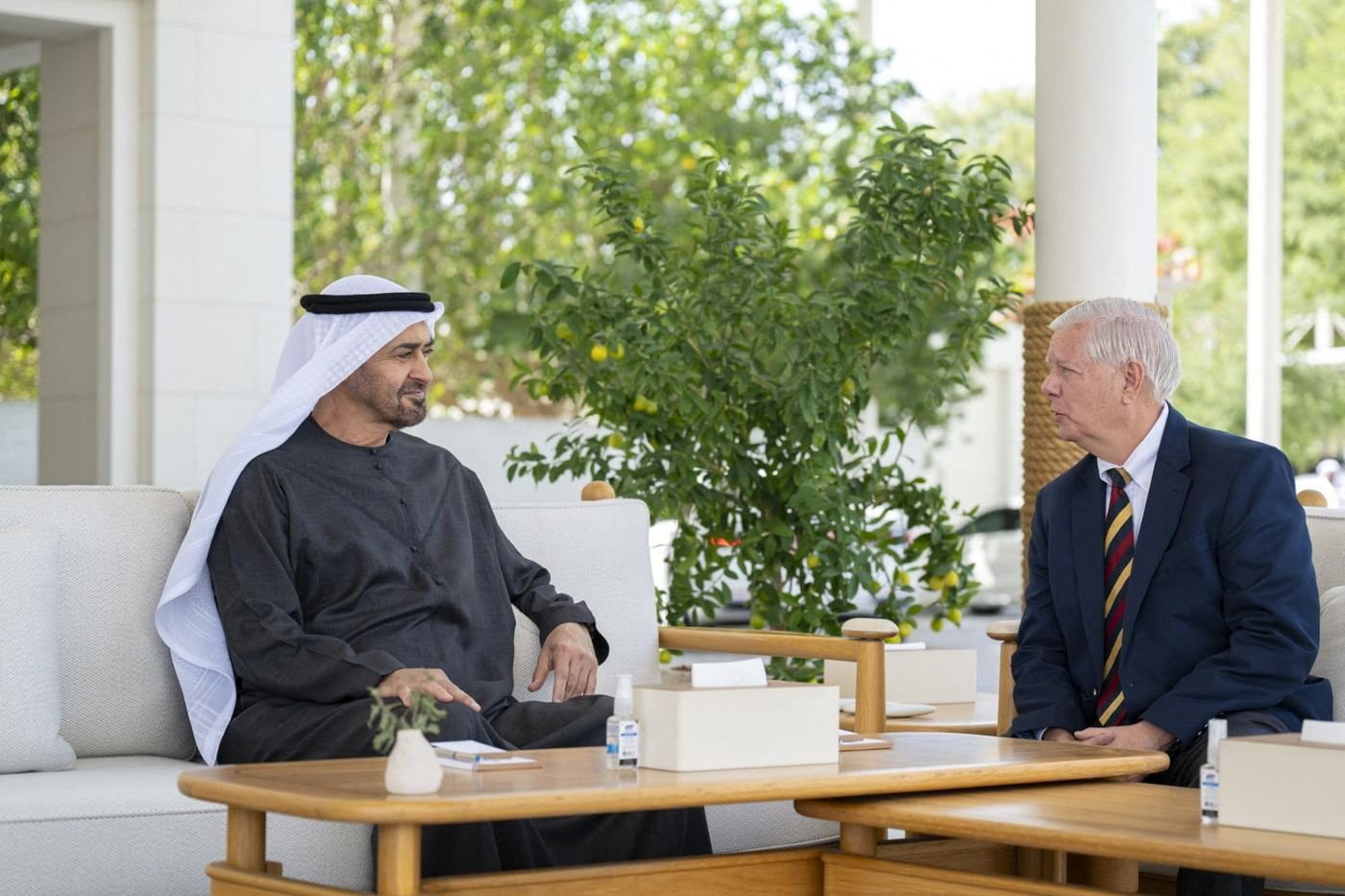
To respond to harsh Saudi criticisms, the Emiratis have sought to reframe, deflect, and calibrate, avoiding escalation while also benefitting from powerful advocates, including Senator Lindsey Graham.
Disputes in the Gulf tend to be structurally constrained by dense interdependence, established patterns of dispute management, and various shades of elite empathy among leaderships.
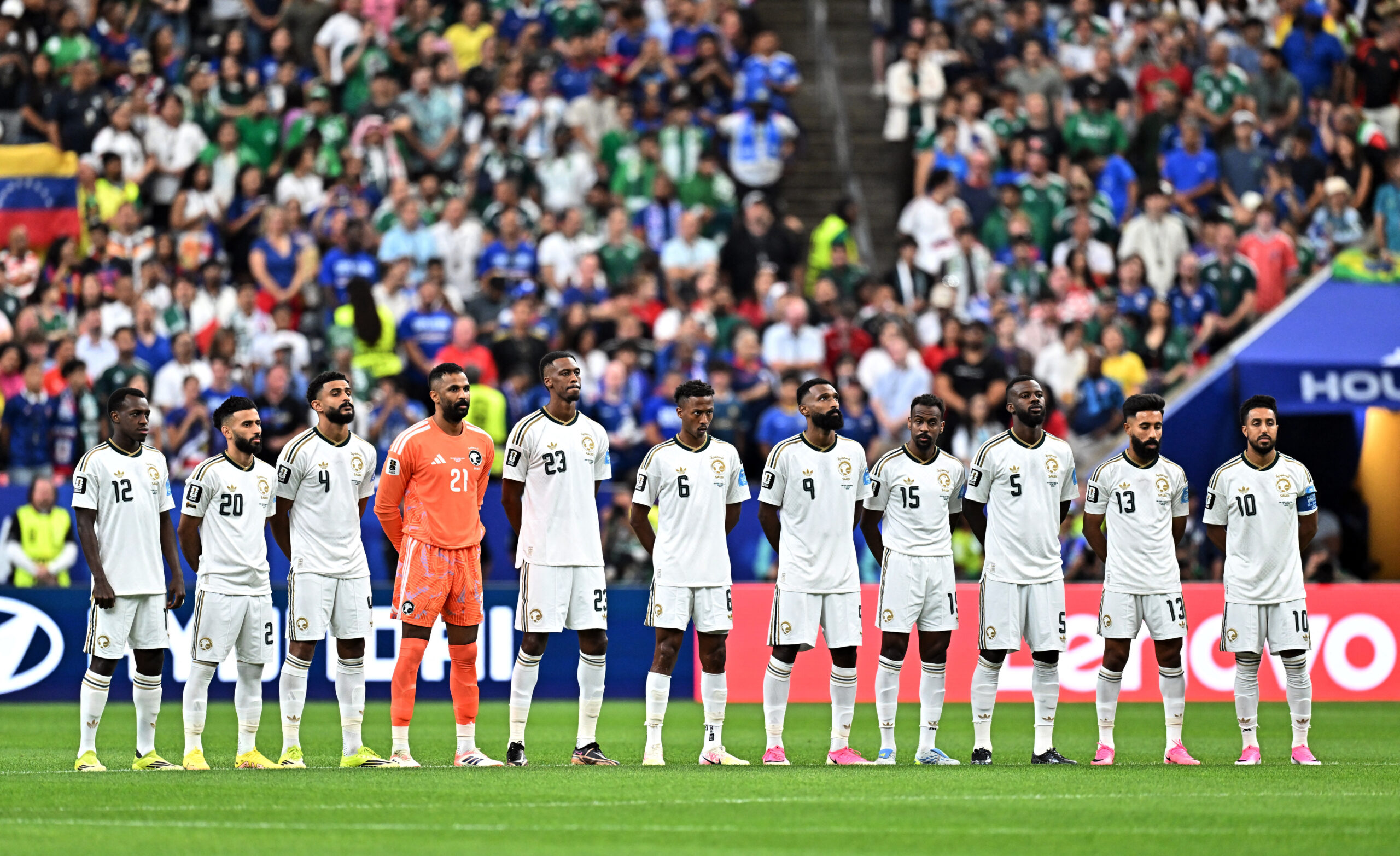
Following Saudi Arabia’s early exit from the World Cup, the kingdom’s soccer authorities may enter a period of introspection considering challenges that have cast a shadow over the post-2023 landscape of Saudi soccer.
Gulf capitals are facing immediate policy choices around how to restore order in a regional setting that is greatly changed – for the worse – as a result of the Iran war.
AGSI explains what Israel’s sudden and massive attack on Iran is likely to mean for Gulf Arab states, Iran, the United States, and global and regional economies.