War in the Gulf has resumed, oil exports have dropped, and the Brent crude price is rising toward $100 per barrel. But a brief reopening after the June 17 memorandum of understanding between the United States and Iran suggested how quickly exports could resume if this conflict is resolved, including volumes from the United Arab Emirates.
For nearly five months, the market confounded expectations of a price spike. Now, renewed conflict between the United States and Iran has rekindled concerns over a prolonged disruption to Gulf oil exports. Four key buffers that had prevented higher oil prices since March have been worn away. Unprecedented oil inventory releases from March to June cannot continue at the same pace. The sharp increase in U.S. crude oil and petroleum product exports has begun to fall back, partly due to concerns about low inventory levels in the United States. Refineries switched to alternative crude streams and adjusted their product slate to keep markets well supplied, but product markets are now showing signs of stress, especially with a drop in Russian diesel exports. And China’s deep cuts in crude oil imports in May and June – down to the lowest levels in nearly a decade – may not be sustainable. If these pillars of energy resilience start to crumble, there will be upside pressure on oil prices in the months to come.
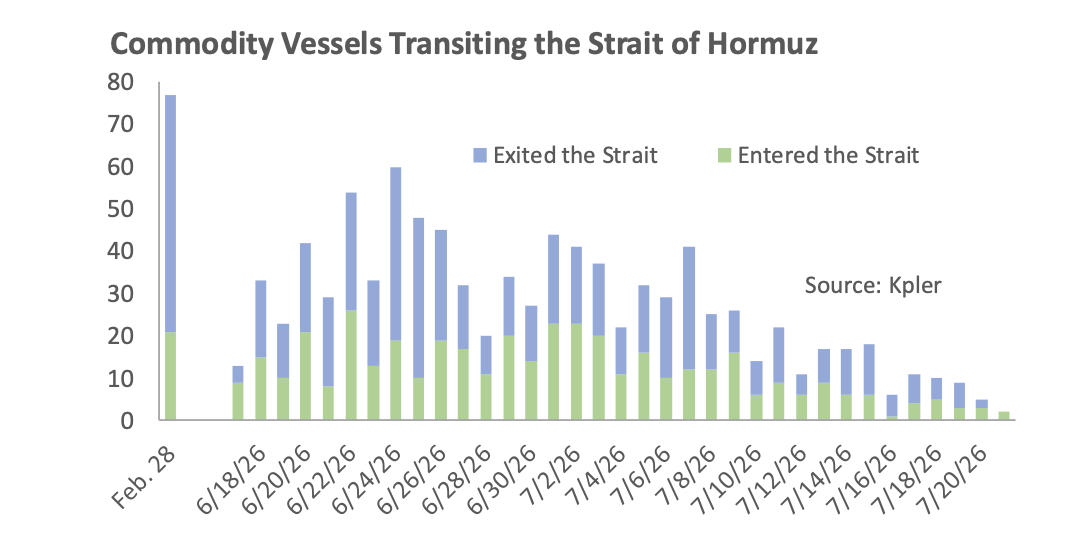
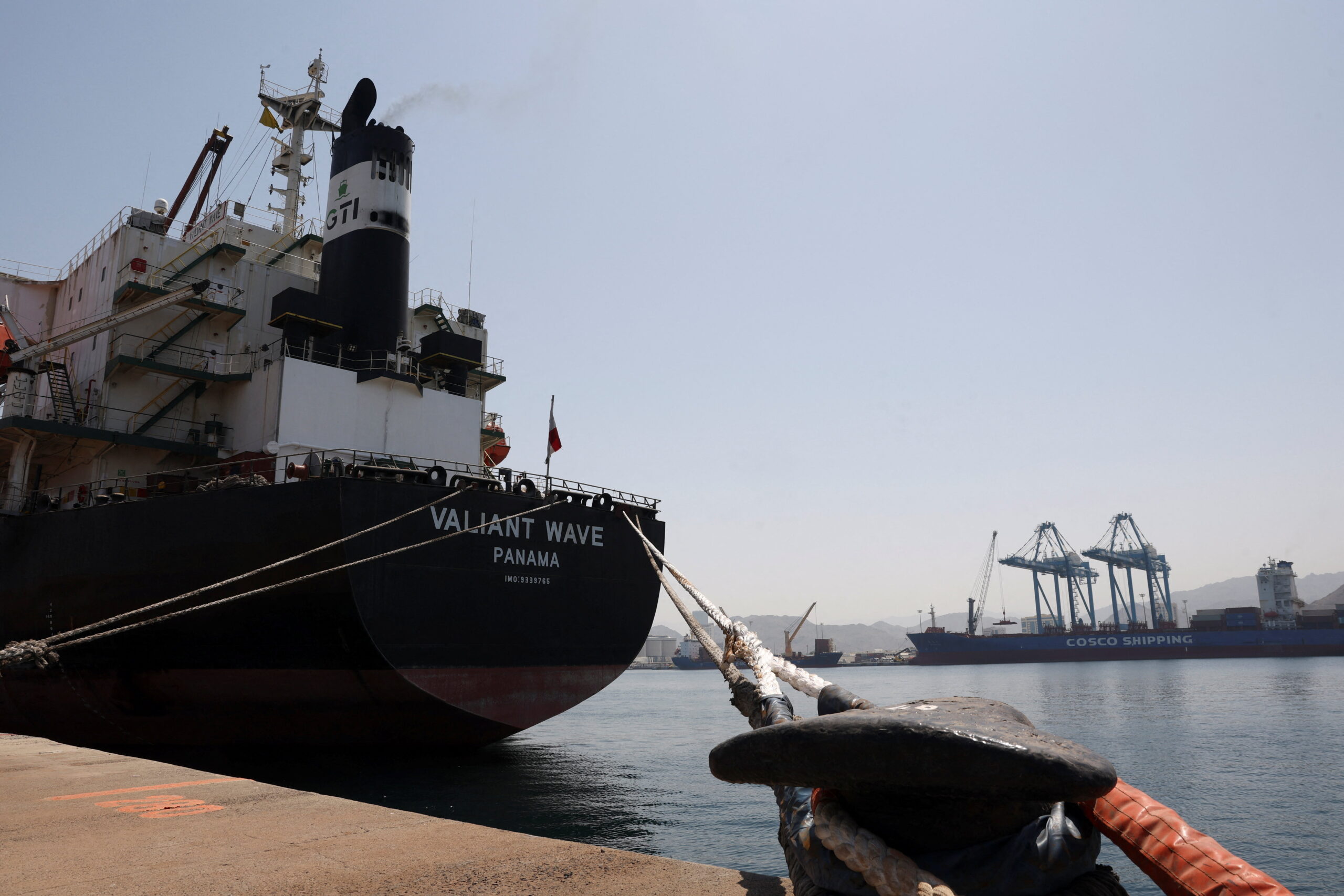
The resumption of conflict has led to a sharp drop in tanker transit. From July 7 – when Iran attacked tankers transiting the “Oman route” of the Strait of Hormuz, touching off escalatory strikes – to July 21, an average of only 14 tankers transited the strait each day. The recent Houthi threat to block Saudi exports via the Red Sea could create yet another chokepoint. On July 22, the price of Brent crude oil for prompt delivery rose to $93 /bbl. It is a moment of deep uncertainty for the oil market.
Yet the month of June provided a glimpse of a potential postwar recovery in oil exports. Global oil supply rose by 4.1 million barrels per day in June, according to the International Energy Agency, thanks to a three-week opening of Strait of Hormuz transit. Saudi Arabia resumed crude loading at its Juaymah facility offshore Ras Tanura, west of the Strait of Hormuz, for the first time since March. Kuwait raised production in June to 1.65 mb/d, and Kuwait Petroleum Corporation lifted force majeure for all customers. Traders briefly expected that a rush of supply from Gulf producers could tip the oil market into surplus. Brent crude even flipped into contango in early July, with the prompt price lower than the price for deliveries six months in the future. Normally this shape of the futures curve suggests a well-supplied near-term market.
The UAE contributed to this supply growth. The country’s exports climbed to about 3.8 mb/d in June, above prewar levels. Even before the reopening, the UAE had employed creative solutions to send its oil to market. To avoid detection, tankers have lifted cargoes from UAE terminals and conducted shuttle runs with their transponders off to obscure their location, later transferring their cargoes in safer waters east of the Strait of Hormuz. This type of dark transit, along with U.S. military escorts for tankers, led analysts to revise upward the amount of oil exported from the Gulf.
The UAE is especially keen to maximize output following its OPEC exit. The UAE left the group in April, after years of dissatisfaction with its production targets. The country has spent the past decade overhauling governance of its oil and gas sector, breaking up concessions, licensing new acreage, and inviting investment across the oil and gas value chain. This set the UAE on a collision course with OPEC, as its production capacity outstripped its reference production volume, or the baseline from which production targets are set. Freed from production restraint, Abu Dhabi is now eager to monetize these investments. It claims that current production capacity is 4.85 mb/d (some OPEC secondary sources place this number slightly lower), within striking distance of its target of 5 mb/d by 2030.
For now, the optimism of June seems a distant memory. The market seems to expect intermittent conflict between the United States and Iran to continue, with sporadic U.S. attacks on Iran and retaliatory Iranian strikes on tankers and energy infrastructure across the Gulf. Iran’s recent attacks on Bahrain, Jordan, and Kuwait – including on power, water, oil, and gas infrastructure – show the high stakes of an escalatory spiral. Diplomacy rather than military force seems to be the only durable solution. But the collapse of the 14-point memorandum of understanding reflected very different interpretations in Washington and Tehran over Iran’s control over transit through the Strait of Hormuz, including administration and potential fees. Transit and supply risks are dominating market sentiment, and the situation is worsening.
Yet the brief reopening of Gulf oil exports in June suggested how the market may evolve if a real settlement is reached. The Gulf states will be determined to increase exports and production, to make up for months of foregone revenue, and the UAE will have especially strong incentives to increase production. As improbable as it seems today, market perceptions could evolve quickly, as they did in June. In that case, while the core OPEC+ “group of seven” may agree to raise production ceilings one more time in August, which would fully unwind by September the tranche of voluntary cuts agreed to in April 2023, OPEC may soon need to pivot to managing a supply surge. This would be a new challenge for Saudi Arabia, after the exit of the UAE – a country that was historically a reliable partner in cutting production. But it is certainly a challenge the producers’ club would relish.
The views represented herein are the author's or speaker's own and do not necessarily reflect the views of AGSI, its staff, or its board of directors.
The UAE’s move to leave OPEC underscores Abu Dhabi’s effort to widen its room for maneuver beyond Saudi-led frameworks, but the Iran war gives this decision a new meaning.
Abu Dhabi’s departure from OPEC signals that discipline within the group is becoming harder to sustain at a time when the global energy market is facing the prospect of a more volatile and uncertain future.
Abu Dhabi traditionally managed its oil and gas resources cautiously and conserved hydrocarbon wealth for future generations, but the energy transition is reshaping its strategy.
Gulf national oil companies are looking to increase stockpiles in Asia to meet customer needs, address their energy security concerns, and enable a nimbler response to unexpected market disruptions.
OPEC+ producers are increasing output in the face of a global economic downtown. This will be a major test for non-OPEC producers, but OPEC+ seems confident that time is on its side.
On July 8, AGSIW hosted a private briefing on the developing OPEC+ dispute and the repercussions for the future of the alliance as well as Saudi-UAE relations.