Secretary Xi’s Visit to Saudi Arabia Doesn’t Look Like a Threat to U.S.-Saudi Partnership
Saudi Arabia’s expanding relationship with China signals its attempts to emerge as a mid-level international power, but that shouldn't threaten the partnership with Washington.
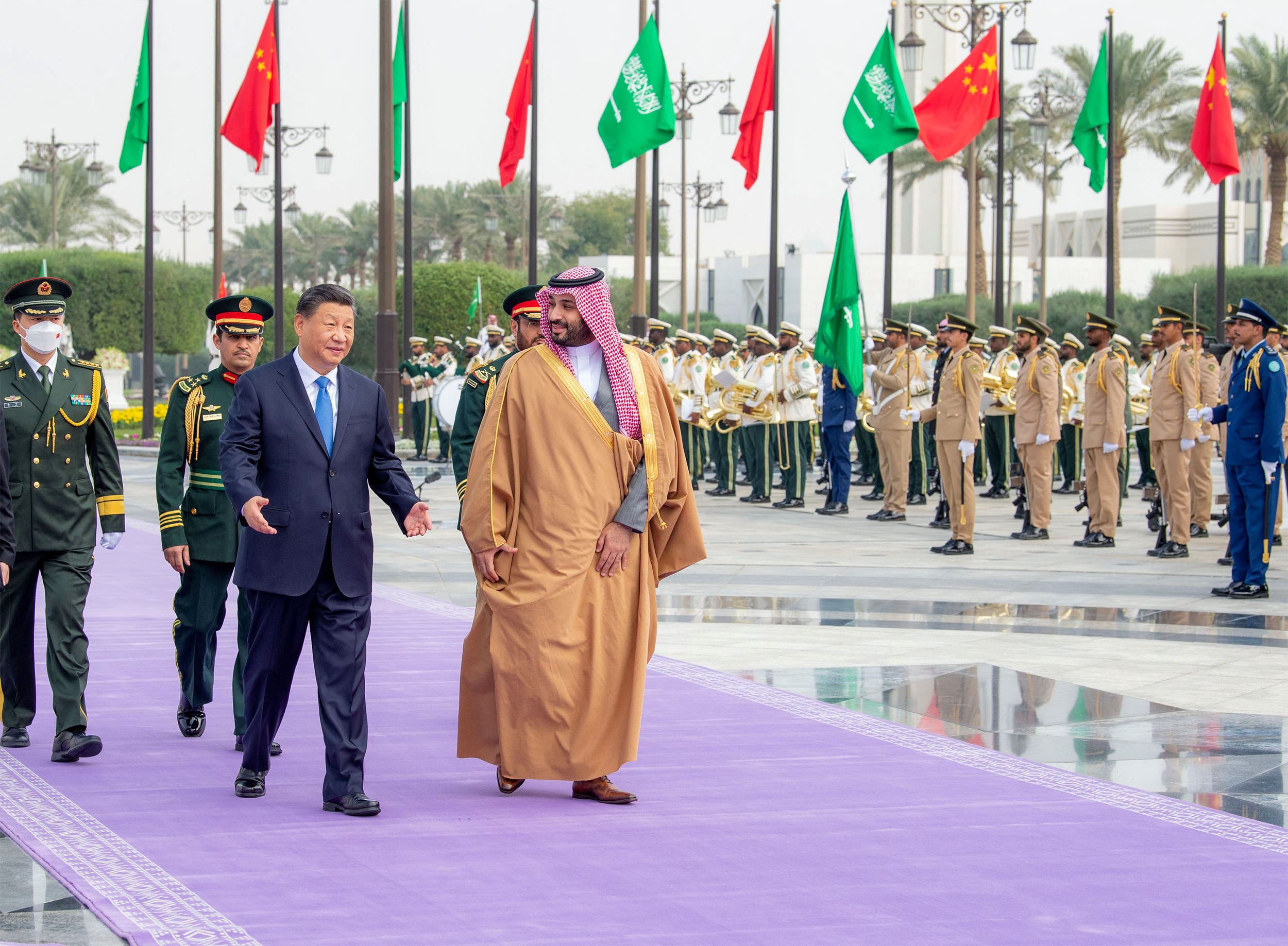
'Saudi Crown Prince Mohammed bin Salman welcomes Chinese President Xi Jinping in Riyadh, Saudi Arabia December 8. (Bandar Algaloud/Courtesy of Saudi Royal Court/Handout via REUTERS)'
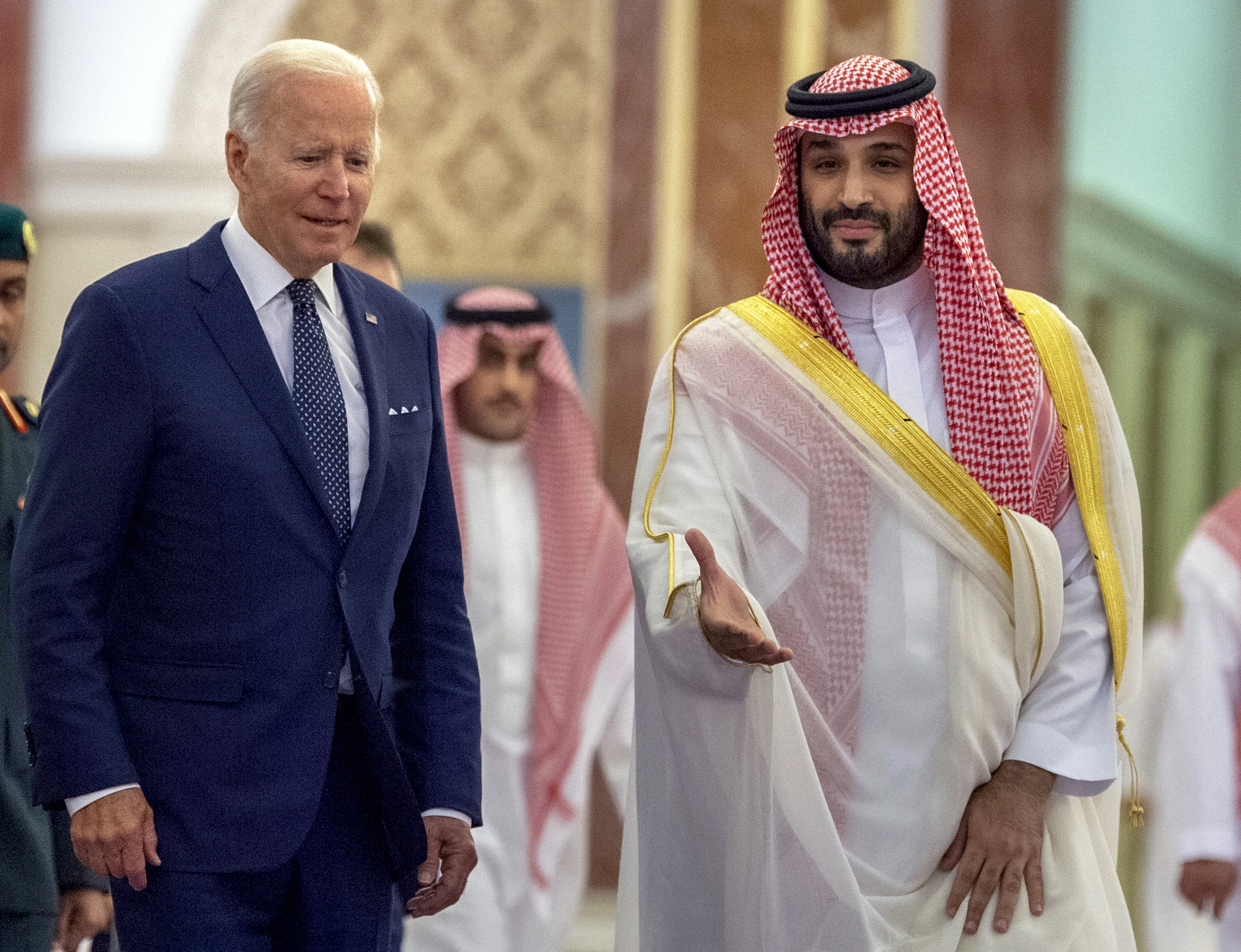
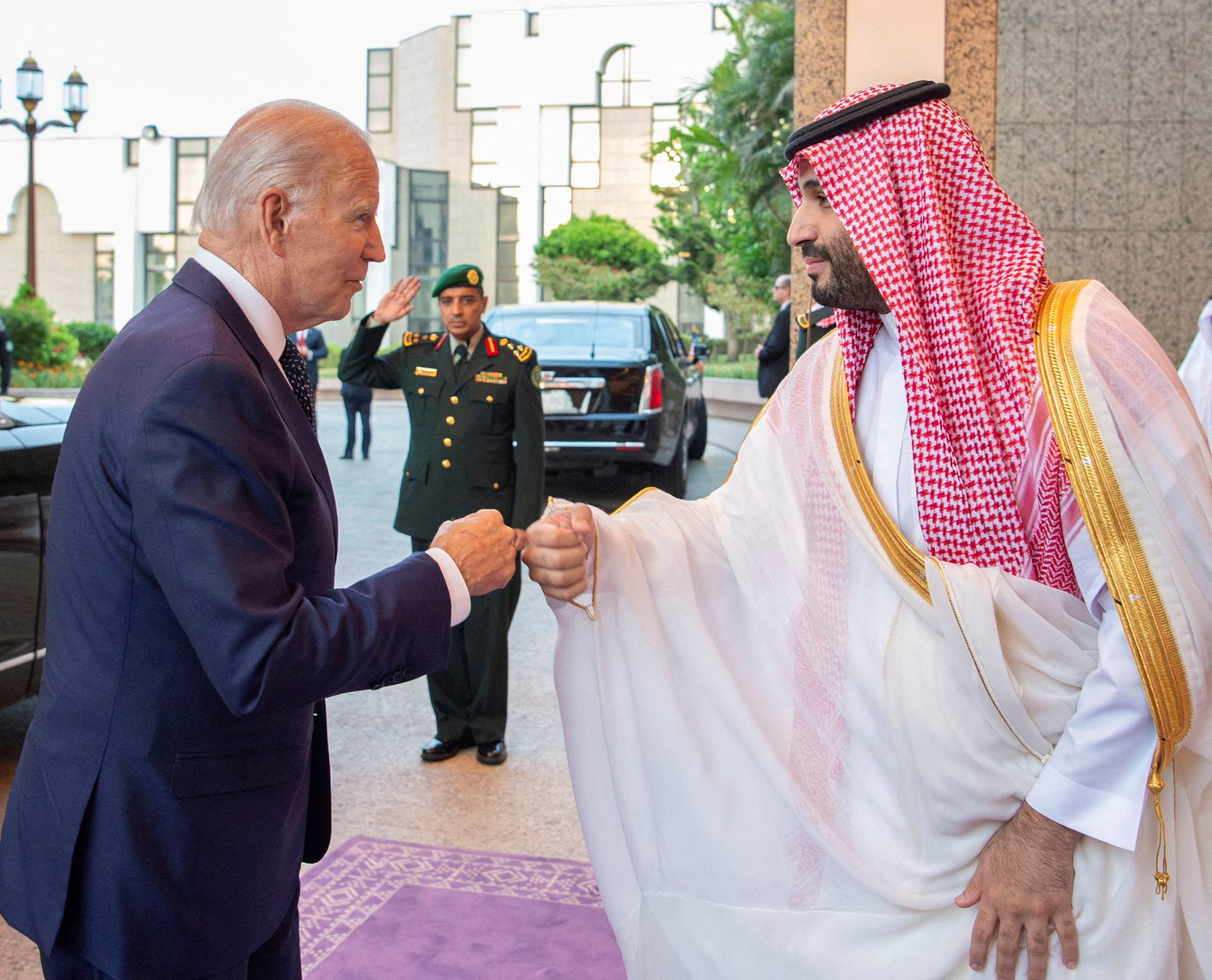
The long-awaited state visit to Saudi Arabia by Chinese leader and Communist Party General Secretary Xi Jinping is an important moment in Riyadh’s ongoing emergence as a more dynamic player on the global stage. It’s also a significant test of Saudi Arabia’s ability to balance its ambitions and other interests with the imperative of maintaining its paramount security relationship with the United States. To some Americans, the optics of the lavish welcome may contrast significantly with the low-key reception of President Joseph R. Biden Jr. in Jeddah in July, even though the White House itself wanted to keep pomp and ceremony to a minimum. More important will be the U.S. reaction to the deliverables, which reportedly will focus on energy and infrastructure deals, possibly involving sums up to $30 billion. There is no sign yet of any arrangement that will raise particular hackles in Washington, but this may be the most dramatic test yet of the ability of the United States’ Gulf partners, like Saudi Arabia and the United Arab Emirates, to balance building closer ties with the emerging power in China while maintaining strong relations with the United States. Both Saudi and UAE officials have repeatedly stressed that one of their biggest foreign policy goals in the coming decades is not to be drawn into a new cold war between Washington and Beijing or to be asked by one side, or both, to shun the other.
My Customer is My Friend
The Chinese-Saudi relationship has been, and still largely is, a commercial one. Saudi Arabia is one of China’s biggest suppliers of energy resources, and China reportedly relies on Gulf energy exports for about 30% of its annual energy needs. China is one of Saudi Arabia’s best customers, and the two countries have a keen interest in developing investment and other commercial relations that go beyond buying and selling oil. Saudi Arabia has been expressing a keen interest in joining China’s infrastructure project, the Belt and Road Initiative, and “harmonizing” it with Riyadh’s own Vision 2030 development plans. The State Grid Corporation of China has been actively seeking Middle Eastern contracts for the generation and distribution of electricity and a potential free-trade agreement between China and the Gulf Cooperation Council is reportedly at an advanced stage.
None of this is likely to particularly bother Washington. What the United States is looking for are any signs that Saudi Arabia is deliberately giving China an undue strategic foothold in the Gulf region. This will focus on the delicate issue of telecommunications technology, in particular, with Chinese companies like Huawei, which is heavily sanctioned by the U.S. government. Dealings with Huawei have already proved a significant point of contention between the United States and the UAE, and if Saudi Arabia were to enter into significant agreements with such Chinese companies, Washington is likely to be deeply rankled. The fear is that Chinese telecommunications technologies could involve techniques of intelligence gathering and surveillance that are so deeply buried in the system that they are virtually undetectable and, therefore, effectively invulnerable. Beyond that, one of Biden’s few major takeaways from his July visit with the Saudis was a memorandum of understanding between the two countries on telecommunications technology, which many Americans interpreted as a commitment to seek such technology from the United States and other Western firms, rather than Huawei and other Chinese corporations.
In addition, the United States will be looking closely at infrastructure projects in the Gulf involving China that could potentially have dual-use purposes. In November 2021, Washington urgently pressed the UAE to halt construction on a secret Chinese port being built near Abu Dhabi that the United States maintained could have served as a naval base or other military facility for China in the heart of what has traditionally been a part of the Gulf region exclusively friendly to the United States. Abu Dhabi apparently complied with the demand and construction was reportedly halted. This incident involving the UAE provides an example of the myriad possibilities of Chinese or joint infrastructure projects in the Gulf region that might alarm Washington, believing that Saudi Arabia has been duped or is colluding with China to give Beijing a strategic or military toehold in a region in which it has precious few.
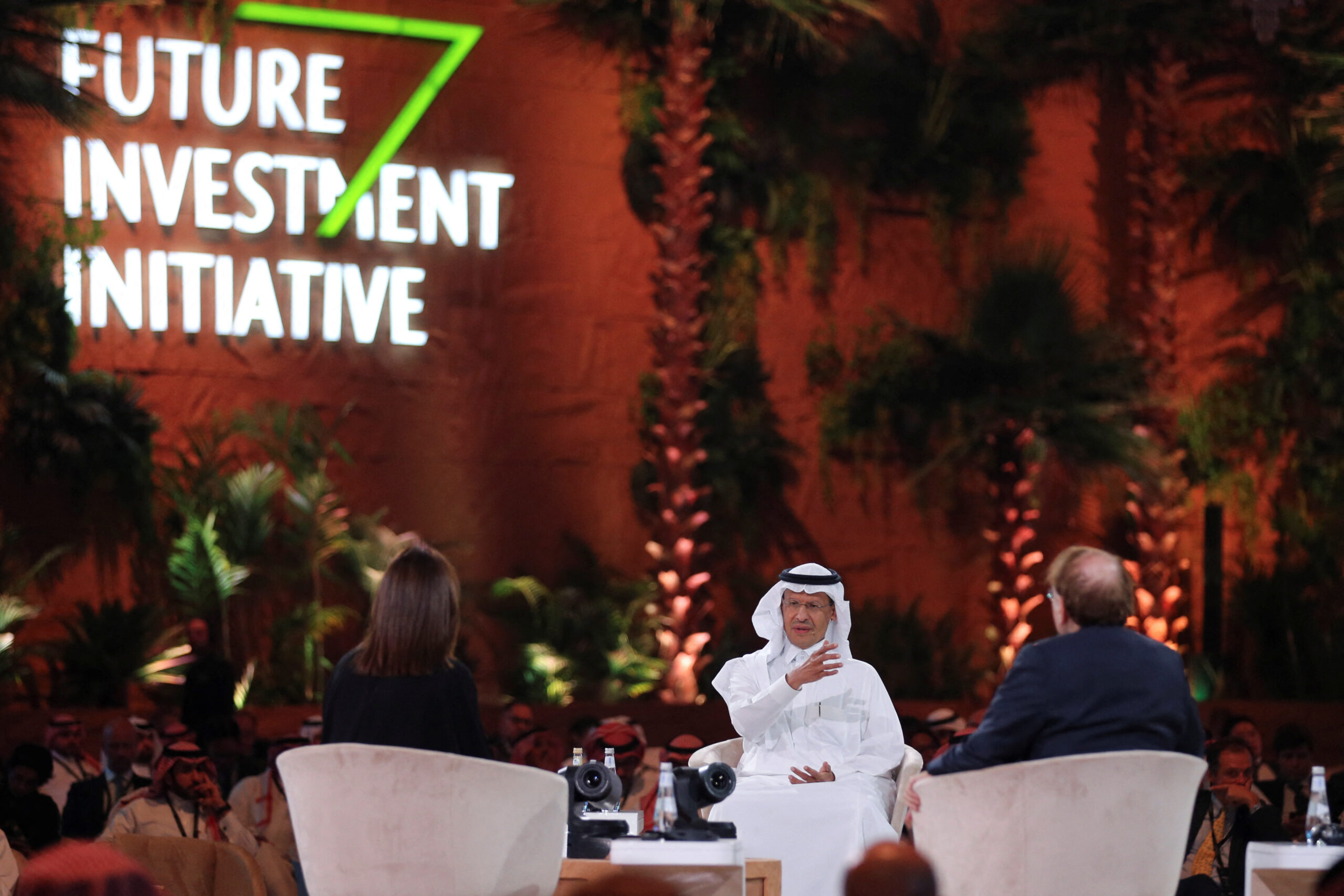
Finally, Chinese-Saudi cooperation on nuclear energy is a delicate matter between Saudi Arabia and the United States. Saudi Arabia has repeatedly said that if Iran develops a nuclear weapon, it will do so as well. Saudi Arabia has a relatively fledgling nuclear energy program, but it also has an obvious incentive to use nuclear power generation to sell rather than use its domestic oil production. The complication is that nuclear technology development follows the same path for both legitimate energy production and potential military projects for a significant part of its development. It is only at a later stage that the military aspect would branch off, if it ever does, from a legitimate energy production project. China has a long-standing agreement to help Saudi Arabia develop its nuclear program. In early October, Saudi Energy Minister Prince Abdulaziz bin Salman and China’s director of the National Energy Administration, Zhang Jianhua, had a virtual video conference to discuss energy cooperation. Among the many topics discussed was how to implement the existing agreement between the two countries to help develop Saudi Arabia’s nuclear energy program.
This is a thorny subject between Washington and Riyadh. Saudi Arabia has every right under the Treaty on Non-Proliferation of Nuclear Weapons to develop its peaceful nuclear energy program and every reason to do so. However, given the threat from Riyadh to develop its own nuclear deterrent if Iran becomes a nuclear weapons power, coupled with the breakdown in nuclear negotiations with Tehran, Washington’s concern about nuclear proliferation in the Gulf region is becoming acute. If it appears that Saudi Arabia will be using China and Chinese technology in a dash to parity with Iran, or anything that strongly suggests such a move, the United States will react badly. But if the two countries keep nuclear cooperation at a relatively slow pace and in a manner that better reflects a focus on energy generation rather than a clandestine fledgling weapons program, Washington may have little choice but to grit its teeth and monitor developments closely without making this a significant bilateral irritant with Saudi Arabia. The only alternative would be to offer Saudi Arabia better technology on better terms, which may be politically impossible and strategically unwise, and at any event is unlikely to be a U.S. policy initiative in the near future.
The Friend of My Enemy is … My Friend?
In addition to the Saudi Arabia-China-United States triangle, there is also, and arguably more significantly, a Saudi Arabia-China-Iran triangle at play as well. China has developed a strong partnership with Tehran, but it does not want to be tied exclusively to Iran among all of its potential friends in the Gulf region. Just as Saudi Arabia is interested in reaching out to China as part of a strategic diversification initiative to gain a wide array of alternatives to simply relying on the United States as a security guarantor, China has the incentive of embracing Saudi Arabia in order to diversify its own alternatives in the region that provides so much of its all-important energy supplies. Saudi Arabia does not want the only Gulf voice in Beijing, as China emerges as a more important global power, to be one speaking in Persian. Riyadh and Abu Dhabi want to add a significant Arab presence in China to offset the potential for exclusive Iranian access to China as it begins to extend its influence strategically as well as commercially in far-flung areas like the Gulf region.
But, again, this raises potential difficulties with Washington. The United States has no problem with Saudi Arabia dealing with China as a customer for oil and even an investment and infrastructure partner. But it is protective of its role as the head of a large and increasingly equitable coalition that maintains security and stability in the Gulf, Arabian Sea, and Red Sea and, in particular, protects the three key chokepoints in the region: the Strait of Hormuz, Suez Canal, and Bab el-Mandeb. A vast amount of global commercial shipping passes through these three vital chokepoints and a huge percentage of the seaborne energy exports on which the global economy depends. In the immediate term, Iran is seen as the biggest threat to such crucial maritime security. In the long run, maintaining security dominance in these waters by a U.S.-led coalition is seen as a key strategic advantage for Washington over Beijing, one that the United States is working hard to maintain.
So once again, it is a delicate balancing act for both Saudi Arabia and the United States as Riyadh and Beijing work to build closer ties. At a certain level, the United States would welcome any move that loosens, complicates, or undermines the partnership between China and Iran – although there is no clear reason to think better relations between China and Saudi Arabia would do that. However, great power competition with China is typically conceptualized in the United States as a long-term global rivalry that involves projecting power and adopting key security roles in crucial areas like the Gulf region. Therefore, Saudi Arabia will have to tread lightly when it comes to the Chinese presence in the region, and Washington, too, must try to strike a balance between tolerating or even welcoming closer Chinese-Saudi relations while working to ensure that they don’t undermine core U.S. interests.
The U.S.-Saudi Friendship is Quietly Rallying
The Chinese-Saudi cooperation meetings and the visit of Xi to Riyadh come at a time when U.S.-Saudi relations are on a quiet but definite uptick from the anger and mutual recriminations following the October quota reduction announcement from the OPEC+ alliance of OPEC and non-OPEC oil producers. U.S. anger has subsided for several reasons. Saudi Arabia’s contention that production cuts would not result in price hikes at the pump in the United States and the West proved correct. Moreover, the dispute was linked to the United States’ midterm elections, and because the Democrats, currently in power, fared better than expected, Saudi Arabia has avoided being, as it would have been had things gone badly, fairly high on the list of suspected guilty parties in the ensuing blame game. In brief, neither nightmares entertained by the White House and congressional Democrats materialized. Oil remains reasonably priced at the commercial and retail level, and Democrats did not take a beating at the polls.
The Xi visit, and in particular the still unknown associated deliverables, is the last obvious source of contention between the United States and Saudi Arabia on the immediate horizon. But overall, the recovery of the U.S.-Saudi relationship looks solid and does not appear to be threatened by the Chinese-Saudi partnership fest. The December 4 OPEC+ meeting maintained the status quo on oil production, but this time the White House was relatively comfortable with the decision as gas prices haven’t risen as a consequence. Meanwhile, the technical level defense cooperation between the United States and GCC states continues to develop as the relationship is reconceptualized on both sides as a more mutual partnership rather than U.S. protection for supposedly vulnerable “client states.”
Without doubt Saudi Arabia is using the Xi visit and the growing relationship with China as part of a series of moves to effectively announce itself as an emerging mid-level power in an increasingly multipolar world. The United States appears to be adjusting to this new reality by emphasizing the benefits of burden sharing and cooperation on mutually shared goals rather than a protection plan based on security for oil. That’s a far healthier and sustainable approach to the relationship than trying to persist with outmoded notions of how the relationship works. The downside is that Gulf countries that are trying to assert themselves as mid-level international powers will have more independence and agency than Washington was, perhaps, happy to embrace in the past. But all this means that the U.S.-Gulf Arab relationship will start to look more like the U.S. partnership with allies in NATO. And since there are at least as many burden sharing and other benefits to this new model, its emergence – even with much closer relations between Saudi Arabia and U.S. rivals like China – shouldn’t pose any threat to the bilateral relationship and probably ought to make it considerably stronger.
The views represented herein are the author's or speaker's own and do not necessarily reflect the views of AGSI, its staff, or its board of directors.
A more self-assertive Saudi Arabia is taking steps to amplify its role on the global stage, at times in defiance of its U.S. partner. What does this mean for global energy markets and the future of U.S.-Saudi relations?
President Trump has led the United States into an impossible dilemma in which resuming and intensifying the war presents one set of alarming consequences while ending it under current circumstances offers at least as many disasters for Washington.
The Trump administration has positioned the United States at a crossroads between a new regime of containment against Iran or a historic drawdown of U.S. influence in the Gulf and broader Middle East.
Riyadh and Abu Dhabi urged President Trump not to attack Iran, but now that the war is into its second month, leaving the current situation in place would be an unthinkable fiasco for them.
Though they were unsuccessful in preventing the current conflict, and, as expected, have been dragged into the U.S.-Israeli confrontation with Iran, Gulf Arab countries remain crucial to hopes for limiting the war and bringing it to a quick resolution.