JASTA: A Pandora’s Box for U.S. Defense and Diplomacy
The recent adoption by overwhelming majorities in both the U.S. Senate and House of Representatives of the Justice Against Sponsors of Terrorism Act (JASTA) is a grave threat – not only to U.S. relations with Saudi Arabia, which is the primary target of the legislation – but also for conducting U.S. foreign policy generally and,...
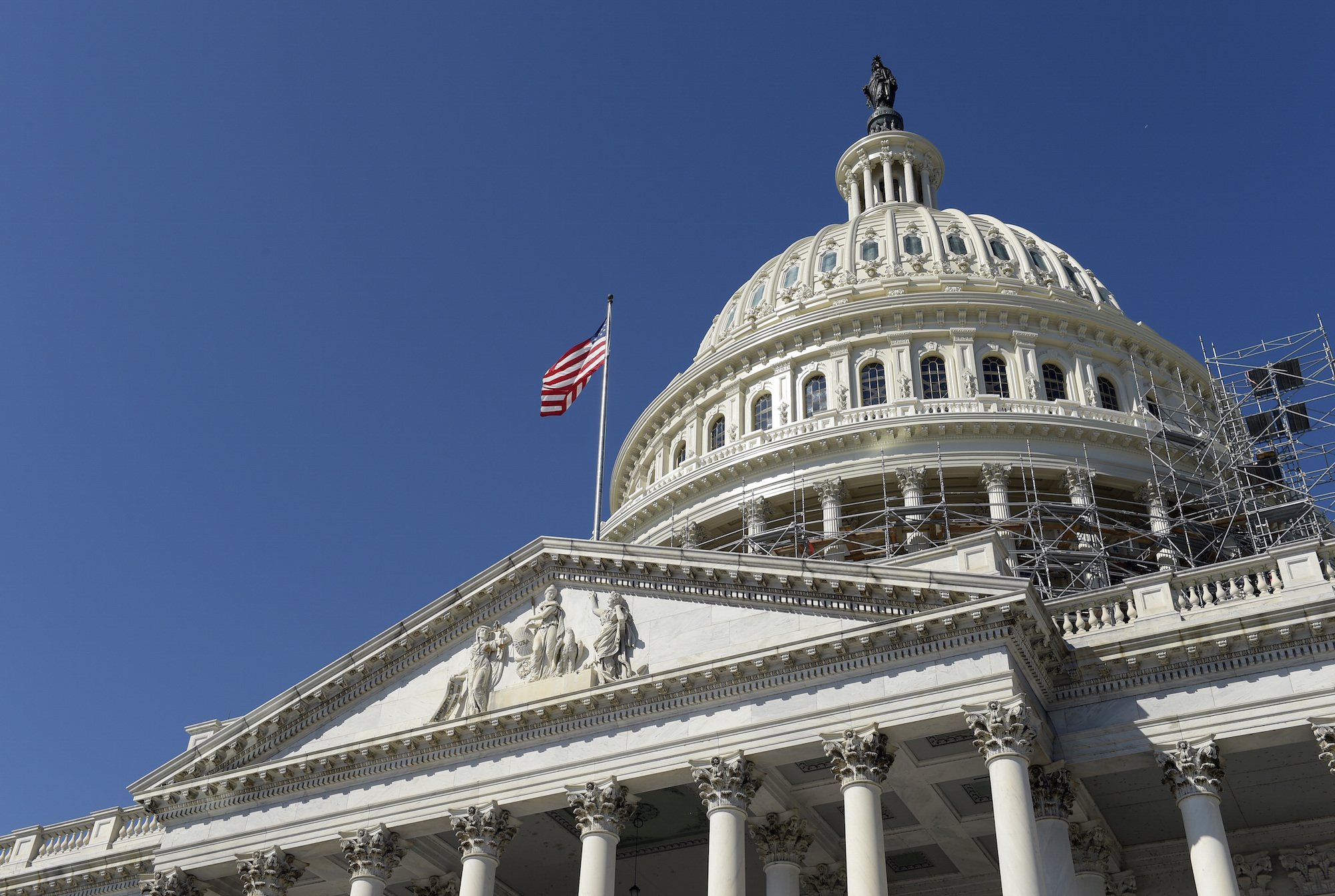
'An American flag flies over Capitol Hill in Washington, DC. (AP Photo/Susan Walsh)'
The recent adoption by overwhelming majorities in both the U.S. Senate and House of Representatives of the Justice Against Sponsors of Terrorism Act (JASTA) is a grave threat – not only to U.S. relations with Saudi Arabia, which is the primary target of the legislation – but also for conducting U.S. foreign policy generally and, potentially, to the effectiveness, safety, and security of U.S. officials around the world. The act, which would lift the customary international convention of sovereign immunity, preventing governments and their officials from being sued in other countries for their official conduct, seeks to allow the families of the victims of the 9/11 attacks to sue foreign governments and officials – in this case, those of Saudi Arabia – who some continue to suspect were complicit in those attacks.
There can be no questioning the legitimacy of the demands for justice for the victims of terrorism anywhere in the world. However, the impact of lifting sovereign immunity by the United States on U.S. officials and military officers serving around the world could be extreme. While U.S. courts would soberly deal with the claims of the 9/11 families and others against foreign governments and their officials for terrorist attacks committed against American citizens on U.S. territory, the floodgates around the world would be opened against the country’s own representatives.
Following a major drone strike, a significant covert operation, or military action that leads to loss of life, even if that is restricted to legitimate combatants and other lawful military targets, U.S. officials deemed responsible could be subjected to endless prosecutions and lawsuits.
The convention of sovereign immunity protects the United States, as well as its officials and military officers, as much as it does any other country in the world. Indeed, it’s hard to imagine another country more vulnerable to an endless series of legal challenges, litigation, lawsuits, and prosecutions – many frivolous, but some possibly even meritorious under the domestic law that may apply in a given country – than the world’s sole remaining superpower.
It may be practically impossible for parties based overseas to recover financial damages from the U.S. government or its officials based on such lawsuits. However, the thinking behind JASTA, apparently, is that foreign assets in the United States could be seized pursuant to rulings against foreign defendants. There are some countries that will not have access to U.S. assets. But there are many that, at least theoretically, might.
Would they dare? Under the current circumstances, surely not. But if the United States sets the example, why wouldn’t they? And what would Americans say if they did? “Oh, we may do it, but others cannot?”
U.S. President Barack Obama has vowed to veto JASTA as a major threat to the country’s ability to conduct its foreign policy without constantly considering the international legal implications of every action the United States takes, and without every civilian or military official considering his or her own potential legal liabilities before obeying any instructions to take action in the national interest.
White House officials claim that many members of Congress have privately agreed with the president’s concerns about the impact on U.S. defense and diplomacy if the country takes the lead in scrapping the principle of sovereign immunity, and opening the door to prosecutions against the U.S. government and its officials. All Americans should hope this is true, and that wisdom will prevail in the event of any vote to override the expected presidential veto.
However, given the continued emotional resonance of the 9/11 attacks, felt by all with this week’s 15th anniversary, there is a danger that enough members of the House and Senate would vote to override a presidential veto in order to avoid having to explain to their constituents why they “denied justice” to the 9/11 families. The great political problem for JASTA is that justice for the 9/11 families is a simple and easy to understand proposition, and one that is impossible to oppose. But the trouble with the law is not merely that it would cause additional strains with a crucial ally in the Middle East on whom we depend in the struggle against terrorist groups such as the Islamic State in Iraq and the Levant and al-Qaeda and in curtailing the pernicious influence of Iran and its allies such as Hezbollah, though it certainly would do that.
The biggest problem with JASTA is the potential havoc it probably would wreak on the United States’ ability to conduct its foreign policy without fear that its officials will be hauled before a judge to defend themselves on a regular basis. When considering this legislation, the public, and members of Congress, tend to think and speak merely in terms of providing a guarantee that foreign officials implicated in the death of innocent Americans will be held to account in upright and fair-minded U.S. courts. It’s much harder to get people to imagine all of the prosecutions and lawsuits that await the U.S. government and its representatives the world over if the United States takes the lead in trashing the principle of sovereign immunity that has protected this country, in many ways above all others, for so long.
And the fallout wouldn’t necessarily be restricted to U.S. officials being accused of terrorism regarding intelligence or military activities. Once the principle of sovereign immunity is lifted, governments and their officials are potentially liable for allegedly breaking any law another jurisdiction determines has been violated.
There’s a familiar metaphor that sums up what JASTA really means for U.S. defense and diplomacy: it’s a Pandora’s Box that looks attractive at first glance but opens up a series of endless nightmares. If Congress does override the promised presidential veto, Americans will surely regret it for decades to come.
The views represented herein are the author's or speaker's own and do not necessarily reflect the views of AGSI, its staff, or its board of directors.
The Iran war has changed the basing question. Washington will have to determine how much infrastructure it can sustain, which missions deserve priority, and how much responsibility regional partners can realistically assume.
Policies that prevent Saudi Arabia from pursuing diplomatic normalization and are fueling alienation in large parts of the West seem to reflect a Jewish consensus in Israel.
Policies that prevent Saudi Arabia from pursuing diplomatic normalization and are fueling alienation in large parts of the West seem to reflect a Jewish consensus in Israel.
President Trump has led the United States into an impossible dilemma in which resuming and intensifying the war presents one set of alarming consequences while ending it under current circumstances offers at least as many disasters for Washington.
The Trump administration has positioned the United States at a crossroads between a new regime of containment against Iran or a historic drawdown of U.S. influence in the Gulf and broader Middle East.
Riyadh and Abu Dhabi urged President Trump not to attack Iran, but now that the war is into its second month, leaving the current situation in place would be an unthinkable fiasco for them.