As long as U.S. sanctions are in place, Iran is likely to encounter more unrest. How the recent crisis compares to earlier crises in the Islamic Republic may provide insights into the regime’s behavior in future protests.
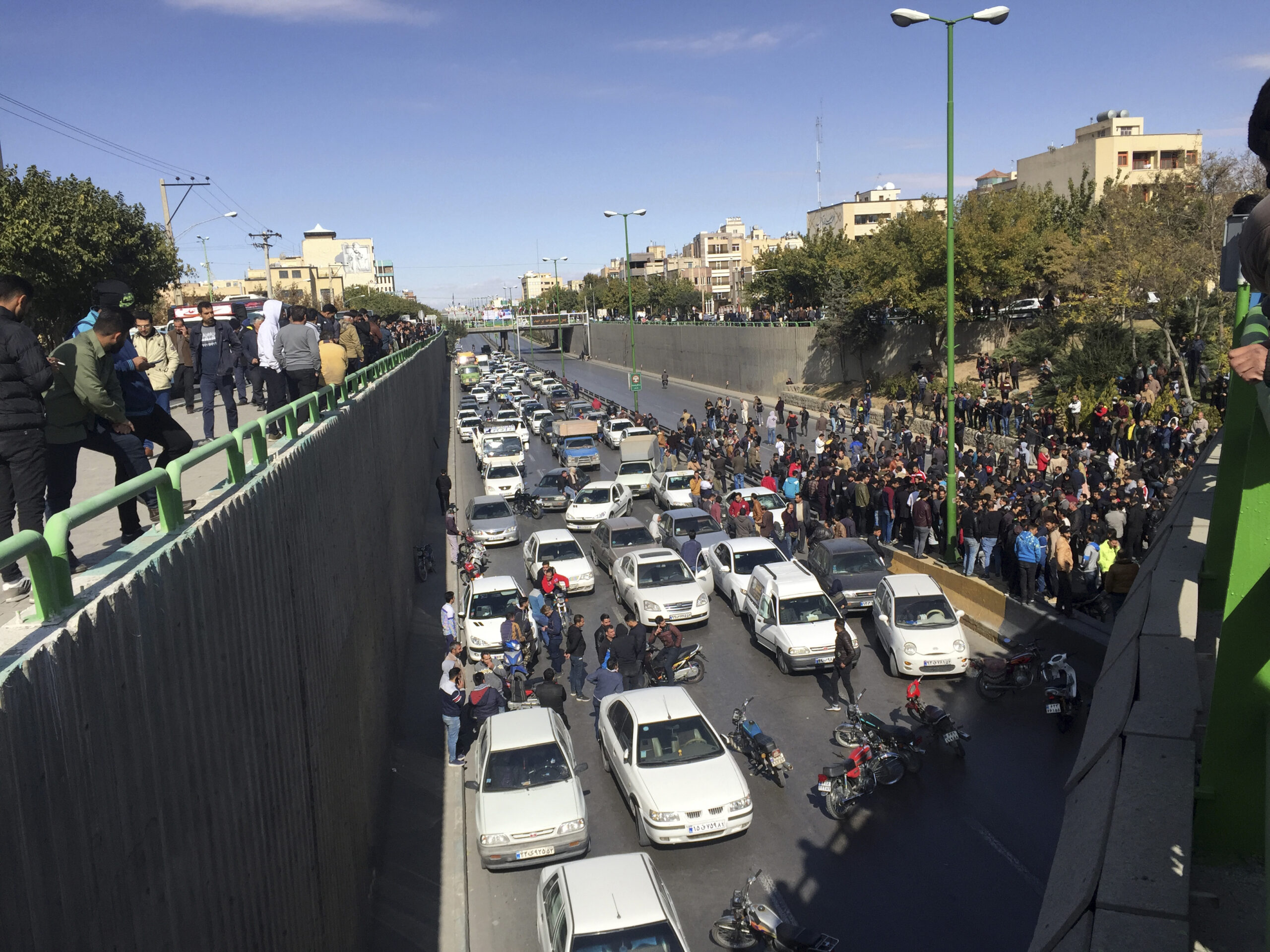
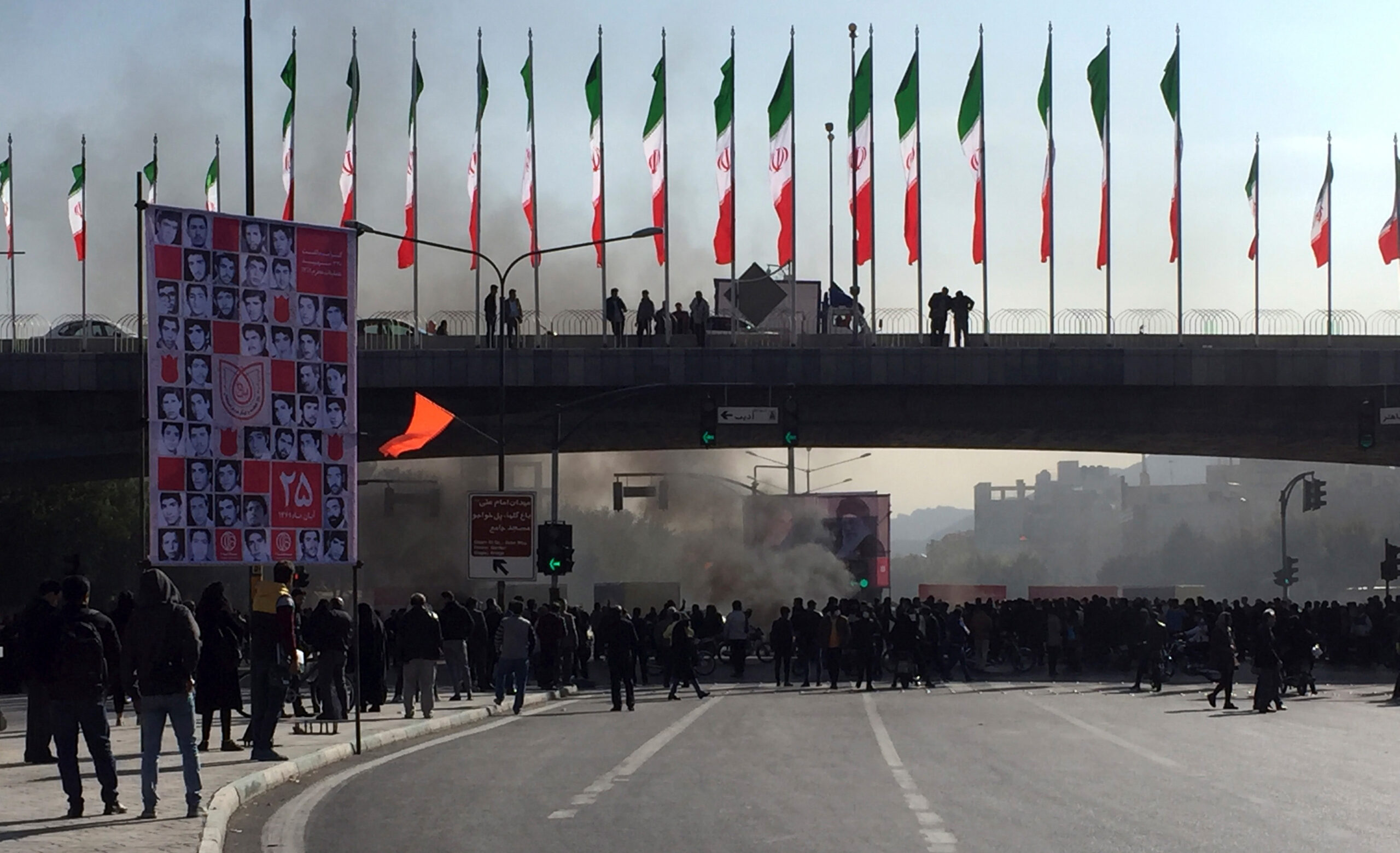
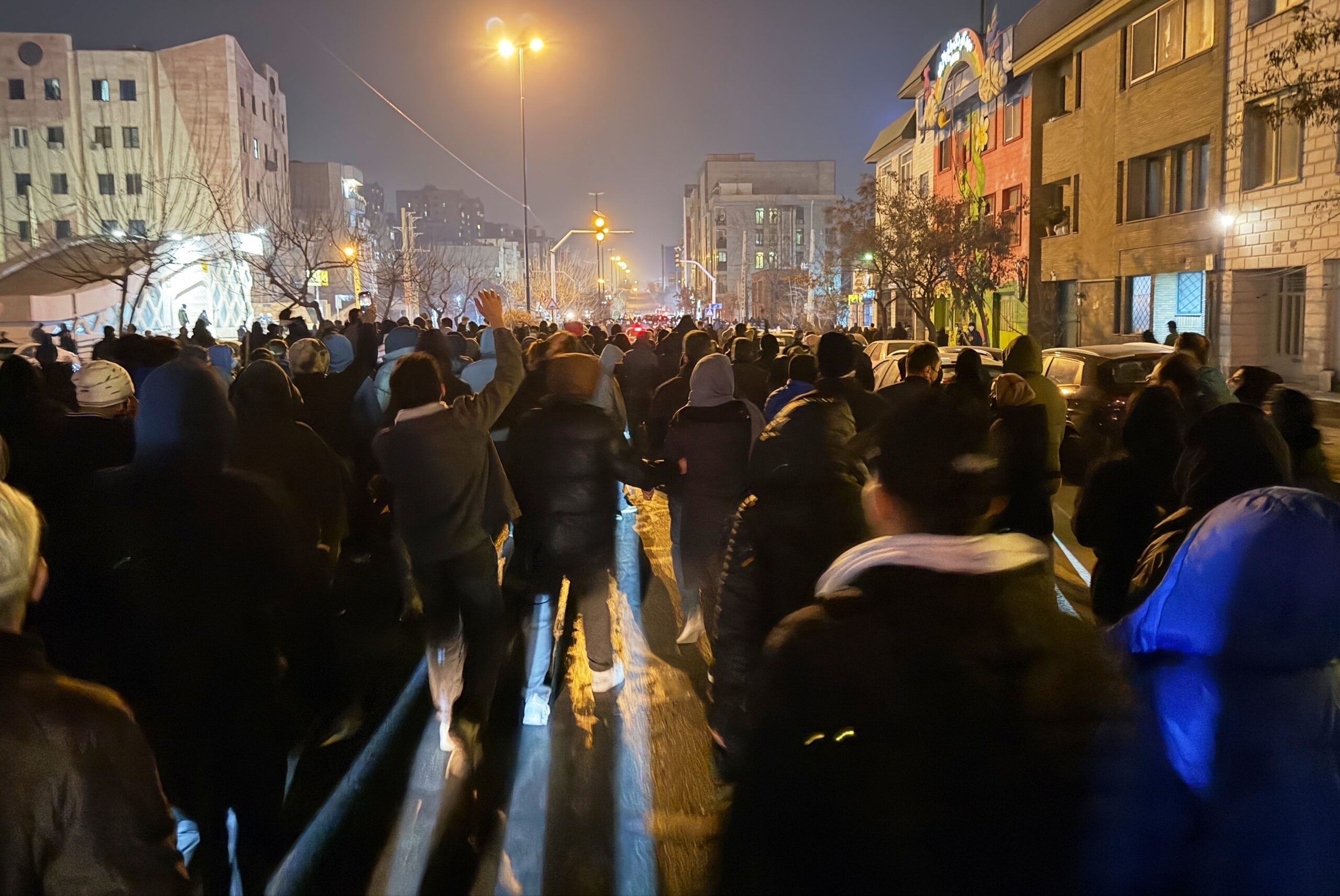
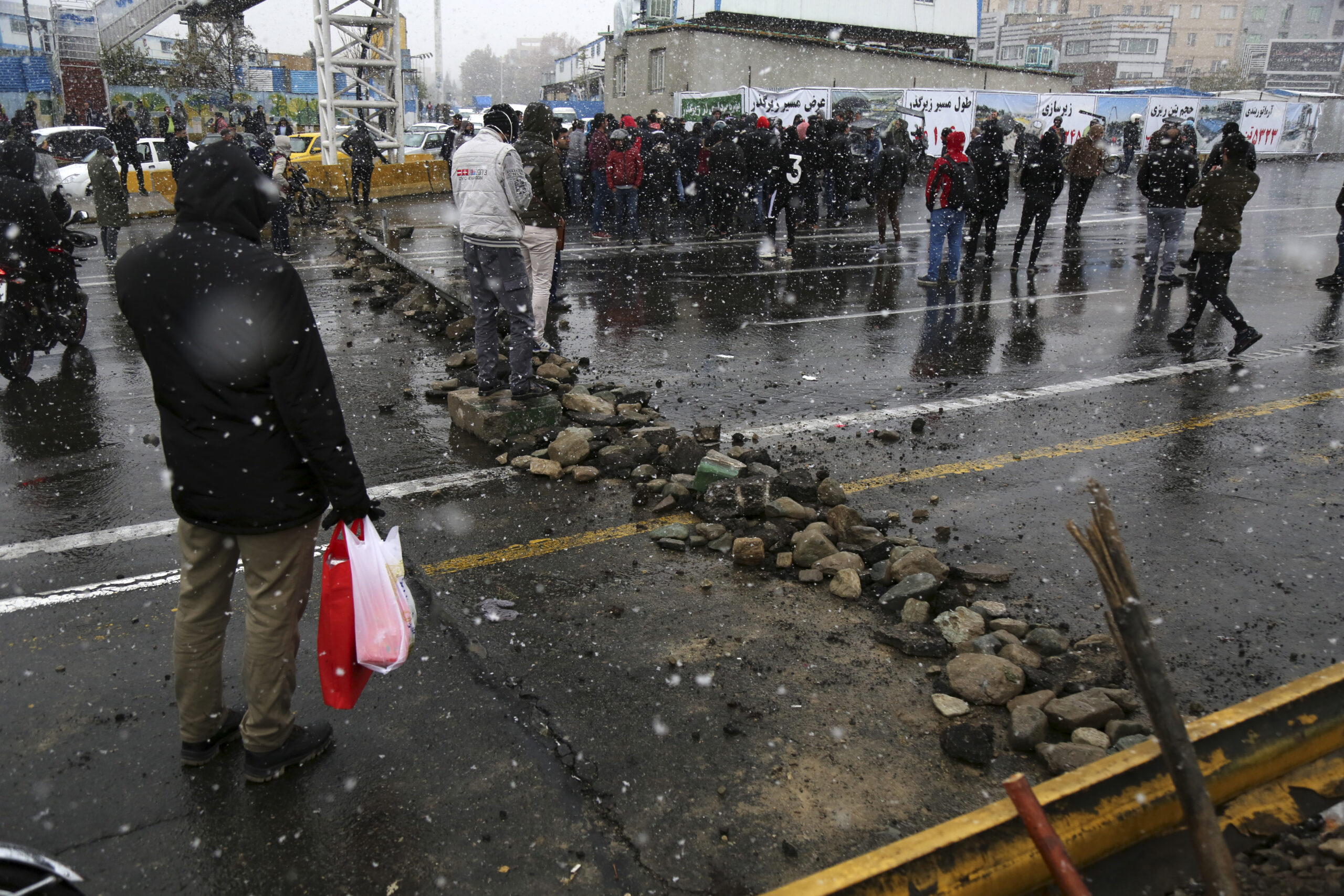
A road is blocked by protesters after authorities raised gasoline prices, Tehran, Iran, Nov. 16. (Majid Khahi/ISNA via AP)
Three weeks after the eruption of countrywide anti-government protests in Iran, information about the scope and scale of the protests and the regime’s response is gradually emerging. But how does this crisis compare to earlier crises in the four decades of the Islamic Republic? The answer to this question may provide insights into the regime’s behavior in future protests.
The Islamic Republic was itself born out of anti-government protests culminating in collapse of the imperial order on February 11, 1979 and victory of the revolution. Before long, the revolutionaries turned against each other in their attempts to seize control over the new regime. This in turn led to a near permanent state of crisis and re-emergence of separatist movements in Iran’s periphery regions dormant since the end of World War II. But by June 1981, the dominant group among the ruling elites of the Islamic Republic defeated all organized opposition and consolidated its rule.
Since June 1981, the consolidated Islamic Republic has experienced countless local protests and uprisings, but only six major anti-government protests, which can roughly be divided into economic and political protests:
The 1992 economic protests were provoked by attempts of the local government to bulldoze the Kou-ye Tollab shantytown in Mashhad, Razavi Khorasan province. The riots fast spread to Arak in Markazi province, Mobarakeh in Isfahan province, and the low-income Chahardangeh neighborhood of Tehran. It was with some difficulty that the Islamic Revolutionary Guard Corps imposed order in the affected areas.
The 1995 economic protests in disadvantaged Eslamshahr suburb of Tehran were provoked by a 30% increase in bus fares from the suburbs to central Tehran, where many Eslamshahr residents worked.
The 1999 political student uprisings were in protest of the closure of the daily Salam newspaper.
The 2009 political protests were sparked by the perceived fraudulent presidential election that secured President Mahmoud Ahmadinejad a second term in office.
The 2017-18 economic protests by residents in poor suburbs of major population centers were in protest of the increased price of foodstuff.
The 2019 economic protests were against the government’s decision to introduce gasoline rationing and price hikes of at least 50%.
Major Anti-Government Protests in Iran, June 1981 – December 2019
Judging by numbers available in Persian-language open sources, economic protests tend to mobilize fewer protesters and be shorter in duration than political protests: Those in 2009 lasted at least six months (the lesser countrywide protests lasted well into 2011). However, economic protests appear to be much more violent than political protests, as they produce disproportionately higher fatalities, result in the arrests of more protesters, and cause greater casualties among security services personnel. Severity of the violence to some extent determines involvement of the IRGC and Basij militia in their suppression: The regime initially deploys the Law Enforcement Forces, but when it is incapable of containing a crisis, the IRGC and Basij step in to suppress protests.
In comparison with earlier protests, the November protests did not mobilize large masses, but with at least 208 protesters killed and 8,343 arrested, they fit the pattern of economic protests: short duration, extreme violence, high fatalities among protesters and some losses among security services, and involvement of the IRGC and Basij to assist the Law Enforcement Forces.
A survey of the protesters killed and their native province points to a very important factor: Ethnicity and sectarian identity in provinces with a history of separatism seem to provoke a harsher government response, which in turn further radicalizes segments of the local population.
Natives of predominantly ethnically Arab and Sunni Khuzestan province and predominantly Kurdish and Sunni Kurdistan and Kermanshah provinces are statistically overrepresented among protester fatalities. Among 143 killed protesters whose native province is known, 86 protesters (around 60%) are from these three provinces. Azeris, on the other hand, who belong to an ethnic minority but are Shia and are overrepresented among the ruling elites of the Islamic Republic, only suffered five losses.
Protesters Killed in Protests, November 15 – November 22, 2019, by Native Province
Source: Amnesty International
It is difficult to draw similar conclusions concerning the arrested protesters. Seyyed Hossein Naqavi Hosseini, a parliamentarian, is the source of information about 7,000 of those protesters arrested during the November uprisings, but he did not provide any details about their places of arrest. Cumulative data extracted from public statements from Islamic Republic authorities show the disclosed provinces of arrests for the remaining 1,343 arrested protesters since the end of the protests on November 22.
Locations of Arrests During November 2019 Protests
Note: Data was collected as information was released, between November 22 and December 4, following the protests.
Similar to previous protests in in the four-decade long history of the Islamic Republic, the November protests in Iran were not caused by a single factor, but chief among the causes appears to be economic grievances ignited by the government’s decision to increase fuel prices to adjust the economy to the increased pressure of U.S. sanctions.
As long as the crippling U.S. sanctions against Iran are in place, the regime in Tehran is likely to encounter more economic protests and considerable unrest. As those protests get more frequent and possibly more violent, the regime is likely to intensify the use of force, which risks further escalating the crisis in the country. This, in turn, gives the regime in Tehran an added incentive to either reach a political solution with Washington aiming to attain sanctions relief, or continue unbridled suppression of the public until President Donald J. Trump leaves the White House, hoping his successor will choose a different policy toward the Islamic Republic.
The views represented herein are the author's or speaker's own and do not necessarily reflect the views of AGSI, its staff, or its board of directors.
Iran’s leadership has for years downplayed the impact of sanctions on the economy. Now that President Hassan Rouhani and the regime are compelled to make economic adjustments, they are facing predictable public anger and protests for which they were unprepared.
Under the weight of the United States' “maximum pressure” campaign, Iran is inching toward economic collapse. But this does not necessarily entail the collapse of the political order.
Iran may still call itself an Islamic Republic. In practice, however, it increasingly resembles a state in which the military governs from behind clerical robes.
Ayatollah Ali Khamenei was killed in his office in Tehran at age 86, leaving behind a country in ruins and on the verge of civil war and potential disintegration.
Iran is signaling that it will not absorb attacks passively. But whether this strategy ensures the regime’s survival, seals its fate, or accelerates a broader catastrophe will shape the region for years to come.
The erosion of the regime’s legitimacy across broad segments of society, combined with the breadth of the 2025-26 protest coalition, raises the possibility that a new confrontation could trigger renewed anti-regime mobilization.
On January 8, AGSI hosted a virtual roundtable with its leadership and scholars as they look ahead and assess trends likely to shape the Gulf region and U.S. foreign policy during the coming year.

 Judging by numbers available in Persian-language open sources, economic protests tend to mobilize fewer protesters and be shorter in duration than political protests: Those in 2009 lasted at least six months (the lesser countrywide protests lasted well into 2011). However, economic protests appear to be much more violent than political protests, as they produce disproportionately higher fatalities, result in the arrests of more protesters, and cause greater casualties among security services personnel. Severity of the violence to some extent determines involvement of the IRGC and Basij militia in their suppression: The regime initially deploys the Law Enforcement Forces, but when it is incapable of containing a crisis, the IRGC and Basij step in to suppress protests.