The UAE’s push to reinvigorate its economy, in this manner and at this time, is linked to Expo 2020 Dubai, regional competition, and a broader realignment of Emirati foreign policy to better serve economic interests.
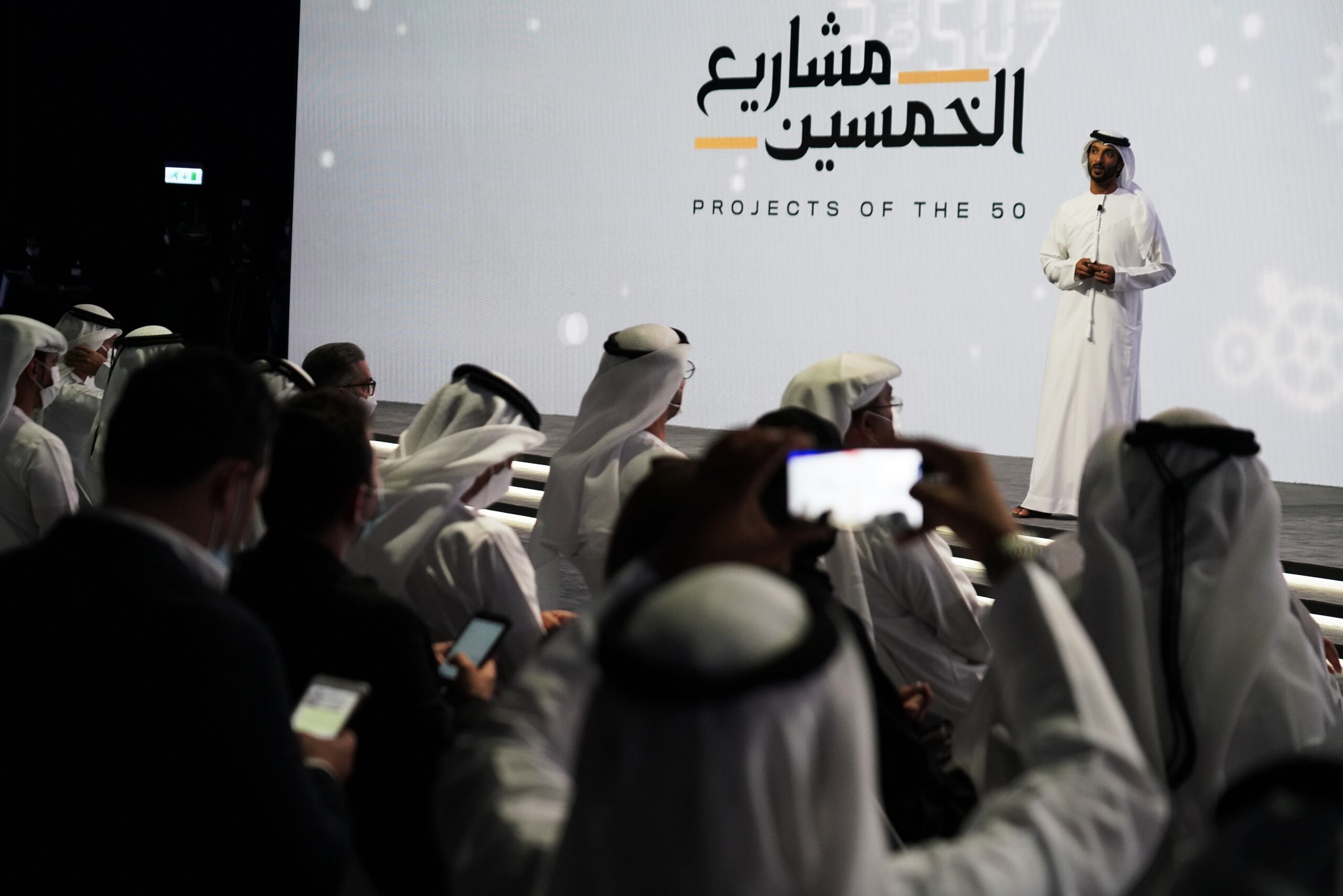
UAE Economy Minister Abdulla bin Touq al-Marri speaks at an event announcing new economic programs in the United Arab Emirates in Dubai, UAE, Sept. 5. (AP Photo/Jon Gambrell)
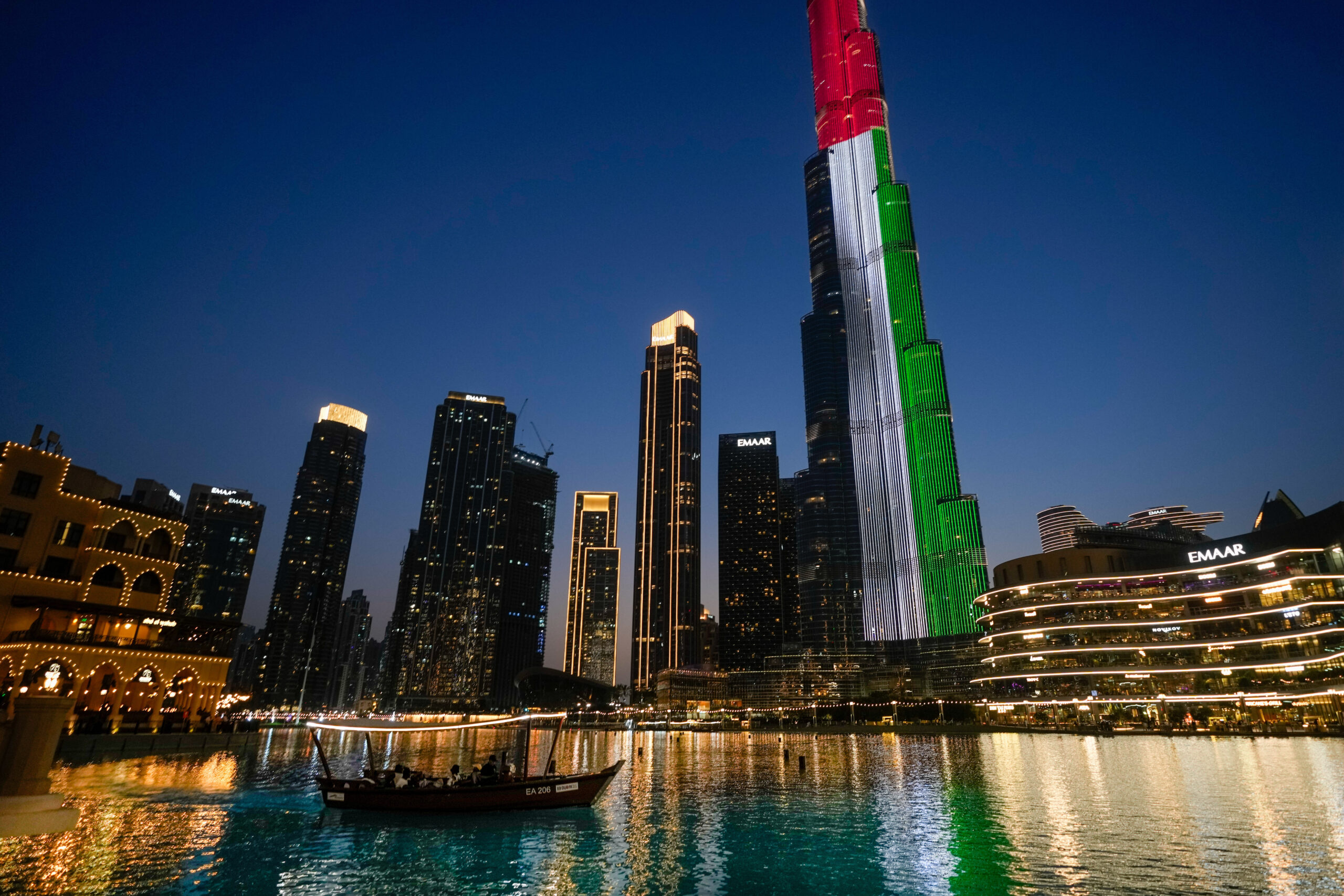
Officials in the United Arab Emirates have unveiled a dizzying array of economic development initiatives and projects in recent weeks, with more announcements expected throughout the remainder of the year. Official celebrations for the country’s 50th anniversary, technically on December 2, began in April and will continue through March 2022, providing the ostensible justification for this economic policymaking acceleration. In early September, the UAE government announced the “Projects of the 50” scheme to boost the country’s development over the coming five decades.
The first batch of these future-oriented projects included 13 initiatives seeking to attract expatriate professionals and residents with new visa schemes, boost UAE exports, generate more foreign investment, and launch technology-related programs and events. The second batch of economic and development initiatives focused on the economic well-being of Emirati citizens. The UAE government unveiled salary subsidies, bonuses, training programs, entrepreneurship promotion, and unemployment support as part of a broader initiative to enable more citizens to enter the private sector. Future announcements will likely aim to further position the country and its citizens at the center of global trade and investment flows.
Timing is everything in the realm of economic planning. And the UAE’s push to reinvigorate its economy, in this manner and at this time, is linked to Expo 2020 Dubai, regional competition, and a broader realignment of Emirati foreign policy to better serve economic interests.
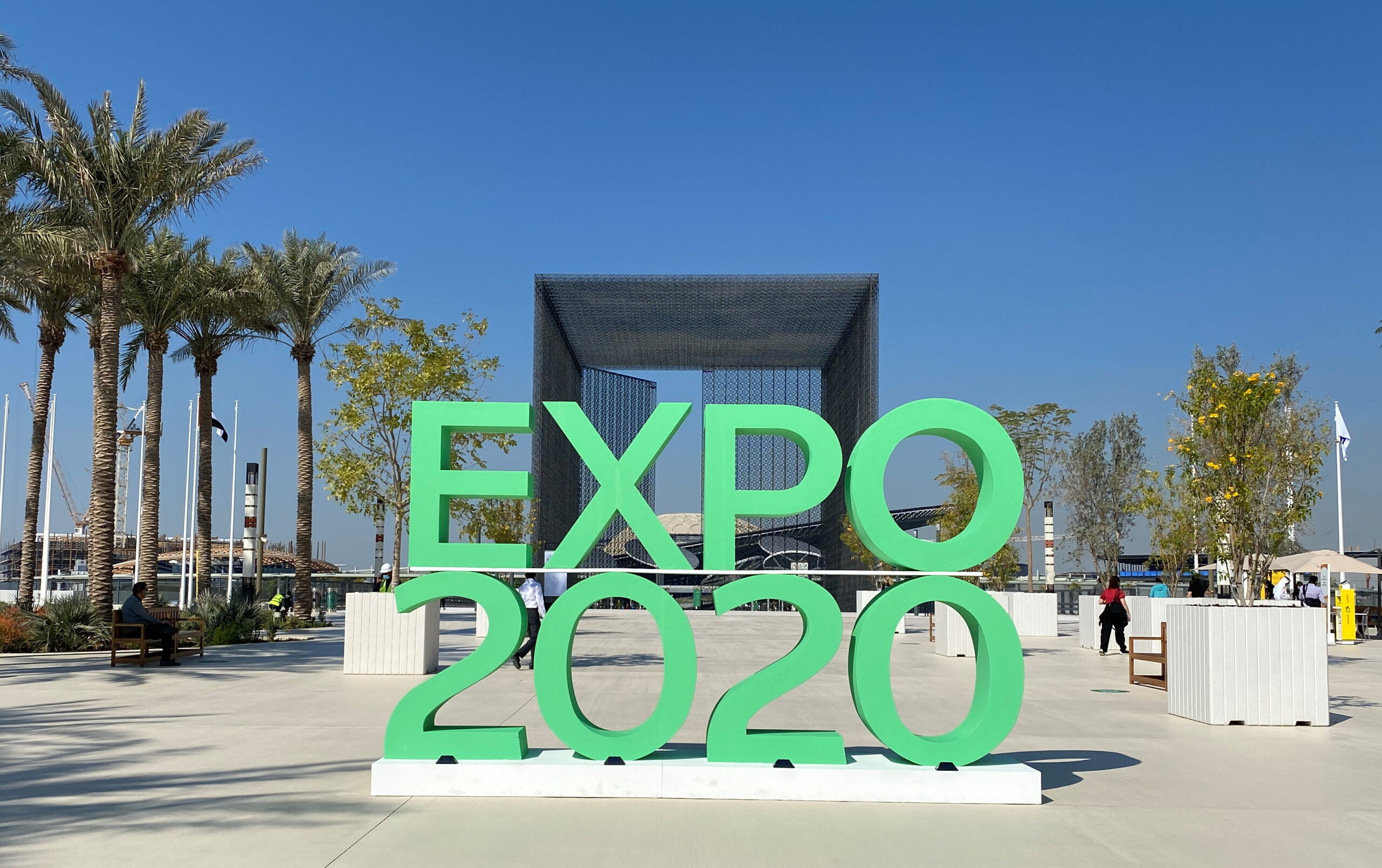
Persistent global health concerns related to the coronavirus pandemic and slow economic recovery efforts in developing economies pose distinct challenges for the delayed Expo 2020 Dubai, which begins in October and runs through March 2022. The emirate of Dubai has reportedly spent approximately $6.8 billion on the expo. Prior to the outbreak of the pandemic, professional services firm EY forecasted the event’s economic impact would include a $6.2 billion boost to the UAE’s gross domestic product during the 6-month expo and $16.9 billion over the following decade. Event planners still expect an influx of 25 million visitors.
It is unclear whether these projections will be met. Event planners are preparing to hold hybrid events, enable virtual participation, and adjust to last-minute bookings and reservation changes.
It is no accident that the timing of government announcements for new economic initiatives coincides with the commencement of the expo. Amid the coronavirus-induced state of flux, Expo 2020 Dubai can play a facilitating role in trade and investment deals rather than becoming a one-off destination or experience for those visitors and delegations. The expo offers a platform to activate new economic partnerships and expand existing ones, while new Projects of the 50 announcements provide concrete fodder for conversations between global businesspeople and UAE business and government leaders.
Competing economic interests across the region are also prompting Emirati leaders to announce these new development initiatives. As part of a state-led pursuit of economic interests taking place in the Gulf region, Saudi Arabia has announced a series of commercial policies – ranging from a policy to push foreign firms to set up headquarters in the kingdom to new tariffs – that will have direct implications for the UAE economy. Placing new economic development initiatives within the context of its golden jubilee, or 50th anniversary, and alongside the expo permits UAE officials to promote their country’s commercial opportunities without explicit engagement in a tit-for-tat confrontation with Saudi Arabia over economic policy.
The UAE’s federal and emirate-level governments are meanwhile doubling down on areas of comparative advantage. The Dubai Land Department lowered the minimum financial requirement to apply for a 3-year visa linked to investments in the emirate’s residential real estate sector. On September 20, the ruler of Dubai issued a new law creating the Dubai Integrated Economic Zones Authority to ensure key free zones, such as the Dubai Airport Free Zone, continue to offer attractive services and incentives to businesses and investors. The UAE has more than 40 operating free zones and is considered a regional leader in this commercial sphere. The Saudi Ministry of Investment, meanwhile, planned to roll out scores of new special economic zones across the country in 2021; however, new zones have not yet materialized with just a few months remaining in the year.
The UAE’s commercial policy response to stiffer economic competition is carefully calibrated to transcend the realm of regional one-upmanship and instead target global trade and investment flows. The recently announced 10×10 program seeks to boost UAE exports by 10% to 10 high-priority markets, including China, Russia, and the United Kingdom. In mid-September, Abu Dhabi Crown Prince Mohammed bin Zayed al-Nahyan announced plans for Mubadala Investment Company to invest $13.8 billion in Britain over five years – a significant expansion of the sovereign investment partnership that the UAE and UK established in March following a $1.1 billion investment commitment by Mubadala. The UAE’s minister of state for foreign trade hopes to negotiate comprehensive economic accords with eight countries over an accelerated timeline, with some concluding within six months to a year.
These new economic policies have coincided with a broader foreign policy realignment to better serve the UAE’s economic interests. The UAE’s relations with Turkey and Qatar have been tense in recent years. However, recent efforts toward restoring ties, including a productive phone conversation between Mohammed bin Zayed and Turkish President Recep Tayyip Erdogan, signal a thaw in relations, and Abu Dhabi-based wealth funds are prospecting for investment opportunities in Turkey. Meanwhile, senior Emirati and Qatari officials resumed visits between the two countries. Saad Sherida Al-Kaabi, Qatar’s minister of state for energy affairs, attended a prominent oil and gas expo in Dubai on September 21.
Early-stage planning and public announcements are the easier parts of the economic policy lifecycle. It is in the implementation stage where UAE officials must differentiate their strategies from those of neighboring countries – such as Saudi Arabia, which has recently announced an array of overlapping economic development initiatives – and establish benchmarks for success.
The views represented herein are the author's or speaker's own and do not necessarily reflect the views of AGSI, its staff, or its board of directors.
Free zones are poised to remain central elements of the post-coronavirus economic recoveries in Gulf Arab states despite shocks impacting the broader business-oriented sector and ongoing commercial reforms.
Beijing keeps treading carefully around conflict in the Middle East while seeking opportunities to deepen ties with key country partners through a longer-term regional engagement strategy.
The UAE’s decision to halt trade and commercial ties with Iran reflects an exercise in applying carefully calibrated geoeconomic pressure amid an uncertain and evolving geopolitical context.