Yemen’s Mokha Under Fire: The Houthis Target Saudi Interests
The Houthi escalation against the port city of Mokha is rooted in intra-Yemeni power balances but, at the same time, it has broader implications for Saudi and regional security, testing new defensive coalitions and alliances.
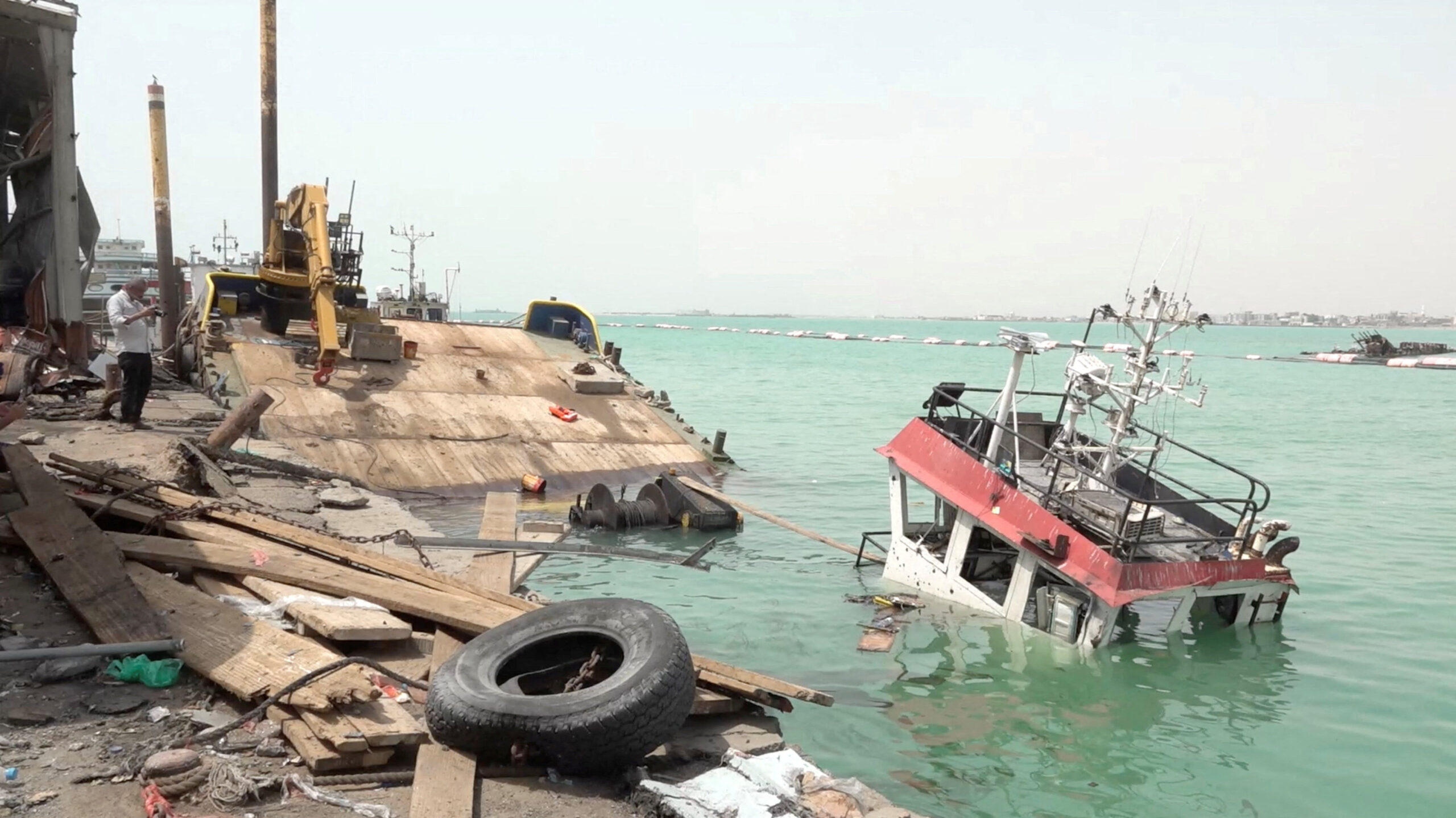
Damage in the aftermath of Houthi strikes on the Red Sea port city of Mokha, Yemen, August 10, in this screengrab taken from a handout video. (Al Joumhouriya TV/Handout via REUTERS)
As the truce in Yemen crumbles after four years, the Houthis are intensively attacking the port city of Mokha, the biggest government-held population center on Yemen’s western coast. Under the fire of drones and missiles, the city is now the main theater of the Iranian-backed group’s return to escalation in the country.
The Houthis have been targeting Mokha for three main reasons, which together reveal the intermeshing of domestic and regional dynamics in the context of the U.S. war with Iran. First, Mokha provides military and logistical support to the United Nations-recognized government forces on the western frontline and contributes, with the neighboring island of Mayyun/Perim, to maritime security monitoring. Second, the city is controlled by the now Saudi-aligned National Resistance Forces, led by Tariq Saleh (nephew of late former Yemeni President Ali Abdullah Saleh), whose coastal units are intercepting smuggled weapons bound for the Houthis in the Red Sea and Bab el-Mandeb. Third, Mokha is key to Saudi Arabia’s stability and security goals in southwestern Yemen, with Saudi forces and Saudi-backed Yemeni groups relying upon local infrastructure to confront the Houthis and restore the local economy through Saudi-funded projects.
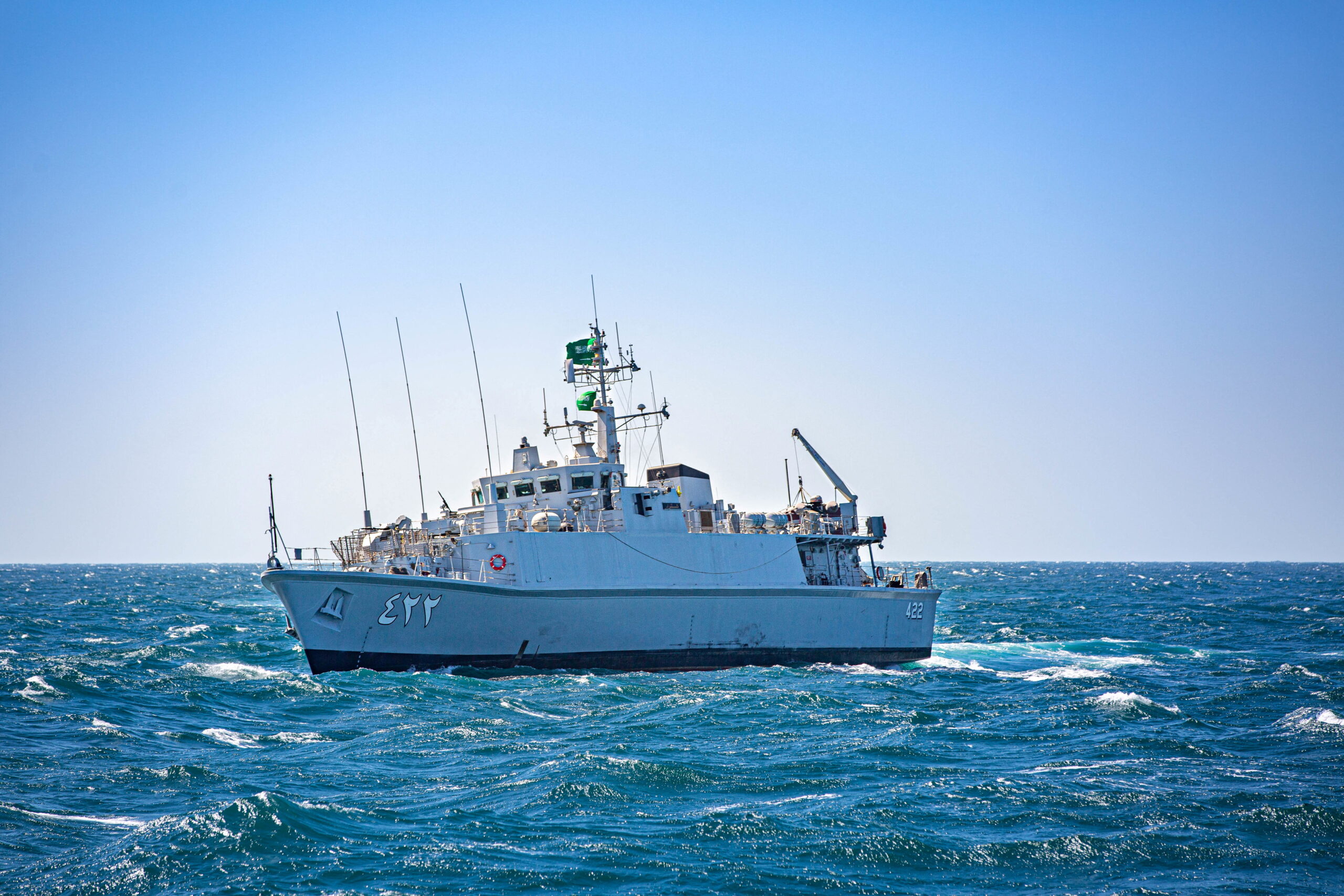
As the Houthis step up attacks on Mokha, destabilizing waters close to the Bab el-Mandeb, Saudi Arabia has launched the Multinational Maritime Defense Alliance aimed at strengthening collective maritime cooperation in the Red Sea, Bab el-Mandeb, and Gulf of Aden. The Houthi escalation against the port city is rooted in intra-Yemeni power balances but, at the same time, it has broader implications for Saudi and regional security, testing new defensive coalitions and alliances.
Framing the Houthi Escalation
In July, the Houthis resumed attacks against Yemeni government forces and Saudi infrastructure and vessels, declaring a maritime embargo on Saudi ports. Given that Houthi aggression, the United Nations special envoy for Yemen assessed that the country now “faces a more serious risk of return to large-scale conflict” than at any point since the 2022 truce was brokered.
The ongoing U.S.-Iran war and blockade of the Strait of Hormuz only partially explain why the Iranian-allied Houthis have now shifted from restraint to open defiance against internal and regional rivals. Likely, their changed approach is a “calculated choice” in which the group has come to prioritize its strategic interest in increasing deterrence and blackmail power vis-à-vis Saudi Arabia while providing concrete support to Tehran.
In recent weeks, low-level fighting between the Houthis and government forces has reignited along multiple Yemeni frontlines that had remained relatively inactive for the last four years: In Marib, the government’s political and military stronghold, in the southern governorates of Lahj, al-Dhale, Abyan, and Shabwa, and in the western regions of Hodeidah and Taiz.
Mokha in the Crosshairs
In Taiz governorate, the Houthis have put Mokha in their sights. The Red Sea port city is the closest government-held population center to the Bab el-Mandeb strait. Since August 9, the Houthis have repeatedly targeted Mokha, with at least 60 missiles and drones in just four days, according to pro-government forces. The attacks targeted the port, military facilities, weapons storage, and civilian infrastructure, killing 18 people. The Houthis launched additional strikes on the port August 15 and 16. They also attacked a commercial ship August 11 as it was coming into Mokha port, killing six sailors and National Resistance Force members. The Houthis claimed the vessel was transporting Saudi military equipment to Yemen, a charge independent media challenged.
Altering the Balance of Force in the Southwest
The first factor explaining why the Houthis have been escalating in Mokha is their intention to alter the balance of forces in Yemen’s southwest. As a port city controlled by Saudi-aligned groups, Mokha provides military and logistical support to Yemeni government forces fighting the Houthis along the southern Hodeidah and Taiz frontline. Since early July, the Houthis have launched attacks on Hodeidah’s southern battleline, as signals for a possible ground offensive against Houthi-held territories were rising. Moreover, government forces backed by Saudi Arabia control two islands close to Mokha’s waters: Zuqar (south of Houthi-held Hodeidah), and Mayyun/Perim in the Bab el-Mandeb. Both islands are key for the monitoring of maritime security and, possibly, to alert or repel Houthi attacks on vessels and nearby coastal areas.
Targeting the Saudi-Aligned Forces of Tariq Saleh
The second factor is the presence in Mokha of armed groups aligned with Saudi Arabia and Saudi support infrastructure and troops as part of the Saudi-led coalition. Mokha and its neighborhood are controlled by the well-trained and equipped National Resistance Forces, an anti-Houthi coalition of groups including the Republican Guards (the remnant of the former elite force of the country), local Tihama Resistance, and Giants Brigades. National Resistance Force leader Tariq Saleh is a member of the Presidential Leadership Council, however his forces are not part of the government: They are allied but operate independently from the regular armed forces.
Formerly close to the United Arab Emirates, Tariq Saleh has gradually aligned with Saudi Arabia since January, when the fight between the Emirati-backed Southern Transitional Council and pro-Saudi Yemeni government forces resulted in the withdrawal of remaining UAE’s personnel from Yemen and the STC’s defeat. Since then, National Resistance Force salaries have been paid by Riyadh as well as those for all the groups that were previously backed by the UAE. The National Resistance Forces are in charge of the Yemeni coast guard and naval units in Mokha, leading countersmuggling operations targeting Houthi weapon provisions: Interceptions have increased since mid-2025, as the coast guard received upgraded funds, training, and equipment from Riyadh and international allies. The Houthis are now directly attacking Tariq Saleh’s forces: A commander of the first division of the National Resistance Forces and a leader in the Tihama Resistance was killed in June by a roadside bomb in southern Hodeidah that the Presidential Leadership Council attributed to the Houthis.
Extending Maritime Disruption Against Riyadh’s Interests
The third factor behind the escalation in Mokha is the Houthi strategy to target Saudi interests outside the kingdom’s borders. By attacking the port city and neighboring military and civilian facilities, the Houthis can disrupt Saudi operations in southwestern Yemen, and, at the same time, they can increase disruption along the Bab el-Mandeb corridor. To a certain extent, the Houthis see targeting Mokha as a way to extend the maritime blockade they declared on Saudi ports, given the centrality the city has gained in Riyadh’s Yemen strategy. In just a few days in the Mokha area, Houthi missile and drone attacks damaged a small port established by the National Resistance Forces and the military airport in Dhuhab, and the Mokha port suspended its commercial and maritime operations August 15 due to extensive damage.
The Mokha port was rehabilitated by the UAE in 2021, after a Houthi attack halted its operations in 2017. Given the geographical position and relative stability, in 2025 the Yemeni government considered rerouting part of trade flows from unstable Aden – the provisional capital de facto controlled by the STC at that time – to Mokha, as the port received its first commercial vessel in 14 years. As Riyadh has worked to reorganize the anti-Houthi front after the STC’s defeat and Emirati withdrawal, the Saudis have been focusing on restoring infrastructure on the western coast. The Saudi Development and Reconstruction Program for Yemen has funded several projects in Mokha, including roads and marine piers on the Zuqar and Hanish islands, initiatives that were publicly unveiled alongside Tariq Saleh.
Testing New Defense Coalitions and Alliances?
Given the intermeshing of Yemeni and regional dynamics, the Houthi escalation in Mokha and Yemen’s southwestern coast is not only about the reactivation of the Yemen conflict. The Iranian-backed group started to launch drones and missiles against the port city just a few days after Saudi Arabia announced, on July 30, the establishment of the Multinational Maritime Defense Alliance to strengthen collective maritime cooperation through the Red Sea, Bab el-Mandeb, and Gulf of Aden.
The Maritime Defense Alliance, which so far includes Bahrain, Bangladesh, the Comoros, Djibouti, Egypt, Jordan, Kuwait, Pakistan, Qatar, Somalia, Sudan, Turkey, and Yemen, looks like an enlarged version of the Red Sea Alliance, established by Saudi Arabia in 2020 with Arab and African states bordering the Red Sea and Gulf of Aden, with very limited follow up and impact. The new Saudi-led alliance, is coming together at a completely different time of heightened insecurity and notably includes Pakistan and Turkey, fresh signatories of the Mecca Joint Defense Agreement with Saudi Arabia.
By continuously targeting Mokha, the Houthis are further destabilizing the Red Sea and Bab el-Mandeb, putting Saudi domestic and maritime interests in their sights. As the escalation worsens, Riyadh will find it harder to draw a line between its Yemen agenda and strict national security imperatives, increasing the likelihood that new defense coalitions and alliances will be practically tested. At this stage, both the Yemeni government and Saudi Arabia can’t let Mokha, their only prominent window onto the Red Sea, get trapped in the Houthis’ escalatory strategy.
The views represented herein are the author's or speaker's own and do not necessarily reflect the views of AGSI, its staff, or its board of directors.
The Houthis’ decision to dip their toes into the conflict is a calculated choice based on military capacity, a blueprint, and the need for retaliatory pressure.
The Houthis’ expanding partnerships with al-Shabab and Al-Qaeda in the Arabian Peninsula are a growing threat to regional security and international shipping.
Oman’s Military Discipline Program uses military codes to promote top-down objectives, such as strengthening social cohesion, responsibility, and a sense of national belonging among young Omanis.
Saudi Arabia has looked to the Red Sea through the lens of economic investment and infrastructure, but an economy-center focus is insufficient to address the various factors causing instability in the region.