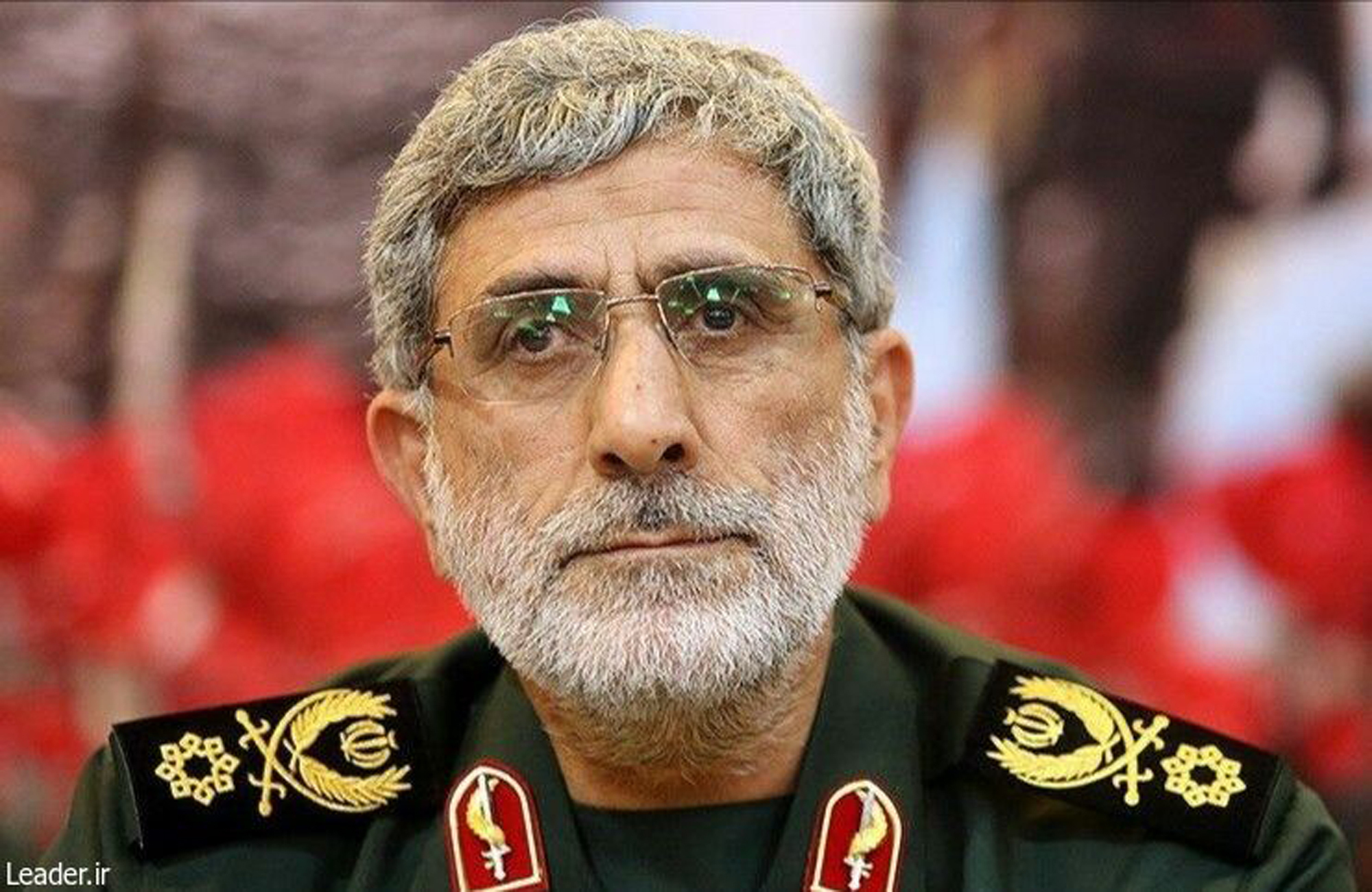
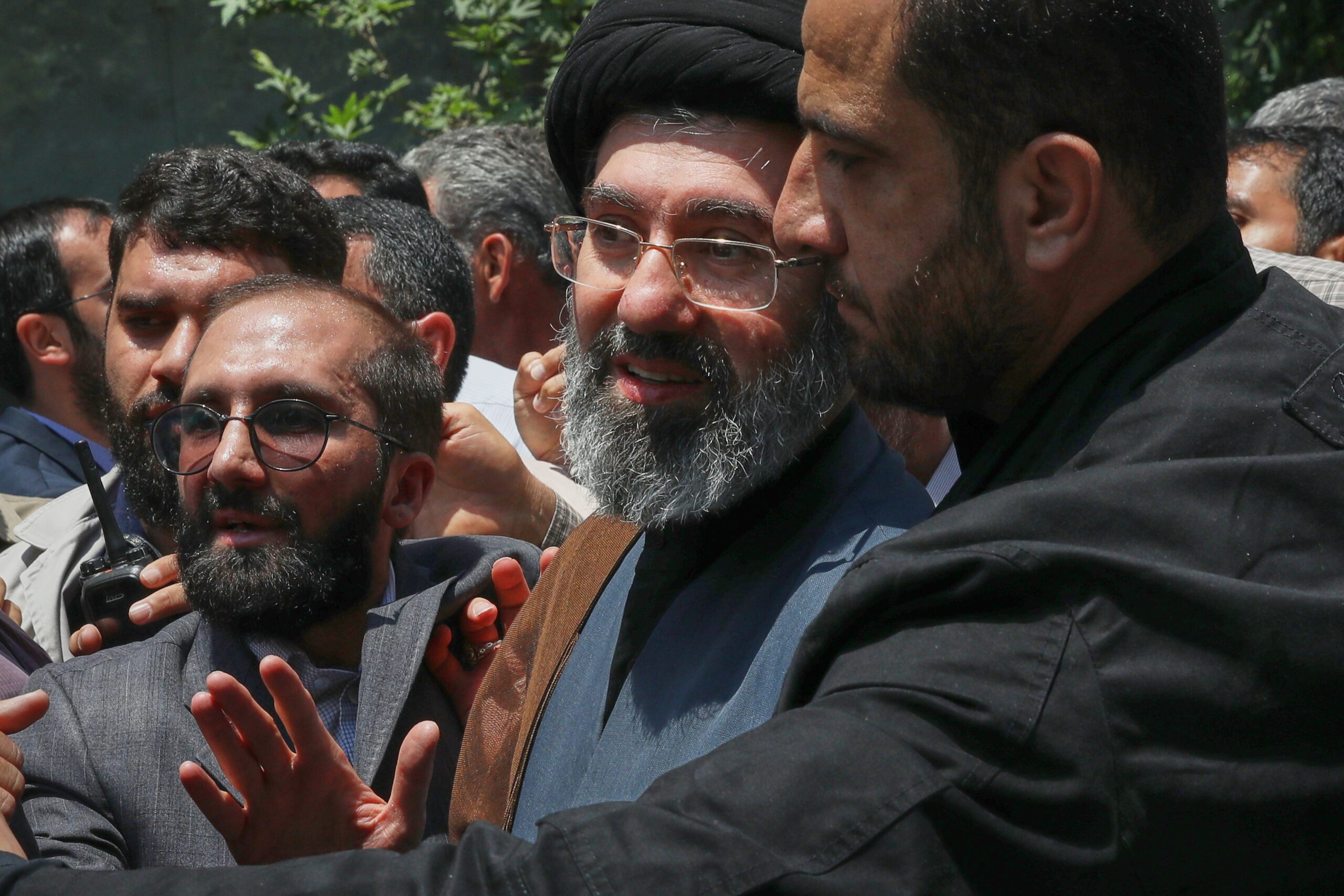
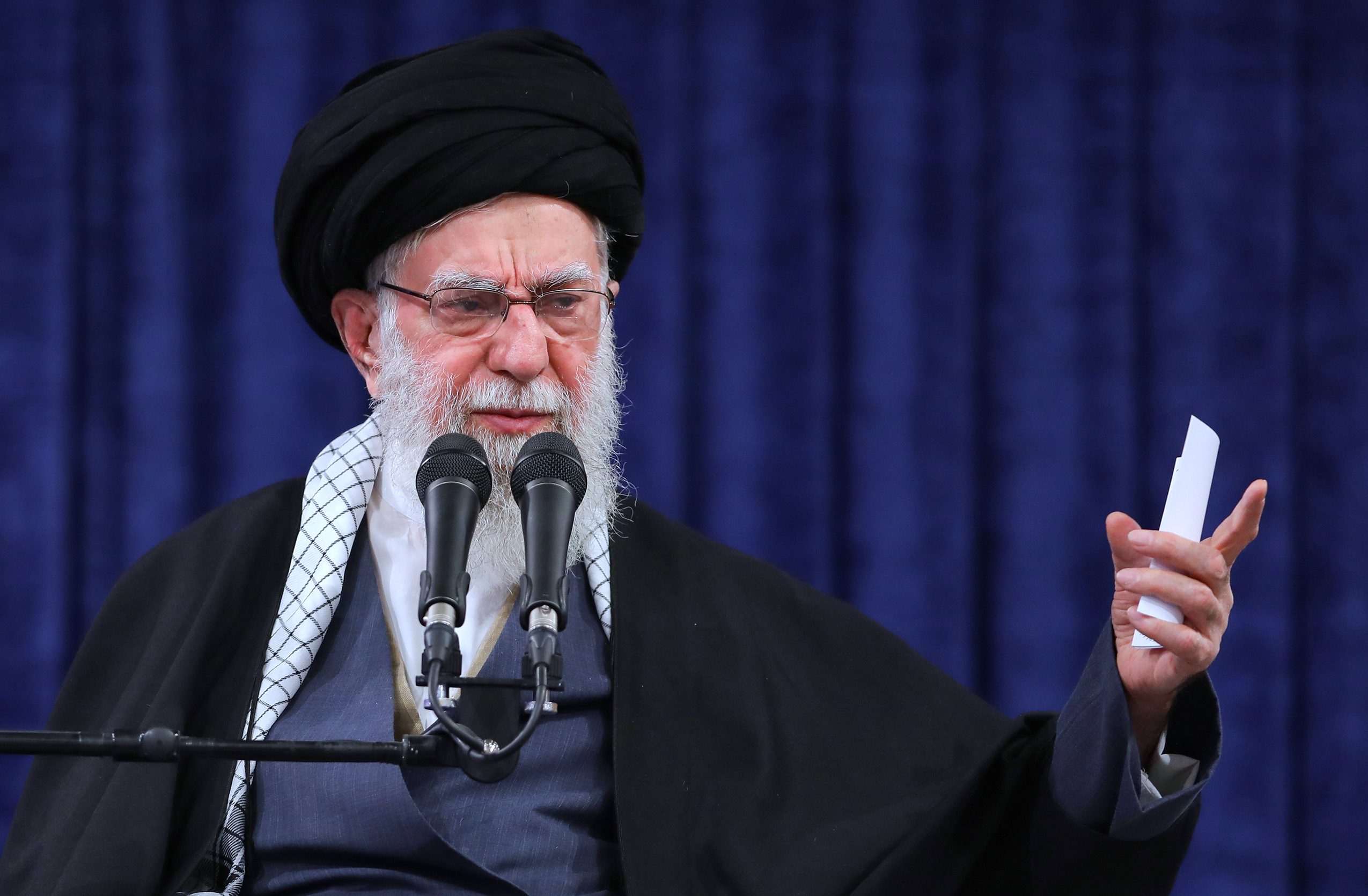
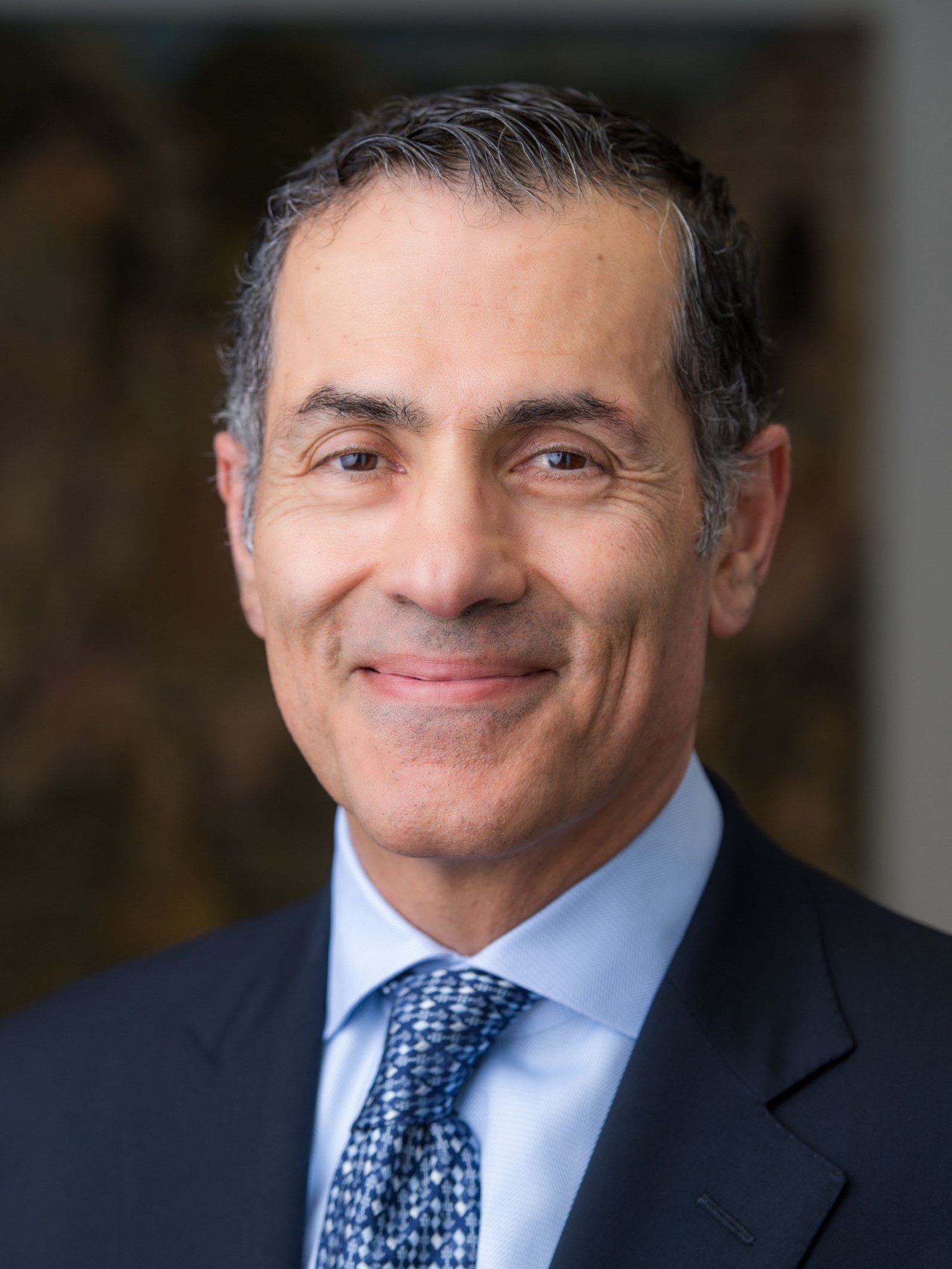
'This undated photo shows Major General Ismail Qaani, the new commander of the Islamic Revolutionary Guard Corps' Quds Force. (Office of the Iranian Supreme Leader via AP)'
On January 3, Iran’s Supreme Leader Ayatollah Ali Khamenei appointed Brigadier General Ismail Qaani as chief commander of the extraterritorial operations Quds Force of the Islamic Revolutionary Guard Corps. Qaani is replacing Major General Qassim Suleimani, who at the direction of President Donald J. Trump, was killed in Iraq by the U.S. military. But who is Qaani, and how is the Quds Force likely to change under his leadership?
Qaani is around 61 years old and is a native of Mashhad in Razavi Khorasan province. According to biographical information released by the Islamic Republic news agencies after his appointment, Qaani joined the nascent IRGC in March 1980, shortly before the September 1980 Iraqi invasion of Iran.
He was immediately sent to Tehran to receive paramilitary training at the IRGC garrison in Saadabad, currently known as Imam Ali Garrison. Following the end of basic military training, Qaani returned to Mashhad, where he, along with Mohammad Baqer Qalibaf, later mayor of Tehran, and Nour Ali Shoushtari, former Imperial Guard officer turned highly influential and respected IRGC officer, constituted the nucleus of a unit later named the 5th Nasr Division.
Before long, the Mashhad unit was deployed in Iran’s Kurdistan province to suppress Kurdish separatists, and later Qaani and his comrades were relocated to Khuzestan province to defend Iran against the invading Iraqi military. Qaani, who served as division commander Qalibaf’s second in command in the 5th Nasr Division, got to know a young Qassim Suleimani, who was the chief of the 41st Sarallah Division from Kerman province. According to one account, their friendship started sometime in March 1982, and Qaani, commenting on his relationship with Suleimani, said in an interview in 2015:
We are all war kids. What connects and relates us and our camaraderie is not based on geography and our hometown. We are war comrades and it was the war that made us friends. Perhaps I’m a year older than him, and we may have the same age, but none of this matters. He is superior to me in certain fields … Those who become friends at times of hardship, have deeper and more lasting relations than those who become friends just because they are neighborhood friends.
Toward the end of the war with Iraq, Qaani replaced Qalibaf as chief of the 5th Nasr Division. Immediately after the war he was promoted to deputy of the IRGC ground forces, and it is likely that in this position he was engaged in the IRGC’s operations against drug cartels infiltrating Khorasan province from Afghanistan. It is just as likely that Qaani and Suleimani cooperated with each other in their support to the United Islamic National Front for the Salvation of Afghanistan, also known as the Northern Alliance, against the Taliban in the late 1990s.
When Suleimani was appointed chief commander of the Quds Force, sometime between September 10, 1997 and March 21, 1998, he probably appointed Qaani as his deputy. The earliest documented reference to Qaani as an IRGC Quds Force commander appears in the 1993 edition of Mohammad Mohaddessin’s “Islamic Fundamentalism: The New Global Threat,” in which Qaani is identified as fourth IRGC Quds Force Ansar Corps commander, which according to the author, is “responsible for Guards Corps’ activities in Afghanistan, Pakistan and Asian Republics.”
Few details are available about the exact nature of the activities of Qaani as Suleimani’s deputy, but at least since the 2003 U.S.-led invasion of Iraq, at which point Iran’s strategic focus shifted westward, there was a division of labor between the two: While Suleimani was primarily present in the western front, Iran’s eastern borders remained Qaani’s focus. Just as important, while Suleimani soon emerged as the charismatic leader of the Quds Force, Qaani appears to have attended to the day-to-day bureaucratic and administrative affairs of the organization.
Under Qaani’s leadership, there is likely to be greater continuity than change in the Quds Force. After all, Suleimani the individual was less responsible than external factors for the biggest change in the history of the Quds Force and the IRGC. Due to the high fatality rate among Quds Force members in Syria, the IRGC began deploying members of the regular IRGC to that country, which removed the barriers between the two otherwise separate branches of the IRGC and is gradually transforming the entire IRGC into one large extraterritorial operations Quds Force.
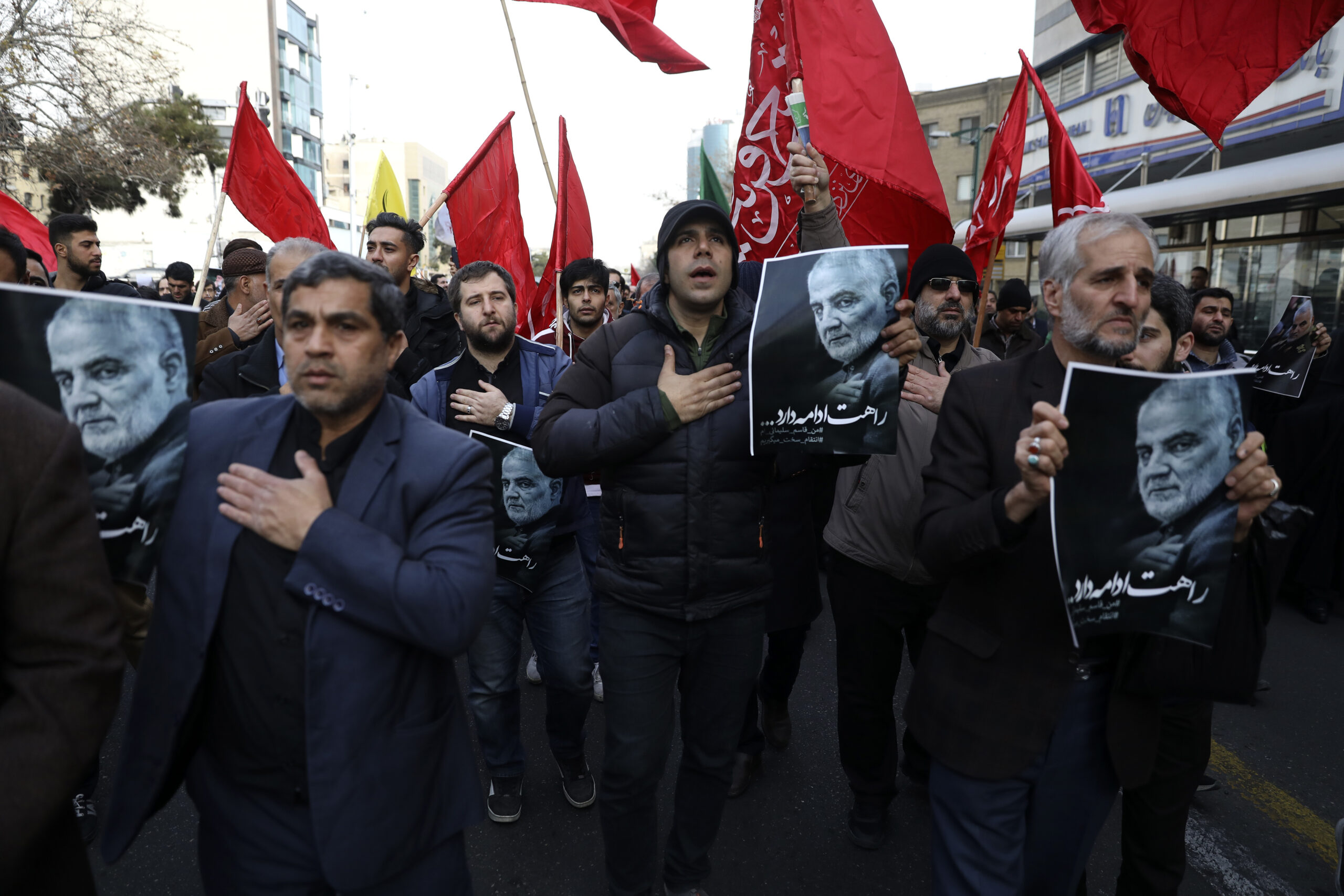
However, there is likely to be a significant change in one respect. As Suleimani became the pubic face of a once secret organization, he exposed himself to considerable danger, which led to his killing. But in doing so, Suleimani also managed to serve as a role model and hero who mobilized the masses for a cause he considered sacred. It is difficult to expect Qaani, the bureaucrat, to emulate his predecessor’s charismatic leadership. That said, Qaani will exert influence nonetheless, owing to the institutional power of the Quds Force itself.
The views represented herein are the author's or speaker's own and do not necessarily reflect the views of AGSI, its staff, or its board of directors.
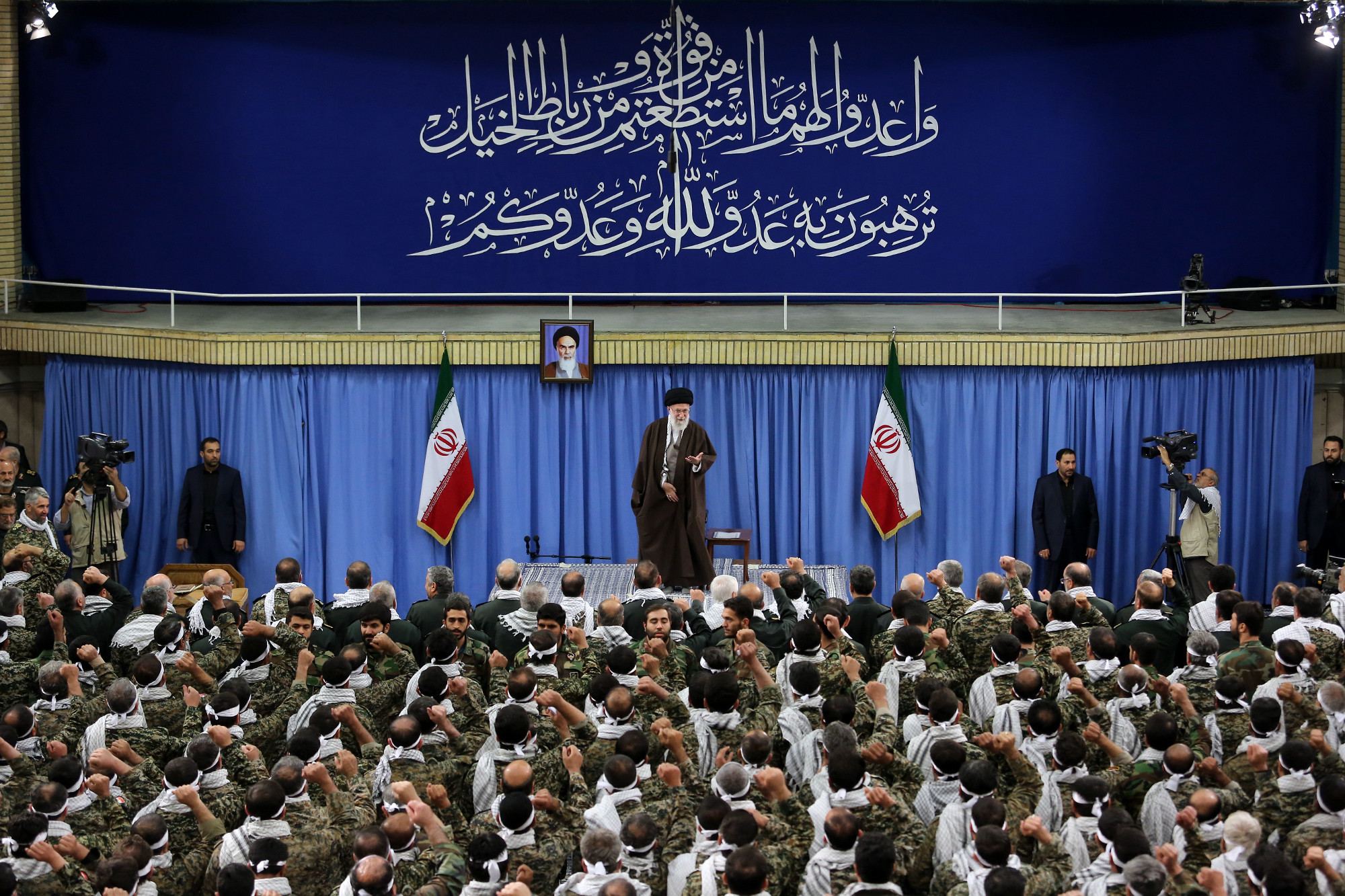
Iran may still call itself an Islamic Republic. In practice, however, it increasingly resembles a state in which the military governs from behind clerical robes.
Ayatollah Ali Khamenei was killed in his office in Tehran at age 86, leaving behind a country in ruins and on the verge of civil war and potential disintegration.
Iran is signaling that it will not absorb attacks passively. But whether this strategy ensures the regime’s survival, seals its fate, or accelerates a broader catastrophe will shape the region for years to come.
The erosion of the regime’s legitimacy across broad segments of society, combined with the breadth of the 2025-26 protest coalition, raises the possibility that a new confrontation could trigger renewed anti-regime mobilization.
On January 8, AGSI hosted a virtual roundtable with its leadership and scholars as they look ahead and assess trends likely to shape the Gulf region and U.S. foreign policy during the coming year.