Silicon Valley is exploring offshoring some of its compute demand. Saudi Arabia and the United Arab Emirates are positioning themselves to capture some of it.
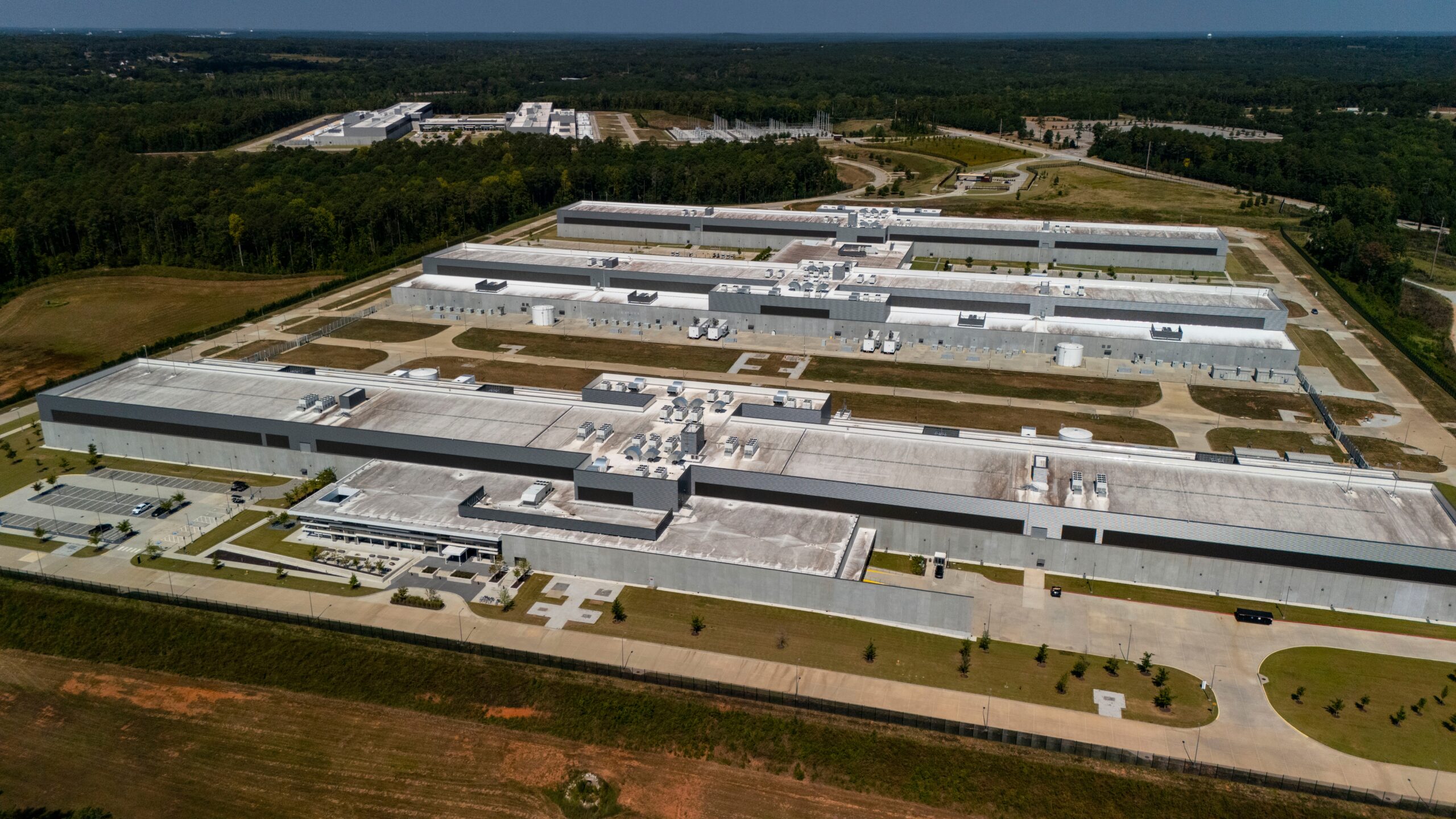
Meta data centers operate near Social Circle, Georgia, September 5. (AP Photo/Mike Stewart, File)
U.S. technology labs face an uphill battle in securing popular consent for a major artificial intelligence infrastructure buildout on U.S. soil. Compute demand is accelerating, but public willingness to host the infrastructure that provides it appears to be moving in the opposite direction. According to a recent Gallup poll, 70% of Americans oppose building AI data centers in their local area. That opposition appears to be intensifying. An Annenberg Public Policy Center poll conducted in June and July found that local opposition among Americans across the country rose from 49% to 61% over the prior four months. The shift also cuts across party and generational lines. Nearly 70% of Democrats, 54% of Republicans, and 53% of independents now oppose new data centers in their communities. That opposition is highest among Americans under 30 at 70%.
This resistance is growing just as AI companies are planning for an expanded infrastructure buildout. The International Energy Agency projects that global data center electricity consumption will more than double to roughly 945 terawatt-hours by 2030. In the United States, data centers are expected to account for nearly half of electricity demand growth through the end of the decade. OpenAI and NVIDIA have announced plans to deploy at least 10 gigawatts of NVIDIA systems for OpenAI’s next-generation AI infrastructure, and OpenAI and Broadcom have separately announced plans for another 10 GW of custom accelerator systems through 2029.
That infrastructure has to be built somewhere. Data centers require substantial amounts of electricity and increasingly compete with other users for access to constrained grids. Large projects can require new generation and transmission infrastructure that takes considerably longer to develop than the data centers themselves. The IEA estimates that around 20% of planned data-center projects could face delays if grid constraints are not addressed. Meanwhile, new White House restrictions on using foreign components to build that infrastructure could push timelines out even further. A 2024 U.S. International Trade Commission assessment found that imports met 71% of U.S. demand for large power transformers in 2023, while domestic producers accounted for just 29%. More recent Department of Energy data suggests that this dependence has continued, with monthly imports of large transformers rising sharply through 2024, as utilities struggled to secure enough equipment domestically. Washington’s new restrictions intended to reduce dependence on foreign infrastructure components may inadvertently intensify a near-term bottleneck on equipment needed to scale the grid capability to host a larger compute capacity.
AI labs and hyperscalers are exploring alternatives in less-regulated spaces. Leading U.S. tech CEOs have already proposed space-based computing, and China inaugurated its first subsea data center in June off the Shanghai coast. Neither model is likely to provide the enormous amount of capacity AI companies need in the near term. This is pushing Silicon Valley to explore offshoring some of its compute demand. A recent Brookings analysis of overseas frontier AI infrastructure noted similarly that growing constraints on domestic expansion could push a meaningful share of future capacity abroad. The bigger question is where.
The Gulf Pitch
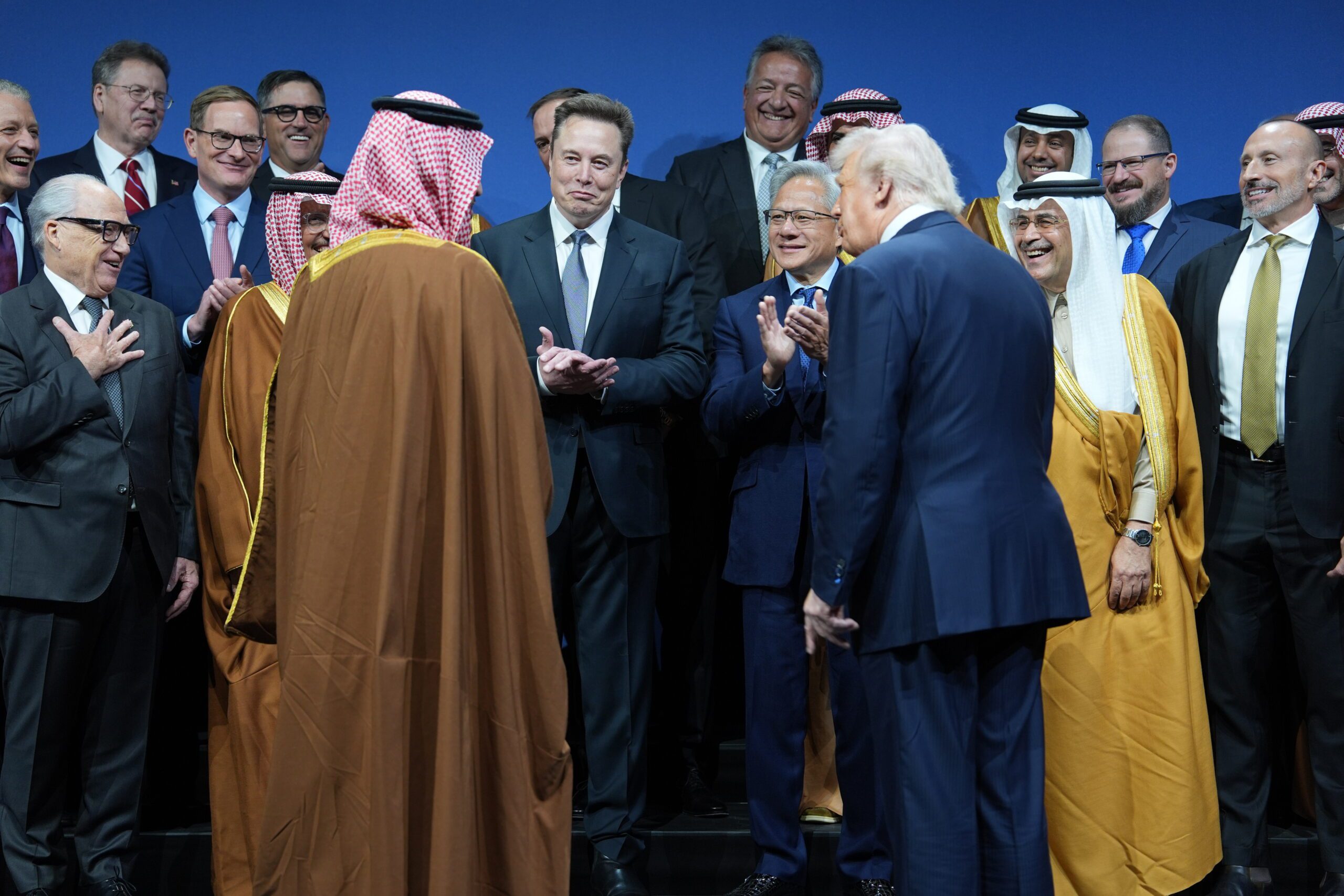
Saudi Arabia and the United Arab Emirates are positioning themselves to capture some of the offshoring demand. Gulf AI strategies have increasingly shifted from importing foreign AI capabilities and models to building their own compute infrastructure by building data centers with top-of-the-line U.S. chips that can host a wide range of enterprise customers. Both governments are investing heavily in data center capacity and using state-backed investment vehicles to bring major U.S. tech companies into those projects.
Saudi Arabia established its AI champion Humain to lead the kingdom’s effort. Established under the Public Investment Fund in 2025, the company is intended to consolidate much of the kingdom’s AI infrastructure development. It is in the midst of a major compute buildout that aims to add 2 GW to Saudi Arabia’s existing data-center market by 2030, then scale to 6.6 GW by 2036. These compute projects far exceed Riyadh’s own domestic demand. The kingdom expects to sell much of its compute capacity to meet growing global demand. Humain CEO Tareq Amin has explicitly presented this capacity as an export product, asserting that “the Kingdom can host AI compute not only to meet domestic demand, but also as an export opportunity.” He later said Saudi Arabia intended to become the “world’s largest AI token exporter.”
The UAE is pursuing a similar strategy from a more developed tech and data-center base. The planned UAE-U.S. AI Campus in Abu Dhabi will eventually hold 5 GW of capacity, which would create one of the world’s largest concentrations of AI infrastructure. Its first major project, Stargate UAE, is a planned 1 GW-compute cluster that brings OpenAI into the UAE’s AI ecosystem alongside G42 and other hyperscalers, such as Oracle, NVIDIA, Cisco, and SoftBank. UAE Ambassador to the United States Yousef Al Otaiba has described the campus as “a vital hub for U.S. hyperscalers” that would serve regional partners and the Global South. This project directly links the UAE’s domestic infrastructure ambitions to the U.S. AI ecosystem.
Both Riyadh and Abu Dhabi want to compete for future U.S. compute demand but have differing approaches for capturing it. Saudi Arabia is attempting to build enormous new capacity quickly to onshore new clients as a compute “landlord,” while the UAE has moved further up the list of top AI partners for the United States and has integrated its existing infrastructure with major U.S. tech companies. Both hope to capture an increasingly valuable part of the AI economy by providing the infrastructure for training future U.S. models. Their political systems can also help streamline the buildout of compute infrastructure. The United States struggles under what University of Michigan Professor Donald Moynihan calls “proceduralism” – the layers of procedural requirements and institutional veto points that can significantly slow major infrastructure projects, including through environmental review and court challenges. Saudi Arabia and the UAE concentrate many of these decisions within a much smaller governing apparatus, giving their governments greater ability to move major infrastructure projects from political approval to construction quickly. This can be beneficial for rapidly scaling and deploying data centers, but this can also be at the expense of local buy-in.
Growing Interdependence
Moving more U.S. compute to the Gulf would deepen mutual interdependence between the United States and Gulf countries. G42 CEO Peng Xiao called this a “shared infrastructure model” designed to serve both countries, in the case of the UAE, with G42 pledging to match what it builds in the UAE with investment in the United States. AI labs may gain access to capacity and infrastructure that is harder to build at home, but Saudi Arabia and the UAE would need continued access to U.S. chips and compute infrastructure to process U.S. AI workloads. That dependence does not end once a data center is built. Advanced chips will need to be replaced as newer generations become available, and the infrastructure supporting them will require continued upgrades. Saudi Arabia and the UAE would therefore need relatively predictable access to U.S. tech potentially over decades. A recent Brookings study of overseas frontier AI infrastructure warned that this could eventually give host countries greater leverage over the United States. Large training clusters are expensive and slow to replace, meaning U.S. companies could not simply move their workloads home during a diplomatic dispute or regional crisis.
Those data centers would need protection from regional insecurity. Operation Epic Fury and the subsequent Iranian attacks on Gulf AI infrastructure demonstrated how quickly data centers can become exposed to regional conflict. Some of that instability has itself been provoked by U.S. military adventurism. Washington could find itself pushing U.S. compute toward the Gulf while simultaneously making the region a riskier place to locate it.
Gulf countries also face significant opposition from U.S. political leaders who view U.S.-Gulf AI cooperation as a risk rather than an asset. Senator Chuck Schumer has warned that the Saudi and Emirati chip agreements risk “cannibalizing the U.S. buildout of AI,” and other Democratic lawmakers have argued that the deals could shift scarce chips and future data-center investment away from the United States. These leaders, however, face growing pressure to stop new data centers at home while also opposing the movement of that capacity abroad. If the United States cannot build enough compute domestically, blocking offshoring does not solve the underlying gap in compute access. Meanwhile, the Gulf states may face further opposition from Republican lawmakers who historically have pushed for tighter controls to prevent advanced U.S. chips from reaching China. For now, these accusations seem to have quieted, but they could quickly reemerge as part of the larger U.S. AI political debate.
Finding the Alternatives
AI compute is a market with few suppliers but growing demand. U.S. lawmakers whose constituencies oppose local data centers and who also resist Gulf buildouts on the grounds of values may look to other democracies for alternatives. But in most cases, they are likely to find similar problems. For example, a recent study out of Australia argued that Canberra should position the country as an offshore data center hub for U.S. frontier labs. Yet a recent survey found that 67% of Australians believe data centers risk straining the grid and increasing power bills. Australia may offer another destination for U.S. compute but not an escape from the politics constraining it at home.
Germany, meanwhile, presents a potentially different alternative. Public support for data-center construction is considerably stronger than in the United States, suggesting that Germany could absorb more U.S. compute. But the political constraint there may take a different form. European concerns over technological sovereignty could create resistance to allowing a larger share of critical AI infrastructure to remain dependent on U.S. companies and technology.
Moving forward, the Gulf countries have positioned themselves to provide U.S. AI companies a solution. Hyperscalers have already walked through the open door, but the dynamics in Washington may effectively close the door behind them.
The views represented herein are the author's or speaker's own and do not necessarily reflect the views of AGSI, its staff, or its board of directors.
Saudi Arabia is eyeing the growth of a sovereign compute exchange model that, like OPEC for crude, would let it shape and stabilize long-term compute costs.
With the Iran war, large AI projects now sit inside a regional battlespace. The next phase of Gulf AI strategy will need to focus on resilience, continuity, and trusted infrastructure, not only capital and scale.
U.S. authorizations for exporting advanced chips to the leading Gulf technology firms is sure to please regional authorities, who will push to broaden and accelerate technology collaboration with the United States.
Saudi Arabia is eyeing the growth of a sovereign compute exchange model that, like OPEC for crude, would let it shape and stabilize long-term compute costs.