Gulf states are combining military modernization, diplomacy, diversified external partnerships, and domestic resilience into a new framework for regional security.
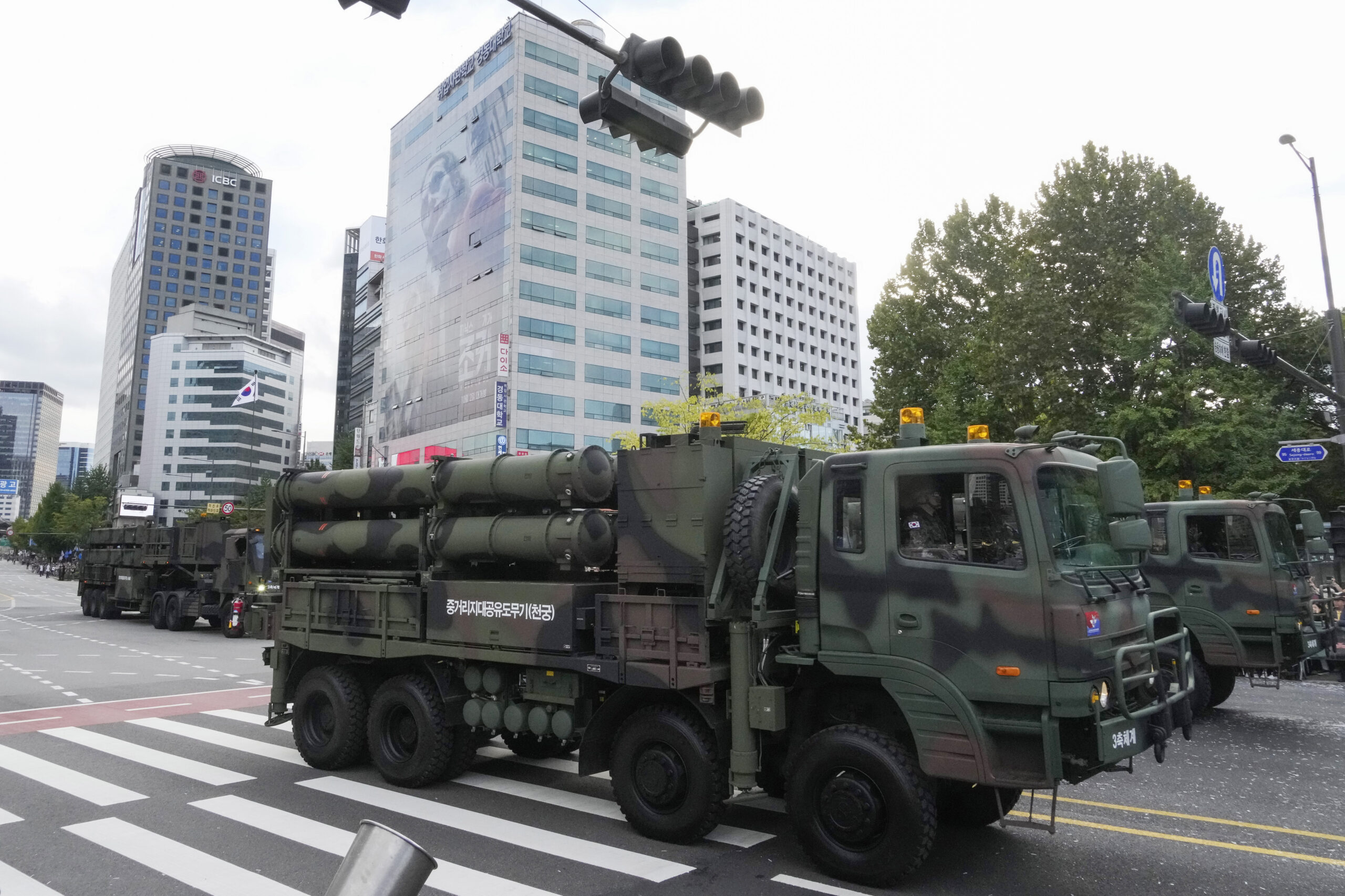
South Korea's Cheongung missiles are carried in a parade during the 76th Armed Forces Day ceremony in Seoul, South Korea, October 1, 2024. (AP Photo/Ahn Young-joon)
The U.S. and Israeli war with Iran is proving to be a turning point in Gulf security. It has reaffirmed the centrality of U.S. military power while exposing the limits of translating battlefield superiority into lasting regional stability. More important, it has accelerated an adaptation already underway. Gulf governments increasingly recognize that neither U.S. security guarantees nor diplomatic engagement with Iran alone can adequately manage an environment characterized by chronic and multidimensional risks.
Rather than relying on any single instrument, Gulf states are responding through a layered approach that combines four distinct but mutually reinforcing instruments: military modernization, diplomacy, diversified external partnerships, and domestic resilience. Together, these layers form an emerging framework for Gulf security.
The Strategic Dilemma
The U.S. and Israeli war with Iran has brought into sharper focus a set of constraints that had been reshaping Gulf security for years. Iran retains the capacity to impose costs across multiple domains through missiles, drones, proxy networks, cyber operations, and maritime disruption. At the same time, the United States remains the only external power capable of providing the high-end military capabilities and deterrence on which Gulf states ultimately depend.
Repeated crises over the past two decades have demonstrated that military superiority alone cannot produce lasting regional stability. The Iran war has demonstrated that while U.S. power remains indispensable for preventing large-scale escalation, it is insufficient to insulate Gulf partners from the broader consequences of regional conflict.
The result has been a gradual and uneven shift – shaped by prewar developments and accelerated by the conflict – away from reliance on any single security instrument toward a layered approach in which military modernization, diplomacy, diversified external partnerships, and domestic resilience each address distinct vulnerabilities.
This adaptation has not produced a common Gulf strategy. Progress varies across the four layers, cooperation remains largely bilateral or issue specific, and national priorities continue to shape how individual states respond to shared regional challenges. The significance of the shift lies less in collective action than in the growing use of multiple instruments to manage different vulnerabilities.
The Four Layers of Gulf Security
The Gulf’s response to the Iran war is evolving into a layered security framework in which each instrument addresses a different category of risk: military capabilities absorb attacks; diplomacy manages escalation; external partnerships diversify security options; and domestic resilience reduces the consequences of disruption. These layers operate in parallel, with each reinforcing the others.
Each layer, however, is developing with significant autonomy in practice. Military modernization reflects national procurement decisions and varying levels of coordination among Gulf partners. Diplomatic engagement proceeds through parallel channels, with states pursuing separate lines of communication and de-escalation with Iran based on their own risk assessments. External partnerships follow capability-specific tracks, including air defense, maritime security, and intelligence sharing. Domestic resilience remains largely nationally driven, with coordination on energy infrastructure, cybersecurity, and supply-chain security still emerging.
Together, these developments point to a more flexible approach to regional security built around multiple instruments and partnerships. The four layers are advancing at different speeds and through different constellations of partners. Some initiatives remain national, others depend on bilateral relationships, and a smaller number are pursued collectively through Gulf Cooperation Council mechanisms.
Military Modernization
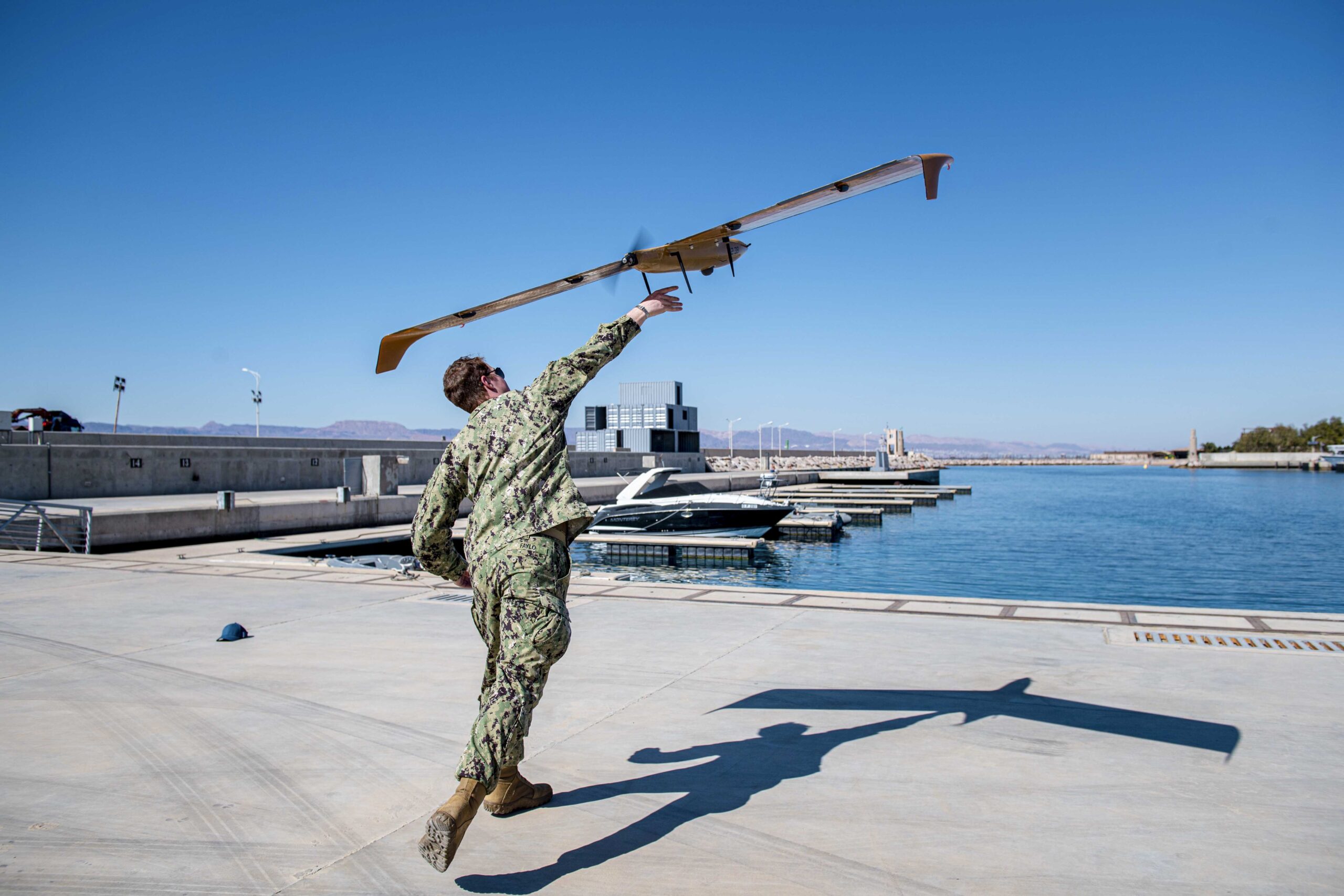
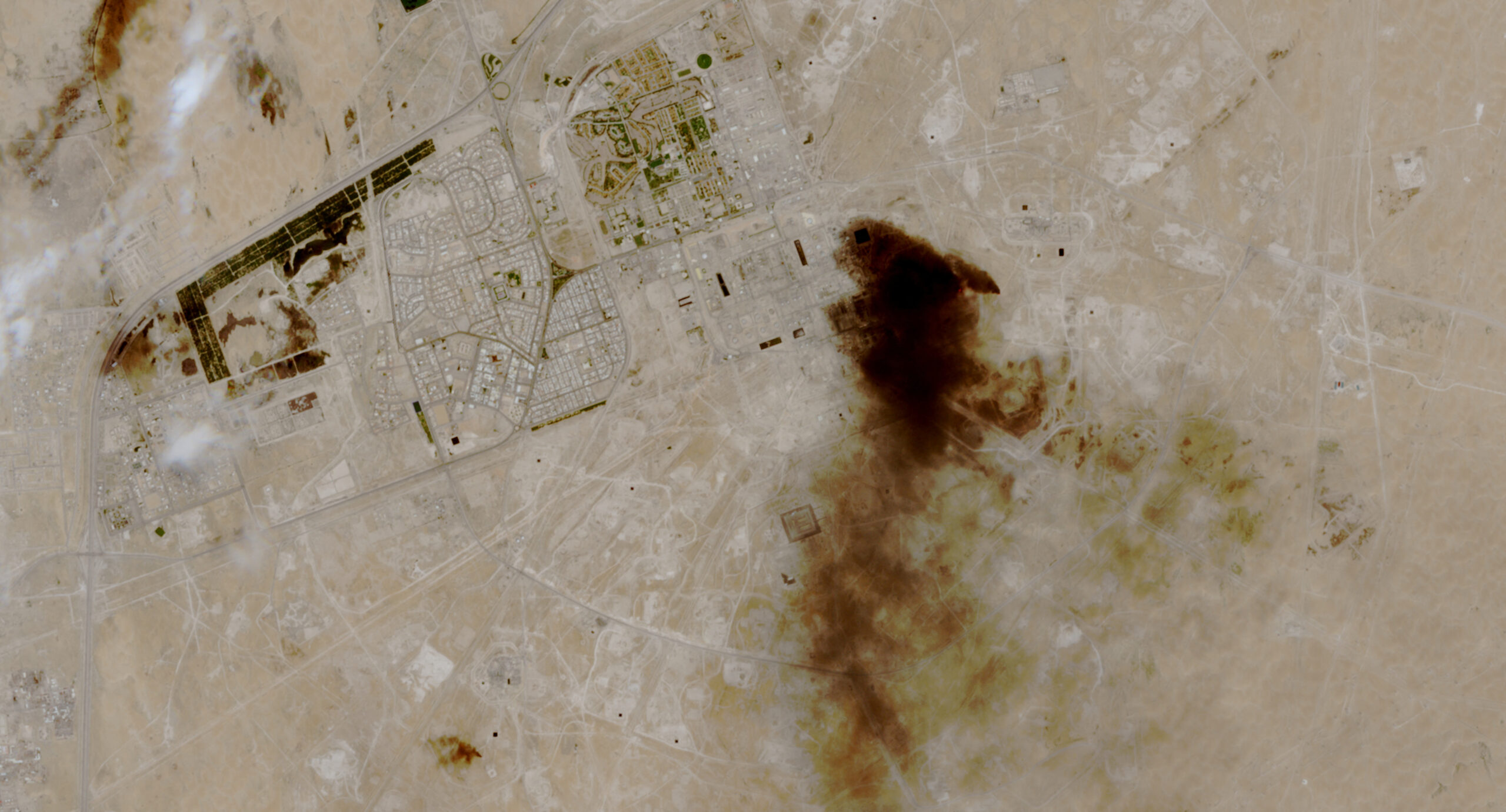
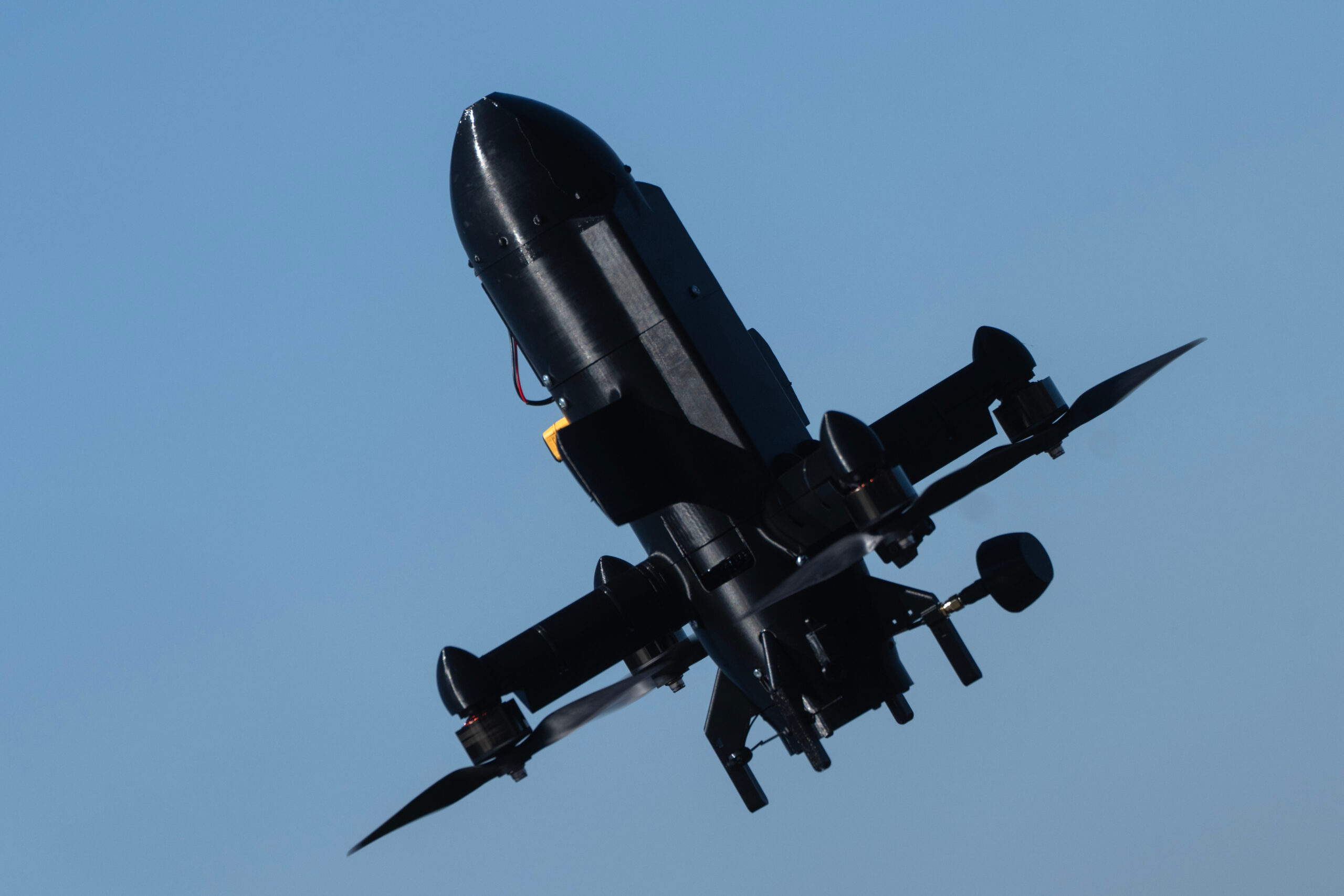
The first layer addresses the immediate military consequences of regional escalation by strengthening Gulf states’ ability to absorb and respond to attack. Gulf states have continued to expand integrated air and missile defenses, strengthen early warning systems, and deepen coordination with U.S. Central Command in response to drone and missile threats going back to the September 2019 attacks on Saudi Arabia’s Khurais and Abqaiq energy facilities and subsequent strikes on shipping and energy infrastructure.
This buildup has been reinforced by a widening supplier base. Gulf governments have moved to increase defense spending and sought to diversify acquisition beyond traditional Western sources. South Korea has revised its arms export policy to accelerate sales to the Middle East, and weapons systems such as its NATO-standard missile interceptor Cheongung have already proved highly effective for the UAE in the Iran war and significantly cheaper than U.S. systems. Saudi Arabia and China have reportedly agreed to set up a Wing Loong-3 drone production line. The United Arab Emirates and India are in early talks over the sale of BrahMos supersonic cruise missiles and the Akashteer command-and-control system. Together, these developments broaden supplier options while preserving the U.S.-centered defense architecture.
Diplomatic Engagement
The second layer reflects a growing recognition that deterrence must be complemented by active crisis management to prevent escalation. Since the start of the war, Gulf diplomacy has become more active and pluralistic, operating through a small set of distinct channels.
Qatar and Oman continue to serve as key mediators with Tehran, while Saudi Arabia has pursued parallel de-escalatory messaging. Other regional actors – including Egypt, Turkey, and Pakistan – have contributed to crisis-management efforts, reflecting their respective relationships with both Gulf partners and Iran. These channels have produced concrete initiatives since the cease-fire. Oman has engaged Tehran over shipping traffic through the Strait of Hormuz, while Saudi Arabia and Qatar have explored their own openings with Tehran outside U.S.-Iranian channels. The UAE, having absorbed the most significant Iranian strikes, adopted a more cautious posture earlier on but has more recently underscored the importance of diplomatic engagement with Iran and has reportedly engaged in its own discreet diplomacy to ease tensions.
The differing responses of Saudi Arabia, the UAE, Qatar, and Oman show how Gulf governments continue to calibrate their own diplomatic approaches based on national risk assessments and strategic priorities. The result is a more active but decentralized diplomatic landscape in which shared concerns increasingly generate parallel initiatives rather than common positions.
External Partnerships
A third layer distributes strategic risk by widening the network of external security partnerships while preserving reliance on the United States for core deterrence capabilities. The United States remains central to integrated air and missile defense, intelligence sharing, and rapid crisis response through CENTCOM-linked infrastructure.
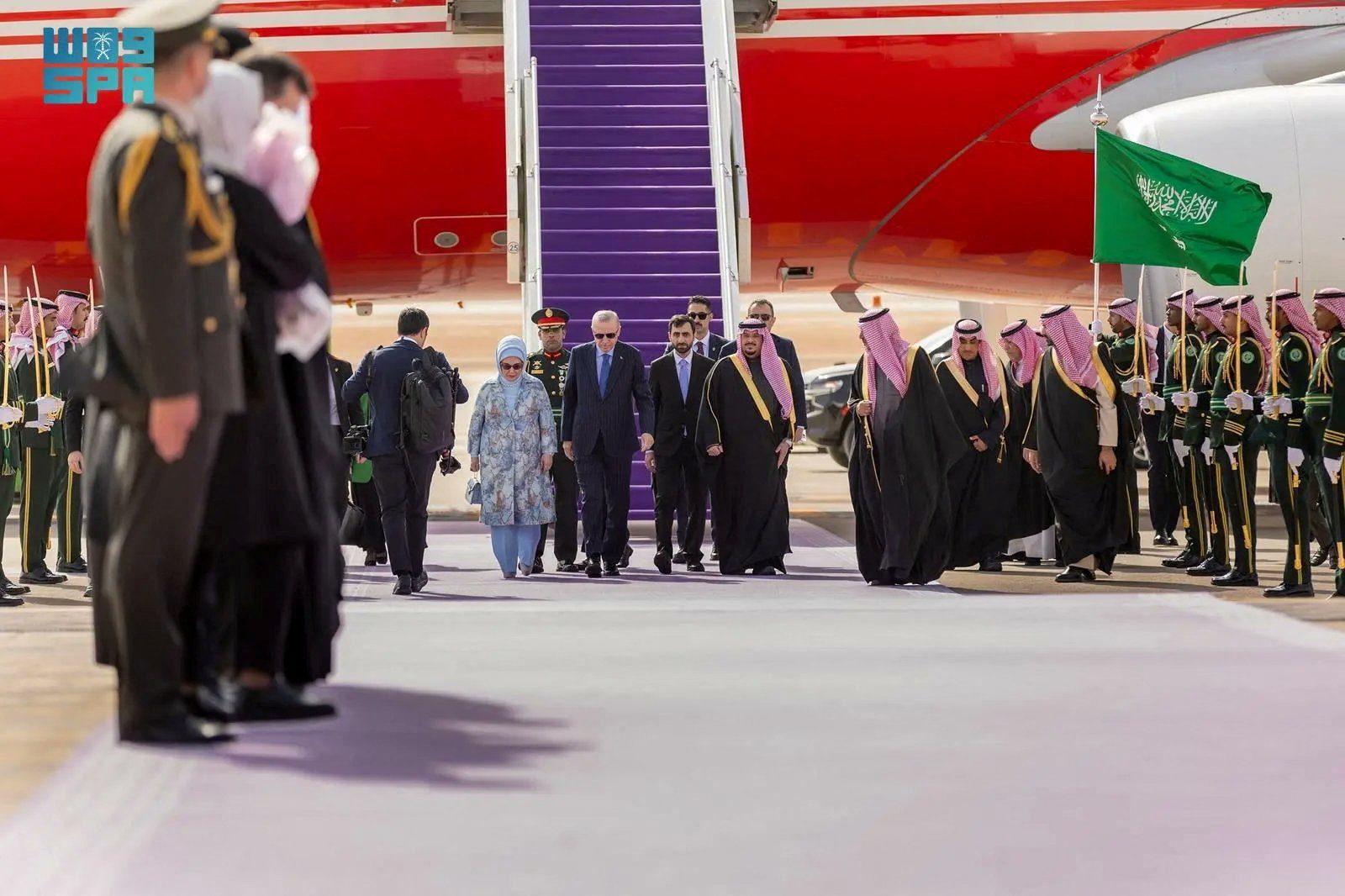
At the same time, Gulf states have expanded cooperation with European partners, deepened naval and defense ties with India, and maintained selective engagement with Russia and China in areas such as procurement and surveillance technology. Early in the conflict, Israel deployed additional air defense systems to the UAE, and Ukraine contributed counterdrone support and signed defense cooperation agreements with several Gulf states covering training and technology transfers. The newly formed Mecca Joint Defense Agreement among Saudi Arabia, Turkey, and Pakistan, with Egypt a possible future participant, underscores this trend toward more diversified, cross-regional security partnerships. Rather than displacing the United States, these relationships complement the U.S. role by providing specialized capabilities and additional strategic options, and they reflect a growing effort to strengthen regional deterrence and reduce dependence on any single security partner.
Domestic Resilience
A fourth layer strengthens the resilience of economies and critical infrastructure against shocks that persist despite deterrence. Gulf states face an increasing imperative to enhance protection of energy systems through refinery hardening, pipeline security, and more distributed infrastructure designed to reduce vulnerability to localized disruption. Cybersecurity capacity has also become a priority, requiring stronger national institutions and closer civil-military coordination to address risks to financial systems, ports, and energy networks.
The war has also strengthened political incentives for investing in redundant energy infrastructure and alternative export routes. The UAE has adopted the “zero Hormuz dependency” strategy marked by efforts to fast-track the expansion of Gulf of Oman port infrastructure and pipeline capacity. The war has strengthened momentum behind plans to expand pipeline capacity to Fujairah by Abu Dhabi’s ADNOC and develop additional refined-product pipelines, further reducing dependence on the Strait of Hormuz.
Such measures complement Abu Dhabi’s broader expansion of ports and logistics infrastructure along the Red Sea and Horn of Africa, extending strategic depth beyond the Gulf itself. By combining the Fujairah export corridor with flexible loading arrangements outside the Strait of Hormuz, Abu Dhabi has shown how operational adaptation can extend resilience beyond fixed infrastructure, reducing the effectiveness of maritime coercion and sustaining energy exports during crisis.
Meanwhile, Saudi officials are considering augmenting the East-West pipeline system, developing new export terminals near Neom, and exploring additional pipeline corridors with neighboring states. However, such projects will require years of investment and substantial financing.
The war has also reinforced the strategic case for the India-Middle East-Europe Economic Corridor as part of a broader effort by India, European partners, and the United States to reduce exposure to vulnerable chokepoints through expanded maritime and overland connectivity. Like energy diversification efforts, IMEC seeks to enhance resilience by creating additional pathways for commerce rather than eliminating risk altogether.
These initiatives seek to reduce dependence on the Strait of Hormuz by redistributing vulnerability across a wider network of maritime and overland corridors. Security in this context is defined not just by deterrence but also by the ability of economic systems to absorb disruption without systemic paralysis.
Layered Security and the Future of Gulf Order
Layered security reflects a region learning to live with ongoing instability rather than moving toward a new order. Gulf states are adjusting existing security arrangements instead of replacing them or settling into a stable balance. They are building a more flexible system in which different tools handle different risks, because uncertainty has become a lasting feature of regional politics. However, this strategy has a number of implications.
The first is the persistence of U.S. predominance in a more distributed form. Despite growing diversification, the United States anchors Gulf security through air and missile defense integration, intelligence sharing, and advanced military capabilities that no other partner currently replicates. The U.S. role as the central security provider is likely to endure, but its scope and character may evolve as Washington and its Gulf partners absorb the lessons of the war.
The second implication is that Gulf cooperation is becoming increasingly selective. Rather than converging around a single GCC-centered strategy, states are assembling overlapping coalitions among these states that vary by issue and partner. The result is a more networked regional security landscape but one in which broad collective action remains constrained by differing national priorities, intra-Gulf coalitions, and legacy competition among these states. The four layers are advancing unevenly – sometimes through GCC cooperation but more often through bilateral relationships and issue-specific partnerships that reflect individual states’ preferences.
The third implication is the redefinition of regional strategy. The focus is shifting away from constructing durable regional order toward managing recurring crises. Diplomacy centers on containment rather than resolution. Partnerships reduce exposure and signal shared tactical approach rather than broad alignment. Resilience strategies absorb shocks rather than prevent them. Across all four layers, the underlying logic is one of adaptation, with instability no longer an exceptional condition but one that must be managed over time.
These dynamics point to a regional system defined more by continuous adjustment than by coherence. The central question that emerges is whether such a layered and distributed system can remain stable under repeated escalation. The tension between flexibility and fragmentation – the ability to diversify responses without sacrificing strategic coherence – will increasingly shape the trajectory of Gulf security. It will also test the degree to which the Gulf model continues to serve as a powerful magnet for global investment, connectivity, and talent.
The Iran war did not produce a decisive strategic realignment, but it accelerated an existing shift in how risk is distributed and managed across the region. Gulf states are responding by developing a more layered security approach that combines continued reliance on U.S. military power with greater emphasis on strengthening national capabilities, diversifying partnerships, and expanding regional coordination.
The Gulf is becoming more networked without becoming more unified. Layered security allows states to adapt to persistent instability, but it does not eliminate the political divisions that continue to limit collective regional action.
The views represented herein are the author's or speaker's own and do not necessarily reflect the views of AGSI, its staff, or its board of directors.
U.S. force projection in the Gulf is increasingly relying on artificial intelligence, unmanned platforms, and space technology, using these systems to augment existing military infrastructure.
In the future landscape of Gulf security, the United States may remain an essential arms supplier but wield less influence over force structure and military doctrine.
Operation Epic Fury has delivered tactical gains without a viable strategic end state. The Strait of Hormuz remains effectively closed, Iran’s leadership has reorganized, and the diplomatic track has fractured.
February talks between Saudi Arabia and Turkey signaled the emergence of a pragmatic regional order grounded in economic complementarity, defense cooperation, and shared anxieties about instability.
The durability of recent peace gestures, energy deals, and revenue-sharing agreements will hinge on political consensus and restraint, both within Kurdistan and across Iraq’s fractured national landscape.