With Sultan Haitham’s planned trip to Tehran to mediate between Iran and the United States, the Omani leader appears to be following his predecessor’s path as a regional interlocutor.
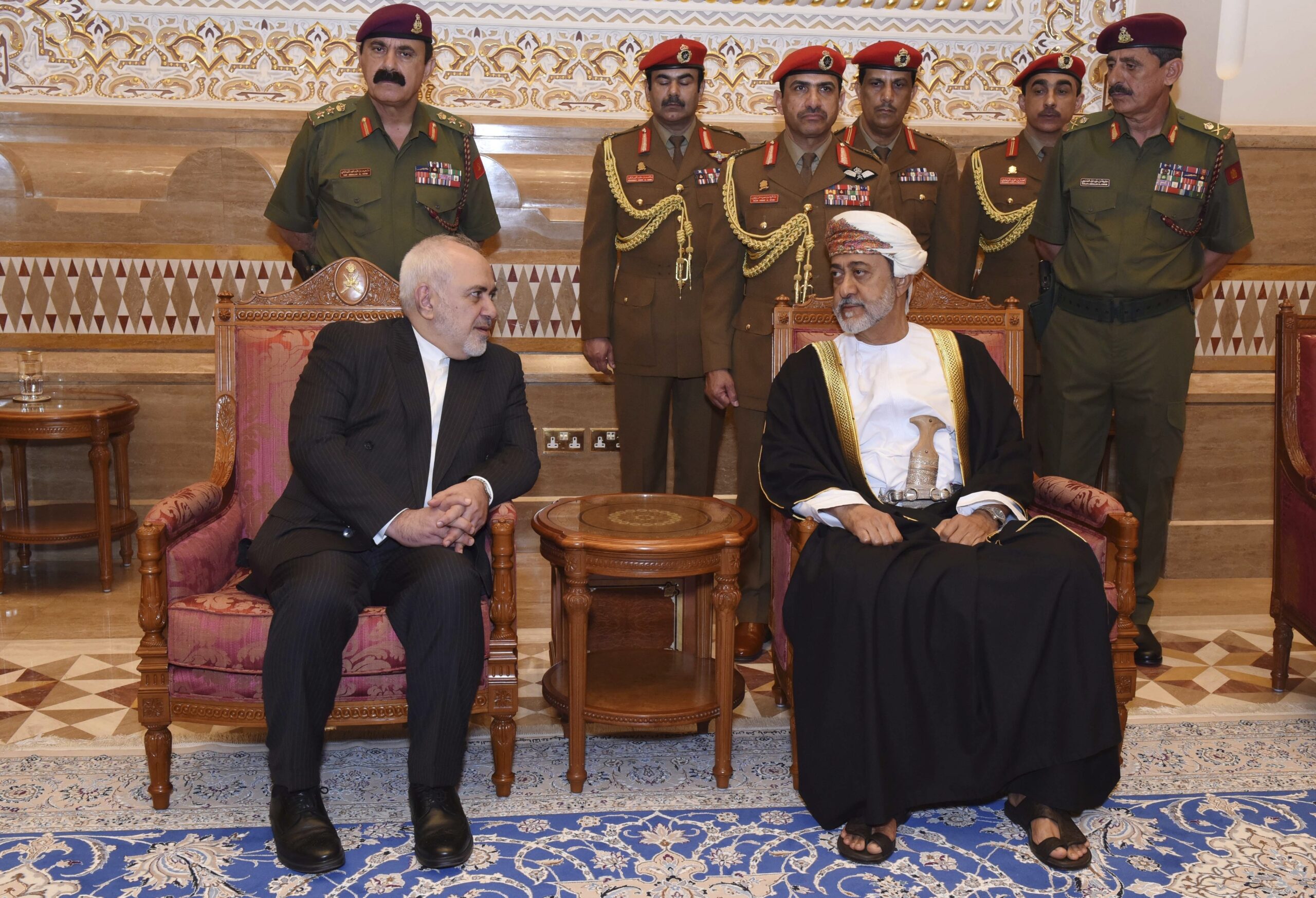
Oman's new sultan, Haitham bin Tariq al-Said, right, receives Iran's then foreign minister, Mohammad Javad Zarif, after his arrival to attend an official mourning ceremony for the late Sultan Qaboos bin Said, in Muscat, Oman, Jan. 12, 2020. (Oman News Agency via AP)
“The greatest honor history can bestow is the title of peacemaker,” President Richard Nixon famously said in his first inaugural address. But no less honorable is the title of mediator, the interlocutor between warring parties. One such mediator was Sultan Qaboos bin Said of Oman. In the 1970s, Sultan Qaboos established a special relationship with Iran, which he sustained despite the 1979 revolution and utilized to mediate between Iran, the Arab states, and the United States until his passing in January 2020. His successor, Sultan Haitham bin Tariq al-Said, who is expected to visit Tehran in the “near future” to mediate between Iran and the United States, appears to be following a similar path.
The special relationship between Iran and Oman can be traced back to Sultan Qaboos’ accession to the throne in 1970 through a palace coup that deposed his father. The young sultan inherited a Marxist rebellion in Dhofar province sponsored by South Yemen, the Soviet Union, and China, which were eager to take advantage of an expected regional power vacuum after Britain’s declared military withdrawal from “east of Suez.” Sultan Qaboos turned to Arab states for support, receiving military instructors from Jordan, equipment and financial support from Saudi Arabia, and some troops from the United Arab Emirates. But when Sultan Qaboos made a special appeal to Shah Mohammad Reza Pahlavi in 1973, Iran provided 3,000 troops as well as aircraft to Oman, which proved key in Oman’s eventual victory over the rebels. At the time, Iran’s military presence in Oman caused unease among members of the Arab League, which proposed the formation of a united Arab army to replace Iranian forces, a proposal Omani Foreign Minister Qais Zawawi shot down, reportedly saying, “Our Arab brethren favor words over deeds. Which Arab state is capable of aiding Oman the way Imperial Iran has?”
The 1979 revolution and the Islamic Republic’s constitutionally mandated mission to “assist the oppressed in the world against the oppressors,” traditionally interpreted as the regime’s intention to export its revolution abroad, and the politicization of non-Iranian Shias in the wake of the revolution led to a significant deterioration in Iran’s relations with its neighbors. Both of these factors contributed to Iraqi dictator Saddam Hussein’s decision to invade Iran in 1980. Alarmed by Iranian rhetoric, and encouraged by the United States, in 1981, Saudi Arabia, Kuwait, the UAE, Qatar, Bahrain, and Oman established the Gulf Cooperation Council. The Arab monarchies further supported Iraq to counterbalance the threat from Iran, but Oman remained neutral, and with the exception of a few disruptive incidents in the early 1980s, Sultan Qaboos largely managed to maintain his special relationship with Tehran.
Sultan Qaboos knew his Iran policy was at odds with the policies of the other GCC states. Commenting on the council’s plan to form a security alliance in 1984, he declared: “To be perfectly frank, I say that here in Muscat we do not believe it to be in the interest of security in the Gulf that Iran feels we intend to establish an Arab military pact that will always be hostile to it, or that we are about to form a joint force, whose main task is to fight Iran … There is no alternative to peaceful coexistence between Arabs and Persians in the end, and there is no alternative to a minimum of accord in the region.” Writing on Oman’s policy toward Iran in the 1980s, RAND analyst Joseph A. Kechichian noted that Sultan Qaboos was dissatisfied with “the GCC tilt toward Iraq,” “did not welcome the Kuwaiti and Saudi largesse toward Baghdad,” and appreciated that “only Tehran could potentially act as a balance to an immensely powerful Baghdad.”
The end of the Iran-Iraq War in 1988 was welcomed by Oman, which had actively mediated between Tehran and Baghdad, and it was Haitham, then Oman’s vice minister of foreign affairs, who emphasized that it was “in the interest of Oman and the GCC states” to talk with Iran in a 1989 interview with Kechichian. On August 2, 1990, when Iraq invaded its benefactor Kuwait, Qaboos and Haitham were validated in their fear of an unchecked Iraq.
In the wake of the catastrophic 1996 attack against the Khobar Towers U.S. military housing complex in Saudi Arabia, killing 19 Americans and wounding 372, which the FBI attributed to pro-Iranian Saudi Hezbollah operatives, Omani officials relayed messages between Tehran and Washington. More significantly, Oman hosted secret negotiations between Iranian and U.S. officials, paving the path for the 2015 Joint Comprehensive Plan of Action nuclear deal.
Sultan Qaboos’ decades of diplomatic maneuvering served Oman well. By maintaining good relations with both Iran and Iraq, Oman was subject to neither anti-government Shia political activism nor Baathist plots. Despite historical territorial disputes and sharp policy differences, particularly concerning Iran, Oman also managed to maintain cordial relations with Saudi Arabia. Muscat remained a member of the GCC, but it consistently pursued an independent foreign and security policy rooted in Sultan Qaboos’ understanding of Omani national interests. This policy also kept the sultanate out of the crossfire between the United States and its Arab allies and Iran during the presidency of Donald J. Trump. Most important, lacking the significant oil reserves that most GCC states have, Sultan Qaboos turned his special relationship with Iran and his ability to act as an interlocutor between Iran, the Arab states, and the West into leverage.
Against this background, Sultan Haitham’s planned visit to Tehran and continued mediation between Iran and the United States is hardly surprising. However, efforts to lower tensions between Iran and the United States under President Joseph R. Biden Jr. may quickly reverse, either due to developments in Iran’s nuclear program or political change in the United States. The same goes for the fragile managed rivalry between Iran and Saudi Arabia. By maintaining good relations with all parties and acting as an interlocutor between adversaries, Sultan Haitham, the mediator, is continuing the course set by his predecessor.
The views represented herein are the author's or speaker's own and do not necessarily reflect the views of AGSI, its staff, or its board of directors.
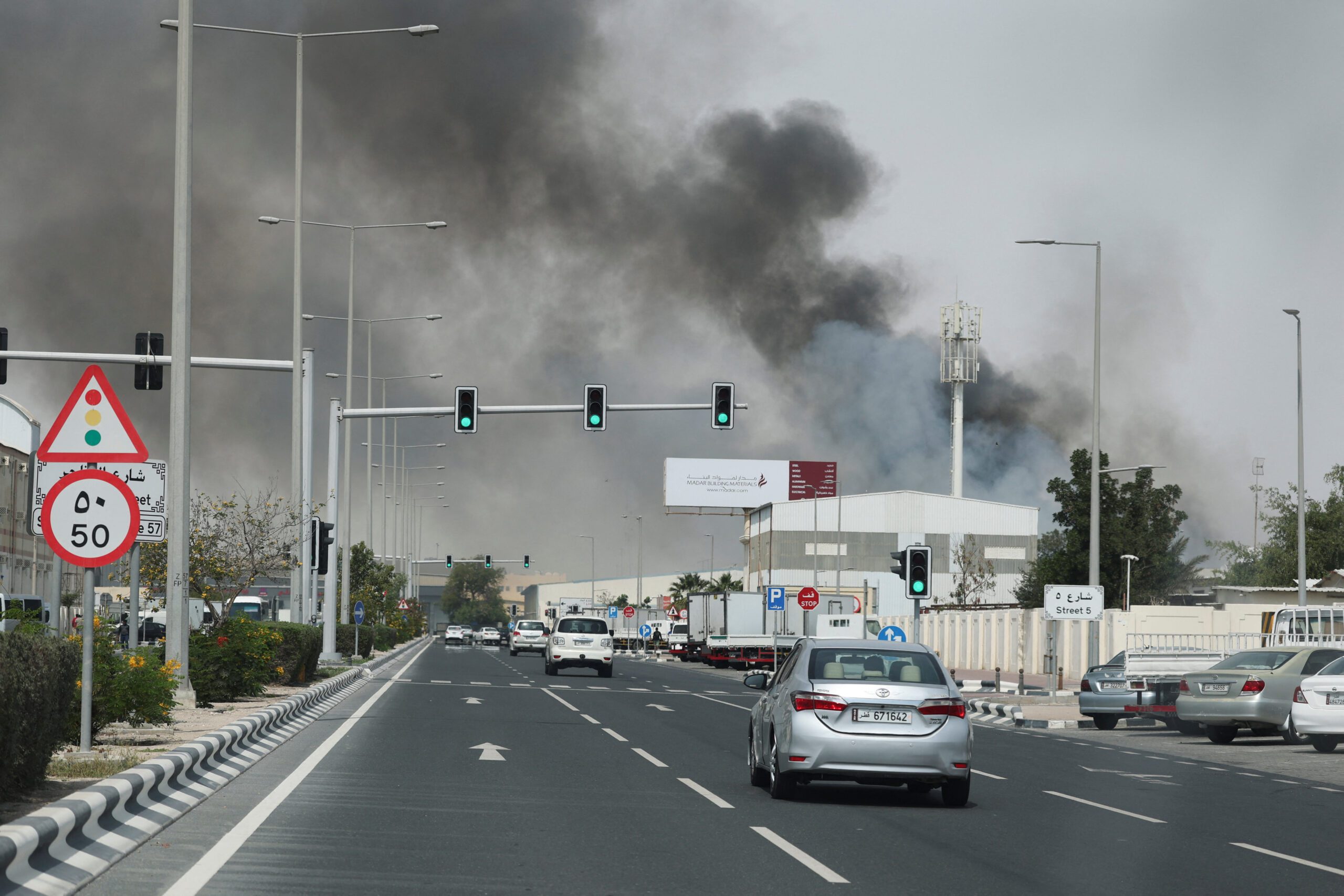
Iran’s attacks have perhaps irrevocably damaged Qatari-Iranian bilateral relations and erased the last few years of broader rapprochement efforts between Iran and the GCC states.
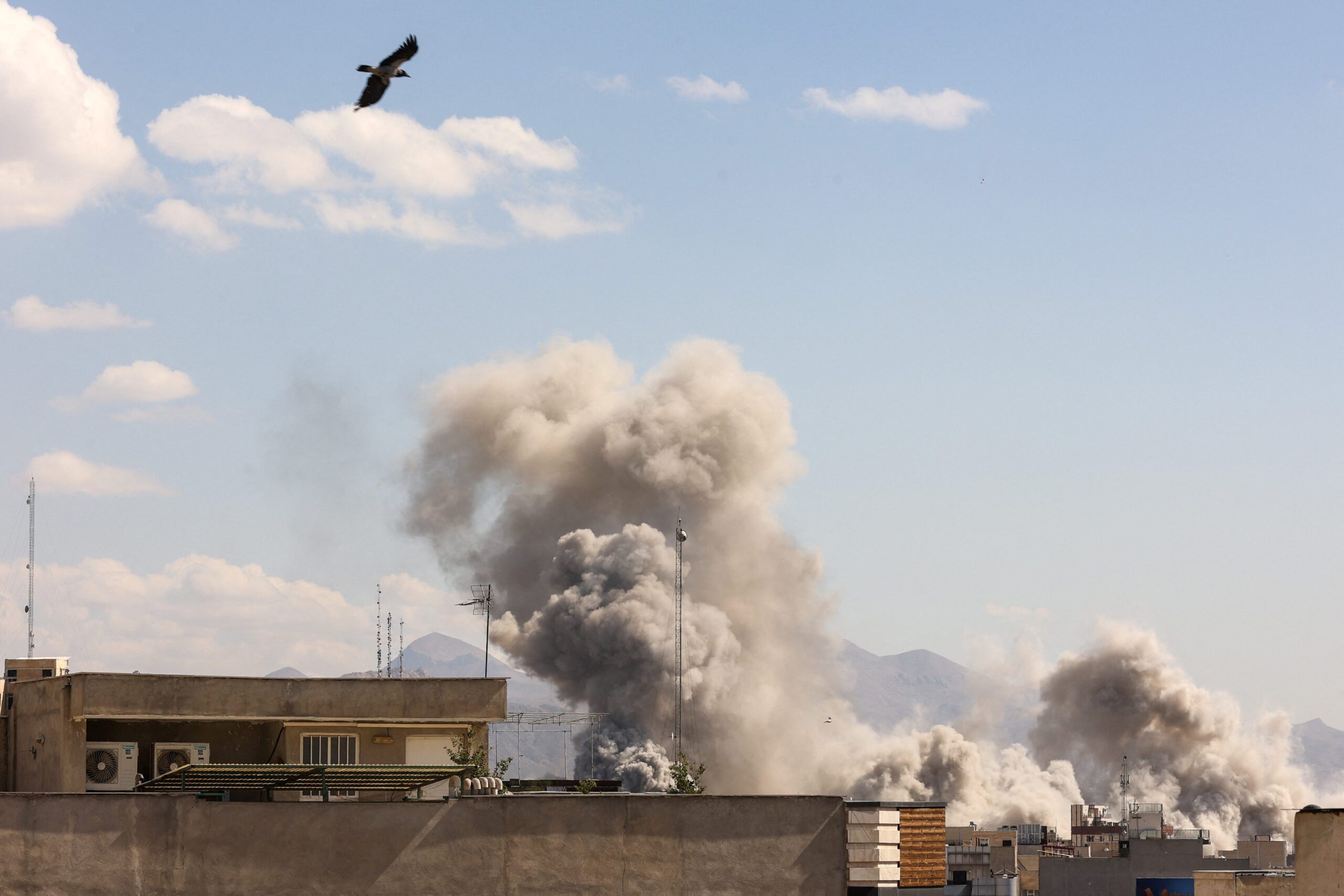
Ayatollah Ali Khamenei was killed in his office in Tehran at age 86, leaving behind a country in ruins and on the verge of civil war and potential disintegration.
Iran is signaling that it will not absorb attacks passively. But whether this strategy ensures the regime’s survival, seals its fate, or accelerates a broader catastrophe will shape the region for years to come.
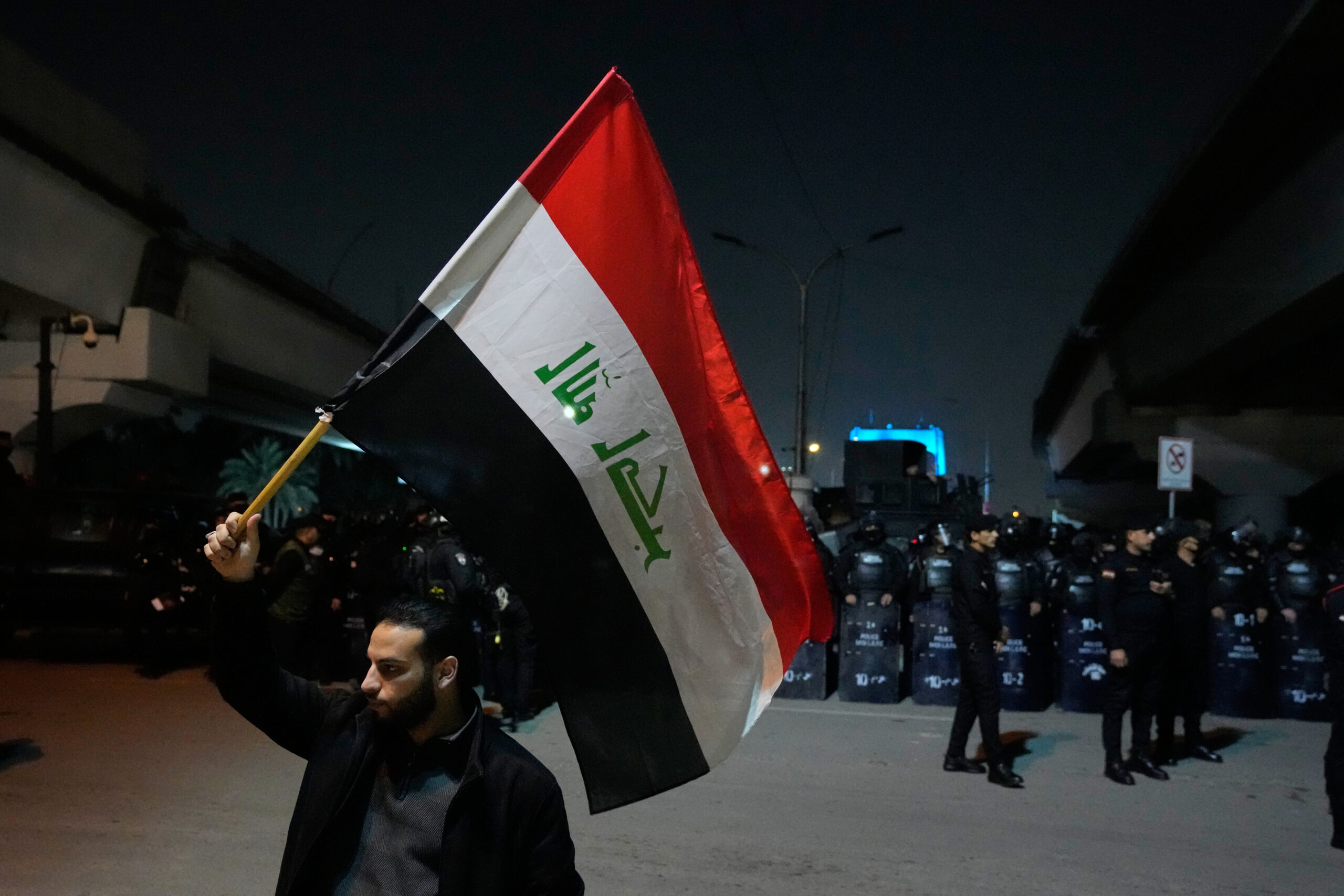
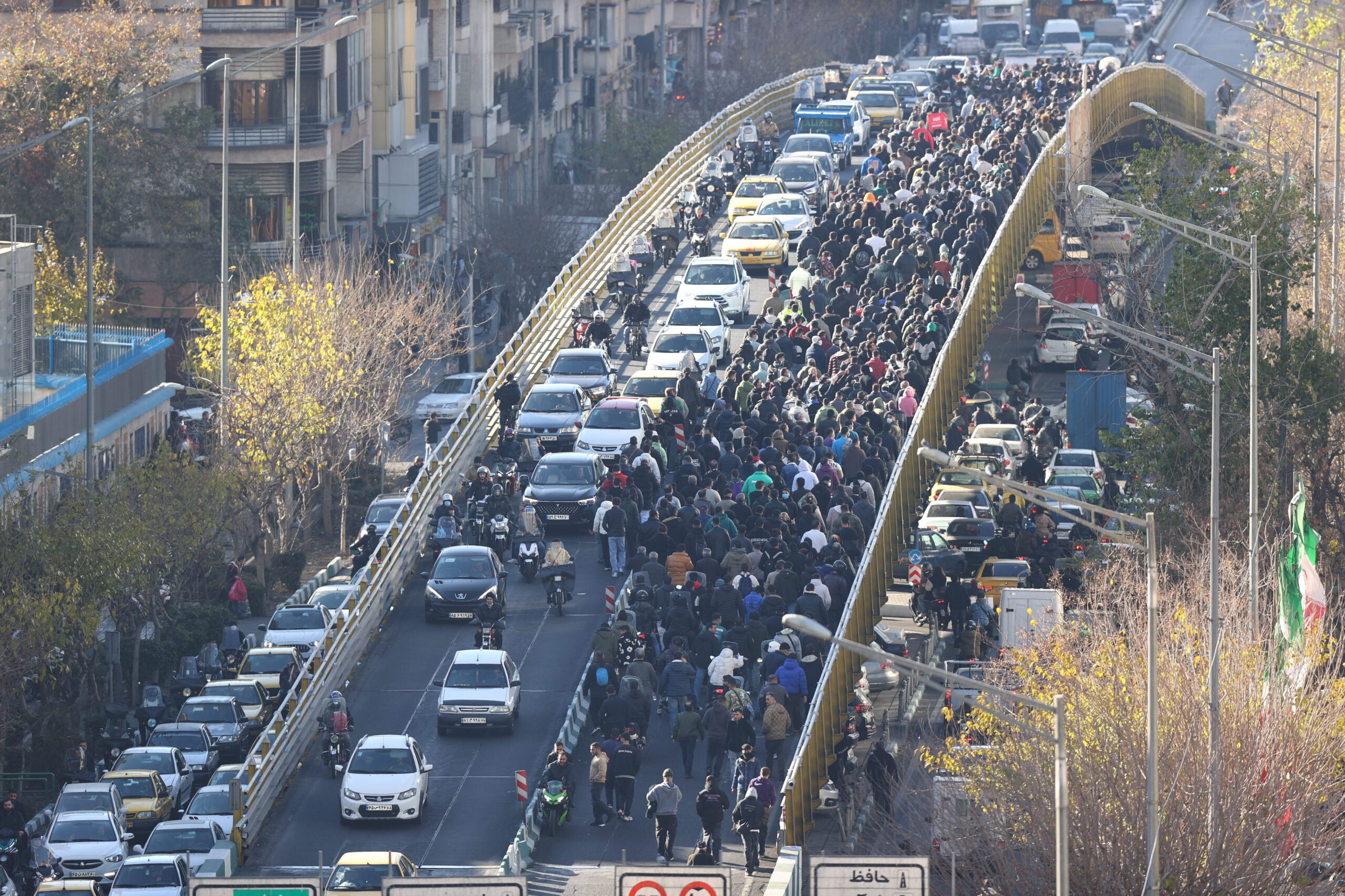
The erosion of the regime’s legitimacy across broad segments of society, combined with the breadth of the 2025-26 protest coalition, raises the possibility that a new confrontation could trigger renewed anti-regime mobilization.
Though the Iranian regime is facing increasing pressure from protesters and armed insurgent groups, it is not yet doomed – but without a deal with the United States, the regime is likely headed for a slow collapse.
On January 8, AGSI hosted a virtual roundtable with its leadership and scholars as they look ahead and assess trends likely to shape the Gulf region and U.S. foreign policy during the coming year.